


Expanded Metal Outdoor Furniture
In the realm of commercial and industrial site furnishings, material selection is the primary determinant of a product's lifecycle and maintenance requirements. Expanded metal has emerged as a preferred substrate for high-traffic environments, offering a unique combination of structural integrity, aesthetic versatility, and cost-efficiency. For engineers, architects, and procurement professionals, understanding the technical specifications of Perforated & Expanded Metal is essential when designing or sourcing expanded metal outdoor furniture that must withstand environmental stressors and heavy use.
As a manufacturer specializing in precision metal components and industrial filtration solutions, Kaifil applies rigorous engineering standards to the production of expanded metal. Whether the application involves park benches, patio tables, or industrial workstations, the performance of the finished piece depends on the metallurgical properties and the geometric precision of the mesh used in its construction.
The Engineering Behind Expanded Metal
Expanded metal is produced through a process of simultaneous slitting and stretching. Unlike perforated metal, which involves punching holes and generating scrap material, expanded metal is created from a single solid sheet of metal that is expanded into a diamond-patterned mesh. This process results in a high strength-to-weight ratio because the material remains physically connected at the "bonds," which act as structural trusses.
For expanded metal outdoor furniture, two primary forms are utilized: Standard (Raised) and Flattened.
1. Standard Expanded Metal: This form retains the original ridges created during the expansion process. While it offers excellent slip resistance and a three-dimensional look, the raised edges can be uncomfortable for direct seating surfaces. It is more commonly used for trash receptacles or decorative architectural accents.
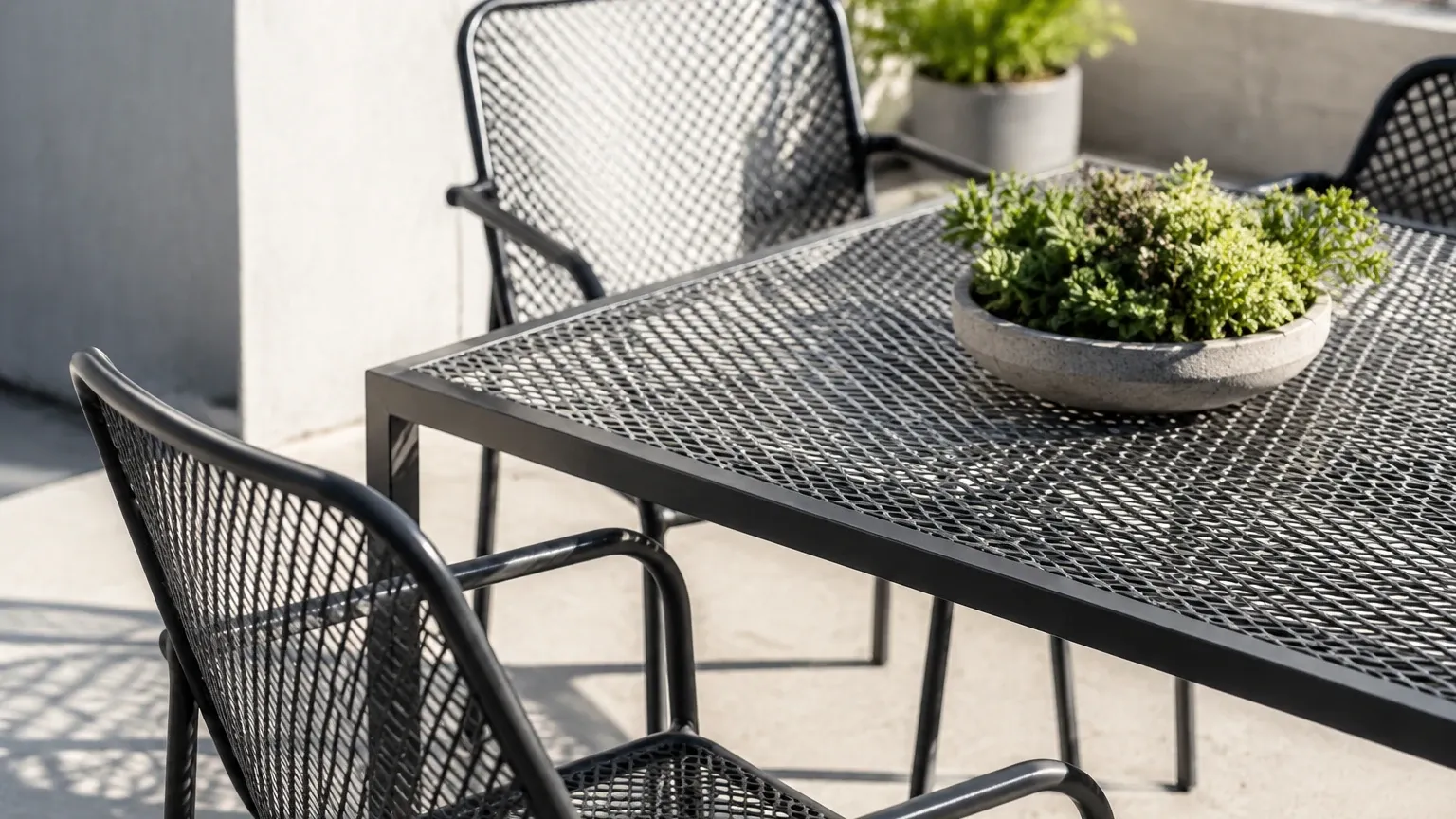
2. Flattened Expanded Metal: After the expansion process, the sheet is passed through a cold-roll reducing mill. This flattens the strands and bonds, creating a smooth, level surface. Flattened expanded metal is the industry standard for seating and table surfaces, as it provides the necessary comfort for users while maintaining the structural benefits of the expanded design.
Material Selection for Durability and Longevity
The choice of material is the most critical factor in preventing corrosion and structural failure in outdoor environments. While carbon steel is often used for budget-conscious projects, it requires extensive coating to prevent oxidation. In contrast, stainless steel and high-grade aluminum offer inherent resistance to the elements.
Stainless Steel Solutions
Kaifil specializes in stainless steel filtration and metal components because of the material's exceptional performance in demanding environments. For expanded metal outdoor furniture, Grade 304 and Grade 316 stainless steel are the premier choices. Grade 304 provides excellent corrosion resistance for most urban and park settings. However, for coastal areas or industrial zones with high chemical exposure, Grade 316—which contains molybdenum—is recommended to prevent pitting and crevice corrosion.
Aluminum and Carbon Steel
Aluminum expanded metal is lightweight and naturally resistant to rust, making it suitable for portable outdoor furniture. However, it lacks the tensile strength of steel, which may be a concern for high-capacity seating. Carbon steel remains a viable option only when treated with heavy-duty finishes such as hot-dip galvanization or thick thermoplastic coatings.
Key Evaluation Criteria for Furniture Manufacturers
When specifying Perforated & Expanded Metal for furniture applications, engineers must evaluate several technical parameters to ensure the product meets safety and performance standards.
SWD and LWD Dimensions
The size of the diamond opening is defined by the Short Way of Design (SWD) and the Long Way of Design (LWD). For outdoor furniture, a smaller SWD is often preferred to prevent small objects from falling through and to provide a more stable surface for food and beverage containers on tables. Conversely, a larger opening increases the "open area" percentage, which facilitates faster drainage and air circulation.
Gauge and Strand Width
The gauge of the metal sheet and the width of the individual strands determine the load-bearing capacity. For heavy-duty commercial benches, a thicker gauge (typically 9 to 13 gauge) is necessary to prevent sagging or deformation under the weight of multiple occupants. Precision in strand width is also vital; inconsistent stretching can lead to weak points in the mesh that may fail over time.
Open Area and Drainage
One of the primary advantages of expanded metal outdoor furniture is its ability to remain dry and clean. The open area allows rainwater to pass through immediately, preventing the pooling that often occurs on solid metal or plastic surfaces. This also reduces the accumulation of debris and dust, lowering the overall maintenance burden for facility managers.
Safety and Surface Treatment Considerations
In public and commercial spaces, safety is paramount. Raw expanded metal has sharp edges at the bonds and strands where the metal was slit. For furniture applications, these edges must be meticulously deburred.
Furthermore, the surface treatment must be robust enough to withstand UV radiation, temperature fluctuations, and physical impact. Common treatments include:
* Thermoplastic Coating: A thick, plastic-like finish that is applied via a fluidized bed process. It provides a "warm to the touch" feel, hides sharp edges, and offers superior impact resistance.
* Powder Coating: A dry finishing process that provides a wide range of colors and a hard, durable finish. While thinner than thermoplastic, high-quality polyester powder coatings offer excellent UV protection.
* Electropolishing: For stainless steel components, electropolishing removes surface impurities and creates a high-luster finish that further enhances corrosion resistance by thickening the protective chromium oxide layer.
Comparing Perforated and Expanded Metal in Outdoor Design
While both materials are used in outdoor amenities, they serve different functional and aesthetic purposes. Perforated metal offers a cleaner, more modern look with circular or square holes. However, it is generally more expensive due to the material waste generated during punching.
Expanded metal is often the more sustainable and cost-effective choice for large-scale projects. Because the expansion process increases the surface area of the original sheet without adding weight or wasting material, it provides a larger footprint of usable mesh for the same volume of raw metal. This makes expanded metal outdoor furniture an ideal solution for municipal parks, school campuses, and corporate courtyards where budget and durability must be balanced.
Maintenance and Lifecycle Cost Analysis
Engineers and purchasing teams must look beyond the initial acquisition cost to the total cost of ownership (TCO). Low-quality outdoor furniture often requires replacement every 3 to 5 years due to rust or structural fatigue.
By utilizing high-grade Perforated & Expanded Metal with appropriate coatings, the service life of outdoor furniture can be extended to 15 years or more. Maintenance requirements are minimal:
1. Periodic Cleaning: Rinsing with water and mild detergent is usually sufficient to remove surface contaminants.
2. Inspection: Regular checks for coating chips or scratches are necessary to prevent localized corrosion, especially on carbon steel units.
3. Repair: High-quality thermoplastic coatings can often be repaired on-site using heat guns and patch kits, further extending the product's life.
Customization and OEM Capabilities
At Kaifil, we understand that industrial and commercial applications often require bespoke solutions. Customization in expanded metal furniture goes beyond color choice. It includes specific mesh patterns, custom border treatments (such as U-edging for safety), and integrated mounting brackets for permanent installation.
Our experience in manufacturing precision filtration components translates directly into our metal mesh production. We ensure that every sheet of expanded metal meets exact tolerances for strand thickness and opening size, providing furniture manufacturers with a reliable substrate that simplifies their assembly processes and ensures a consistent final product.
Conclusion
Expanded metal outdoor furniture represents a sophisticated intersection of industrial engineering and functional design. By selecting the right material grade, gauge, and finish, organizations can invest in outdoor amenities that provide comfort, safety, and decades of service. For those seeking high-performance metal components, understanding the nuances of the expansion process and material science is the first step toward a successful installation.
For detailed technical specifications and to explore our range of precision metal solutions, Review product options and application support at Kaifil. Our team is available to assist with material selection and custom design requirements to ensure your filtration or structural project meets the highest industrial standards.
