


Expanded Metal of Iron or Steel
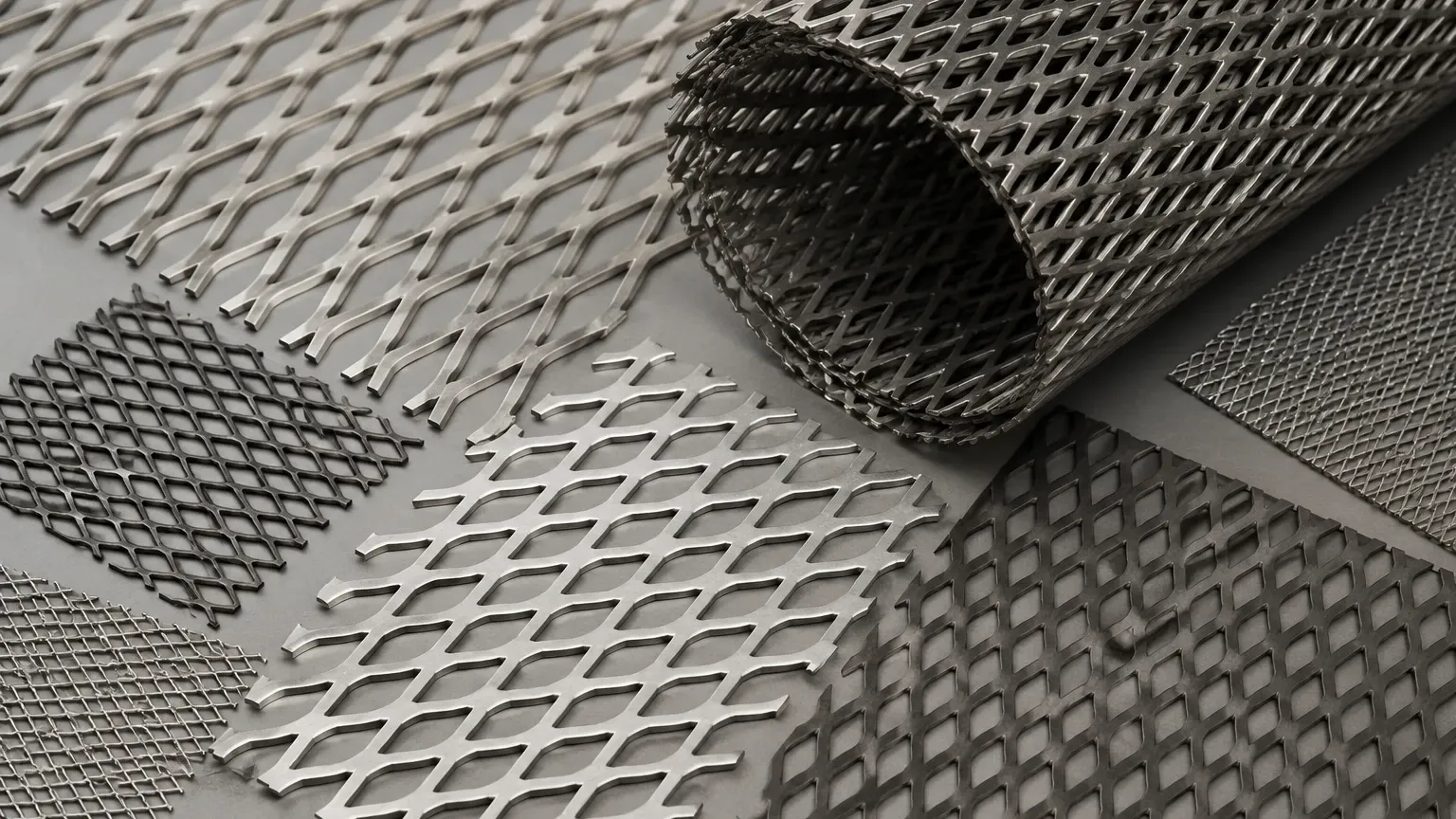
In the landscape of industrial filtration and structural engineering, expanded metal of iron or steel serves as a foundational component. Unlike woven wire mesh or perforated sheets, expanded metal is produced through a unique mechanical process that involves simultaneously slitting and stretching a solid metal sheet. This results in a continuous, one-piece mesh structure characterized by diamond-shaped openings. For engineers and procurement teams, understanding the technical nuances of this material is essential for optimizing filtration efficiency, structural integrity, and cost-effectiveness in demanding environments.
The Manufacturing Process: Slitting and Stretching
The production of expanded metal of iron or steel is a cold-working process that differentiates it from other metal mesh products. A solid sheet or coil of iron or steel is fed into an expanding machine, where a set of precision knives slits the metal while a mechanical force stretches it.
One of the primary advantages of this process is that it produces no waste. Unlike perforated metal, where the "slugs" or holes are punched out and discarded (or recycled), expanded metal retains the full mass of the original sheet. This makes it an inherently sustainable and cost-efficient choice for large-scale industrial projects.
There are two primary forms of expanded metal produced through this method:
1. Standard (Raised) Expanded Metal: In this form, the strands and bonds (the intersections of the strands) are set at a uniform angle to the plane of the sheet. This creates a three-dimensional surface that provides excellent grip and high strength-to-weight ratios, though it may require additional consideration in filtration applications where a flush surface is needed.
2. Flattened Expanded Metal: Standard expanded metal can be passed through a cold-roll reducing mill to flatten the strands and bonds into the same plane as the sheet. Flattened expanded metal is often preferred in filtration as a support layer because it provides a smooth surface that will not abrade delicate filter media like fiberglass or synthetic membranes.
Technical Specifications and Terminology
To accurately specify expanded metal of iron or steel, engineers must use standardized terminology to describe the dimensions and geometry of the mesh. These parameters directly influence the flow rate, pressure drop, and mechanical support capabilities of the component.
* SWD (Short Way of Design): The distance from the center of one bond to the center of the next bond measured across the short diamond diagonal.
* LWD (Long Way of Design): The distance from the center of one bond to the center of the next bond measured across the long diamond diagonal.
* SWO (Short Way of Opening): The clear distance between the inside edges of the bonds across the short diamond diagonal.
* LWO (Long Way of Opening): The clear distance between the inside edges of the bonds across the long diamond diagonal.
* Strand Width: The amount of metal fed into the knives for each slit.
* Strand Thickness: The thickness of the original base metal sheet.
* Overall Thickness: The total thickness of the finished expanded sheet, which is significantly greater than the strand thickness in "raised" varieties.
For filtration applications, the Open Area Percentage is the most critical metric. It determines the permeability of the filter and the velocity of the fluid passing through the mesh. Calculating the open area for expanded metal is more complex than for perforated metal due to the angular orientation of the strands, but it is a vital step in preventing system cavitation or excessive pressure buildup.
Comparing Perforated & Expanded Metal
When designing a filtration system or a protective enclosure, engineers often choose between Perforated & Expanded Metal. While both serve similar functions, their mechanical properties and manufacturing costs differ significantly.
Perforated Metal offers the advantage of precision. It can be manufactured with extremely specific hole diameters and patterns (round, square, hexagonal, or slotted). This makes it ideal for high-precision sieving where the particle size cutoff must be exact. However, the punching process creates scrap material, which increases the unit cost, especially when using expensive alloys like 316L stainless steel.
Expanded Metal, by contrast, is generally more rigid. Because the strands are not woven but are part of a single piece of metal, the mesh cannot unravel. The diamond pattern provides inherent structural rigidity, allowing it to support heavy filter cakes or withstand high-pressure differentials without deforming. In many industrial contexts, expanded metal of iron or steel is used as a "support cage" or "pleat protector" for finer filter media, providing the necessary mechanical strength while the secondary media handles the actual particle separation.
Material Selection: Iron, Carbon Steel, and Stainless Steel
The choice of material for expanded metal is dictated by the chemical environment and the mechanical loads of the application.
* Carbon Steel: Often referred to as "iron" in general industrial parlance, low-carbon steel is the most common material for expanded metal. It offers excellent strength and is highly weldable. However, it is susceptible to oxidation. In non-corrosive environments or when protected by coatings, it is the most economical choice.
* Galvanized Steel: To enhance the longevity of carbon steel, expanded metal is often hot-dip galvanized or made from pre-galvanized sheets. This provides a sacrificial zinc layer that prevents rust, making it suitable for outdoor air intake filters or water treatment components.
* Stainless Steel (304 and 316): For chemical processing, pharmaceutical manufacturing, or food and beverage applications, stainless steel is the standard. It provides superior corrosion resistance and can withstand high-temperature sterilization processes. 316 stainless steel, containing molybdenum, is specifically recommended for environments involving chlorides or marine exposure.
Applications in Industrial Filtration
Expanded metal of iron or steel is a versatile component in various filtration stages. Its primary roles include:
1. Support and Drainage Layers
In multi-layered filter cartridges, expanded metal often serves as the inner core or outer wrap. It provides the structural backbone that prevents the filter media from collapsing under the force of the fluid flow. Its open structure allows for maximum drainage, ensuring that the filter media is utilized across its entire surface area.
2. Coarse Pre-Filtration
In large-scale HVAC systems or industrial water intakes, expanded metal acts as a primary barrier against large debris. Its rigid diamond mesh can stop leaves, stones, and large particulates from entering the system and damaging sensitive downstream components like pumps or fine membranes.
3. Mist Eliminators and Demisters
In chemical towers and scrubbers, layers of expanded metal are used to capture liquid droplets from gas streams. The angular surfaces of the strands provide a large surface area for impingement, causing droplets to coalesce and drain away.
4. Flame Arrestors
The thermal mass of expanded metal of iron or steel can be used to dissipate heat. In certain safety applications, layers of fine expanded metal are used to extinguish flames by cooling the combustion gases below their ignition temperature as they pass through the mesh.
Engineering Considerations for Selection
Before finalizing a specification for expanded metal of iron or steel, engineers should evaluate the following factors to ensure long-term performance and minimize the total cost of ownership:
* Direction of Flow: In raised expanded metal, the angle of the strands can influence the flow direction. Engineers must determine if the "louvers" created by the expansion process will assist or hinder the fluid dynamics of the system.
* Load-Bearing Capacity: If the expanded metal is intended to support a heavy filter cake or act as a walkway/grating, the LWD should be oriented perpendicular to the support members to maximize strength.
* Surface Finish: For many B2B applications, the finish is as important as the material. Options include pickling and passivation for stainless steel to remove surface contaminants, or powder coating for carbon steel to provide both color-coding and corrosion protection.
* Tolerances: Standard industrial tolerances for expanded metal are generally broader than those for machined parts. If a filter housing requires a high-precision fit, the expanded metal may need to be custom-sheared or laser-cut to meet tighter dimensional requirements.
Maintenance and Replacement Cycles
The durability of expanded metal of iron or steel makes it a low-maintenance component, but it is not indestructible. In filtration systems, the primary cause of failure is blinding (clogging) or mechanical erosion.
Regular inspection should focus on the bonds of the mesh. In high-vibration environments, such as those found in hydraulic systems, the bonds can experience fatigue over time. If the expanded metal is used as a support for a disposable filter element, it should be cleaned thoroughly during each element change-out. For stainless steel components, ultrasonic cleaning is often an effective method for removing deeply embedded particulates from the diamond intersections.
Conclusion
Expanded metal of iron or steel remains a critical material for industrial engineers due to its unique combination of structural strength, material efficiency, and versatility. Whether used as a robust support for delicate membranes or as a primary coarse filter, its performance is dependent on precise specification of diamond geometry, material grade, and surface finish.
By carefully evaluating the SWD/LWD requirements and considering the trade-offs between raised and flattened varieties, technical teams can ensure that their filtration systems operate with maximum uptime and efficiency. For those requiring specific configurations or material grades, it is advisable to Review product options and application support to align the component's mechanical properties with the specific demands of the industrial application.
