


Expanded Metal Patterns
In industrial filtration and structural engineering, the selection of media is a critical decision that influences flow dynamics, structural integrity, and the longevity of the equipment. Expanded metal is a versatile material produced by simultaneously slitting and stretching a solid sheet of metal, resulting in a continuous, non-raveling mesh. Unlike woven wire mesh, expanded metal features interconnected strands that are part of the original base material, offering unique mechanical properties. For engineers and procurement teams, understanding the nuances of expanded metal patterns is essential for optimizing performance in demanding environments such as chemical processing, pharmaceutical manufacturing, and high-pressure hydraulic systems.
The Fundamentals of Expanded Metal Manufacturing
The manufacturing process of expanded metal distinguishes it from other filtration media like Perforated & Expanded Metal. While perforated metal is created by punching holes into a sheet—resulting in material waste—expanded metal is produced through an expansion process that increases the surface area of the original sheet without any scrap. This efficiency often makes expanded metal a cost-effective alternative for large-scale industrial applications.
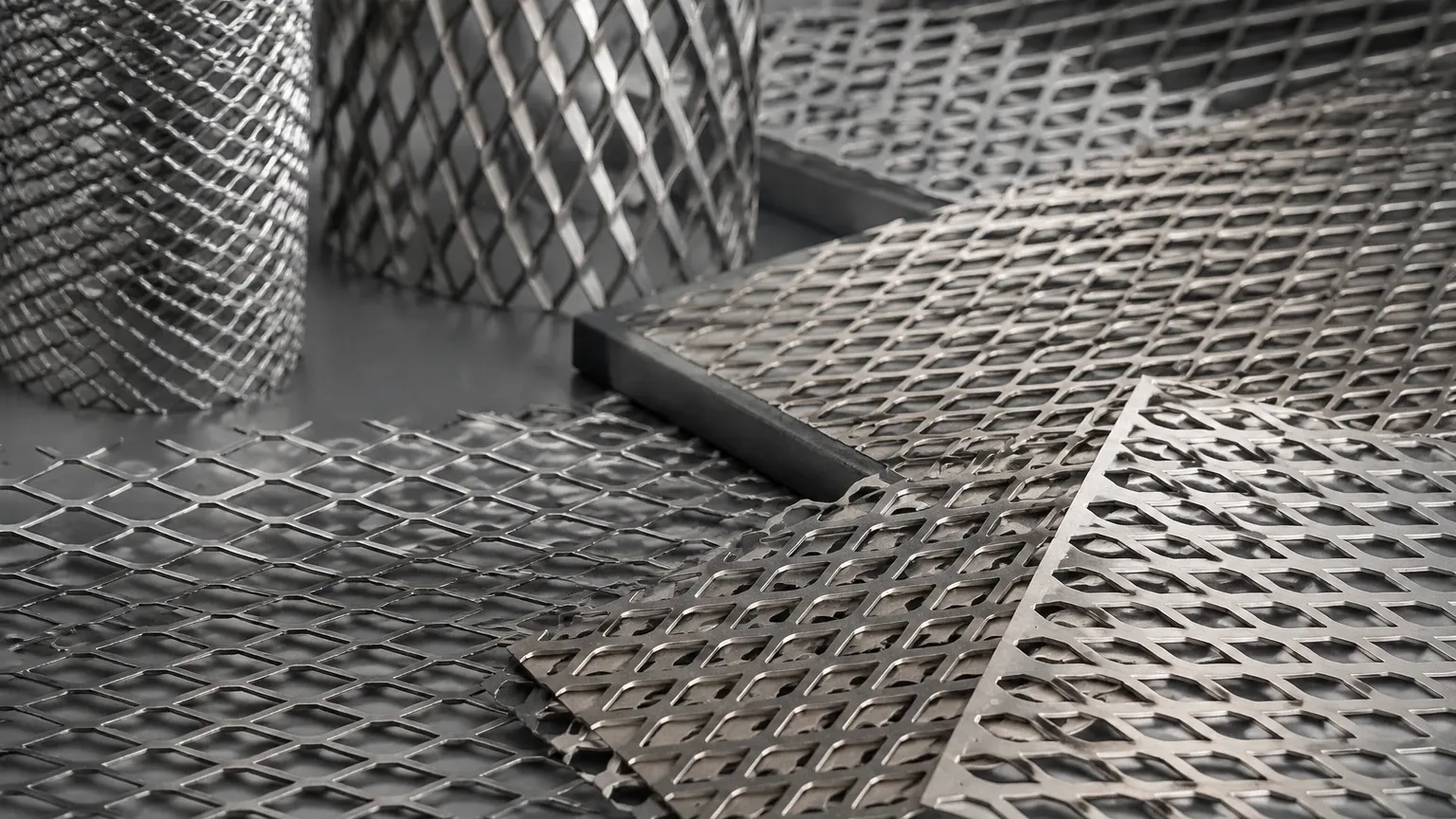
During production, a metal plate or coil is fed through a machine equipped with a reciprocating knife. This knife slits the metal at precise intervals while the machine stretches the material. The result is a series of diamond-shaped openings. The geometry of these openings is determined by the shape of the knife and the degree of the stretch, leading to a wide variety of expanded metal patterns tailored for specific industrial functions.
Understanding Key Expanded Metal Patterns
The geometry of the openings in expanded metal determines its performance characteristics, including its open area percentage, weight-to-strength ratio, and flow resistance. While the diamond pattern is the industry standard, variations exist to meet specific engineering requirements.
1. Standard (Raised) Expanded Metal
Standard expanded metal is the product as it comes off the expansion press. The strands and bonds (the intersections of the strands) are set at a uniform angle to the plane of the sheet. This creates a three-dimensional surface that provides excellent grip and high structural rigidity. In filtration, standard patterns are often used as support structures for finer filter media, as the raised strands create a space that facilitates fluid flow and prevents the finer mesh from blinding against a solid surface.
2. Flattened Expanded Metal
Flattened expanded metal is produced by passing the standard expanded sheet through a cold-roll reducing mill. This process flattens the strands and bonds into a single plane, reducing the overall thickness of the sheet and creating a smooth, two-dimensional surface. For filtration applications, flattened expanded metal patterns are preferred when the filter element requires a smooth exterior to prevent the accumulation of debris or when the component must fit into a tight tolerance housing. Flattening also increases the surface area of the strands, which can slightly alter the open area percentage.
3. Hexagonal Patterns
While the diamond shape is most common, hexagonal expanded metal patterns are engineered for applications requiring a higher open area. The hexagonal shape allows for greater fluid or gas throughput while maintaining significant structural strength. These patterns are frequently utilized in high-flow water treatment systems and air intake screens where minimizing pressure drop is a primary design objective.
4. Micro-Mesh Patterns
In precision industries like electronics and specialized chemical processing, micro-mesh expanded metal is used. These patterns feature extremely small openings, often measured in microns. Despite their small size, they retain the structural integrity of the base material, making them superior to thin woven meshes in applications where the filter must withstand mechanical vibration or high-velocity flows.
Technical Specifications and Evaluation Criteria
When specifying expanded metal patterns for an industrial project, engineers must use standardized terminology to ensure the manufacturer provides a product that meets the application's requirements. The following parameters are critical:
* SWD (Short Way of Design): The distance from the center of one bond to the center of the next bond measured across the short diamond diagonal.
* LWD (Long Way of Design): The distance from the center of one bond to the center of the next bond measured across the long diamond diagonal.
* SWO (Short Way of Opening): The actual width of the opening, measured from the inside of the bonds.
* LWO (Long Way of Opening): The actual length of the opening, measured from the inside of the bonds.
* Strand Width: The amount of metal fed into the machine between the slits.
* Strand Thickness: The thickness of the original base metal sheet.
* Open Area Percentage: A calculation of the ratio of the openings to the total area of the sheet. This is the most vital metric for filtration efficiency and pressure drop calculations.
Material Selection for Industrial Filtration
The environment in which the expanded metal will operate dictates the material choice. At Kaifil, we specialize in stainless steel filtration solutions because of their superior durability and resistance to harsh conditions.
* Stainless Steel 304: The standard grade for most industrial applications, offering good corrosion resistance and mechanical strength. It is commonly used in food and beverage processing and general industrial filtration.
* Stainless Steel 316L: Containing molybdenum, this grade offers enhanced resistance to chlorides and pitting. It is the preferred choice for pharmaceutical, marine, and chemical processing environments where the media is exposed to aggressive solvents or saline solutions.
* Specialty Alloys: For extreme temperatures or highly corrosive environments, expanded metal can be produced from nickel alloys, titanium, or Monel. These materials ensure that the expanded metal patterns maintain their structural integrity over long service cycles.
Engineering Considerations: Why Patterns Matter
Selecting the correct expanded metal pattern is not merely an aesthetic choice; it is a functional engineering decision. The pattern influences several key performance factors:
Structural Support and Pleat Spacing
In pleated filter cartridges, expanded metal is often used as an inner or outer support core. The pattern must be rigid enough to prevent the pleats from collapsing under high differential pressure. A standard diamond pattern with a high strand-to-opening ratio provides the necessary hoop strength for cylindrical filter elements.
Pressure Drop and Flow Dynamics
The open area of the pattern directly impacts the pressure drop across the filter. A pattern with a low open area will cause a higher pressure drop, requiring more energy for the pump or compressor to maintain flow. Conversely, a pattern with a very high open area may lack the strength to support the filtration media. Engineers must balance these two factors to achieve an optimal total cost of ownership.
Cleaning and Maintenance
In reusable filtration systems, the ability to clean the media is paramount. Flattened expanded metal patterns are generally easier to backwash or ultrasonic clean because they lack the crevices found in raised patterns where particles can become trapped. This reduces the risk of cross-contamination in pharmaceutical and food-grade applications.
Common Risks and Quality Verification
When sourcing expanded metal for critical industrial components, several risks must be mitigated through rigorous quality control:
1. Burrs and Sharp Edges: The slitting process can leave sharp edges. In applications involving sensitive membranes or human handling, these edges must be removed through deburring or electropolishing.
2. Dimensional Inconsistency: If the expansion process is not tightly controlled, the SWD and LWD can vary across the sheet, leading to uneven flow and potential weak points in the filter structure.
3. Material Fatigue: In high-vibration environments, the bonds of the expanded metal can become points of stress concentration. Selecting a pattern with wider bonds can improve the fatigue life of the component.
Before proceeding with a large-scale order, engineering teams should confirm the material certifications (MTRs), dimensional tolerances, and the specific mesh orientation (diamond direction) to ensure compatibility with their existing equipment.
Customization and OEM Solutions
Every industrial process has unique requirements that off-the-shelf products may not satisfy. Customization of expanded metal patterns allows for precise control over the filtration characteristics. Kaifil works closely with global customers to develop tailored solutions, from selecting the ideal strand width to designing custom dimensions for specific filter housings.
Whether the application requires a robust support cage for a hydraulic filter or a precision micro-mesh for a chemical reactor, the choice of expanded metal pattern is a foundational element of the design. By understanding the relationship between pattern geometry, material properties, and fluid dynamics, engineers can ensure their filtration systems operate with maximum efficiency and reliability.
For more information on selecting the right specifications for your project, you can Review product options and application support to find the most suitable configuration for your industrial needs.
