


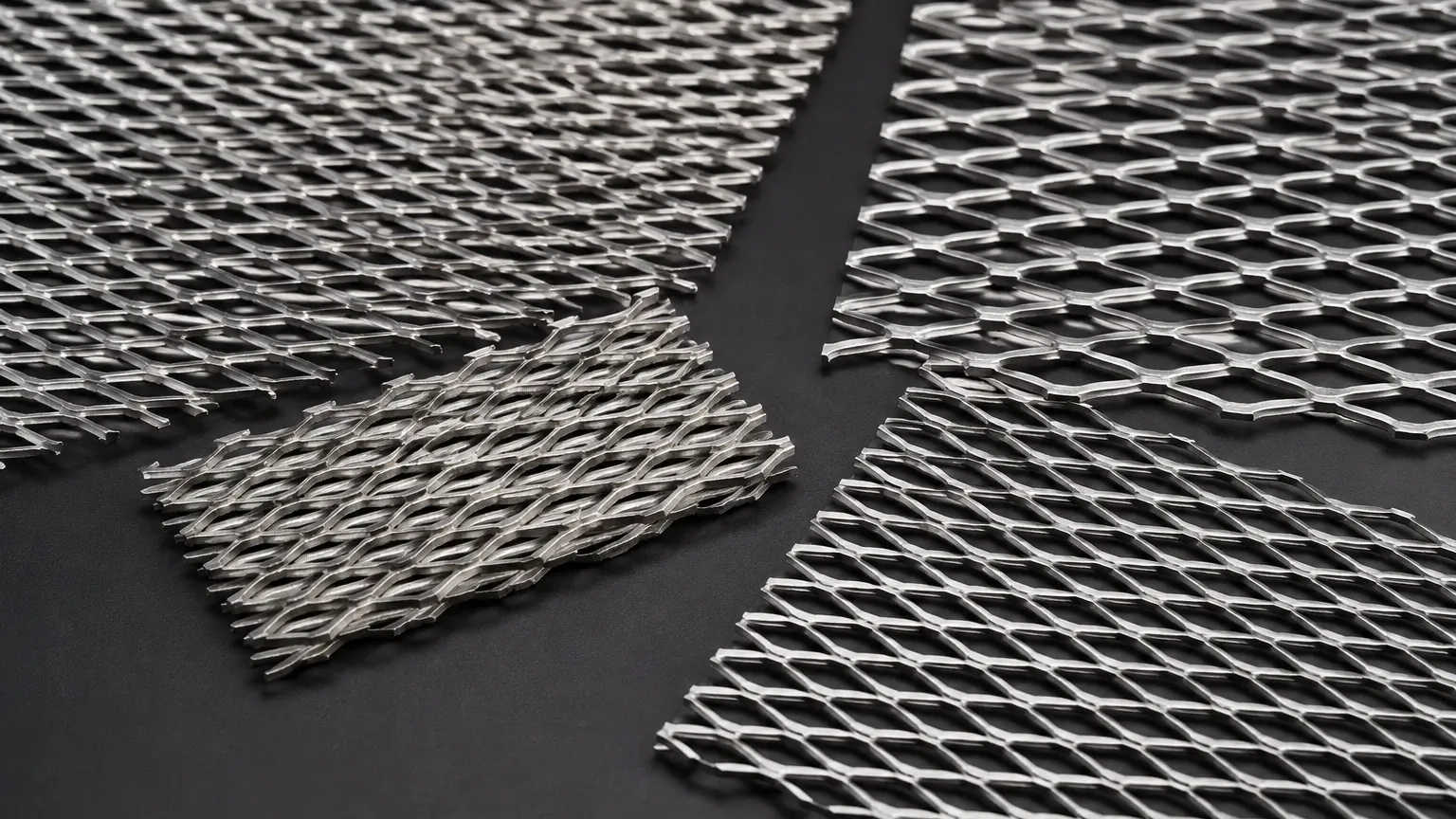
Picture of Expanded Metal
In the field of industrial filtration and structural engineering, a visual representation or a technical picture of expanded metal serves as more than just a reference; it is a critical tool for assessing the suitability of a material for specific mechanical and filtration requirements. For engineers and procurement professionals, understanding the nuances behind the geometry, material properties, and manufacturing tolerances of expanded metal is essential to ensuring long-term performance in demanding environments.
Expanded metal is produced by simultaneously slitting and stretching a solid sheet of metal, usually stainless steel or carbon steel, to create a diamond-shaped pattern. Unlike perforated metal, which involves punching holes and generating scrap material, the expansion process is highly efficient and results in a rigid, one-piece structure. When evaluating a picture of expanded metal for a project, technical stakeholders must look beyond the aesthetic pattern to analyze the strand width, bond characteristics, and the ratio of open area.
Understanding Expanded Metal Geometry and Terminology
To accurately interpret a picture of expanded metal, one must be familiar with the standardized terminology used in the industry. These dimensions dictate how the material will behave under pressure and how effectively it will function as a filtration medium or a support structure for finer meshes.
1. SWD (Short Way of Design): This is the distance from the center of one bond to the center of the next bond measured across the short diamond diagonal.
2. LWD (Long Way of Design): This is the distance from the center of one bond to the center of the next bond measured across the long diamond diagonal.
3. Strand Width: The amount of metal fed between the upper and lower dies to produce one strand.
4. Strand Thickness: The thickness of the original base metal before expansion.
5. Bonds: The intersections where the strands meet, forming the rigid diamond pattern.
When reviewing a picture of expanded metal, these dimensions determine the "open area" percentage. In filtration applications, the open area is a primary factor in calculating flow rates and pressure drops. A higher open area allows for greater throughput but may compromise the structural rigidity of the filter cartridge or support sleeve.
Visual Indicators of Quality in Industrial Expanded Metal
When an engineer requests a sample or a high-resolution picture of expanded metal, they are typically looking for indicators of manufacturing precision. At Kaifil, we emphasize that the quality of the expansion process directly impacts the integrity of the final filtration component.
Key visual and technical aspects to confirm include:
Uniformity of the Diamond Pattern
In a high-quality picture of expanded metal, the diamonds should be uniform in size and shape across the entire sheet. Variations in the diamond dimensions often indicate inconsistent tension during the stretching process or worn tooling. For filtration applications, non-uniformity can lead to bypass or uneven stress distribution, which eventually causes premature failure of the filter element.
Edge Cleanliness and Burrs
The slitting and stretching process can leave sharp edges or burrs. While some applications can tolerate these, precision filtration often requires deburred or polished surfaces to prevent the entrapment of contaminants or damage to sensitive filter media (such as fine wire mesh or synthetic membranes) that may be layered over the expanded metal. A clear picture of expanded metal will reveal whether the strands are clean or if they exhibit signs of tearing or jagged edges.
Bond Integrity
The bonds are the strongest points of the expanded metal. If the picture shows cracking or thinning at the bonds, the material may be prone to fatigue under cyclic pressure loads, common in hydraulic or chemical processing systems.
Comparing Standard (Raised) vs. Flattened Expanded Metal
One of the most important distinctions to make when viewing a picture of expanded metal is whether the material is "Standard" (Raised) or "Flattened." This choice significantly affects the physical profile and functionality of the component.
* Standard (Raised) Expanded Metal: In its raw state, the strands and bonds are set at a sharp angle to the plane of the sheet. This creates a 3D texture that provides excellent grip and high strength-to-weight ratios. In filtration, raised expanded metal is often used as a pre-filter or a protective outer cage because the angled strands can help deflect larger particles.
* Flattened Expanded Metal: This is produced by passing the standard expanded metal through a cold-roll reducing mill. The process flattens the strands and bonds into a single plane, resulting in a smooth, flat surface. Flattened metal is preferred when the expanded sheet serves as a support for thin filter papers or fine meshes, as it prevents the sharp angles of the raised strands from puncturing the primary filtration layer.
Engineers should specify which type they require based on the internal stack-up of their filter design. A picture of expanded metal in its flattened state will show a more two-dimensional appearance with slightly elongated diamonds compared to the raised version.
Material Selection for Corrosive Environments
In industrial filtration, the material of construction is as vital as the geometry. While a picture of expanded metal might look the same regardless of the alloy, the chemical compatibility is the deciding factor for longevity.
Kaifil specializes in Perforated & Expanded Metal solutions primarily using stainless steel grades such as 304, 316, and 316L.
* 304 Stainless Steel: Suitable for general industrial applications where basic corrosion resistance is required.
* 316/316L Stainless Steel: Essential for chemical processing, pharmaceutical, and marine environments. The addition of molybdenum provides superior resistance to pitting and crevice corrosion in chloride-rich environments.
* Specialty Alloys: For extreme temperatures or highly aggressive chemicals, alloys like Monel or Inconel may be used, though these are less common for standard expanded patterns.
When evaluating a picture of expanded metal for procurement, it is standard practice to confirm the material certification (MTR) alongside the visual sample to ensure the product meets the specific environmental demands of the application.
The Role of Expanded Metal in Filtration Support
Expanded metal is rarely used as a standalone fine filter. Instead, its primary role is providing structural reinforcement. In high-pressure hydraulic systems or large-scale water treatment plants, the primary filter media (such as sintered mesh or pleated paper) lacks the mechanical strength to withstand the differential pressure as it becomes loaded with contaminants.
By incorporating a rigid cylinder of expanded metal, the filter element can maintain its shape under high flow rates. When looking at a picture of expanded metal used in this context, engineers should consider the "flow direction." The orientation of the diamonds can influence how fluid moves through the outer cage and into the filter media.
Furthermore, expanded metal is often used as a "spacer" in multi-layered filter constructions. It creates a defined gap between layers, ensuring that the entire surface area of the primary filter media is accessible to the fluid, thereby optimizing the dirt-holding capacity and extending the replacement cycle.
Technical Specifications to Confirm Before Procurement
Before moving from a picture of expanded metal to a bulk order, purchasing teams and engineers should document and confirm several technical parameters with the manufacturer:
1. Dimensional Tolerances: What is the allowable variance in SWD and LWD? For custom filter housings, tight tolerances are necessary to ensure a proper fit.
2. Flattening Requirements: If the metal is flattened, what is the final thickness tolerance? Over-flattening can weaken the bonds, while under-flattening can leave protrusions.
3. Surface Treatment: Does the application require passivation, electropolishing, or a specific coating? For food and beverage or pharmaceutical applications, a smooth, passivated surface is mandatory to meet hygiene standards.
4. Sheet Orientation: Does the LWD run parallel to the length or the width of the sheet? This is crucial for rolling the metal into cylinders for filter cartridges.
5. Cleaning Standards: Industrial filters must be free of residual oils from the manufacturing process. Confirming the cleaning protocol (e.g., ultrasonic cleaning) is essential for oxygen service or high-purity chemical filtration.
Common Risks and Mitigation Strategies
Relying solely on a generic picture of expanded metal without detailed specifications can lead to several project risks. One common issue is "material fatigue." If the strand thickness is too thin for the intended pressure, the metal may stretch or deform, leading to a breach in the primary filter media.
Another risk is "media migration." If the expanded metal has sharp burrs, small fragments of the metal or the supported mesh could break off and enter the downstream flow, potentially damaging sensitive equipment like pumps or valves. To mitigate this, Kaifil recommends rigorous visual inspection and selecting manufacturers with advanced deburring capabilities.
Finally, ensure that the "picture of expanded metal" you are reviewing matches the actual manufacturing method. Some suppliers might provide images of perforated metal when expanded metal is requested; while both provide open area, their structural behaviors and cost profiles are significantly different. Expanded metal is generally more cost-effective for large-scale support structures because there is zero material waste during production.
Conclusion
A picture of expanded metal is the starting point for a complex engineering decision. By understanding the geometric terminology, the differences between raised and flattened profiles, and the critical importance of material selection, technical professionals can specify filtration components that offer the best balance of flow efficiency and structural durability.
Whether you are designing a custom hydraulic filter, a chemical strainer, or a protective cage for industrial equipment, the details found within the diamond pattern are the key to optimized performance. For those requiring precise specifications and high-quality manufacturing, reviewing professional Perforated & Expanded Metal options ensures that the final product aligns with the rigorous demands of modern industrial applications.
