


Plain Steel Expanded Metal
In industrial engineering and filtration design, selecting the appropriate structural support material is as critical as the filtration media itself. Plain steel expanded metal represents a fundamental component in the construction of robust filtration systems, providing the necessary mechanical strength to withstand high-pressure differentials while maintaining the desired flow characteristics. Unlike perforated sheets that are created by punching holes and removing material, expanded metal is manufactured through a process of simultaneous slitting and stretching, resulting in a continuous, jointless mesh that offers a high strength-to-weight ratio.
For engineers and procurement teams, understanding the technical nuances of plain steel expanded metal is essential for optimizing the performance and longevity of industrial filter assemblies. This material serves as the backbone for various filtration products, including air intake filters, hydraulic fluid strainers, and liquid processing components, where structural integrity and cost-efficiency must be balanced.
The Manufacturing Process and Structural Integrity
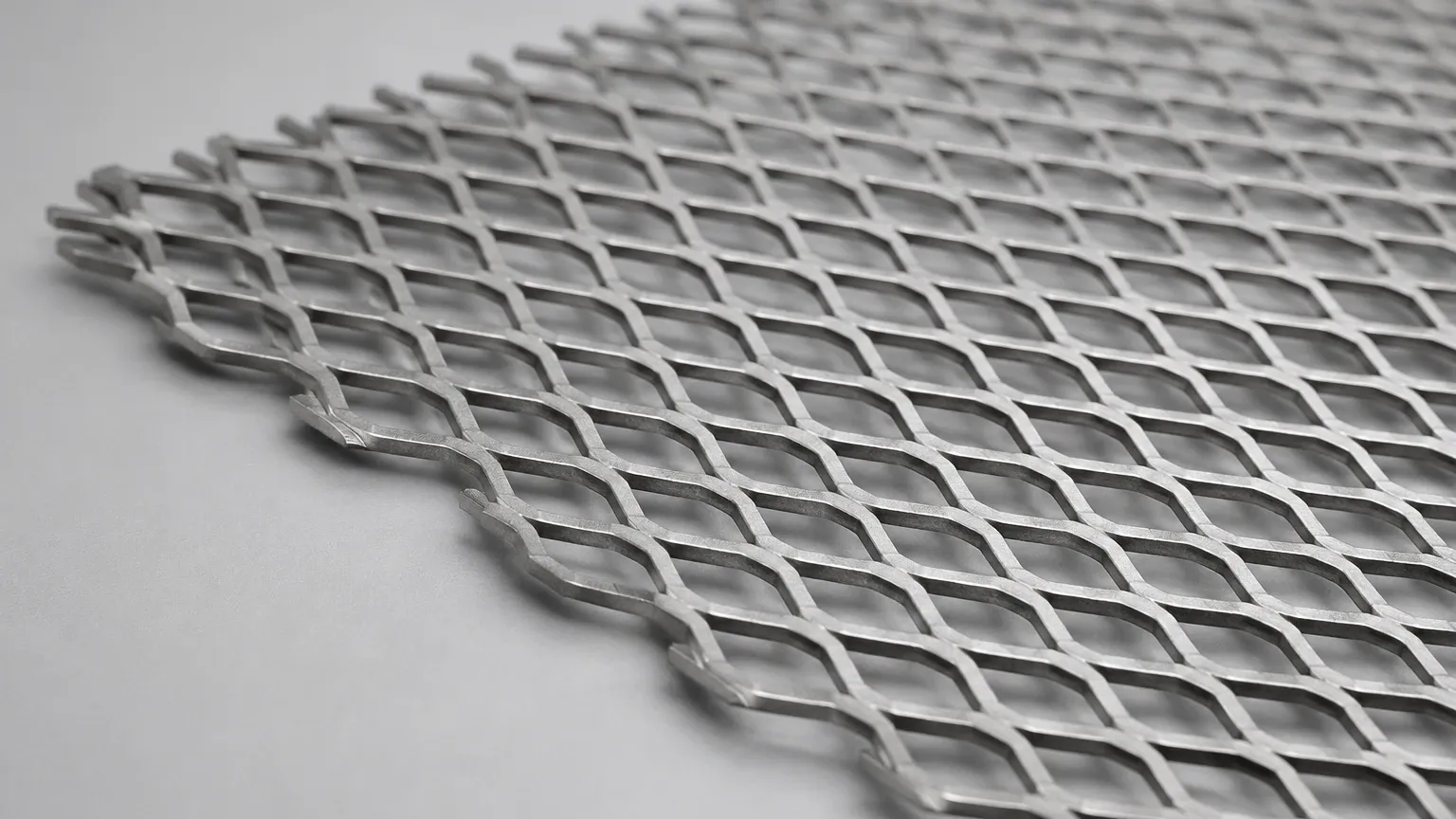
The production of plain steel expanded metal begins with a solid sheet of low-carbon or mild steel. A specialized machine slits and expands the metal in a single motion. This process creates diamond-shaped openings while leaving the strands of the metal interconnected without any welds or joints. Because the material is stretched rather than punched, there is virtually no scrap produced during manufacturing, making it a highly resource-efficient option compared to other Perforated & Expanded Metal products.
The lack of welds is a significant engineering advantage. In high-vibration environments or applications subject to thermal cycling, welded joints can become points of mechanical failure due to fatigue. The monolithic structure of expanded metal ensures that stresses are distributed evenly across the entire sheet, enhancing the overall durability of the filter housing or support cage.
Technical Specifications: SWD, LWD, and Strand Geometry
When specifying plain steel expanded metal for an industrial application, engineers must define several key geometric parameters that dictate both the mechanical properties and the filtration performance of the component:
* SWD (Short Way of Diamond): The distance from the center of one bond to the center of the next bond measured across the short axis of the diamond.
* LWD (Long Way of Diamond): The distance measured across the long axis of the diamond.
* Strand Width: The amount of metal fed into the machine between the slits, which determines the thickness of the individual "ribs" of the mesh.
* Strand Thickness: The original thickness of the base metal sheet.
* Open Area Percentage: This is perhaps the most critical value for filtration. It represents the ratio of the area of the openings to the total area of the sheet. A higher open area reduces pressure drop (Delta P) but may decrease the structural rigidity of the part.
By adjusting these variables, manufacturers like Kaifil can customize the mesh to meet specific load-bearing requirements or flow rate targets. For instance, a narrower strand width with a larger SWD will maximize airflow in HVAC pre-filters, while a thicker strand with a smaller diamond pattern is preferred for supporting heavy-duty hydraulic filter elements.
Raised vs. Flattened Expanded Metal
One of the primary decisions an engineer must make when selecting plain steel expanded metal is whether to use the "raised" or "flattened" variety.
Raised Expanded Metal
Standard or raised expanded metal comes off the machine with the strands set at an angle to the plane of the sheet. This creates a three-dimensional surface that provides excellent grip and high rigidity. In filtration, the raised profile can be used to create turbulence in the fluid stream, which may be beneficial in certain mixing or heat exchange applications. However, the angular edges can be sharp, which must be considered if the mesh will be in direct contact with delicate synthetic filter media.
Flattened Expanded Metal
Flattened expanded metal is produced by passing the standard expanded sheet through a cold-roll reducing mill. This process flattens the strands and bonds into a single plane, reducing the overall thickness and creating a smooth surface. Flattened mesh is often preferred as a support layer for fine wire cloth or non-woven membranes. The smooth surface prevents the fine media from being abraded or punctured under high pressure, ensuring the integrity of the micronic filtration layer.
Engineering Considerations for Plain Steel
While stainless steel is often the default choice for corrosive environments, plain steel expanded metal remains a staple in industrial applications due to its specific mechanical and economic properties.
Strength and Ductility
Low-carbon plain steel offers excellent ductility, allowing it to be easily formed into cylindrical or conical shapes for filter cartridges. Its yield strength is sufficient for most industrial support applications, provided the operating environment does not lead to rapid oxidation. In many hydraulic systems, the presence of oil actually protects the plain steel from corrosion, making it a technically sound and cost-effective choice.
Thermal Conductivity
Plain steel has higher thermal conductivity than many stainless steel alloys. In applications where the filter also acts as a minor heat sink or where temperature stabilization of the fluid is required, the thermal properties of the support mesh can play a role in the overall system design.
Coating and Surface Treatment
To extend the service life of plain steel expanded metal in mildly corrosive or humid environments, various surface treatments can be applied. Common options include galvanizing, powder coating, or electroplating (such as zinc or chrome plating). These treatments provide a barrier against moisture while maintaining the structural benefits of the steel core. For many B2B buyers, a galvanized plain steel mesh offers the best balance between corrosion resistance and total project cost.
Applications in Industrial Filtration
Plain steel expanded metal is utilized across a broad spectrum of industries, serving various functions within the filtration assembly:
1. Support Cores for Cartridges: In high-pressure liquid filtration, the filter media (such as pleated paper or fiberglass) would collapse without internal support. A cylinder of expanded metal provides the necessary hoop strength to resist inward pressure.
2. Outer Protective Cages: For large industrial air filters, an outer wrap of expanded metal protects the delicate media from mechanical damage during handling, installation, and operation.
3. Pre-filtration and Trash Racks: In water treatment or heavy industrial intake systems, coarse expanded metal acts as a primary barrier to remove large debris before the fluid reaches the finer filtration stages.
4. Flame Arrestors: The specific geometry of expanded metal can be used to dissipate heat and prevent the passage of flames in specialized ventilation systems.
Selection Criteria: Choosing the Right Mesh
When evaluating plain steel expanded metal for a new project, engineers should consider the following checklist to ensure the selected material meets the application's demands:
* Pressure Drop Requirements: Calculate the required open area to ensure the mesh does not become a bottleneck in the system. Even a small change in strand width can significantly impact the flow coefficient.
* Mechanical Load: Determine the maximum pressure the filter will encounter, including surge pressures. This dictates the required thickness and diamond size of the expanded metal.
* Media Compatibility: Ensure that the finish of the metal (raised vs. flattened) is compatible with the primary filtration media to avoid mechanical wear.
* Environmental Exposure: Assess the chemical composition of the fluid and the ambient atmosphere. If the fluid is non-corrosive (like most lubricating oils), plain steel is ideal. If moisture or acidic vapors are present, consider protective coatings or a transition to stainless steel.
* Fabrication Needs: Will the mesh be welded, bolted, or crimped? Plain steel is exceptionally easy to weld using standard MIG or TIG processes, which simplifies the assembly of custom filter housings.
Customization and OEM Capabilities
At Kaifil, we recognize that standard off-the-shelf expanded metal often fails to meet the precise requirements of specialized industrial filtration. Customization is key to achieving optimal performance. Our manufacturing processes allow for the adjustment of diamond dimensions, strand thickness, and overall sheet size to fit specific filter designs.
OEM customers benefit from our ability to provide precision-cut pieces that are ready for immediate integration into production lines. By controlling the tolerances of the expansion process, we ensure that every batch of plain steel expanded metal provides consistent flow resistance and structural strength, which is vital for maintaining the certified performance of industrial filtration equipment.
Total Cost of Ownership (TCO)
From a procurement perspective, plain steel expanded metal offers a compelling TCO. The primary cost drivers are the raw material weight and the complexity of the expansion pattern. Because the expansion process adds value without wasting material, the per-unit cost is generally lower than that of perforated metal of similar strength. Furthermore, the ease of machining and welding plain steel reduces labor costs during the final assembly of the filtration system.
However, the TCO calculation must also include the replacement cycle. In environments where plain steel may eventually oxidize, engineers must weigh the lower initial cost against the potential for more frequent maintenance. In many closed-loop industrial systems, the longevity of plain steel is more than sufficient, making it the most economical choice over the equipment's lifecycle.
Conclusion
Plain steel expanded metal is a versatile, high-performance material that remains indispensable in the world of industrial filtration. Its unique combination of structural rigidity, high open area, and cost-effectiveness makes it the preferred choice for support structures and protective components. By carefully selecting the diamond geometry, strand profile, and surface finish, engineers can design filtration systems that are both durable and efficient.
For technical teams seeking reliable filtration components, partnering with a manufacturer that understands the engineering requirements of Perforated & Expanded Metal is essential. Whether you are designing a new hydraulic system or optimizing a chemical processing filter, the correct application of plain steel expanded metal ensures that your filtration media can perform its job without the risk of structural failure.
