


Plastic Expanded Metal
In industrial engineering and filtration design, the selection of structural support and media protection materials is critical to the longevity and efficiency of the system. While stainless steel remains the gold standard for high-pressure and high-temperature environments, plastic expanded metal has emerged as a specialized alternative for applications requiring chemical inertness, lightweight properties, and electrical insulation.
Produced through a process of simultaneous slitting and stretching, plastic expanded metal creates a continuous, jointless mesh structure. Unlike woven materials, it does not unravel when cut, and unlike perforated materials, the manufacturing process generates zero waste, making it a cost-effective solution for large-scale industrial use. For engineers and procurement teams, understanding the technical nuances of this material is essential for optimizing filtration performance and structural integrity.
Understanding Plastic Expanded Metal in Industrial Filtration
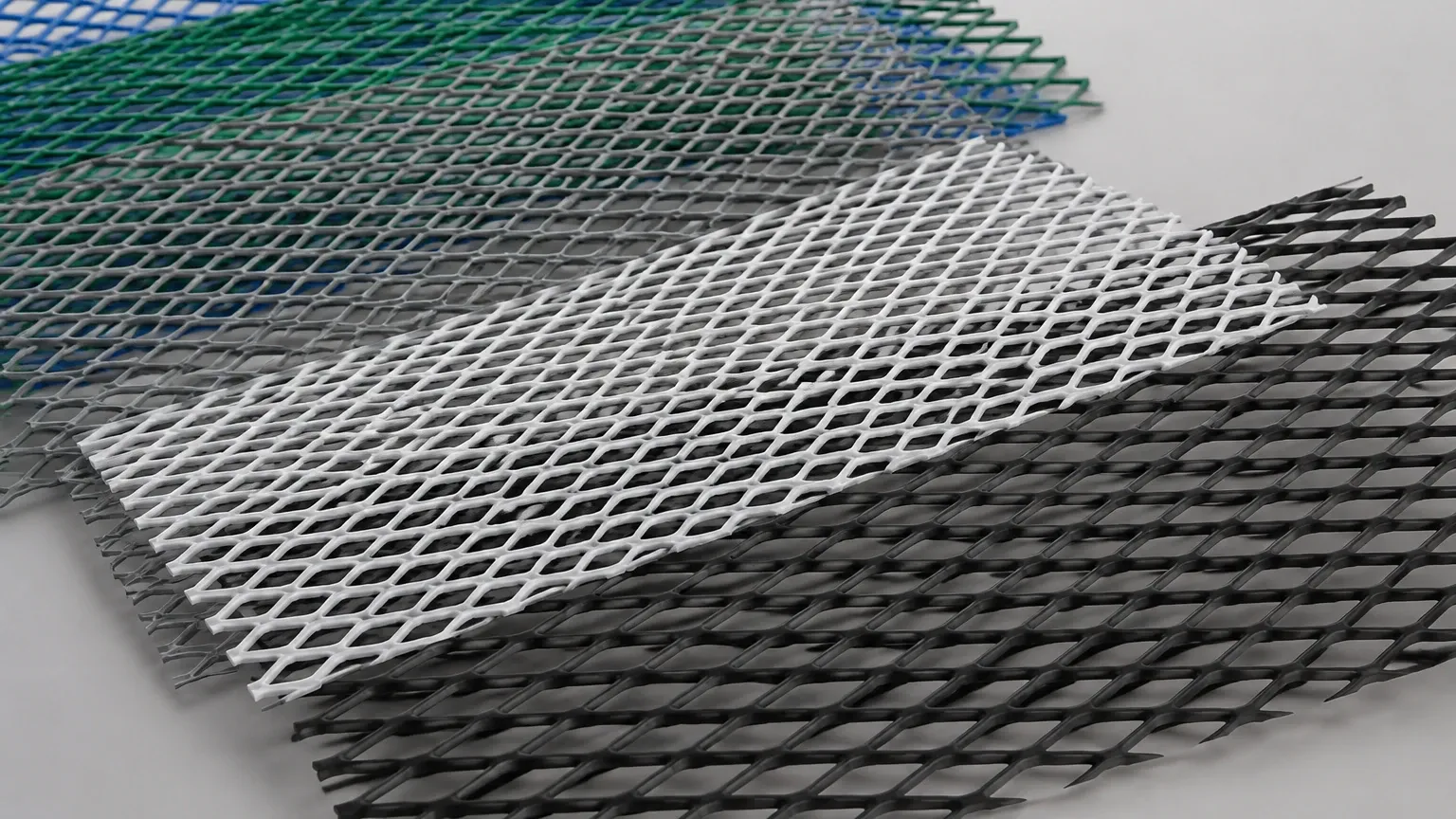
Plastic expanded metal is manufactured from thermoplastic sheets, including Polypropylene (PP), Polyethylene (PE), and High-Density Polyethylene (HDPE). The production method involves a reciprocating knife that slits the plastic sheet while it is stretched. This results in a diamond-shaped or hexagonal opening pattern with integrated strands and bonds.
In the context of industrial filtration, this material serves several primary functions:
* Support Cores: It provides a rigid internal structure for pleated filter media, preventing collapse under differential pressure.
* Outer Protectors: It acts as a protective cage for delicate filter elements, shielding them from mechanical damage during installation or backwashing.
* Spacers and Drainage Layers: In multi-layer filtration systems, it maintains consistent spacing between layers of fine wire mesh or synthetic membranes, ensuring uniform fluid flow.
Because the material is expanded rather than punched, the strands are often angled. This three-dimensional geometry can be advantageous in fluid dynamics, as it can induce turbulence that prevents the premature blinding of the filter surface in certain liquid-solid separation processes.
Material Selection and Engineering Properties
The performance of plastic expanded metal is dictated by the polymer used in its construction. Engineers must match the material properties to the specific chemical and thermal demands of the application.
Polypropylene (PP)
Polypropylene is the most common choice for industrial filtration. It offers excellent resistance to organic solvents, acids, and alkalis. With a higher melting point than polyethylene, it can typically operate in environments up to 80°C (176°F) without significant loss of structural rigidity. It is frequently used in water treatment and chemical processing filters.
High-Density Polyethylene (HDPE)
HDPE is selected for its superior toughness and low-temperature performance. It is highly resistant to moisture and many chemicals, though it has a lower temperature threshold than PP. Its flexibility makes it ideal for applications where the mesh must be wrapped around small-diameter filter cores.
Polyvinyl Chloride (PVC) and Specialty Polymers
For applications requiring flame retardancy or specific UV resistance, PVC or specialized fluoropolymers may be used. These are less common in standard filtration but critical in niche chemical scrubbing and outdoor environmental monitoring equipment.
Critical Design Parameters: Mesh Size and Open Area
When specifying plastic expanded metal, technical professionals must look beyond the base material and evaluate the geometric configuration. The performance of the mesh is defined by several key measurements:
1. LWD (Long Way of Design): The distance from the center of one bond to the center of the next bond across the long axis of the diamond.
2. SWD (Short Way of Design): The distance across the short axis of the diamond.
3. Strand Width and Thickness: These dimensions determine the mechanical strength and the total weight of the mesh.
4. Open Area Percentage: This is the most critical factor for filtration engineers. It represents the ratio of the area of the openings to the total area of the sheet. A higher open area reduces pressure drop but may compromise the structural support of the filter media.
For example, a mesh with a 60% open area may be suitable for a protective outer wrap, whereas a 40% open area with thicker strands might be required for an internal support core subject to high hydraulic pressure. Engineers should request flow-rate versus pressure-drop data when integrating these materials into a new filter housing design.
Comparative Analysis: Plastic vs. Perforated & Expanded Metal
Choosing between polymer-based solutions and traditional Perforated & Expanded Metal is a common challenge in B2B procurement. Each has distinct advantages depending on the operational environment.
Corrosion Resistance
Stainless steel expanded metal is highly resistant to corrosion, but in certain highly acidic or saline environments, even high-grade alloys like 316L can undergo pitting. Plastic expanded metal is inherently immune to electrochemical corrosion, making it the preferred choice for seawater desalination and aggressive chemical baths.
Weight and Handling
Plastic is significantly lighter than metal. This reduces the overall weight of the filtration assembly, which is a key consideration in mobile equipment, aerospace applications, or systems where manual handling and replacement are frequent. However, the lower density comes at the cost of lower tensile strength.
Thermal and Mechanical Limits
Metal expanded mesh can withstand temperatures exceeding 500°C and maintains its shape under extreme mechanical stress. Plastic expanded metal is limited to much lower temperatures and can exhibit "creep" (gradual deformation) under constant high-pressure loads. In high-pressure hydraulic systems, stainless steel remains the necessary standard.
Cost Considerations
Plastic expanded metal generally offers a lower initial material cost and lower shipping costs due to its weight. However, the total cost of ownership must account for the replacement cycle. If a metal filter can be cleaned and reused ten times while a plastic filter must be discarded after one use, the metal solution may be more cost-effective over a five-year period.
Industrial Applications and Use Cases
The versatility of plastic expanded metal allows it to be utilized across various sectors beyond simple filtration support.
* Chemical Processing: Used as electrode separators in electrolytic cells and as packing support in gas scrubbing towers where metal would corrode rapidly.
* Food and Beverage: FDA-compliant grades of PP and PE are used in dewatering belts and fruit processing trays. The smooth surface of plastic is often easier to sanitize in low-temperature food environments.
* Water Treatment: In Reverse Osmosis (RO) systems, plastic expanded mesh serves as a feed spacer, maintaining the gap between membrane layers to allow for turbulent flow and minimize concentration polarization.
* Electrochemical Applications: Because plastics are non-conductive, they are used as insulating spacers in battery manufacturing and fuel cell stacks.
Procurement and Customization: What Engineers Need to Confirm
Before finalizing a purchase order for plastic expanded metal, engineering and purchasing teams should confirm several technical details with the manufacturer to ensure the product meets application requirements.
Chemical Compatibility Verification
It is not enough to specify "plastic." Engineers must provide the full chemical profile of the fluid being filtered, including trace contaminants and the maximum operating temperature. A polymer that is stable at 20°C may degrade rapidly at 60°C in the presence of certain surfactants or hydrocarbons.
Dimensional Tolerances
In precision filtration components, even slight variations in LWD or SWD can affect the fitment of the mesh into a cartridge assembly. Confirm the manufacturer’s tolerances for strand width and overall sheet thickness. For OEM applications, automated cutting and forming require high consistency to prevent machine downtime.
Edge Treatment and Finishing
Expanded metal has naturally sharp edges where the strands are cut. For many industrial applications, these edges need to be bonded, framed, or ultrasonic-welded to prevent them from puncturing the filter media or injuring personnel during maintenance. Discussing edge finishing options during the design phase can prevent failures in the field.
Compliance and Certification
For pharmaceutical and food-grade applications, ensure the raw resin used in the expansion process is certified (e.g., FDA, REACH, or RoHS compliant). Manufacturers should be able to provide Material Test Reports (MTRs) and certificates of conformance upon request.
Conclusion
Plastic expanded metal is a high-performance engineering material that offers unique advantages in weight, chemical resistance, and cost-efficiency. While it does not replace the structural dominance of stainless steel in high-heat or high-pressure scenarios, it is an indispensable component in modern filtration and industrial design. By carefully evaluating material properties, mesh geometry, and environmental constraints, engineers can select the optimal expanded solution to enhance the reliability and performance of their industrial systems. Whether used as a standalone mesh or as a support for complex filter elements, this material continues to evolve with new polymer blends and precision manufacturing techniques.
