


Expanded Metal Qatar
In the rapidly evolving industrial landscape of the Middle East, particularly within Qatar’s petrochemical, desalination, and construction sectors, the demand for high-performance materials is governed by extreme environmental conditions. Expanded metal, a versatile material produced by simultaneously slitting and stretching metal sheets, has become a critical component in both structural and filtration applications. For engineers and procurement specialists sourcing expanded metal qatar, understanding the technical nuances of material selection, mesh geometry, and corrosion resistance is essential to ensuring long-term operational reliability.
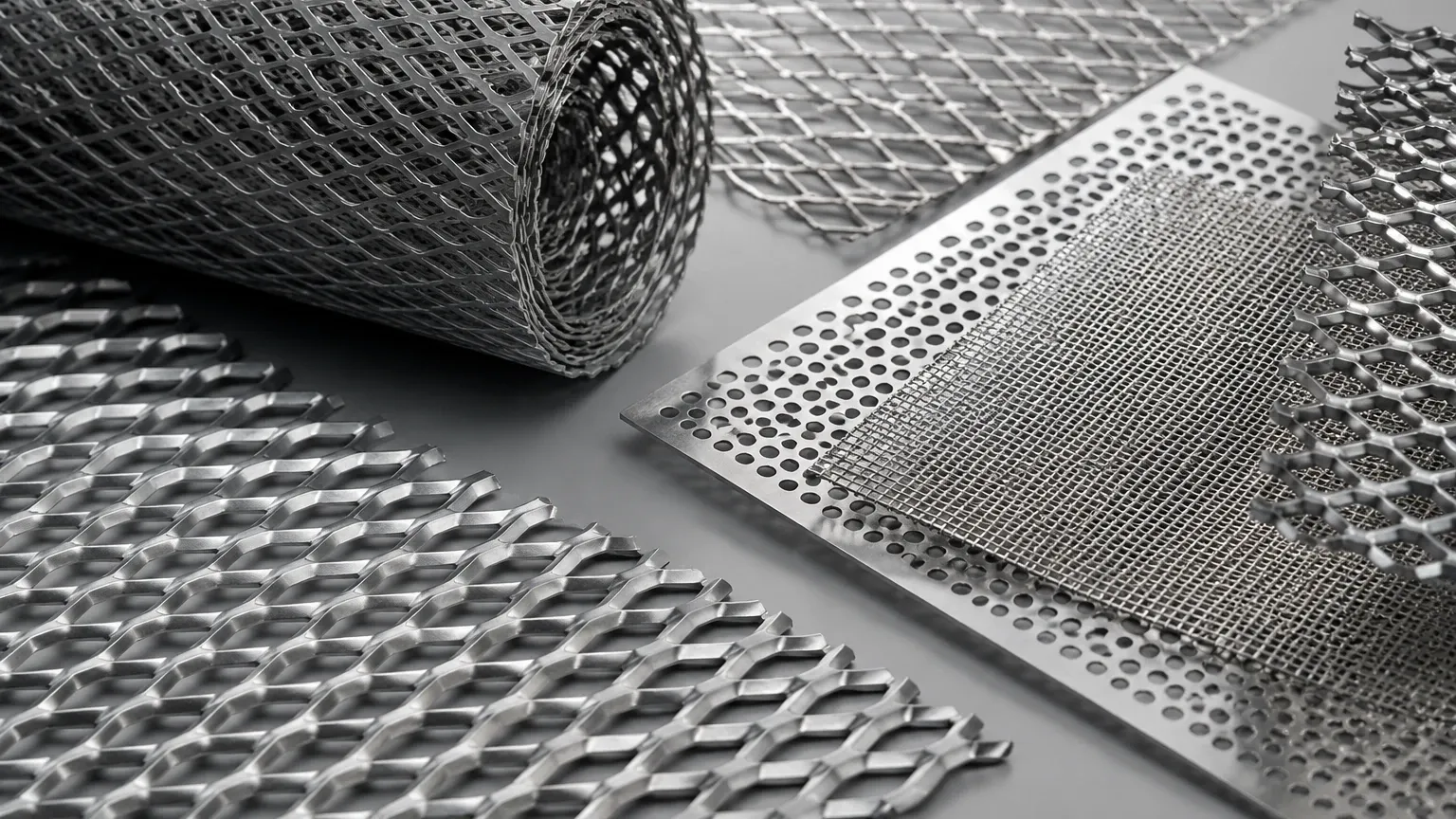
Unlike perforated metal, which involves punching holes and generating scrap, the expansion process creates a diamond-shaped mesh without any material loss. This results in a high strength-to-weight ratio and a unique structural integrity where the strands and bonds form a one-piece construction. When specifying Perforated & Expanded Metal for industrial projects, technical professionals must evaluate how these materials perform under the specific stressors of the Gulf region, including high humidity, airborne salinity, and extreme thermal fluctuations.
Technical Characteristics of Expanded Metal
The manufacturing of expanded metal involves a precision shearing and stretching process. This creates a series of diamond-shaped openings that are integral to the sheet, rather than joined or welded. This lack of joins makes the material exceptionally strong and resistant to unraveling, even when cut into irregular shapes.
Geometry and Terminology
To accurately specify expanded metal, engineers use four primary measurements:
1. SWD (Short Way of Design): The distance from the center of one bond to the center of the next bond across the short diamond diagonal.
2. LWD (Long Way of Design): The distance from the center of one bond to the center of the next bond across the long diamond diagonal.
3. Strand Width: The amount of metal fed into the machine for each stroke.
4. Strand Thickness: The thickness of the original base metal sheet.
In filtration and industrial support applications, the "open area" percentage is a critical calculation. This determines the flow rate of fluids or air and the pressure drop across the mesh. For projects involving expanded metal qatar, where dust and sand filtration are often required alongside fluid processing, the precision of these diamond dimensions directly impacts the efficiency of the entire system.
Material Engineering for the Qatar Environment
The environmental conditions in Qatar present significant challenges for metal components. The combination of high ambient temperatures and proximity to the sea creates a highly corrosive atmosphere. Selecting the correct alloy is the most important factor in preventing premature failure due to pitting or stress corrosion cracking.
Stainless Steel Grades
For most industrial applications in the region, stainless steel is the preferred substrate.
* Grade 304: Suitable for indoor applications or controlled environments where moisture levels are moderate. However, it may struggle in coastal outdoor settings.
* Grade 316/316L: The industry standard for expanded metal qatar in marine and chemical processing environments. The addition of molybdenum provides superior resistance to chloride-induced corrosion, which is prevalent in the Gulf.
* Duplex Stainless Steel: For high-pressure hydraulic systems or aggressive chemical filtration, duplex grades offer higher yield strength and even greater corrosion resistance, though they require specialized manufacturing expertise.
Surface Treatments
Beyond material selection, surface finishes such as electro-polishing or specialized coatings can further enhance the lifespan of the mesh. Electro-polishing is particularly valuable in the pharmaceutical and food and beverage industries, as it removes surface impurities and creates a microscopically smooth finish that prevents bacterial growth and eases the cleaning process.
Industrial Applications in Qatar’s Key Sectors
Expanded metal is utilized across a broad spectrum of industries in Qatar, ranging from heavy oil and gas infrastructure to advanced water treatment facilities.
Oil, Gas, and Petrochemicals
In the upstream and downstream sectors, expanded metal serves as a robust support structure for filter media in gas processing units. It is also used for safety walkways, stair treads, and machinery guards. Its anti-slip properties and ability to allow debris and liquids to pass through make it an ideal choice for offshore platforms and refinery environments.
Desalination and Water Treatment
Qatar’s reliance on desalination requires filtration components that can withstand constant exposure to brine. Expanded metal is used as a primary screen or as a support cage for fine wire mesh filters in reverse osmosis (RO) systems. The structural rigidity of the expanded metal ensures that the delicate filter media does not collapse under high pressure.
Architectural and HVAC Systems
In the construction of high-rise buildings and industrial warehouses, expanded metal is frequently used for sunscreens and HVAC intake louvers. The angled strands of the mesh provide natural shading while maintaining airflow, which is vital for reducing cooling loads in the desert climate. When used in HVAC systems, it acts as a pre-filter, capturing large particulates before they reach the secondary filtration stages.
Comparing Perforated and Expanded Metal
While both materials are used for similar functions, the choice between perforated and expanded metal often comes down to specific engineering requirements.
| Feature | Expanded Metal | Perforated Metal |
| :— | :— | :— |
| Material Waste | Zero (stretched) | High (slugs punched out) |
| Strength | High (one-piece structure) | Moderate (holes can weaken sheet) |
| Weight | Lighter per square meter | Heavier per square meter |
| Aesthetics | Three-dimensional, textured | Flat, uniform |
| Cost | Generally lower due to no waste | Higher due to material loss |
For engineers looking for expanded metal qatar, the cost-effectiveness of expanded metal often makes it the preferred choice for large-scale industrial enclosures and support grids. However, perforated metal may be chosen when specific circular hole patterns are required for precision mechanical sorting.
Selection Criteria and Engineering Considerations
When transitioning from a design phase to procurement, several technical factors must be confirmed to ensure the expanded metal meets the application's demands.
1. Load-Bearing Requirements: If the metal is used for flooring or shelving, the LWD should generally run parallel to the span to maximize structural strength.
2. Filtration Accuracy: In filtration applications, the mesh acts as a substrate. The relationship between the expanded metal's open area and the flow velocity must be modeled to avoid excessive turbulence or pressure spikes.
3. Tolerances: Standard industrial tolerances may not suffice for precision metal filter components. It is crucial to specify dimensional tolerances for sheet size, flatness, and diamond uniformity.
4. Installation Methods: Consider how the expanded metal will be attached to the frame. Welding, bolting, or clamping are common, but the method must account for the thermal expansion of the metal, which can be significant in the Qatar heat.
Quality Assurance and Procurement Standards
Sourcing expanded metal qatar requires a rigorous verification of quality standards. Because these components often operate in critical systems where failure can lead to expensive downtime or safety hazards, purchasing teams should demand comprehensive documentation.
* Material Mill Certificates: Verification of the chemical composition of the steel (e.g., ensuring 316L actually contains the required molybdenum levels).
* Dimensional Inspection Reports: Confirmation that the SWD, LWD, and strand dimensions fall within the specified tolerances.
* Compliance with International Standards: Most industrial expanded metal is produced according to standards such as ASTM F1267 or equivalent ISO benchmarks, which define the classes and grades of the material.
Working with a manufacturer that offers OEM and customized filtration solutions allows for the development of bespoke components. This is particularly relevant for specialized hydraulic systems or unique chemical processing vessels found in Qatar’s industrial zones, where off-the-shelf products may not meet the exact spatial or performance constraints.
Total Cost of Ownership (TCO)
In the B2B procurement cycle, the initial purchase price of expanded metal is only one component of the total cost. In harsh environments, the frequency of replacement and the ease of maintenance are more significant drivers of value. High-quality stainless steel expanded metal may have a higher upfront cost than galvanized alternatives, but its resistance to the corrosive Qatari atmosphere ensures a significantly longer service life, reducing the frequency of shutdowns and replacement labor costs.
Furthermore, the lightweight nature of expanded metal reduces shipping costs and simplifies onsite installation, providing additional savings during the construction phase of a project.
Conclusion
Expanded metal remains a cornerstone of industrial design in Qatar, providing a unique combination of strength, transparency, and durability. Whether it is used as a support structure in a desalination plant’s filtration system or as a protective barrier in an oil refinery, the material’s performance is dictated by the precision of its manufacture and the suitability of its alloy. By focusing on technical specifications—such as diamond geometry, material grade, and load-bearing orientation—engineers can ensure that their choice of expanded metal qatar contributes to the efficiency and longevity of their industrial operations. For those requiring specialized configurations or integrated filtration components, partnering with a manufacturer capable of precision customization is the most effective path to optimizing system performance.
