


Expanded Metal Manufacturing Qatar
In the rapidly evolving industrial landscape of the Middle East, particularly within Qatar’s energy, construction, and water treatment sectors, the demand for high-performance materials is at an all-time high. Expanded metal, a versatile material created by slitting and stretching metal sheets, has become a cornerstone for engineers seeking a balance between structural integrity and permeability. For those involved in expanded metal manufacturing qatar, understanding the technical nuances of production, material science, and application-specific engineering is essential for ensuring long-term performance in harsh environments.
Unlike perforated metal, which is created by punching holes and removing material, expanded metal is manufactured through a process that involves no waste. This makes it an inherently cost-effective and sustainable choice for large-scale industrial projects. In Qatar’s specific climate—characterized by high temperatures, humidity, and salinity—the selection of the right expanded metal specification is not merely a matter of cost, but of engineering necessity.
Understanding the Expanded Metal Manufacturing Process
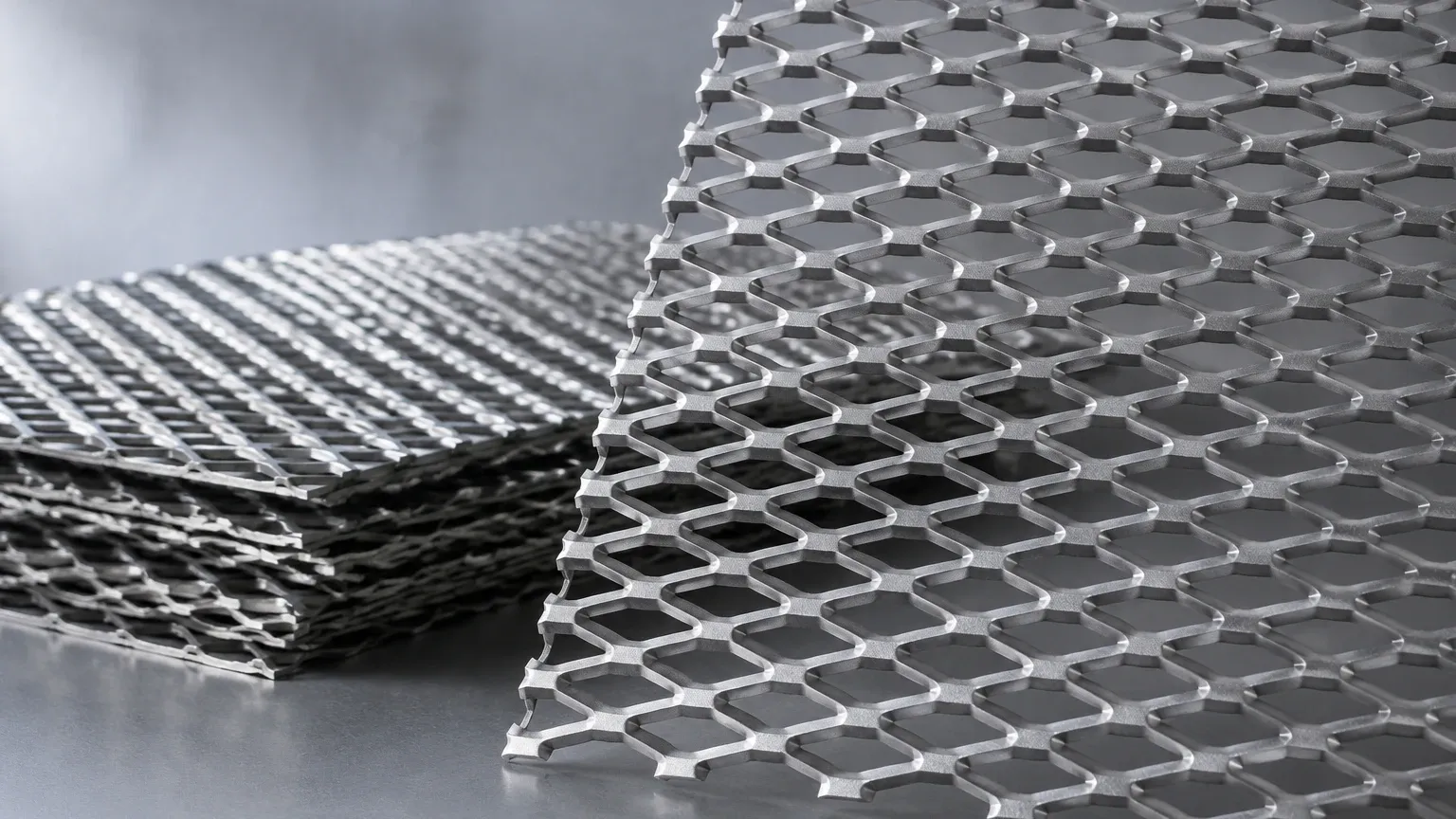
The manufacturing of expanded metal is a precision engineering task. It begins with a solid sheet or coil of metal, typically stainless steel, carbon steel, or aluminum. The sheet is fed through a machine equipped with a specialized knife that performs two simultaneous actions: it slits the metal and stretches it in a single motion.
This process creates a series of diamond-shaped openings. Because the metal is stretched rather than cut out, the resulting mesh is often stronger than the original sheet. The "strands" and "bonds" (the points where the strands meet) are set at an angle to the plane of the sheet, providing inherent structural rigidity. For industrial filtration and support applications, this three-dimensional structure is advantageous as it provides more surface area and better mechanical grip for secondary filter media.
In the context of expanded metal manufacturing qatar, the focus often shifts to precision tolerances. Engineers must specify the Long Way of the Diamond (LWD) and the Short Way of the Diamond (SWD), as well as the strand width and thickness. These dimensions dictate the open area percentage, which is a critical variable in fluid dynamics and air filtration systems.
Material Selection for the Qatari Industrial Environment
One of the most critical decisions in the procurement process for Qatari projects is material selection. The proximity to the Persian Gulf means that atmospheric salinity is a constant threat to metal components.
1. Stainless Steel 316/316L: This is the gold standard for expanded metal manufacturing qatar. The addition of molybdenum provides superior resistance to pitting and crevice corrosion in chloride-rich environments. For desalination plants and offshore oil platforms, 316L is often the only viable option to prevent premature failure.
2. Stainless Steel 304: While suitable for inland applications and less aggressive environments, SS304 may struggle with the high-salinity coastal air of Doha or Ras Laffan if not properly maintained.
3. Specialty Alloys: For high-temperature chemical processing, alloys like Monel or Inconel may be required. These are often used in expanded metal forms for catalyst support grids or high-temperature gas filtration.
When evaluating Perforated & Expanded Metal solutions, engineers must consider the electrochemical compatibility of the metal with its surrounding environment to avoid galvanic corrosion, especially when the mesh is used as a support structure for different alloys.
Applications of Expanded Metal in Qatar’s Key Industries
The versatility of expanded metal allows it to serve multiple functions across Qatar’s primary industrial sectors.
Oil, Gas, and Petrochemicals
In the hydrocarbon sector, expanded metal is frequently used as a primary filtration layer or as a protective shroud for more delicate filter cartridges. Its ability to withstand high pressure and mechanical stress makes it ideal for downhole sand control screens and intake strainers. Furthermore, it is used in the construction of walkways and safety barriers on offshore rigs, where its slip-resistant surface and high strength-to-weight ratio are vital.
Desalination and Water Treatment
Qatar relies heavily on desalination for its water supply. Expanded metal serves as a pre-filtration component in intake systems, preventing large debris from entering sensitive reverse osmosis (RO) membranes. In these applications, the mesh must be manufactured to exact specifications to ensure consistent flow rates and minimal pressure drops.
Architectural and Infrastructure
Beyond industrial filtration, expanded metal is a popular choice for Qatar’s modern architectural projects. It is used for sunshades, building facades, and ventilation grilles. In these cases, the manufacturing focus shifts toward aesthetic consistency and the ability to apply specialized coatings, such as PVDF or powder coating, to enhance UV resistance and color stability.
Key Engineering Considerations for Custom Filtration
When designing a filtration system that incorporates expanded metal, engineers must look beyond simple dimensions. Several technical factors influence the performance and lifespan of the component:
* Open Area Percentage: This determines the flow capacity and the pressure drop across the filter. A higher open area reduces resistance but may compromise the structural strength of the mesh.
* Flattened vs. Raised: Expanded metal can be supplied in its "raised" (standard) state or "flattened." Flattened expanded metal is passed through a cold rolling mill to create a smooth, flat surface. This is often preferred in filtration applications where a flush surface is needed to prevent the accumulation of particles or to protect an inner mesh layer from abrasion.
* Structural Integrity: In high-pressure hydraulic or gas systems, the expanded metal acts as a skeleton. It must be able to withstand the collapse pressure of the system without deforming, which could lead to bypass or total filter failure.
* Weldability: For custom filter cartridges, the expanded metal must be easily weldable to end caps and other fittings. Manufacturers like Kaifil emphasize the importance of clean, burr-free edges to ensure high-quality TIG or plasma welding.
Evaluating Manufacturers for Qatari Projects
Selecting a partner for expanded metal manufacturing qatar involves more than comparing price quotes. Because these components are often critical to the operation of multi-million dollar facilities, the reliability of the manufacturer is paramount.
OEM and Customization Capabilities
Industrial projects rarely fit a "one-size-fits-all" model. A manufacturer should offer extensive customization options, from non-standard diamond sizes to specialized material grades. The ability to provide technical drawings and prototypes is essential for engineering teams during the FEED (Front-End Engineering Design) phase.
Quality Standards and Certification
Ensure the manufacturer adheres to international standards such as ISO 9001. For the oil and gas industry, compliance with specific ASTM standards for material testing and mesh dimensions is non-negotiable. Documentation, including Material Test Reports (MTRs), should be readily available to verify the chemical composition of the steel.
Logistics and Lead Times
For projects in Qatar, lead times can significantly impact construction schedules. While local sourcing is an option, global manufacturers with established logistics networks often provide a better balance of quality and cost. It is important to confirm that the manufacturer understands the documentation requirements for importing industrial goods into Qatar, including Certificates of Origin and compliance with Qatar General Organization for Standardization (QS) regulations.
Maintenance and Durability in High-Salinity Environments
The total cost of ownership (TCO) of expanded metal components is heavily influenced by their maintenance requirements. In Qatar, the primary threat is the accumulation of salt and industrial pollutants, which can lead to localized corrosion.
To maximize the lifespan of expanded metal filters and screens, a regular cleaning cycle should be established. For stainless steel components, passivating the metal after manufacturing or welding can significantly enhance its corrosion resistance by restoring the protective chrome-oxide layer. In filtration systems, monitoring the differential pressure across the expanded metal layer can provide early warning signs of fouling or structural fatigue, allowing for planned maintenance rather than emergency shutdowns.
Conclusion: Making Informed Procurement Decisions
Expanded metal is a sophisticated engineering material that requires careful specification to perform effectively in Qatar's demanding industrial sectors. By focusing on material science—specifically the use of high-grade stainless steel—and precise manufacturing tolerances, engineers can ensure their systems operate at peak efficiency.
Whether you are designing a filtration system for a petrochemical plant in Mesaieed or a ventilation system for a new infrastructure project in Lusail, the choice of expanded metal will have a lasting impact on the project's success. Engaging with a manufacturer that understands the technical rigors of the industry and offers robust OEM capabilities is the most effective way to mitigate risk and achieve optimal performance. When evaluating your next project, ensure that you confirm material certifications, structural load requirements, and the manufacturer's ability to deliver custom solutions tailored to the unique challenges of the Middle Eastern environment.
