


Expanded Metal Roof Rack
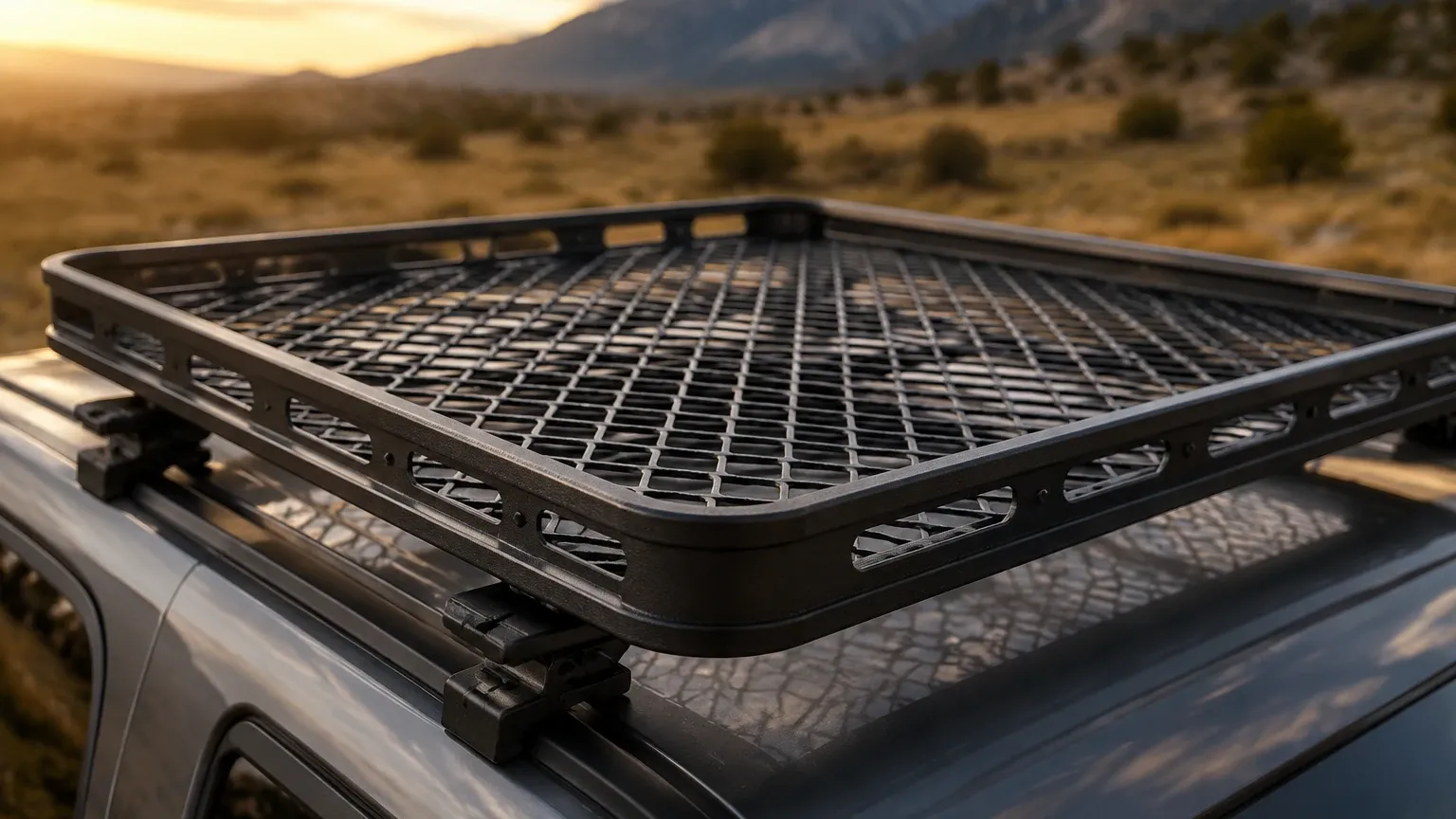
In the realm of industrial vehicle outfitting and heavy-duty transport, the selection of materials for load-bearing structures is a critical engineering decision. The expanded metal roof rack has emerged as a preferred solution for engineers and fleet managers who require a balance of high strength, low weight, and superior durability. Unlike solid plates or traditional welded wire mesh, expanded metal offers a unique truss-like structure that provides multi-directional rigidity while maintaining an open area for drainage and aerodynamics.
For manufacturers like Kaifil, producing high-quality Perforated & Expanded Metal involves precise control over material deformation and structural integrity. This article examines the technical specifications, engineering advantages, and selection criteria for expanded metal used in roof rack applications, providing a comprehensive guide for B2B procurement and design teams.
The Engineering Behind Expanded Metal
Expanded metal is produced through a process of simultaneously slitting and stretching a solid metal sheet. This manufacturing method is inherently efficient because it creates a larger surface area without adding weight and produces zero scrap material. The resulting diamond-shaped pattern is not composed of joined or welded wires; rather, it is a single piece of metal where the strands are interconnected at "bonds."
From an engineering perspective, this continuous structure is significant. In a welded mesh, the joints are potential points of failure under vibration or heavy impact. In an expanded metal roof rack, the load is distributed across the entire sheet through the interconnected strands. This creates a high strength-to-weight ratio, which is essential for roof-mounted applications where minimizing the vehicle's center of gravity is a safety priority.
Key Geometric Parameters
When specifying expanded metal for a roof rack, engineers must consider four primary dimensions:
1. Long Way of Diamond (LWD): The distance from the center of one bond to the center of the next bond across the long axis.
2. Short Way of Diamond (SWD): The distance across the short axis.
3. Strand Thickness: The thickness of the original base metal sheet.
4. Strand Width: The amount of metal fed into the precision dies during the expanding process.
By adjusting these parameters, manufacturers can customize the "open area" percentage, which dictates airflow and drainage, as well as the overall load capacity of the rack floor.
Material Selection for Industrial Environments
Material choice is the most influential factor in the lifespan and performance of an expanded metal roof rack. While carbon steel is often used for its cost-effectiveness, industrial and specialized applications frequently demand higher-performance alloys.
Stainless Steel (304 and 316)
Stainless steel is the gold standard for filtration and structural components in demanding environments. Grade 304 offers excellent corrosion resistance for standard outdoor use, while Grade 316 is recommended for racks exposed to marine environments or chemical processing facilities due to its molybdenum content, which resists pitting from chlorides. Kaifil specializes in these high-grade stainless steel solutions, ensuring that the structural integrity of the rack is not compromised by oxidation over time.
Aluminum Alloys
For applications where weight reduction is the primary concern—such as in electric vehicle fleets or high-performance utility vehicles—aluminum expanded metal is an ideal choice. It provides a natural oxide layer for corrosion resistance and can be significantly lighter than steel, though it may require thicker strands to achieve comparable load ratings.
Surface Treatments and Coatings
For carbon steel racks, hot-dip galvanizing or industrial-grade powder coating is essential. Galvanizing provides a sacrificial zinc layer that protects the steel even if the surface is scratched during loading and unloading. Powder coating offers additional UV protection and can be customized to meet fleet branding requirements.
Comparative Analysis: Expanded Metal vs. Perforated Metal
In the design of industrial racks and filtration supports, the choice often lies between Perforated & Expanded Metal. While both offer an open-area configuration, their mechanical properties differ.
* Structural Rigidity: Expanded metal strands are typically set at an angle to the plane of the sheet. This creates a "raised" profile that provides inherent anti-slip properties and greater rigidity against bending. Perforated metal remains flat, which may require additional support cross-members to prevent sagging under heavy loads.
* Material Efficiency: Perforated metal is created by punching holes, which results in material waste (the "slugs"). Expanded metal uses 100% of the raw material, making it a more sustainable and often more cost-effective option for large-scale production.
* Grip and Traction: For a roof rack, the raised edges of expanded metal provide essential traction for securing gear or for technicians who may need to access the roof. Perforated metal is smooth and can become slippery when wet or oily.
Load-Bearing Capacity and Structural Integrity
Determining the load-bearing capacity of an expanded metal roof rack requires an understanding of the relationship between the mesh size and the support frame. The mesh itself acts as the floor of the rack, but its performance is dependent on how it is integrated into the perimeter frame.
Deflection and Support Spacing
Engineers must calculate the maximum allowable deflection for the intended load. If the spans between the rack's cross-members are too wide, the expanded metal may experience permanent deformation (yielding) under heavy point loads. Using a smaller SWD (Short Way of Diamond) generally increases the stiffness of the floor, allowing for wider support spacing.
Flattened vs. Raised Expanded Metal
Expanded metal can be supplied in its "raised" state or can be cold-rolled to create a "flattened" surface. Raised expanded metal is stronger and provides better grip, but flattened expanded metal offers a smooth surface that is easier to clean and prevents delicate cargo from being marked by the strand edges. For most industrial roof racks, raised expanded metal is preferred for its superior strength-to-weight characteristics.
Engineering Advantages for Vehicle Applications
The integration of expanded metal into vehicle rack systems provides several functional benefits that go beyond simple load carrying.
Aerodynamics and Wind Noise
One of the primary challenges with roof-mounted equipment is wind resistance. A solid plate rack creates significant drag and can generate high-frequency whistling. The open diamond pattern of expanded metal allows air to flow through the structure, reducing the drag coefficient and minimizing wind noise at highway speeds. This contributes to better fuel efficiency and a more comfortable environment for the vehicle operator.
Drainage and Debris Management
Industrial vehicles often operate in environments with heavy rain, snow, or mud. A solid floor rack would allow water to pool, increasing weight and promoting corrosion. Expanded metal ensures immediate drainage. Furthermore, the mesh size can be selected to allow small debris to fall through while securely supporting larger tools and equipment.
Attachment Points and Versatility
The repetitive diamond pattern provides virtually unlimited tie-down points. Straps, hooks, and specialized brackets can be secured through any part of the mesh, offering much greater flexibility than fixed-point mounting systems found on solid-bar racks.
Customization and OEM Considerations
For B2B purchasers and OEMs, the ability to customize the filtration and structural components is vital. Kaifil’s manufacturing capabilities allow for precise tailoring of expanded metal to meet specific project requirements. Key customization options include:
* Edge Finishing: Expanded metal has sharp edges where the strands are cut. For roof racks, these edges are typically enclosed within a U-channel or welded to a tubular frame to ensure safety and structural stability.
* Custom Mesh Sizes: Depending on the cargo (e.g., small parts bins vs. large machinery), the LWD and SWD can be adjusted to provide the necessary support without unnecessary weight.
* Precision Cutting: Utilizing advanced CNC cutting and shearing, components can be delivered ready for immediate assembly into the final rack structure, reducing labor costs for the OEM.
Maintenance and Long-Term Durability
To maximize the ROI of an expanded metal roof rack, maintenance protocols should be established based on the environment. While stainless steel requires minimal upkeep, regular inspections should focus on:
1. Attachment Points: Checking the welds or bolts that secure the expanded metal to the frame for signs of stress cracking or vibration-induced loosening.
2. Coating Integrity: On coated carbon steel racks, any chips or scratches should be touched up promptly to prevent sub-film corrosion.
3. Cleaning: Removing salt, mud, and industrial chemicals that can trap moisture against the metal surface, which is particularly important in the bonds where strands intersect.
Conclusion: Selecting the Right Solution
The expanded metal roof rack is a sophisticated engineering solution that addresses the complex requirements of industrial transport. By selecting the appropriate material, mesh geometry, and surface treatment, engineers can ensure a product that offers long-term reliability and high performance.
When evaluating suppliers for Perforated & Expanded Metal, it is essential to partner with a manufacturer that understands the technical nuances of metal expansion and structural integrity. Kaifil provides the expertise necessary to develop customized filtration and support components that meet the rigorous standards of the chemical, pharmaceutical, and industrial sectors. For technical teams moving toward the procurement phase, confirming the specific load requirements, environmental exposure levels, and desired weight targets will ensure the final expanded metal solution is optimized for the application's demands.
