


Expanded Metal Red Tiger
In the landscape of industrial filtration and structural screening, the term "Red Tiger" has become synonymous with high-durability expanded metal solutions designed for the most demanding environments. For engineers and procurement specialists, selecting the right material involves more than just identifying a pattern; it requires a deep understanding of metallurgical properties, mechanical stresses, and the specific fluid dynamics of the application. Expanded metal red tiger represents a specialized category of expanded metal that prioritizes abrasion resistance and structural integrity, making it a critical component in heavy-duty filtration, aggregate processing, and industrial safeguarding.
As a manufacturer specializing in custom stainless steel filtration solutions, Kaifil recognizes that the performance of a filter or screen is only as reliable as its base material. Whether used as a primary screening media or as a support structure for finer wire mesh, expanded metal must be engineered to withstand the rigors of continuous operation without compromising flow efficiency or structural form.
Understanding the Engineering Behind Expanded Metal Red Tiger
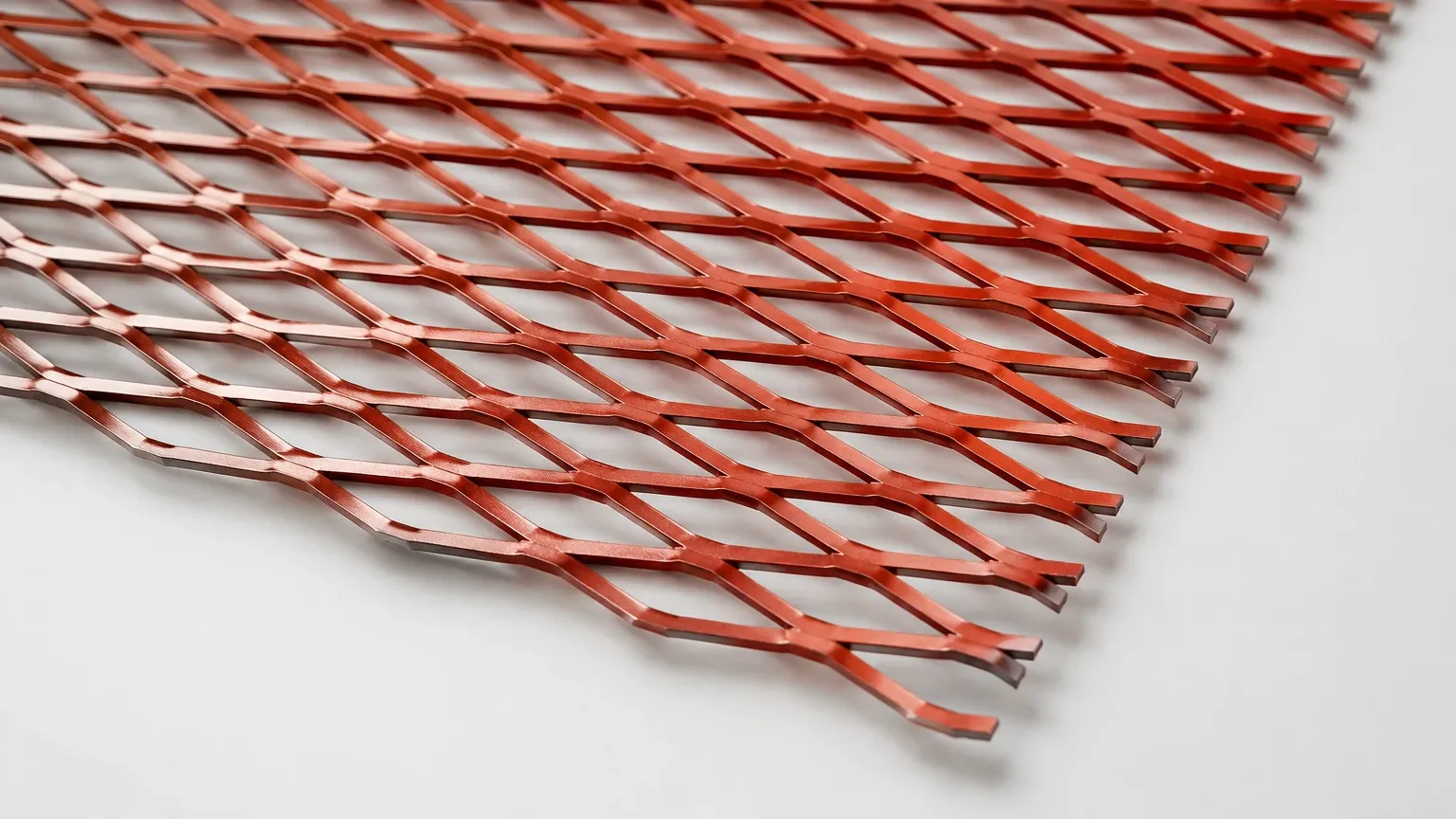
Expanded metal is produced through a process of simultaneously slitting and stretching a solid metal sheet. Unlike perforated metal, which involves punching holes and creating scrap material, expanded metal is formed into a continuous diamond-shaped pattern without any loss of material. This process creates a mesh that is structurally superior to woven wire of the same weight, as the "bonds" where the strands intersect are part of the original solid metal.
The "Red Tiger" designation typically refers to a specific grade of high-tensile or hardened steel, often coated or treated for extreme abrasion resistance. In the context of Perforated & Expanded Metal, this material is engineered to handle high-impact loads and abrasive slurry flows that would quickly degrade standard carbon steel or lighter-gauge aluminum.
The Structural Integrity of the Diamond Pattern
The geometry of the diamond pattern is the defining characteristic of expanded metal red tiger. Because the metal is stretched rather than cut, the strands are set at an angle to the plane of the sheet. This creates a three-dimensional structure that naturally resists deformation under pressure. For filtration applications, this means the media can maintain its shape even when subjected to high differential pressures (Delta P) across the filter element.
Material Selection and Metallurgical Considerations
When specifying expanded metal red tiger for industrial use, the choice of base alloy is the most significant factor in determining the component's lifespan. While the standard Red Tiger line is often associated with hardened carbon steel for mining and aggregate, many industrial filtration applications require the corrosion resistance of stainless steel.
Stainless Steel vs. Hardened Carbon Steel
1. Hardened Carbon Steel: Best suited for dry aggregate screening or non-corrosive hydraulic fluids where abrasion is the primary concern. Its high Rockwell hardness prevents the strands from thinning under the constant friction of abrasive particles.
2. Stainless Steel (304, 316, 316L): Essential for chemical processing, food and beverage, and pharmaceutical applications. Stainless steel expanded metal provides the necessary resistance to oxidation and chemical attack while maintaining the structural benefits of the expanded design. In filtration, 316L is often preferred for its superior resistance to pitting and crevice corrosion in chloride-rich environments.
Surface Treatments and Coatings
To enhance the performance of expanded metal red tiger, various surface treatments can be applied. For carbon steel variants, specialized coatings (often giving the material its "Red" moniker) provide a barrier against moisture and chemical exposure. In stainless steel applications, electropolishing or passivating the metal ensures that the surface is free of contaminants and provides maximum corrosion resistance, which is critical for maintaining hygiene standards in food-grade filtration.
Geometric Specifications and Filtration Performance
Engineers must confirm several key dimensions when integrating expanded metal red tiger into a filtration system. These specifications directly impact flow rate, pressure drop, and the size of particles retained.
Key Dimensional Variables
* LWD (Long Way of Diamond): The distance from the center of one bond to the center of the next bond across the long axis of the diamond.
* SWD (Short Way of Diamond): The distance across the short axis of the diamond. The ratio of LWD to SWD determines the "openness" of the mesh.
* Strand Width: The amount of metal fed into the expanding machine between slits. A wider strand increases the strength of the mesh but reduces the open area.
* Strand Thickness: The original thickness of the metal sheet. For heavy-duty industrial applications, thicker gauges are required to prevent structural collapse under high-velocity flows.
Calculating Open Area
The percentage of open area is a critical metric for any filtration component. It determines the face velocity of the fluid and the potential for pressure drop. Expanded metal red tiger offers a unique advantage here: by adjusting the expansion ratio, manufacturers can create a mesh with a high percentage of open area while retaining significantly more strength than a perforated sheet with similar hole sizes. This allows for higher flow rates in a smaller footprint, an essential factor in designing compact industrial filter housings.
Industrial Applications: From Support Structures to Primary Screening
The versatility of expanded metal red tiger allows it to serve multiple roles within an industrial filtration system. Its high strength-to-weight ratio makes it an ideal candidate for both protective and functional components.
1. Support Cages for Filter Cartridges
In high-pressure hydraulic and gas filtration, fine filter media (such as pleated wire mesh or fiberglass) lacks the structural rigidity to withstand the force of the fluid. Expanded metal red tiger is often formed into cylindrical cages that provide internal or external support to the filter element. This prevents the media from collapsing or "telescoping" during pressure surges.
2. Primary Coarse Screening
In water treatment and chemical processing, expanded metal serves as the first line of defense. It captures large debris, scale, and foreign objects before they can reach more sensitive downstream equipment. The abrasion resistance of the Red Tiger specification is particularly valuable here, as it can withstand the constant impact of solids without the strands wearing down.
3. Diffusers and Flow Distributors
The angled strands of expanded metal can be used to break up laminar flow and create controlled turbulence. This is useful in reaction vessels and large-scale filtration systems where even distribution of the fluid across the entire surface of the filter media is required to prevent localized clogging.
Common Risks and Mitigation Strategies
Despite its durability, the improper application of expanded metal red tiger can lead to system failures. Engineers should be aware of the following risks:
Corrosion and Material Incompatibility
Using carbon steel expanded metal in a process involving corrosive chemicals or high humidity will lead to rapid oxidation. Rust particles can then break off and contaminate the downstream fluid, potentially damaging sensitive components like pumps and valves. Always verify the chemical compatibility of the metal with the process fluid, especially when dealing with extremes in pH or temperature.
Blinding and Clogging
If the diamond size is too close to the size of the particles being filtered, "near-size" particles can become wedged in the openings, a phenomenon known as blinding. This significantly reduces the open area and increases pressure drop. Selecting the correct SWD and LWD based on particle size distribution is essential to ensure a long service life and manageable cleaning cycles.
Mechanical Fatigue
In applications involving vibrating screens or pulsating flows, the metal is subject to cyclic loading. If the gauge is too thin or the material is not properly annealed, stress cracks can develop at the bonds. Specifying a heavy-duty expanded metal like the Red Tiger series helps mitigate this risk by providing a higher margin of safety against mechanical fatigue.
Procurement and Customization: What Engineers Need to Confirm
When sourcing expanded metal red tiger for a project, providing a generic description is often insufficient. To ensure the component meets the performance requirements of the application, several technical details must be confirmed with the manufacturer.
Customization Options
* Flattened vs. Raised: Standard expanded metal (raised) has strands that are tilted. Flattened expanded metal is passed through a cold-rolling mill to create a smooth, level surface. Flattened metal is often easier to clean and safer to handle, but it loses some of the three-dimensional rigidity of the raised version.
* Edge Finishing: Expanded metal leaves sharp "diamonds" at the edges when cut. For filter cartridges, these edges must be deburred or framed to prevent damage to the filter media or injury to maintenance personnel.
* Material Certification: For industries such as pharmaceuticals or food processing, material traceability is mandatory. Ensure the manufacturer can provide Mill Test Reports (MTRs) confirming the alloy composition and mechanical properties.
Total Cost of Ownership (TCO)
While high-performance expanded metal like the Red Tiger series may have a higher initial purchase price than standard expanded mesh, the total cost of ownership is often lower. The extended replacement cycles, reduced maintenance downtime, and protection of expensive downstream equipment provide a significant return on investment in demanding industrial environments.
As a professional manufacturer, Kaifil provides the technical expertise necessary to navigate these selections. By focusing on precision manufacturing and material integrity, we ensure that every filtration component—from the simplest screen to the most complex custom cartridge—performs reliably under pressure. For more information on our capabilities in metal filtration media, explore our range of Perforated & Expanded Metal solutions designed for global industrial standards.
