


Expanded Metal Sheet Near Me
For engineers and procurement professionals in the industrial sector, sourcing high-quality metal components is rarely about finding the closest retail outlet. When searching for an "expanded metal sheet near me," the priority is typically a combination of technical precision, material integrity, and a reliable supply chain capable of meeting specific engineering tolerances. Expanded metal is a versatile material used extensively in filtration, structural support, and safety applications, but its performance is heavily dependent on the manufacturing process and material selection.
At Kaifil, we understand that industrial filtration and structural components must withstand demanding environments, ranging from chemical processing plants to high-pressure hydraulic systems. Selecting the right expanded metal requires a deep understanding of its mechanical properties, the nuances of the expansion process, and how it compares to alternative solutions like perforated metal.
Understanding the Technical Foundations of Expanded Metal
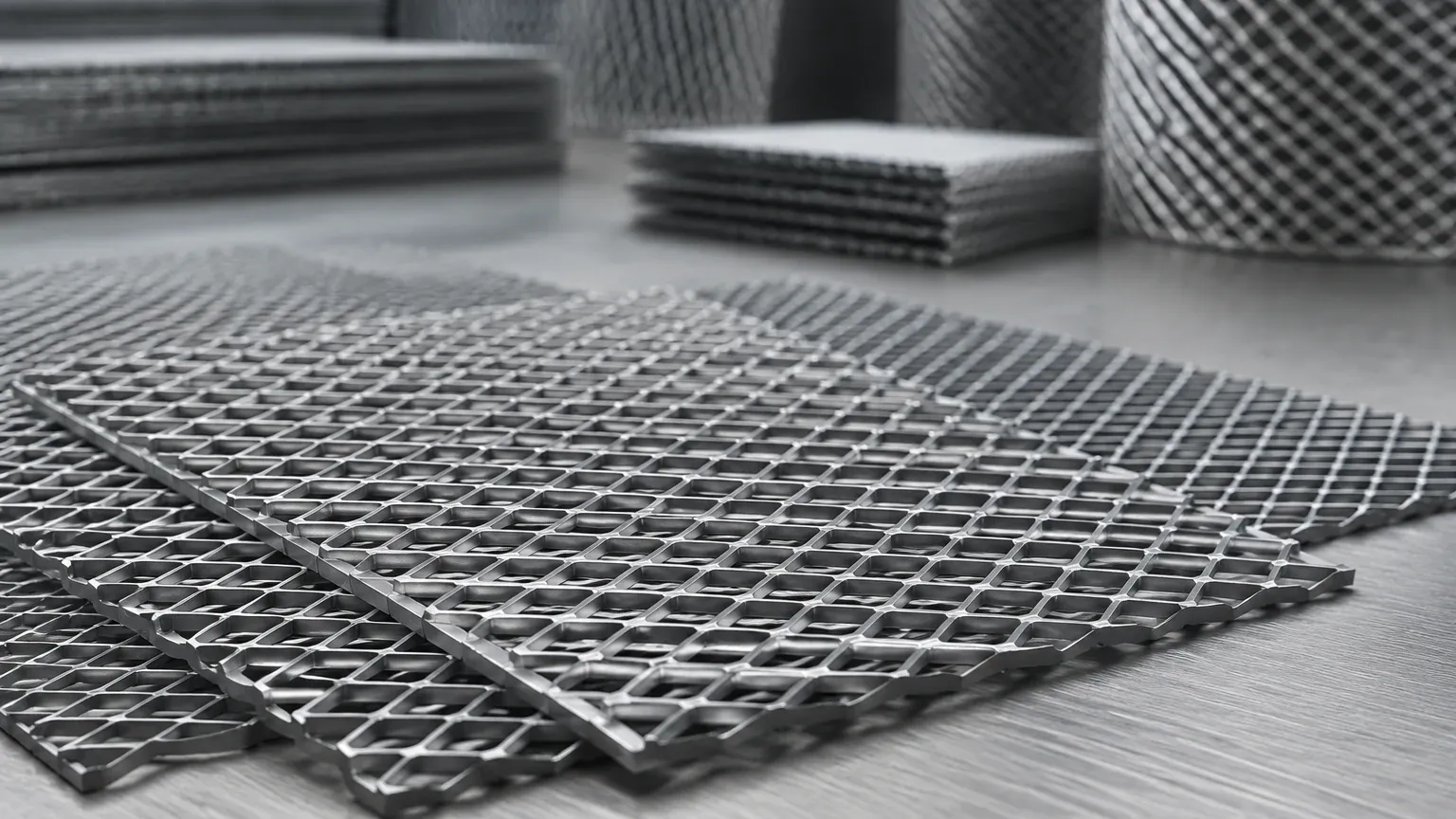
Expanded metal is produced through a unique manufacturing process where a solid sheet or coil of metal is simultaneously slit and stretched. This process creates a diamond-shaped pattern of openings, resulting in a continuous piece of metal without joins or welds. Unlike perforated metal, which involves punching holes and generating significant material waste, the expansion process utilizes the entire original sheet, making it a highly resource-efficient and cost-effective option.
Key Terminology for Engineering Specifications
When evaluating an expanded metal sheet near me, engineers must be familiar with the standardized terminology used to define the product’s dimensions and performance characteristics:
* SWD (Short Way of Design): The distance from the center of one bond to the center of the next bond measured across the short diamond diagonal.
* LWD (Long Way of Design): The distance from the center of one bond to the center of the next bond measured across the long diamond diagonal.
* Strand Width: The amount of metal fed into the expanding machine to produce one strand.
* Strand Thickness: The thickness of the original base metal.
* Bond: The intersection where two strands meet, forming the diamond pattern.
There are two primary types of expanded metal: standard (raised) and flattened. Standard expanded metal has strands that are set at a sharp angle to the plane of the sheet, providing a high strength-to-weight ratio and excellent grip for safety applications. Flattened expanded metal is processed through a cold-rolling mill after expansion, resulting in a smooth, flat surface that is ideal for filtration support layers where a uniform profile is required.
The Role of Perforated & Expanded Metal in Industrial Filtration
In the context of industrial filtration, Perforated & Expanded Metal serves several critical functions. While fine wire mesh provides the actual filtration rating, it often lacks the structural rigidity to withstand high differential pressures. Expanded metal acts as a robust support skeleton for these finer media.
Structural Support and Pleat Spacing
In pleated filter cartridges, expanded metal sheets are often used as inner or outer support cores. Their diamond-shaped openings allow for maximum open area, ensuring low pressure drop while providing the mechanical strength necessary to prevent the filter media from collapsing under flow. The rigid nature of expanded metal also helps maintain consistent pleat spacing, which is essential for maximizing the effective filtration area and extending the service life of the component.
Pre-filtration and Coarse Screening
In applications such as HVAC systems or large-scale water intake screens, expanded metal can serve as a standalone coarse filter. It is particularly effective at capturing large debris, protecting downstream precision filters from premature clogging. Because the strands are interconnected without welds, the material is inherently resistant to vibration-induced fatigue, a common failure mode in industrial machinery.
Material Selection: Beyond Proximity
When searching for an expanded metal sheet near me, the proximity of the supplier is secondary to the quality of the raw materials used. For industrial applications, material grade is the most significant factor in determining the longevity and chemical compatibility of the filter or component.
1. Stainless Steel (304 and 316L): This is the gold standard for many industrial environments. Type 304 offers excellent corrosion resistance for general applications, while Type 316L (low carbon) is preferred for chemical processing and marine environments due to its superior resistance to pitting and stress-corrosion cracking.
2. Aluminum: Lightweight and naturally resistant to atmospheric corrosion, aluminum expanded metal is often used in aerospace and architectural applications where weight reduction is a priority.
3. Carbon Steel: For less demanding environments or applications where cost is the primary driver, carbon steel is a viable option, often provided with a galvanized or powder-coated finish to prevent oxidation.
Engineers must confirm that the supplier provides material certifications (MTRs) to ensure the chemical composition of the metal meets the project's specific requirements. At Kaifil, we prioritize high-grade stainless steel to ensure our filtration solutions remain durable in the most aggressive industrial settings.
Comparing Expanded Metal vs. Perforated Metal
One of the most common questions engineers face is whether to specify perforated or expanded metal for their project. Both have distinct advantages, and the choice depends on the specific application goals.
| Feature | Expanded Metal | Perforated Metal |
| :— | :— | :— |
| Material Waste | Minimal (stretched, not punched) | Significant (slugs are punched out) |
| Strength-to-Weight | Very High | High |
| Surface Profile | Raised or Flattened | Always Flat |
| Customization | Patterns limited by tooling | Highly customizable hole shapes/sizes |
| Cost | Generally lower for large volumes | Higher due to material waste |
For filtration support, expanded metal is often favored because its open area can be precisely controlled by adjusting the expansion ratio, and its structural integrity is superior for a given weight. However, if a specific hole geometry (such as perfect circles or squares) is required for flow dynamics or aesthetic reasons, perforated metal may be the better choice.
Key Evaluation Criteria for B2B Procurement
When evaluating a supplier for an expanded metal sheet near me, purchasing teams should look beyond the price per sheet. Total cost of ownership and performance reliability are driven by several technical factors:
Dimensional Accuracy and Flatness
In automated assembly lines, even a slight bow or twist in a metal sheet can cause production delays or equipment failure. A high-quality manufacturer uses precision leveling equipment to ensure that expanded metal sheets are delivered perfectly flat. Furthermore, the tolerances on the LWD and SWD must be strictly maintained to ensure the component fits perfectly into the final housing or assembly.
Edge Finish and Safety
Expanded metal naturally has sharp edges where the diamonds are cut. For many industrial applications, especially those involving manual handling or delicate filter media, these edges must be deburred or provided with a solid "bond edge" (a solid border of unexpanded metal). Confirming that your supplier can provide customized edge treatments is vital for both safety and product integrity.
Customization and OEM Capabilities
Many industrial projects require non-standard dimensions or unique patterns. A supplier that offers OEM capabilities, like Kaifil, can work with your engineering team to develop custom expanded metal profiles that optimize filtration efficiency or structural load-bearing capacity. This includes custom material thicknesses, specific diamond sizes, and secondary fabrication such as rolling, welding, or coating.
Addressing Logistics: The "Near Me" Reality in a Global Market
In the modern B2B landscape, "near me" is less about physical distance and more about the efficiency of the partnership. A supplier located thousands of miles away can often provide better value and faster lead times than a local distributor if they have optimized logistics and a robust inventory of raw materials.
When sourcing expanded metal, consider the following logistical factors:
* Lead Times: Does the manufacturer have the capacity to handle large-scale orders without compromising quality?
* Packaging: Expanded metal can be easily damaged during transit if not properly crated. Ensure your supplier uses industrial-grade packaging to prevent bending or surface scratching.
* Technical Support: A reliable partner should provide more than just a product; they should offer engineering guidance on material selection and design optimization to ensure the final component meets the application's performance expectations.
Conclusion: Making an Informed Decision
Searching for an expanded metal sheet near me should be the beginning of a technical evaluation, not the end of it. Whether you are designing a new hydraulic filtration system, a chemical reactor support, or industrial safety grating, the quality of the expanded metal will directly impact the safety and efficiency of your operations.
By focusing on material grade, dimensional precision, and the specific advantages of the expansion process, engineers can select a solution that offers the best balance of performance and cost-effectiveness. At Kaifil, we combine manufacturing expertise with a deep commitment to quality, providing custom stainless steel filtration solutions that meet the rigorous demands of global industry. When precision and durability are non-negotiable, choosing a partner with specialized knowledge in Perforated & Expanded Metal is the most effective way to ensure project success.
