


Expanded Metal Screen
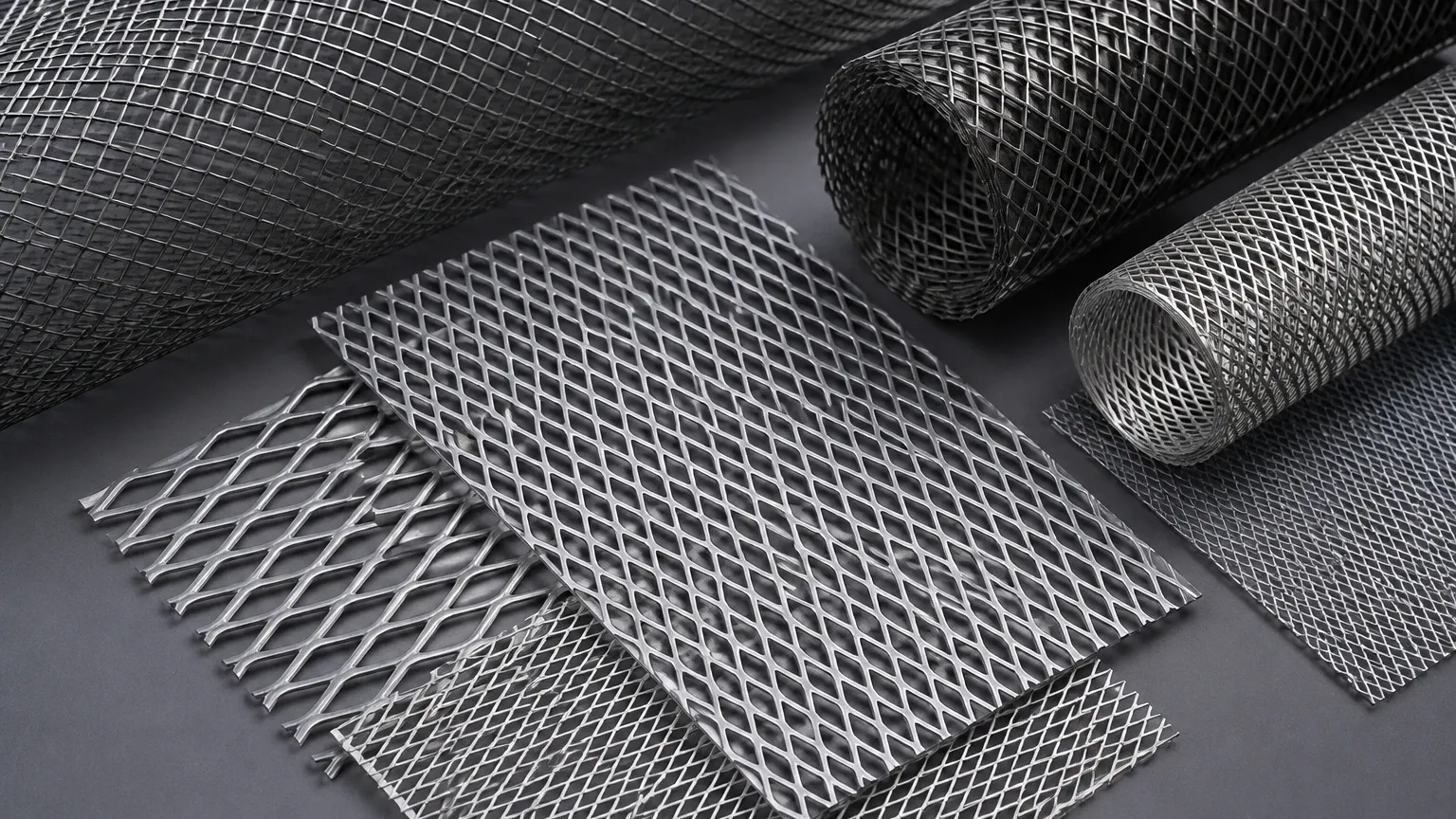
In industrial filtration and structural engineering, the selection of the right medium is critical for ensuring system longevity and process efficiency. An expanded metal screen is a versatile component produced by simultaneously slitting and stretching a single sheet of metal—typically stainless steel, aluminum, or carbon steel. Unlike woven wire mesh or perforated sheets, expanded metal is a monolithic structure with no joins or welds, providing a unique combination of high strength-to-weight ratios and precise open areas.
For engineers and procurement professionals, understanding the technical nuances of Perforated & Expanded Metal is essential when designing filtration systems, protective guards, or structural supports. This guide examines the manufacturing principles, material specifications, and application-specific considerations for expanded metal screens within demanding industrial environments.
Manufacturing Principles and Structural Integrity
The production of an expanded metal screen involves a "slit and stretch" process. A solid metal plate or coil is fed through a machine equipped with a reciprocating knife that slits the metal while simultaneously expanding it. This process creates a diamond-shaped pattern of openings, where the metal "strands" are interconnected by "bonds."
Because the material is expanded rather than punched, there is zero waste during production, making it a cost-effective alternative to perforated metal in many applications. From an engineering perspective, the lack of welds or joints is a significant advantage. In high-vibration environments, such as hydraulic systems or heavy industrial machinery, traditional welded meshes can suffer from fatigue at the joint points. An expanded metal screen maintains its structural integrity because the bonds are part of the original parent metal.
Standard vs. Flattened Expanded Metal
There are two primary forms used in industrial filtration:
1. Standard (Raised) Expanded Metal: The strands are set at an angle to the plane of the sheet. This creates a three-dimensional surface that can assist in breaking up laminar flow or providing extra grip for filter media layers.
2. Flattened Expanded Metal: The standard expanded sheet is passed through a cold-roll reducing mill. This flattens the strands and bonds into the same plane, resulting in a smooth, flat surface. Flattened screens are often preferred when the screen serves as a support layer for delicate filter membranes, as the smooth surface prevents puncturing or abrasion of the media.
Key Technical Specifications for Engineering Selection
When specifying an expanded metal screen for a filtration project, engineers must define several geometric parameters that dictate the performance of the component. These include:
* Long Way of Diamond (LWD): The distance from the center of one bond to the center of the next bond across the long axis of the diamond.
* Short Way of Diamond (SWD): The distance across the short axis of the diamond.
* Strand Width: The amount of metal fed into the machine between slits.
* Strand Thickness: The original thickness of the base metal sheet.
* Open Area Percentage: This is perhaps the most critical value for filtration. It determines the flow rate and pressure drop across the screen. Calculating the open area involves a ratio of the opening size to the strand width and bond area.
In custom filtration solutions, Kaifil provides precision-engineered screens where these dimensions are tightly controlled to meet specific micron ratings or support requirements. For instance, a screen used as a protective outer cage for a stainless steel filter cartridge requires a higher open area to minimize flow resistance, whereas a screen used as a primary coarse filter may prioritize strand thickness for impact resistance.
Material Considerations for Industrial Filtration
The choice of material for an expanded metal screen is dictated by the operating environment, including temperature, chemical exposure, and mechanical load. As a specialist in custom stainless steel filtration, Kaifil emphasizes the use of high-grade alloys to ensure durability.
Stainless Steel (304, 316, 316L)
Stainless steel is the industry standard for chemical processing, food and beverage, and pharmaceutical applications.
* Grade 304: Offers excellent corrosion resistance for general industrial use and is highly cost-effective.
* Grade 316/316L: Contains molybdenum, which provides superior resistance to chlorides and pitting. This is essential for marine environments or processes involving acidic or alkaline solutions. The "L" (low carbon) variant is preferred for components that require welding during the assembly of filter cartridges to prevent carbide precipitation.
Specialized Alloys
In extreme environments, such as high-temperature petrochemical refining or highly corrosive chemical synthesis, specialized materials like Monel, Inconel, or Titanium may be used. These materials ensure that the expanded metal screen does not degrade or leach contaminants into the process stream.
Applications of Expanded Metal Screens in Filtration Systems
Expanded metal screens serve multiple roles within a filtration assembly. Their versatility allows them to function as both a primary filtration medium and a secondary support structure.
1. Support and Pleat Spacing
In pleated filter cartridges, expanded metal is frequently used as an inner core or outer support wrap. It provides the necessary rigidity to prevent the pleats from collapsing under high differential pressure. The diamond pattern of the screen acts as a spacer, ensuring that the entire surface area of the filter media is exposed to the fluid flow.
2. Pre-filtration and Debris Guarding
For water treatment and intake systems, expanded metal screens act as a primary barrier against large debris. Their robust construction allows them to withstand the impact of solids without deforming. In these applications, the angular strands of a "raised" expanded screen can help deflect larger particles away from the screen surface.
3. Flame and Spark Arrestors
Due to the high thermal conductivity of metal and the specific geometry of the expanded openings, these screens are often utilized as flame arrestors in exhaust systems or chemical storage vents. They dissipate heat and prevent the passage of sparks while allowing gases to flow freely.
4. Acoustic and Airflow Management
In industrial HVAC and machinery enclosures, expanded metal screens are used to protect acoustic insulation while allowing sound waves and air to pass through. The controlled open area ensures that airflow remains within specified velocity limits to avoid excessive noise or pressure buildup.
Comparing Perforated & Expanded Metal for Filtration
Engineers often weigh the pros and cons of Perforated & Expanded Metal when designing a new system. While both materials provide reliable filtration and support, there are distinct differences:
* Cost Efficiency: Expanded metal is generally more economical because the process does not produce scrap. Perforated metal involves punching out holes, which results in significant material waste (the "slugs").
* Strength: Expanded metal has a higher strength-to-weight ratio. The stretching process work-hardens the metal, and the continuous strand structure distributes loads more effectively than the individual bridges between perforated holes.
* Flow Characteristics: Perforated metal offers a more uniform and predictable flow pattern, which is sometimes preferred in high-precision laboratory filtration. However, the 3D geometry of expanded metal can induce beneficial turbulence in certain mixing or heat exchange applications.
* Customization: Perforated metal allows for a wider variety of hole shapes (round, square, slotted), whereas expanded metal is primarily limited to diamond or hexagonal patterns. However, the size of the diamond in an expanded metal screen can be adjusted with high precision to meet specific design needs.
Critical Factors for Custom Procurement
When purchasing expanded metal screens for industrial applications, technical professionals should confirm several factors with the manufacturer to ensure the component is fit for purpose.
Tolerance and Edge Finishing
In precision filtration, tolerances for LWD and SWD are critical for ensuring the screen fits perfectly within a housing or cartridge assembly. Furthermore, the edges of an expanded metal screen can be sharp. For B2B applications where the screen is handled frequently or integrated with delicate membranes, specifying "deburred" or "edge-trimmed" finishes is necessary to prevent injury or equipment damage.
Cleaning and Passivation
For the food, beverage, and pharmaceutical industries, the cleanliness of the filtration component is paramount. Stainless steel expanded metal should undergo ultrasonic cleaning and passivation to remove any residual oils from the manufacturing process and to restore the protective oxide layer on the metal surface. This prevents localized corrosion and ensures compliance with hygiene standards.
Total Cost of Ownership (TCO)
While the initial purchase price is important, the TCO includes the lifespan of the screen and the frequency of replacement. A high-quality stainless steel expanded metal screen from a manufacturer like Kaifil may have a higher upfront cost than a carbon steel alternative, but its resistance to corrosion and mechanical fatigue significantly reduces downtime and maintenance costs over the life of the filtration system.
Conclusion
The expanded metal screen is a fundamental component in modern industrial filtration, offering a unique balance of structural strength, material efficiency, and versatile flow characteristics. By carefully selecting the material grade, diamond dimensions, and surface finish, engineers can optimize their filtration systems for maximum performance and durability. Whether used as a support core in a high-pressure hydraulic filter or as a protective screen in a chemical reactor, the technical properties of expanded metal make it an indispensable tool for managing fluid and gas streams in demanding environments.
