


Ss Expanded Metal
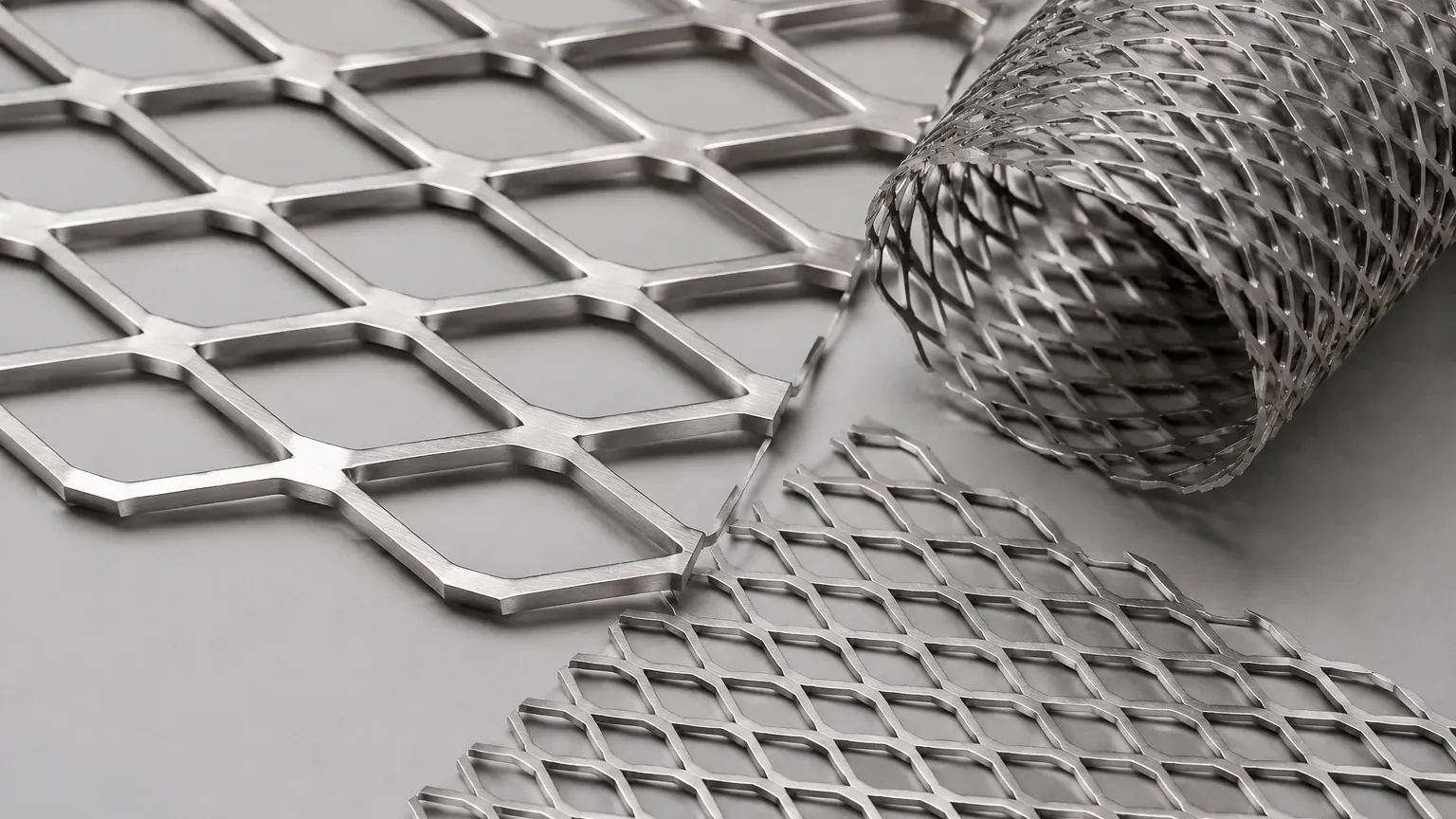
In the landscape of industrial filtration and structural engineering, stainless steel (SS) expanded metal stands as a versatile and high-performance material. Unlike traditional woven wire mesh or perforated sheets, ss expanded metal is produced through a unique process of slitting and stretching, resulting in a continuous piece of metal with diamond-shaped openings. For engineers and procurement specialists, understanding the technical nuances of this material is essential for optimizing filtration efficiency, structural integrity, and cost-effectiveness in demanding industrial environments.
As a specialized manufacturer, Kaifil provides precision-engineered Perforated & Expanded Metal solutions tailored to the rigorous requirements of chemical processing, water treatment, and pharmaceutical manufacturing. This guide explores the technical specifications, material considerations, and application-specific advantages of stainless steel expanded metal.
Understanding the Manufacturing and Structural Integrity of SS Expanded Metal
The production of expanded metal is a highly efficient process that distinguishes it from other metal products. A solid sheet of stainless steel is fed through a machine that simultaneously slits and stretches the material. Because the metal is expanded rather than punched, there is virtually no scrap or waste generated during production. This makes it a more sustainable and often more cost-effective alternative to perforated metal.
Raised vs. Flattened Expanded Metal
There are two primary forms of expanded metal used in industrial applications:
1. Raised Expanded Metal (Standard): This is the direct product of the expanding machine. The strands and bonds are set at a uniform angle to the plane of the sheet. This configuration provides maximum strength and rigidity, as well as a slip-resistant surface. In filtration, the raised profile can help create turbulence, which may be desirable in certain fluid dynamics scenarios.
2. Flattened Expanded Metal: To create this version, the standard raised sheet is passed through a cold-roll reducing mill. This process flattens the strands and bonds into a single plane, reducing the thickness of the sheet and creating a smooth surface. Flattened ss expanded metal is often preferred when the material serves as a support layer for fine wire mesh, as it prevents the mesh from being punctured or abraded by raised edges.
Key Technical Parameters for Engineering Specifications
When specifying stainless steel expanded metal for a project, engineers must use standardized terminology to ensure the finished product meets the required tolerances and performance metrics. The following parameters are critical:
* SWD (Short Way of Design): The distance from the center of one bond to the center of the next bond measured across the short diamond diagonal.
* LWD (Long Way of Design): The distance from the center of one bond to the center of the next bond measured across the long diamond diagonal.
* SWO (Short Way of Opening): The clear distance between the inside edges of the diamond across the short diagonal.
* LWO (Long Way of Opening): The clear distance between the inside edges of the diamond across the long diagonal.
* Strand Width: The amount of metal fed into the machine for each slit.
* Strand Thickness: The thickness of the base stainless steel sheet.
By manipulating these variables, manufacturers like Kaifil can adjust the open area percentage and the mechanical strength of the material to suit specific filtration or structural needs. For instance, a larger open area reduces pressure drop across a filter, while thicker strands increase the burst pressure resistance of a filter cartridge core.
Material Selection: 304 vs. 316 vs. 316L Stainless Steel
The choice of stainless steel grade is perhaps the most significant factor in determining the longevity and performance of expanded metal in industrial settings. While several alloys are available, three grades dominate the market:
Grade 304
Grade 304 is the most common stainless steel used for expanded metal. It offers excellent corrosion resistance in a wide range of atmospheric environments and many corrosive media. It is suitable for general industrial applications where extreme chemical exposure is not a primary concern.
Grade 316
For more aggressive environments, Grade 316 is the industry standard. The addition of molybdenum significantly enhances its resistance to chlorides and acids. It is widely used in marine environments, chemical processing plants, and applications involving brine or de-icing salts.
Grade 316L
Grade 316L is the low-carbon version of 316. It is preferred for components that require extensive welding. The low carbon content prevents carbide precipitation during the welding process, which maintains the material's corrosion resistance in the heat-affected zones. This is critical for high-quality filter cartridges and pressure vessels used in the pharmaceutical and food and beverage industries.
The Role of SS Expanded Metal in Industrial Filtration Systems
In the context of industrial filtration, ss expanded metal rarely acts as the primary filtration medium for fine particles. Instead, it serves several critical secondary roles that ensure the overall system's success.
Structural Support Cores
In pleated filter cartridges or cylindrical strainers, expanded metal is frequently used as the internal support core. Its high strength-to-weight ratio allows it to withstand significant differential pressures without collapsing. Unlike solid perforated tubes, the diamond pattern of expanded metal provides a high percentage of open area, minimizing the resistance to flow.
Protective Outer Guards
Filters operating in high-velocity streams or environments with large debris often require an outer guard to protect the delicate inner filtration layers (such as fine wire mesh or fiber media). Expanded metal provides a robust physical barrier that deflects large particles while allowing the fluid to pass through freely.
Media Pleat Support
In high-temperature or high-pressure gas filtration, expanded metal can be laminated with glass fiber or synthetic media. It helps maintain the pleat geometry under flow stress, preventing the pleats from "pinching off," which would otherwise reduce the effective filtration area and increase pressure drop.
Comparing Perforated & Expanded Metal for Filtration Support
Engineers often weigh the pros and cons of Perforated & Expanded Metal when designing filtration components. While both serve similar functions, there are distinct differences:
* Weight and Cost: Expanded metal is generally lighter and less expensive per square foot than perforated metal of the same thickness because the process expands the material rather than removing it.
* Structural Integrity: Expanded metal is a single, continuous piece of material. The "bonds" where the strands intersect are not welded or joined; they are part of the original metal. This provides superior structural integrity compared to some woven or welded products.
* Flow Characteristics: The angled strands of raised expanded metal can influence the flow direction and create micro-turbulence, which can be beneficial in heat exchange or specific mixing applications. Perforated metal offers a more linear, predictable flow path.
* Customization: Perforated metal allows for more complex hole shapes (round, square, hexagonal, slotted), whereas expanded metal is primarily limited to diamond or hexagonal variations.
Selection Criteria: What Engineers Should Confirm Before Purchase
To ensure the selected ss expanded metal meets the application's demands, the following technical factors must be evaluated during the procurement phase:
1. Differential Pressure (Delta P): Determine the maximum pressure the material will encounter. This dictates the required strand thickness and bond width to prevent mechanical failure.
2. Chemical Compatibility: Beyond just the liquid being filtered, consider cleaning agents (CIP – Clean-in-Place) and potential trace contaminants that could cause pitting or stress corrosion cracking.
3. Open Area Requirements: Calculate the required open area to maintain the desired flow rate. A higher open area usually means thinner strands, which may compromise structural strength.
4. Surface Finish: For food, beverage, and pharmaceutical applications, the surface must be free of burrs and sharp edges. Electropolishing or specialized de-burring processes may be necessary, especially for raised expanded metal.
5. Tolerances: Standard industrial tolerances for expanded metal are broader than those for precision machined parts. If the material must fit into a tight housing or groove, specific "camber" and "out-of-square" tolerances must be negotiated with the manufacturer.
Maintenance and Longevity in Demanding Environments
Stainless steel expanded metal is valued for its durability, but its lifespan is heavily dependent on proper maintenance and environmental control. In filtration systems, the primary cause of failure is often blinding (clogging) or localized corrosion.
Regular cleaning cycles are essential. Because expanded metal has many "nooks and crannies" at the bond intersections, ultrasonic cleaning or high-pressure backwashing is often more effective than simple manual scrubbing. In corrosive environments, periodic passivation treatments can help restore the protective chromium oxide layer on the surface of the stainless steel, extending the component's service life.
Conclusion
Stainless steel expanded metal is a foundational component in the world of industrial filtration and metal fabrication. Its unique combination of strength, high open area, and material efficiency makes it an ideal choice for support structures, protective guards, and specialized filtration layers. By carefully selecting the appropriate grade—whether 304 for general use or 316L for high-purity environments—and precisely defining the diamond dimensions, engineers can achieve a balance of performance and cost-effectiveness.
Kaifil continues to support global industries by manufacturing high-quality Perforated & Expanded Metal products that meet the most exacting technical standards. Whether you are designing a new hydraulic system, a chemical reactor, or a food processing line, choosing the right ss expanded metal specification is a critical step toward operational reliability and efficiency.
