Expanded Metal Usa
In the landscape of industrial manufacturing and filtration, expanded metal serves as a versatile and high-strength material used across a wide array of sectors. For engineering and procurement teams sourcing expanded metal usa standards and specifications, understanding the technical nuances of production, material grades, and application-specific designs is essential. Unlike other metal processing methods, expanding metal involves slitting and stretching a single sheet of material, creating a diamond-shaped pattern without any waste. This process results in a product that maintains structural integrity while offering a high strength-to-weight ratio, making it an ideal choice for both structural support and filtration media.
The Fundamentals of Expanded Metal Production
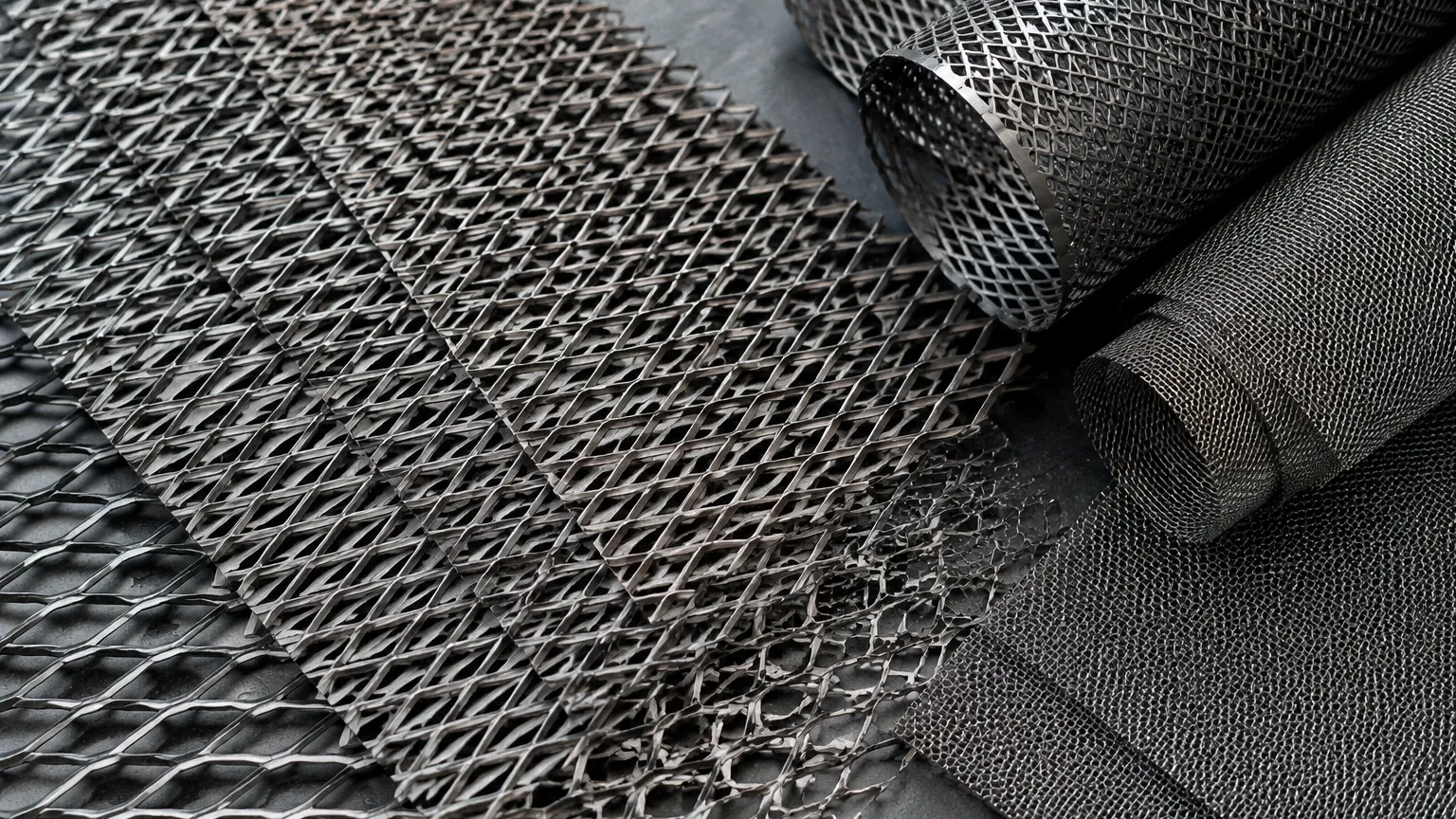
Expanded metal is manufactured through a simultaneous slitting and stretching process. A solid metal sheet is fed into a machine where a series of knives cut and expand the material in a single motion. This creates a continuous piece of metal with uniform openings, characterized by "bonds" and "strands."
There are two primary forms of expanded metal used in industrial applications:
1. Standard (Raised) Expanded Metal: This is the product as it comes directly from the expanding machine. The strands and bonds are set at a uniform angle to the plane of the sheet, providing extra strength and rigidity. The raised surface also offers increased grip and resistance to sliding, which is often utilized in industrial walkways or heavy-duty filtration baskets.
2. Flattened Expanded Metal: This is produced by passing standard expanded metal through a cold-roll reducing mill. The process flattens the strands and bonds into a single plane, resulting in a smooth, flat surface. Flattened expanded metal is often preferred when a consistent thickness is required or when the material needs to be integrated into a multi-layer filtration assembly without creating gaps between layers.
Technical Specifications and Standards
When evaluating expanded metal usa requirements, engineers must adhere to specific terminology to ensure the material meets the design tolerances of the project. The most critical dimensions include:
* SWD (Short Way of Design): The distance from the center of one bond to the center of the next bond measured across the short diamond diagonal.
* LWD (Long Way of Design): The distance from the center of one bond to the center of the next bond measured across the long diamond diagonal.
* SWO (Short Way of Opening): The actual width of the diamond opening.
* LWO (Long Way of Opening): The actual length of the diamond opening.
* Strand Thickness: The thickness of the base metal used.
* Strand Width: The amount of metal fed into the knives for each stroke.
In the United States, the ASTM F1267 standard is the primary reference for expanded metal specifications. It covers various classes and grades, ensuring that the material provides the necessary mechanical properties for industrial use. For filtration applications, the percentage of open area is a vital calculation, as it directly impacts flow rates and pressure drops across the system.
Perforated & Expanded Metal: Comparative Analysis
Selecting between Perforated & Expanded Metal depends largely on the specific mechanical and filtration requirements of the application. While both materials provide openings for flow and structural support, their manufacturing processes and physical characteristics differ significantly.
Perforated Metal is created by punching holes into a solid sheet. This allows for a wider variety of hole shapes (round, square, slotted) and precise control over the margins. However, the punching process creates scrap material, which can increase the total cost, especially when using expensive alloys like 316L stainless steel.
Expanded Metal, by contrast, is a more cost-effective solution for many applications because it involves no material waste. The stretching process increases the overall area of the original sheet, sometimes by as much as ten times, without adding weight. From an engineering perspective, expanded metal provides superior directional strength. The interconnected strands allow the material to distribute loads more effectively than perforated sheets of the same weight.
Material Selection for Demanding Industrial Environments
Material choice is the most critical factor in determining the longevity and performance of expanded metal in industrial settings. While carbon steel and aluminum are common, stainless steel remains the gold standard for chemical processing, pharmaceuticals, and food and beverage applications.
Stainless Steel Grades
* Type 304: The most common grade, offering excellent corrosion resistance and formability. It is suitable for most general industrial environments and water treatment applications.
* Type 316/316L: Contains molybdenum, which provides enhanced resistance to pitting and crevice corrosion in chloride-rich environments. This is the preferred choice for marine applications and chemical processing plants.
* Specialty Alloys: For extreme temperatures or highly corrosive acids, materials like Monel, Inconel, or Hastelloy may be used in the expansion process.
In the context of expanded metal usa sourcing, ensuring that the material grade matches the chemical compatibility requirements of the fluid or gas being processed is paramount. Using an inferior grade can lead to premature failure, contamination of the process stream, and increased maintenance costs.
Engineering Applications in Filtration and Processing
Expanded metal is a foundational component in many complex filtration systems. Its role typically falls into three categories:
1. Support Cores and Outer Guards
In high-pressure hydraulic or liquid filtration, delicate filter media (such as fine wire mesh or fiberglass) cannot withstand the differential pressure on its own. Expanded metal is rolled into cylinders to act as a rigid support core or an outer protective guard. The diamond pattern provides maximum open area for flow while maintaining the structural integrity of the filter cartridge.
2. Pre-Filtration and Coarse Screening
For applications involving large particulate matter, expanded metal serves as an effective primary screen. In water intake systems or industrial cooling towers, it prevents debris from entering sensitive equipment. The angular nature of raised expanded metal can also help in breaking up laminar flow, which is sometimes beneficial in specialized heat exchange or mixing applications.
3. Catalyst Support and Air Filtration
In the chemical industry, expanded metal sheets are used as trays or supports for catalyst beds. The uniform openings ensure even distribution of gas or liquid across the catalyst. Similarly, in heavy-duty air filtration for gas turbines or industrial HVAC systems, expanded metal provides the necessary rigidity to hold pleated media in place against high-velocity airflow.
Procurement and Customization Strategies for Engineers
When sourcing components for expanded metal usa projects, engineers should look beyond standard off-the-shelf sizes. Customization is often the key to optimizing filtration performance and reducing assembly labor.
Key Considerations for Customization:
* Dimensional Accuracy: For filter cartridges, the tolerances on the SWD and LWD must be tight to ensure a proper fit within the housing. Specifying exact sheet sizes or pre-rolled cylinders can reduce onsite fabrication time.
* Edge Treatment: Expanded metal naturally has sharp edges where the diamonds are cut. For components that will be handled frequently or integrated into sensitive assemblies, specifying "bond-sheared" edges or adding a U-edging frame is recommended.
* Surface Finishes: Depending on the application, additional treatments such as electropolishing, powder coating, or galvanizing may be necessary. Electropolishing is particularly important in the pharmaceutical and food industries to ensure a smooth, burr-free surface that is easy to sanitize.
Maintenance and Total Cost of Ownership
While the initial purchase price is a factor, the total cost of ownership (TCO) for expanded metal components is driven by durability and maintenance requirements. Stainless steel expanded metal, although higher in initial cost than carbon steel, typically offers a lower TCO due to its extended service life and reduced need for replacement in corrosive environments.
Engineers should establish clear replacement cycles based on pressure drop indicators. If the expanded metal is used as a support structure, it should be inspected for signs of deformation or stress cracking during routine filter element changes. In most cases, if the material is correctly specified for the chemical and mechanical load, it will outlast the primary filter media multiple times over.
Conclusion
Expanded metal remains an indispensable material in the industrial toolkit, offering a unique combination of strength, transparency, and cost-efficiency. Whether used as a robust support for high-precision filter cartridges or as a standalone screening solution, its performance depends on rigorous material selection and adherence to technical specifications. By understanding the nuances of expanded metal usa standards and the benefits of different manufacturing styles, procurement and engineering teams can ensure their filtration systems operate at peak efficiency with minimal downtime.