


Expanded Metal vs Grating
In industrial engineering and facility design, selecting the appropriate material for walkways, platforms, and filtration support structures is a critical decision that impacts safety, durability, and project costs. Two of the most common materials used for these applications are expanded metal and bar grating. While they may appear similar at a distance, their manufacturing processes, mechanical properties, and performance characteristics differ significantly.
For engineers and procurement teams, understanding the nuances of expanded metal vs grating is essential for optimizing industrial systems. Whether the application involves a chemical processing plant, a food production facility, or a heavy-duty filtration system, the choice between these two materials dictates the structural integrity and long-term maintenance requirements of the installation.
Understanding the Structural Fundamentals
To make an informed selection, one must first understand what defines each material. Both serve as open-mesh products that allow for the passage of light, air, and liquid, but they achieve this through different structural configurations.
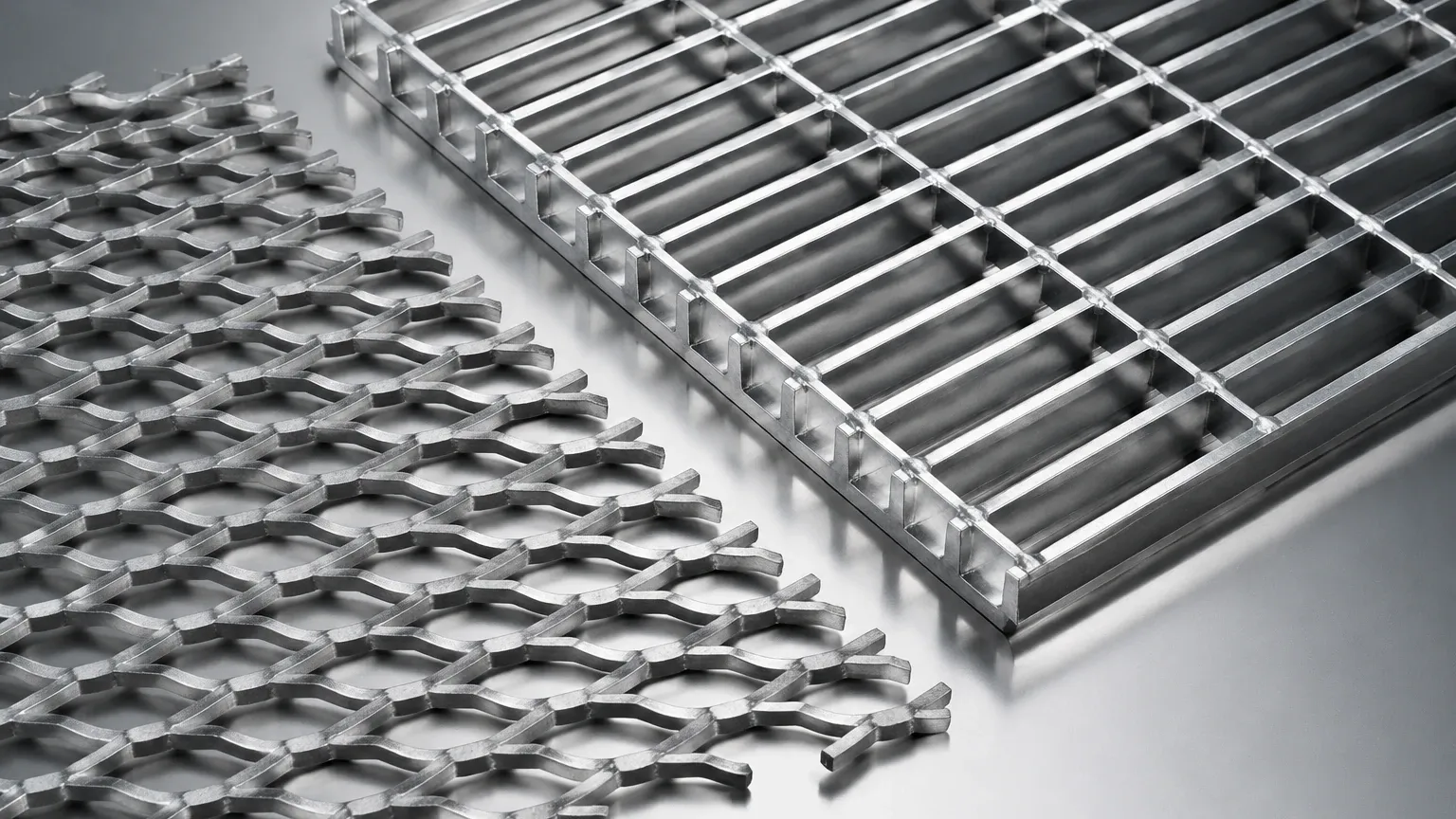
Expanded metal is produced from a single solid sheet of metal, typically stainless steel, carbon steel, or aluminum. The sheet is simultaneously slit and stretched (expanded) into a diamond-shaped pattern. Because it is made from a single piece of material, there are no welds or joints that can fail under stress. The resulting mesh consists of "strands" and "bonds" (the points where strands intersect), which provide a high strength-to-weight ratio.
Bar grating, on the other hand, is an assembly of parallel bearing bars held together by perpendicular cross bars. These components are joined through welding, swaging, or pressure-locking. The bearing bars are the primary load-carrying members, while the cross bars provide lateral stability. This modular construction allows for significantly higher load capacities but involves multiple points of connection that must be monitored for structural fatigue over time.
Manufacturing Processes and Material Efficiency
The manufacturing process is perhaps the most significant differentiator when evaluating expanded metal vs grating from a cost and sustainability perspective.
Expanded metal is often cited as one of the most resource-efficient metal products available. Because the process involves slitting and stretching rather than punching or cutting holes, there is virtually zero scrap or waste produced during fabrication. This efficiency makes expanded metal a cost-effective choice, particularly when using high-value materials like 316L stainless steel. For technical teams focusing on Perforated & Expanded Metal solutions, this lack of waste translates directly into lower material costs per square foot compared to perforated sheets or heavy grating.
Bar grating manufacturing is more labor and energy-intensive. It requires the precise alignment of individual bars followed by high-energy welding or mechanical locking. While this results in a much heavier and more rigid product, the production costs are generally higher due to the increased material volume and the complexity of the assembly process. In applications where extreme weight-bearing is not the primary requirement, expanded metal often provides a more economical alternative without sacrificing necessary functionality.
Load-Bearing Capacity and Mechanical Integrity
When engineers evaluate expanded metal vs grating, load-bearing capacity is usually the primary technical constraint.
Bar grating is specifically engineered for high-load applications. The vertical orientation of the bearing bars provides exceptional resistance to deflection under heavy loads, such as vehicular traffic or heavy industrial machinery. Standard bar grating can span much larger distances between supports than expanded metal. In environments like oil rigs, power plants, or heavy manufacturing floors, grating is the industry standard for primary flooring and mezzanine levels.
Expanded metal is better suited for light to medium-duty applications. While it is remarkably strong for its weight, it is prone to deflection over long spans if not properly supported. In industrial settings, expanded metal is frequently used for catwalks, safety guards, and machine enclosures. It is also a preferred material for filtration support. In many high-pressure filtration systems, expanded metal acts as a rigid outer or inner core for stainless steel filter cartridges, providing the necessary structural reinforcement for fine wire mesh layers without adding excessive weight.
Surface Traction and Safety Considerations
Safety is paramount in industrial environments, particularly regarding slip resistance and the prevention of falling objects. Both expanded metal and grating offer distinct advantages in this area.
Expanded metal is available in two forms: raised (standard) and flattened. Raised expanded metal features strands that are tilted at an angle to the plane of the sheet, creating a naturally slip-resistant surface that is ideal for inclines or areas prone to oil and moisture. The angular edges of the strands provide excellent grip for industrial footwear. However, for applications where a smooth surface is required (such as for rolling carts), flattened expanded metal is used, though it offers less traction.
Bar grating can be manufactured with a serrated surface on the bearing bars to enhance slip resistance. One of the primary safety advantages of grating is its ability to allow large amounts of debris, snow, or liquid to pass through, keeping the walking surface clear. However, the larger openings in standard grating can pose a risk if small tools or components are dropped. In these cases, engineers may specify "close-mesh" grating or add an expanded metal overlay to the grating to catch smaller objects while maintaining the structural benefits of the bars.
Filtration and Industrial Application Suitability
In the context of industrial filtration and fluid dynamics, the comparison of expanded metal vs grating shifts toward open area percentages and flow characteristics.
Expanded metal is a staple in the filtration industry. Its diamond-patterned openings can be manufactured to precise dimensions, allowing it to serve as a primary filter for large particulates or as a support structure for more delicate filter media. The "bond" intersections in expanded metal provide a stable foundation that prevents the migration of wire mesh under high differential pressures. This makes it an essential component in the production of custom stainless steel filter cartridges used in chemical processing and water treatment.
Grating is rarely used as a filtration medium itself due to its large open areas and heavy profile. Instead, it serves as the structural support for large-scale filtration beds or as a protective screen for intake pipes in water treatment facilities. In these roles, the primary concern is not particle retention but rather the ability to withstand the hydraulic forces of high-volume fluid flow.
Maintenance and Longevity in Corrosive Environments
The longevity of these materials depends heavily on the environment and the base alloy used. In sectors like pharmaceutical manufacturing or food and beverage processing, stainless steel is the standard due to its corrosion resistance and ease of sanitation.
Expanded metal made from stainless steel is relatively easy to maintain. Because it is a single piece of metal, there are no crevices or weld points where corrosive agents can accumulate or where bacteria can grow. This "clean" geometry is a significant advantage in food-grade applications.
Bar grating, particularly welded varieties, can be more susceptible to localized corrosion at the weld points if the welding process is not perfectly executed or if the protective oxide layer of the stainless steel is compromised. Furthermore, the intersections between the bearing bars and cross bars can trap moisture and fine particulates, requiring more intensive cleaning protocols in sanitary environments.
Engineering Selection Guide: Which One to Choose?
Choosing between expanded metal vs grating requires a systematic evaluation of the application's specific needs. Engineers should confirm the following data points before finalizing a specification:
1. Span and Load: What is the distance between supports, and what is the maximum expected live and dead load? If the span exceeds 36 inches or involves heavy machinery, bar grating is likely required.
2. Environmental Exposure: Will the material be exposed to caustic chemicals, high humidity, or extreme temperatures? Stainless steel expanded metal is often the most cost-effective solution for corrosive, light-load environments.
3. Open Area Requirements: Does the application require maximum airflow or light penetration? Grating typically offers a larger percentage of open area, whereas expanded metal can be tailored for specific filtration or screening needs.
4. Installation Constraints: Is weight a factor for the supporting structure? Expanded metal's high strength-to-weight ratio can reduce the overall weight of the assembly, potentially lowering the costs of the primary structural frame.
5. Safety Standards: Does the facility require specific slip-resistance ratings or protection against falling objects? The raised strands of expanded metal provide inherent traction that may eliminate the need for additional anti-slip coatings.
Conclusion
Both expanded metal and bar grating are indispensable in modern industrial design. While bar grating remains the superior choice for heavy-duty structural flooring and high-load spans, expanded metal offers unmatched versatility, material efficiency, and performance in filtration and light-to-medium structural applications.
For technical professionals seeking to optimize their filtration systems or industrial platforms, the decision should be based on a rigorous analysis of mechanical requirements and environmental factors. By selecting the right configuration of Perforated & Expanded Metal, companies can ensure a balance of safety, durability, and cost-efficiency in their operations.
