


Where to Buy Expanded Metal
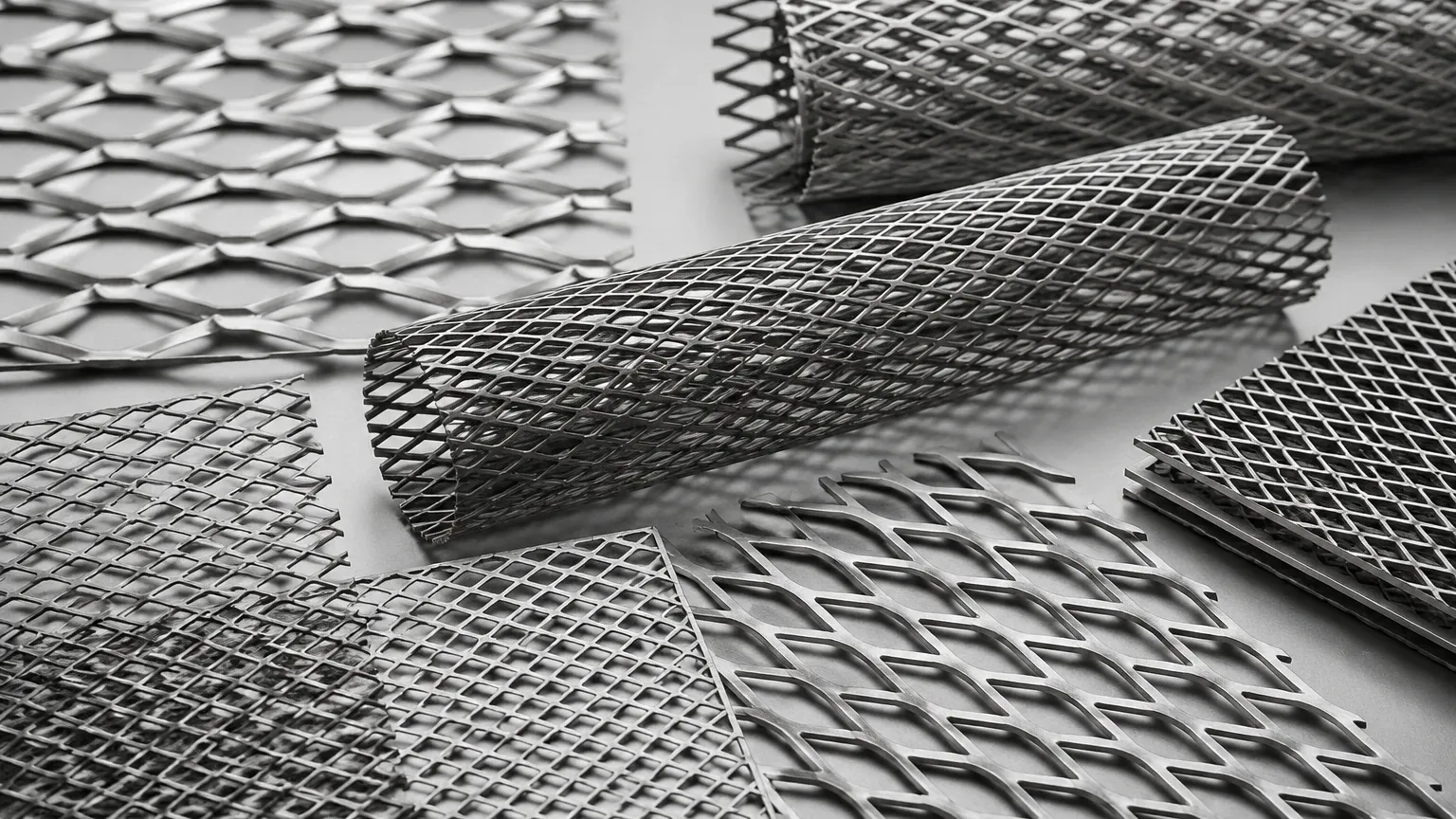
In industrial engineering and filtration design, selecting the right material is a balance of structural integrity, flow efficiency, and chemical compatibility. Expanded metal is a versatile material produced by simultaneously slitting and stretching a solid metal sheet, creating a diamond-shaped pattern of openings. Unlike perforated metal, which involves punching holes and removing material, the expansion process creates no waste, making it a cost-effective choice for many B2B applications. However, for engineers and procurement managers, the challenge often lies in determining where to buy expanded metal that meets precise industrial tolerances and material standards.
Sourcing expanded metal for industrial filtration or heavy-duty machinery requires more than just finding a local metal distributor. It requires a partner who understands the nuances of material behavior under pressure, the requirements of corrosive environments, and the necessity of precise dimensional accuracy. This guide explores the technical considerations and sourcing strategies necessary to acquire high-quality metal components for demanding applications.
The Role of Expanded Metal in Industrial Filtration
In the context of industrial filtration, expanded metal serves two primary functions: as a primary filter medium for coarse particulates and as a structural support for finer filtration layers. Because the expansion process creates a rigid, interconnected structure, it provides exceptional strength-to-weight ratios.
When used as a support layer, expanded metal prevents the deformation of delicate wire mesh or synthetic filter media under high-pressure flow. In hydraulic systems or chemical processing units, the structural stability of the filter cartridge is paramount. A failure in the support structure can lead to media migration, bypass, or complete system failure. Therefore, when evaluating where to buy expanded metal, technical teams must prioritize manufacturers who can provide consistent strand thickness and bond integrity.
Beyond support, expanded metal is frequently used in air intake filters, grease filters, and flame arrestors. Its three-dimensional structure creates a tortuous path for fluid or air, which can aid in the impingement of larger particles or droplets. The choice between "raised" (standard) and "flattened" expanded metal is critical here. Raised expanded metal provides more surface area and turbulence, which may be beneficial for certain air filtration applications, while flattened expanded metal offers a smooth surface that is easier to clean and integrate into multi-layer filter assemblies.
Sourcing Channels: Where to Buy Expanded Metal for Industrial Use
When determining where to buy expanded metal, procurement teams typically choose between three main channels, each with its own set of advantages and limitations.
1. General Metal Service Centers
Local metal service centers are a common starting point for small-scale projects or general construction needs. They typically stock standard sizes and materials, such as carbon steel or aluminum. However, for specialized filtration applications, these centers often lack the material variety (such as 316L stainless steel) and the precision required for industrial components. They may also lack the technical documentation, such as Material Test Reports (MTRs), that are essential for pharmaceutical or food-grade applications.
2. Specialized Industrial Distributors
Industrial distributors focus on components for the manufacturing and processing sectors. They are more likely to carry stainless steel options and have a better understanding of industrial standards. While they offer a broader range of products, they are still intermediaries. For custom dimensions, non-standard diamond sizes, or specific open-area requirements, distributors may have limited flexibility and longer lead times.
3. Direct Manufacturers and OEM Specialists
For engineers requiring custom filtration solutions, buying directly from a manufacturer like Kaifil is often the most reliable route. Direct manufacturers provide several advantages:
* Customization: Ability to specify exact SWD (Short Way of Design) and LWD (Long Way of Design) dimensions.
* Material Expertise: Access to high-grade alloys, including SS304, SS316, and SS316L, which are critical for corrosion resistance.
* Quality Control: Direct oversight of the expansion and flattening processes to ensure uniform mesh patterns and the absence of burrs.
* Technical Support: Direct communication with engineers who can assist in selecting the right Perforated & Expanded Metal specifications for a specific flow rate or pressure drop requirement.
Essential Technical Specifications for Procurement
To ensure that the sourced material performs as expected, procurement documents must include detailed technical specifications. Simply requesting "expanded metal" is insufficient for industrial applications. The following parameters are essential:
SWD and LWD (Diamond Dimensions)
* SWD (Short Way of Design): The distance from the center of one bond to the center of the next bond across the short axis of the diamond.
* LWD (Long Way of Design): The distance across the long axis of the diamond.
These measurements determine the size of the openings and directly impact the filtration accuracy and the structural rigidity of the sheet.
Strand Width and Thickness
* Strand Width: The amount of metal fed into the machine between the dies for each stroke.
* Strand Thickness: The thickness of the original base metal sheet.
Together, these dimensions define the "heaviness" of the mesh and its ability to withstand mechanical stress. In filtration, thicker strands provide better support but may reduce the total open area.
Percentage of Open Area
This is perhaps the most critical metric for engineers. The open area determines the flow rate and the pressure drop across the filter. A higher open area allows for higher flow but may compromise the structural strength. A precise calculation of the open area is necessary to ensure the filter does not become a bottleneck in the system.
Flattened vs. Raised (Standard)
* Raised Expanded Metal: The strands and bonds are set at a uniform angle to the plane of the sheet. This adds strength and rigidity but results in a thicker overall profile.
* Flattened Expanded Metal: The raised sheet is passed through a cold-roll reducing mill, which flattens the strands and bonds into the same plane. This is often preferred for filter cartridges where a smooth outer or inner surface is required to prevent damage to other filter layers.
Material Selection: Why Stainless Steel is Often Necessary
While expanded metal can be made from carbon steel, aluminum, or copper, industrial filtration applications almost exclusively demand stainless steel. When deciding where to buy expanded metal, the availability of specific stainless grades should be a primary filter for potential suppliers.
* Stainless Steel 304: The most common grade, offering good corrosion resistance for general industrial applications, food processing, and water treatment.
* Stainless Steel 316/316L: Contains molybdenum, which provides superior resistance to chlorides and pitting. This is essential for chemical processing, marine environments, and pharmaceutical manufacturing. The "L" (low carbon) version is preferred for components that require welding, as it prevents carbide precipitation.
* Specialty Alloys: In extreme environments involving high temperatures or highly acidic fluids, alloys like Monel or Inconel may be required. Specialized manufacturers are usually the only source for expanded metal in these high-performance materials.
Evaluating Supplier Quality and Reliability
Not all expanded metal is manufactured to the same standard. Poor-quality material can lead to significant operational issues. When evaluating a supplier, consider the following quality indicators:
Dimensional Consistency
In a filtration assembly, the expanded metal must fit perfectly within a housing or frame. Inconsistent diamond sizes or variations in sheet thickness can lead to gaps, which allow unfiltered fluid to bypass the system. A reputable manufacturer uses precision dies and maintains strict tolerances throughout the production run.
Surface Finish and Cleanliness
For the food, beverage, and pharmaceutical industries, surface finish is critical. The expansion process can sometimes leave sharp burrs or oil residues from the machinery. High-quality suppliers offer deburring and ultrasonic cleaning services to ensure the components are "process-ready." Burrs are particularly dangerous in filtration because they can puncture adjacent wire mesh layers or shed metal particles into the process stream.
Material Traceability
In regulated industries, traceability is non-negotiable. Suppliers should be able to provide MTRs that verify the chemical composition and mechanical properties of the steel. This ensures that a component labeled as 316L stainless steel actually meets the ASTM or international standards for that grade.
Common Risks in Sourcing Expanded Metal
Identifying where to buy expanded metal also involves understanding the risks associated with low-cost or unverified sourcing. Common pitfalls include:
* Camber and Out-of-Square Sheets: If the sheet is not perfectly rectangular or has a slight curve (camber), it will be difficult to weld or fit into a cylindrical filter cartridge. This leads to increased labor costs and higher scrap rates during fabrication.
* Inconsistent Open Area: Variations in the expansion stroke can lead to different open areas across the same sheet. This creates uneven flow distribution, which can cause localized clogging and premature filter failure.
* Material Impurities: Lower-grade stainless steel may contain impurities that lead to "tea staining" or localized corrosion, even in environments where the material should theoretically be stable.
Customization and OEM Capabilities
For many B2B buyers, the standard off-the-shelf sizes available at retail outlets are insufficient. Industrial filtration often requires custom-engineered components. A manufacturer with OEM capabilities can provide:
* Custom Slitting and Shearing: Delivering the metal in the exact widths or shapes needed for the production line, reducing waste and processing time at the buyer's facility.
* Cylindrical Forming and Welding: Some manufacturers can provide expanded metal already formed into tubes or cylinders, ready for integration into filter cartridges.
* Layer Integration: In some cases, expanded metal can be sintered or mechanically bonded with wire mesh to create a composite filtration medium with high strength and fine micron ratings.
By working with a specialist like Kaifil, engineers can ensure that the Perforated & Expanded Metal they procure is optimized for their specific application, whether it involves hydraulic oil, corrosive chemicals, or high-purity water.
Total Cost of Ownership Considerations
When deciding where to buy expanded metal, the initial purchase price is only one part of the equation. Procurement professionals should consider the total cost of ownership (TCO), which includes:
* Durability and Replacement Cycles: High-quality stainless steel expanded metal may have a higher upfront cost but lasts significantly longer in corrosive environments, reducing the frequency of maintenance shutdowns.
* Ease of Fabrication: Material that is flat, square, and burr-free reduces the time and labor required for welding and assembly.
* System Efficiency: Precisely engineered open areas minimize pressure drop, which reduces the energy consumption of pumps and compressors within the system.
Conclusion: Making an Informed Sourcing Decision
Expanded metal is a fundamental component in industrial filtration and structural engineering. Finding where to buy expanded metal that meets the rigorous demands of the B2B sector requires a shift from commodity-based purchasing to technical procurement. By focusing on material grades, dimensional tolerances, and the specific needs of the application, engineers can source components that enhance system performance and reliability.
For those in the chemical, pharmaceutical, and food processing industries, the choice of supplier is a choice of quality assurance. Partnering with a manufacturer that specializes in stainless steel filtration solutions ensures that every sheet or component of expanded metal contributes to a more efficient and durable filtration process. When technical precision and material integrity are the priorities, sourcing directly from an experienced manufacturer remains the most effective strategy for achieving long-term operational success.
