


Xg21 Expanded Metal
In the landscape of industrial materials, the selection of structural support components is as critical as the selection of the primary filtration media. Xg21 expanded metal represents a specific heavy-duty mesh profile widely utilized in demanding engineering environments. Unlike traditional woven wire or perforated sheets, expanded metal is manufactured through a simultaneous slitting and stretching process, resulting in a continuous, jointless structure that offers unique mechanical advantages. For engineers and procurement professionals, understanding the technical nuances of xg21 expanded metal is essential for ensuring the structural integrity and efficiency of filtration systems and industrial platforms.
The Geometry and Specifications of XG21 Expanded Metal
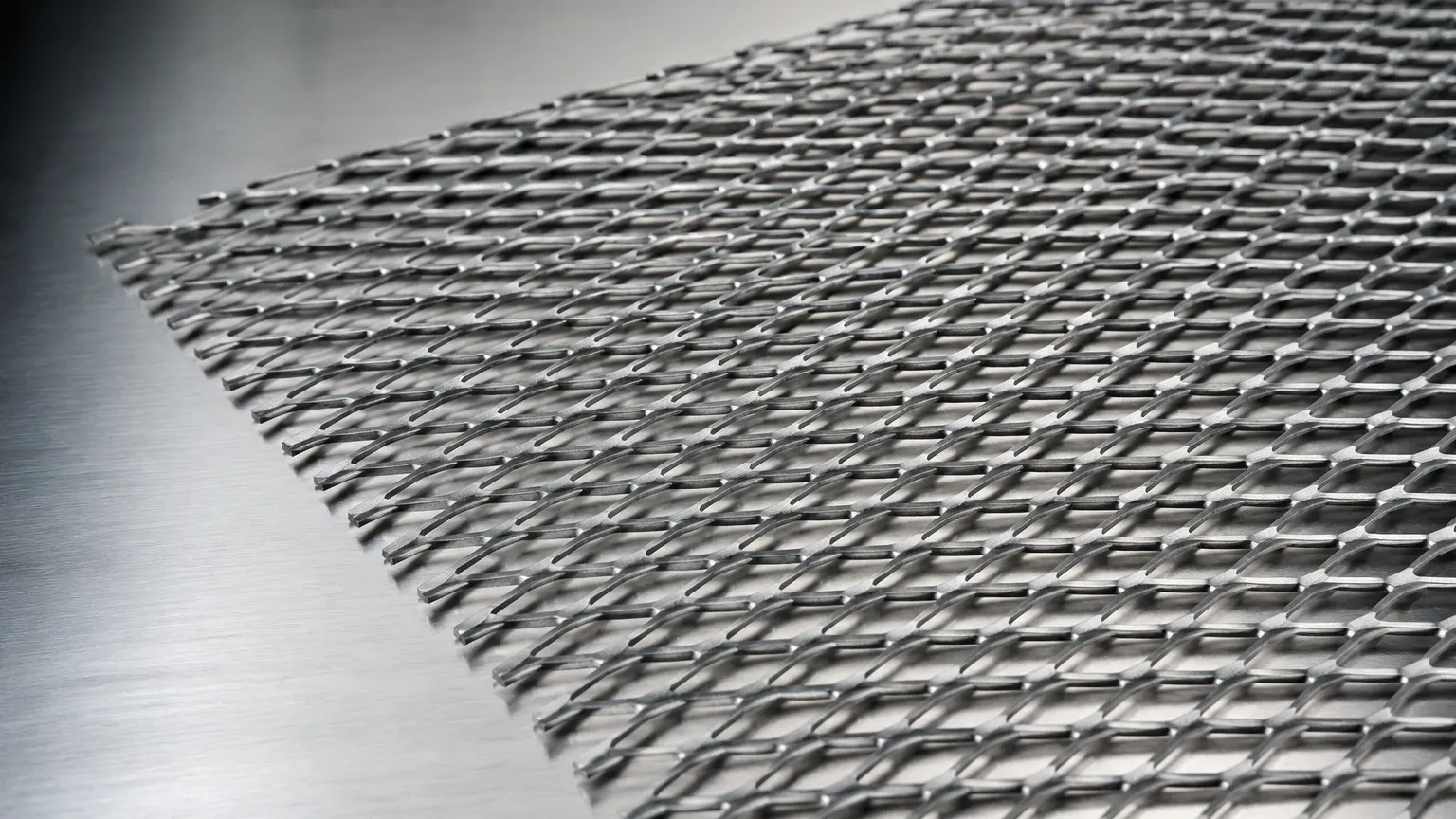
The designation "XG21" refers to a standardized profile within the expanded metal hierarchy, typically characterized by its diamond-shaped openings and heavy-gauge strands. To evaluate this material for industrial use, one must look at four primary dimensions: the Long Way of Mesh (LWM), the Short Way of Mesh (SWM), the strand width, and the strand thickness.
For a standard xg21 expanded metal profile, the LWM is generally approximately 76.2mm (3 inches), while the SWM is approximately 30.5mm (1.2 inches). The strand width and thickness are what define the "heavy-duty" nature of this specific mesh. Typically, the strand thickness for XG21 is around 3.0mm, with a strand width of approximately 4.8mm. These dimensions result in a robust mesh that provides a high strength-to-weight ratio, making it suitable for applications where material weight must be minimized without sacrificing load-bearing capacity.
The geometry of the diamond opening is not merely aesthetic; it dictates the flow characteristics and the structural rigidity of the sheet. In filtration, these dimensions determine the level of support provided to finer mesh layers and the degree of turbulence introduced into the fluid stream.
Manufacturing Advantages: Slitting and Stretching vs. Punching
When comparing Perforated & Expanded Metal, the manufacturing process is the primary differentiator. Perforated metal is created by punching holes into a solid sheet, which results in significant material waste (the "slugs"). In contrast, expanded metal is produced by slitting the metal sheet and then stretching it. This process expands the material to several times its original length while retaining the original weight of the sheet per unit of length.
For xg21 expanded metal, this manufacturing method offers several technical benefits:
1. Structural Integrity: Because the mesh is made from a single piece of metal, there are no welds or joints to fail. The "bonds" (where the strands intersect) are part of the solid metal, providing inherent resistance to shearing and impact.
2. Material Efficiency: Since no material is lost during production, expanded metal is often a more cost-effective solution for large-scale industrial projects compared to heavy-gauge perforated sheets.
3. Anti-Slip Properties: In the "raised" or "standard" form, the strands of XG21 are set at an angle to the plane of the sheet. This creates a natural grip, which is highly valued in industrial walkways and stair treads where oil or moisture may be present.
Integrating XG21 into Industrial Filtration Systems
In the context of professional filtration manufacturing, xg21 expanded metal serves as a critical structural component. High-pressure filtration systems, such as those found in hydraulic circuits or large-scale chemical processing, require filter elements that can withstand significant pressure differentials without collapsing.
Kaifil utilizes heavy-duty expanded metal profiles like XG21 to create the outer cages or inner support cores for stainless steel filter cartridges. In these applications, the expanded metal acts as a skeleton. A finer wire mesh or sintered metal fiber is wrapped around or placed inside the XG21 structure. The large open area of the XG21 ensures that the structural support does not significantly impede the flow of the medium, while the thick strands provide the necessary hoop strength to resist deformation under high-pressure loads.
Furthermore, in coarse filtration or as a primary debris screen, XG21 can be used independently. Its ability to capture large particulates while maintaining a high flow rate makes it an ideal pre-filter in water treatment and intake systems.
Comparing Perforated & Expanded Metal for Support Structures
Engineers often face a choice between using perforated plate or expanded metal for support structures. While both fall under the category of Perforated & Expanded Metal, their performance profiles differ.
* Open Area: Expanded metal typically offers a higher percentage of open area for the same level of structural strength compared to perforated metal. For XG21, the open area is optimized to balance flow and rigidity.
* Weight: For a given thickness and strength, expanded metal is usually lighter than perforated plate. This is a critical consideration in mobile industrial equipment or large-scale suspended filtration assemblies.
* Flow Dynamics: The angled strands of raised expanded metal can influence the direction of fluid flow, which can be used to promote mixing or to deflect incoming high-velocity streams that might otherwise damage delicate inner filter media.
* Customization: Perforated metal offers more flexibility in hole shape (round, square, slotted), whereas expanded metal is primarily limited to diamond or hexagonal patterns. However, for most industrial support applications, the diamond pattern of xg21 expanded metal is more than sufficient.
Engineering Considerations: Open Area and Pressure Differential
When specifying xg21 expanded metal, engineers must calculate the effective open area to predict the pressure drop across the filter element. The open area of XG21 is determined by the relationship between the strand width and the mesh pitch.
In a filtration assembly, the "clean pressure drop" is the initial resistance to flow. If the support structure (the XG21 layer) is too restrictive, it contributes to a higher baseline pressure, reducing the overall efficiency of the system and shortening the service life of the pump. Conversely, if the mesh is too light, it may flex under the "dirty pressure drop"—the increased pressure that occurs as the filter media becomes loaded with contaminants.
Structural failure of the support core can lead to "media migration," where the fine filtration layer is pushed through the support gaps, potentially contaminating the downstream process and causing catastrophic equipment failure. XG21’s 3.0mm thickness provides a safety margin for heavy-duty industrial applications where such failures are unacceptable.
Material Selection: Stainless Steel Grades for XG21
While expanded metal can be produced from carbon steel or aluminum, industrial filtration applications almost exclusively demand stainless steel. The choice of grade is dictated by the chemical environment and temperature of the process.
* Grade 304 Stainless Steel: This is the standard choice for most industrial applications. It offers excellent strength and good corrosion resistance in non-acidic environments. It is commonly used in food and beverage processing and general industrial filtration.
* Grade 316L Stainless Steel: For applications involving marine environments, chlorides, or aggressive chemicals (such as in pharmaceutical or chemical processing), 316L is preferred. The addition of molybdenum provides superior resistance to pitting and crevice corrosion. The "L" (low carbon) designation is crucial if the xg21 expanded metal is to be welded, as it prevents carbide precipitation and ensures the integrity of the welds.
At Kaifil, the focus is on providing these high-performance alloys to ensure that the xg21 expanded metal components match the longevity of the custom filtration solutions they support.
Installation Best Practices for Heavy-Duty Mesh
Proper installation is vital to the performance of xg21 expanded metal. Because the material has a "direction" (the LWM and SWM), it must be oriented correctly to maximize its load-bearing capabilities. Generally, the LWM should run perpendicular to the support spans to provide the greatest rigidity.
When welding XG21 into a frame or onto a filter end cap, TIG (Tungsten Inert Gas) welding is often preferred for stainless steel to ensure clean, precise bonds. It is important to weld at the "bonds" of the expanded metal rather than the mid-strand to ensure maximum strength. Furthermore, engineers should account for the "edge configuration." Expanded metal can be supplied with "random sheared" edges (where diamonds are cut through) or "bond sheared" edges (where the cut is made through the intersections). For filtration cartridges, bond shearing is often preferred to eliminate sharp points that could puncture the primary filter media.
Total Cost of Ownership and Selection Criteria
When evaluating the procurement of xg21 expanded metal, the total cost of ownership should be considered beyond the initial purchase price. Factors such as durability, maintenance requirements, and the impact on system efficiency play a significant role.
1. Durability: A robust XG21 support structure reduces the frequency of filter element replacements by preventing structural deformation.
2. Cleanability: In applications where filters are cleaned and reused (such as backwashing systems), the smooth, continuous strands of expanded metal are easier to clean than woven meshes, which can trap particles in the wire overlaps.
3. Compatibility: Ensure that the material grade and the physical dimensions of the mesh are fully compatible with the housing and the fluid being processed.
Before finalizing a specification, technical teams should confirm the exact dimensions required, the preferred material grade, and whether the application requires "raised" or "flattened" expanded metal. Flattened expanded metal has been cold-rolled to create a smooth, flat surface, which may be necessary if the mesh is in direct contact with a delicate membrane.
By selecting the appropriate Perforated & Expanded Metal profile, such as xg21 expanded metal, engineers can ensure that their filtration systems are built on a foundation of strength and reliability, capable of meeting the rigorous demands of modern industrial processing.
