


How Do You Measure Expanded Metal Mesh
In industrial filtration and structural engineering, precision is the foundation of performance. Expanded metal mesh, a versatile material created by simultaneously slitting and stretching a metal sheet, is widely utilized for its high strength-to-weight ratio and customizable open areas. Whether used as a support medium for stainless steel filter cartridges or as a primary filtration barrier in chemical processing, understanding the exact dimensions of the mesh is critical for ensuring compatibility and flow efficiency.
For engineers and procurement professionals, the question "how do you measure expanded metal mesh?" involves more than just a simple length and width calculation. It requires a technical understanding of diamond geometry, strand dimensions, and the physical state of the material. This guide provides a comprehensive breakdown of the measurement protocols used in the manufacturing and specification of Perforated & Expanded Metal components.
Understanding Expanded Metal Mesh in Industrial Applications
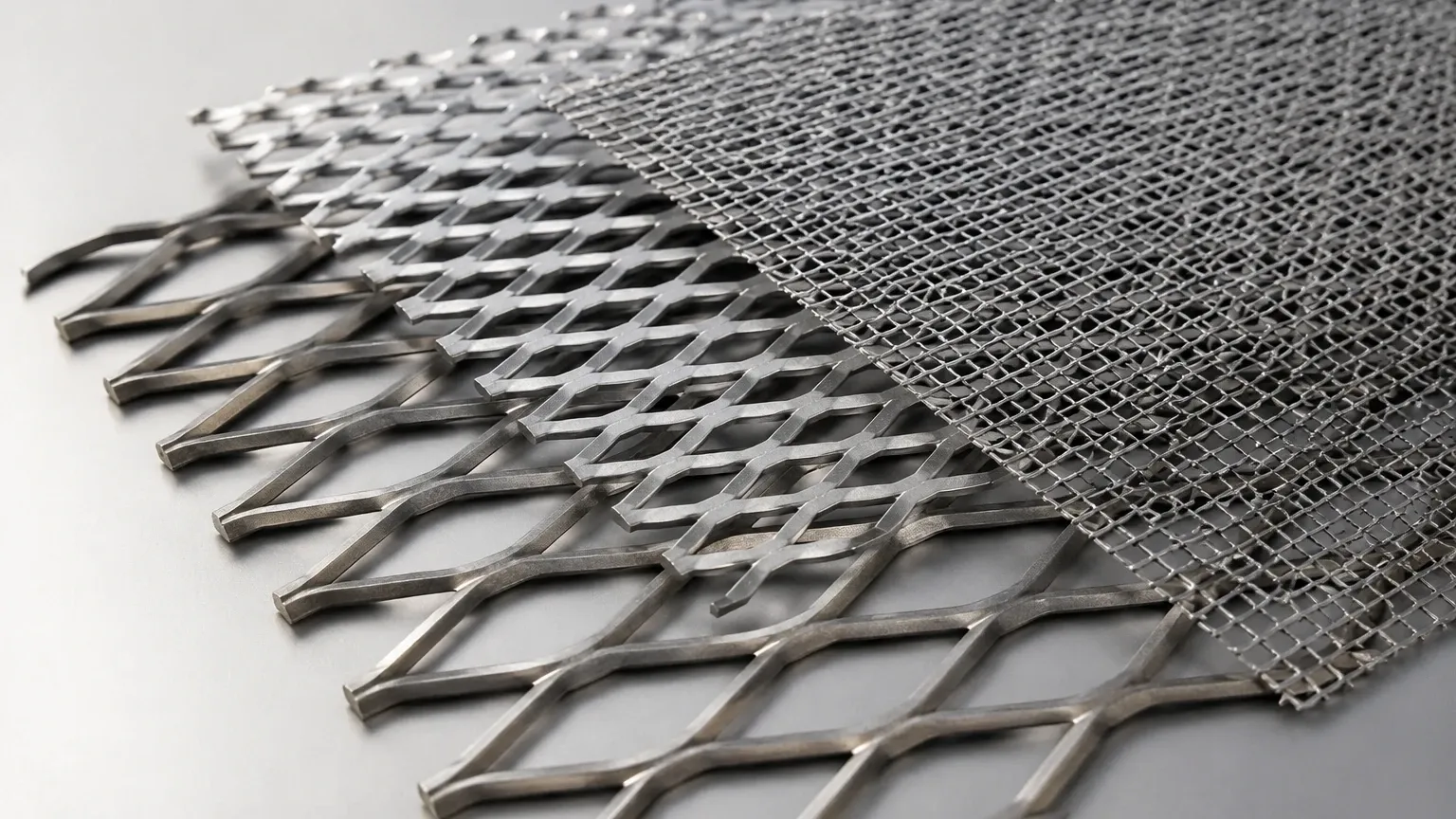
Expanded metal is unique because it is produced from a single piece of material without any waste. The process involves a machine that shears and expands the metal into a diamond-shaped pattern. Because the material is not woven or welded, it maintains structural integrity even when cut into irregular shapes, making it an ideal choice for demanding industrial environments.
In filtration, expanded metal often serves as the inner or outer support core for cylindrical filter elements. It must withstand high differential pressures while providing maximum open area to minimize pressure drop. To achieve these performance goals, the mesh must be specified with extreme accuracy. A deviation of even a fraction of a millimeter in the strand width or diamond opening can significantly alter the filtration characteristics and the mechanical strength of the final assembly.
Key Terminology for Measuring Expanded Metal
Before picking up a measuring tool, it is essential to understand the industry-standard terminology used to describe the geometry of expanded metal. Unlike woven wire mesh, which is often measured by mesh count (wires per inch), expanded metal is defined by the dimensions of its diamond-shaped openings.
SWD and LWD
* SWD (Short Way of Diamond): This is the distance from the center of one bond to the center of the next bond, measured across the short axis of the diamond. It is the most critical dimension for determining the density of the mesh.
* LWD (Long Way of Diamond): This is the distance from the center of one bond to the center of the next bond, measured across the long axis of the diamond.
SWO and LWO
While SWD and LWD measure from center-to-center, engineers often need to know the clear opening size for filtration purposes:
* SWO (Short Way of Opening): The clear distance between the inside edges of the diamond on the short axis.
* LWO (Long Way of Opening): The clear distance between the inside edges of the diamond on the long axis.
Strands and Bonds
* Strands: The individual metal strips that form the sides of the diamond opening.
* Bonds: The intersection point where two strands meet.
* Strand Width: The amount of metal fed into the expanding machine for each stroke. This determines how "thick" the diamond walls appear when looking at the face of the mesh.
* Strand Thickness: This refers to the thickness of the original base metal sheet. In standard expanded metal, this remains constant, but in flattened expanded metal, it may be slightly reduced during the rolling process.
How Do You Measure Expanded Metal Mesh: A Technical Guide
To accurately measure expanded metal mesh for industrial specifications, follow these technical steps. Use high-precision digital calipers for all measurements to ensure the data is reliable for engineering calculations.
Step 1: Identify the Orientation
Place the mesh on a flat surface. Observe the diamond pattern. The diamonds usually run lengthwise across the sheet. Identify the "Short Way" (the vertical axis of the diamond) and the "Long Way" (the horizontal axis of the diamond). Accurate orientation is vital because expanded metal has different structural properties depending on the direction of the load.
Step 2: Measure the SWD and LWD
Using your calipers, measure from the center of one bond to the center of the adjacent bond.
* For SWD, measure vertically across the short axis.
* For LWD, measure horizontally across the long axis.
Note: In some technical drawings, SWD and LWD might be specified as the distance from the top of one diamond to the top of the next. Always confirm with the manufacturer whether they are using center-to-center or edge-to-edge measurements for these specific values.
Step 3: Determine Strand Dimensions
This is where many errors occur. You must distinguish between strand width and strand thickness.
* Strand Width: Measure the width of the metal strip that forms the diamond. Hold the calipers perpendicular to the strand's surface.
* Strand Thickness: Measure the thickness of the metal itself (the gauge). For stainless steel filtration components, this is usually measured in decimals of an inch or millimeters.
Step 4: Calculate the Overall Thickness
In "Standard" (raised) expanded metal, the strands are turned at an angle to the plane of the sheet. Therefore, the overall thickness of the mesh is significantly greater than the strand thickness. Use the depth gauge on your calipers to measure from the highest point of the mesh to the flat surface it is resting on.
Differentiating Between Standard and Flattened Expanded Metal
How do you measure expanded metal mesh when the physical profile changes? The measurement process shifts slightly depending on whether the material is "Standard" or "Flattened."
Standard (Raised) Expanded Metal
Standard expanded metal is the product as it comes off the expanding machine. The strands and bonds are set at a uniform angle to the plane of the sheet. This gives the material a 3D texture and added rigidity. When measuring standard mesh, the "Overall Thickness" is a key metric. This dimension is crucial for calculating clearances in filter housings or determining the volume the mesh will occupy in a multi-layer laminate.
Flattened Expanded Metal
Flattened expanded metal is standard expanded metal that has been passed through a cold-rolling reducing mill. This process flattens the strands and bonds into the same plane, resulting in a smooth, flat surface.
* Dimensional Changes: During flattening, the LWD usually stays the same, but the SWD may elongate slightly.
* Thickness: The overall thickness of flattened mesh is roughly equal to the strand thickness.
* Measurement Focus: For flattened mesh, the focus is often on the LWO and SWO to ensure the clear openings meet the required filtration rating.
Calculating Open Area and Filtration Performance
For B2B applications in the chemical, food and beverage, or pharmaceutical sectors, the percentage of open area is a critical performance indicator. It determines the flow rate and the pressure drop across the filter element.
To calculate the open area of expanded metal, you can use the following formula:
**Percentage of Open Area = (1 – (Strand Width * 2) / SWD) * 100**
This formula provides a theoretical value. In practical engineering, factors such as the angle of the strands in raised mesh can affect the "effective" open area, especially in applications involving fluid dynamics. When selecting Perforated & Expanded Metal for filtration, it is often necessary to balance the open area with the required mechanical strength. A larger open area typically results in lower structural integrity, which may require a thicker base material or a different alloy, such as 316L stainless steel, to maintain performance in corrosive environments.
Material Selection and Manufacturing Tolerances
When measuring and specifying expanded metal, the choice of material significantly impacts the final dimensions and the longevity of the component.
Common Materials
* Stainless Steel (304, 316, 316L): Preferred for industrial filtration due to excellent corrosion resistance and the ability to withstand high temperatures.
* Aluminum: Used where weight is a primary concern, though it offers less mechanical strength than steel.
* Specialty Alloys: For highly corrosive chemical processing, alloys like Monel or Inconel may be specified.
Understanding Tolerances
No manufacturing process is perfect. Standard industrial tolerances for expanded metal usually allow for a slight variance in the SWD and LWD (typically +/- 5% to 10%) and the strand width. If your application requires high-precision fitment—such as a support tube for a pleated filter cartridge—you must specify "tight tolerances" during the procurement phase.
At Kaifil, we emphasize that the precision of the initial measurement directly influences the success of the custom fabrication. Engineers should confirm whether their measurements include the "random shear" or "bond shear" at the edges of the sheet, as this affects the overall width and length of the mesh panel.
Specifying Custom Perforated & Expanded Metal for Filtration
Once you have mastered how to measure expanded metal mesh, the next step is providing a clear specification to your manufacturer. A complete specification should include:
1. Material Grade: (e.g., Stainless Steel 316L)
2. Style Designation: (e.g., 1/2" #13, where 1/2" refers to the nominal SWD)
3. Standard or Flattened: Specify the surface finish.
4. Exact SWD and LWD: The center-to-center measurements.
5. Strand Width and Thickness: The gauge and width of the metal strips.
6. Sheet Size and Orientation: The overall dimensions and which way the diamonds should run (LWD parallel to the length or width).
Working with a specialized manufacturer like Kaifil allows for the development of high-performance filtration components tailored to specific industrial needs. From selecting the right filtration accuracy to ensuring the durability of the mesh in demanding hydraulic or water treatment applications, technical expertise is vital.
Accurate measurement is the first step in optimizing your filtration system. By understanding the nuances of SWD, LWD, and strand geometry, you can ensure that your Perforated & Expanded Metal components provide the reliable, long-term performance required in professional industrial environments.
