


Anping Zhongtai Expanded Metal Mesh Co
In the landscape of industrial filtration and structural support, the selection of metal media is a critical engineering decision that impacts the efficiency, durability, and safety of a system. For procurement teams and engineers evaluating suppliers in the global wire mesh market, Anping Zhongtai Expanded Metal Mesh Co represents a significant entity within the specialized manufacturing hub of Anping, China. This region is globally recognized for its concentrated production of wire mesh, perforated sheets, and expanded metal products. Understanding the technical capabilities of such suppliers, alongside the engineering nuances of Perforated & Expanded Metal, is essential for optimizing industrial processes.
Industrial filtration often requires a balance between structural rigidity and high permeability. Expanded metal, produced through a process of slitting and stretching, offers a unique set of characteristics that differ fundamentally from perforated metal. This guide explores the technical parameters, application considerations, and evaluation criteria necessary when sourcing from specialized manufacturers like Anping Zhongtai Expanded Metal Mesh Co.
The Manufacturing Process of Expanded Metal Mesh
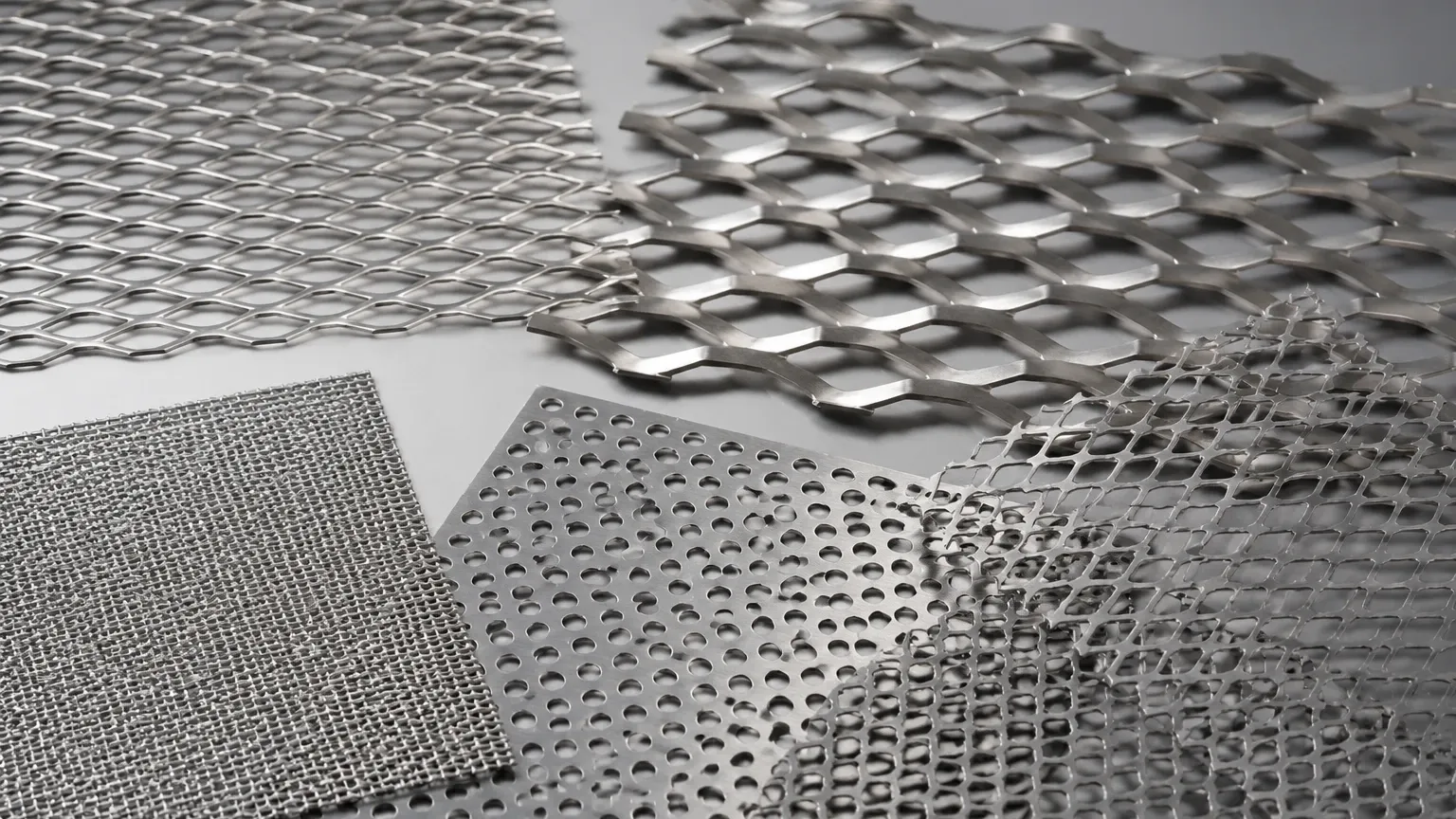
Expanded metal is manufactured by simultaneously slitting and stretching a solid sheet of metal. Unlike perforated metal, which involves punching holes and generating scrap material, the expansion process is a non-waste method. This efficiency often translates to a lower cost per square foot for the end-user while maintaining high structural integrity.
Slitting and Stretching Mechanics
The process begins with a metal coil or sheet—typically stainless steel, carbon steel, or aluminum. A reciprocating knife slits the metal at regular intervals while the sheet is pulled forward. The resulting "diamonds" or hexagonal openings are formed as the metal is stretched. The points where the strands meet are known as "bonds," which remain part of the solid metal sheet, ensuring that the mesh does not unravel even if cut.
Standard vs. Flattened Expanded Metal
Engineers must specify whether they require "standard" (raised) or "flattened" expanded metal.
1. Standard Expanded Metal: This version retains the angular profile created during the stretching process. The strands are set at an angle to the plane of the sheet, providing a three-dimensional surface that offers excellent grip and high strength-to-weight ratios. In filtration, this profile can help create turbulence, which may be desirable in certain fluid dynamics applications.
2. Flattened Expanded Metal: After the expansion process, the sheet is passed through a cold-rolling mill. This flattens the strands and bonds back into a single plane, reducing the overall thickness and creating a smooth surface. Flattened mesh is often preferred for filter support layers where a flush contact surface is required to prevent damage to delicate filter membranes.
Sourcing from Anping Zhongtai Expanded Metal Mesh Co: Evaluation Criteria
When evaluating a regional manufacturer such as Anping Zhongtai Expanded Metal Mesh Co, industrial buyers must look beyond basic dimensions. The Anping region hosts thousands of factories, ranging from small workshops to large-scale industrial operations. To ensure the quality of Perforated & Expanded Metal components, several technical benchmarks must be verified.
Material Certification and Traceability
In chemical processing and pharmaceutical applications, material grade is non-negotiable. A supplier must provide Mill Test Reports (MTRs) that confirm the chemical composition of the alloy. For instance, if 316L stainless steel is specified for its corrosion resistance, the molybdenum content must be verified to ensure it meets ASTM or ISO standards. Sourcing from Anping Zhongtai Expanded Metal Mesh Co requires a clear agreement on these documentation standards before production begins.
Dimensional Tolerance and Consistency
In automated assembly lines, even minor deviations in sheet size or mesh alignment can lead to equipment downtime. Engineers should confirm the manufacturer’s ability to hold tight tolerances on the Long Way of the Diamond (LWD) and Short Way of the Diamond (SWD). Inconsistent expansion can lead to variations in the open area percentage, which directly affects the pressure drop across a filter element.
Technical Specifications: LWD, SWD, and Strand Geometry
To accurately communicate requirements to a manufacturer, engineers use a specific set of measurements. These definitions are standard across the industry, including for products produced by Anping Zhongtai Expanded Metal Mesh Co.
* LWD (Long Way of the Diamond): The distance from a point on a bond to the corresponding point on the next bond measured across the long axis.
* SWD (Short Way of the Diamond): The distance measured across the short axis.
* Strand Width: The amount of metal fed into the knives for each slit.
* Strand Thickness: The thickness of the original base metal sheet.
* Open Area: Calculated as a percentage, this indicates how much of the sheet is comprised of openings. This is the most critical value for filtration engineers, as it determines the flow rate and particle retention capabilities.
For example, a mesh with a large LWD and a narrow strand width will provide a high open area, suitable for high-flow ventilation or primary filtration. Conversely, a small SWD with a thick strand provides a heavy-duty reinforcement layer for high-pressure hydraulic filters.
Perforated vs. Expanded Metal in Industrial Filtration
While Anping Zhongtai Expanded Metal Mesh Co may produce both, the choice between perforated and expanded metal depends on the specific mechanical requirements of the application.
Structural Rigidity
Expanded metal is generally stronger than an equivalent weight of perforated metal. Because the bonds are integral to the sheet, the material distributes loads more effectively. This makes it an ideal support cage for pleated filter cartridges, where the mesh must withstand significant outward pressure from the fluid flow.
Flow Characteristics
Perforated metal offers more precise control over hole geometry. If a project requires perfectly round holes of a specific micron rating, perforated metal is the superior choice. However, expanded metal’s diamond-shaped openings are often more cost-effective for secondary support layers or debris screens where exact hole geometry is less critical than overall porosity.
Cost Efficiency
As mentioned, the lack of scrap in the expanded metal process makes it a more economical choice for large-scale industrial projects. When sourcing from high-volume manufacturers in Anping, this cost advantage is often amplified, provided that the quality control systems are robust enough to meet the project's technical specifications.
Material Grades and Corrosion Resistance
The environment in which the Perforated & Expanded Metal will operate dictates the material selection. Suppliers like Anping Zhongtai Expanded Metal Mesh Co typically offer a variety of alloys:
* Austenitic Stainless Steel (304, 316L): The standard for food, beverage, and pharmaceutical industries due to its corrosion resistance and ease of cleaning.
* Carbon Steel: Suitable for oil-based hydraulic fluids or applications where the mesh will be coated or galvanized to prevent oxidation.
* Aluminum: Used where weight reduction is a priority, such as in aerospace filtration or mobile industrial equipment.
* Specialty Alloys (Monel, Inconel): Required for extreme temperatures or highly acidic environments in chemical processing.
Engineers must also consider the finish of the metal. For expanded metal, "deburring" is a critical post-production step. The expansion process can leave sharp edges on the strands, which can tear filter media or cause injury during handling. Specifying a tumbled or chemically polished finish is often necessary for high-end filtration assemblies.
Quality Control and Compliance in Custom Metal Fabrication
When working with international suppliers like Anping Zhongtai Expanded Metal Mesh Co, establishing a clear Quality Management System (QMS) is vital. For B2B buyers, this involves more than just checking a certificate on a website. It requires a deep dive into the manufacturer's internal testing protocols.
Visual and Mechanical Inspection
Key inspection points include:
* Flatness: Ensuring the sheet does not have a camber or bow that would interfere with welding or framing.
* Bond Integrity: Checking for cracks at the bonds, which can occur if the metal is over-stretched or if the base material is too brittle.
* Uniformity of Openings: Using optical measurement tools to ensure the LWD and SWD remain constant across the entire roll or sheet.
Customization and Engineering Support
While many suppliers in Anping focus on standard commodity sizes, complex industrial projects often require customization. This includes custom shearing to specific dimensions, annealing to improve ductility for further forming, or welding the mesh into cylindrical shapes for filter cartridges. Evaluating whether a supplier can handle these secondary operations in-house or through reliable partners is a key step in the procurement process.
Conclusion: Optimizing Your Filtration Supply Chain
Selecting the right mesh involves a thorough understanding of both the material science and the manufacturing landscape. Entities like Anping Zhongtai Expanded Metal Mesh Co provide the industrial capacity needed for large-scale requirements, but the responsibility of technical verification remains with the engineering and procurement teams. By focusing on precise specifications—such as LWD/SWD ratios, material certifications, and the choice between standard and flattened profiles—professionals can ensure that their Perforated & Expanded Metal components deliver the required performance.
Whether the goal is to provide a rigid backbone for a high-pressure hydraulic filter or to create a durable screen for wastewater treatment, the integration of high-quality expanded metal is a proven engineering solution. As the global market for precision filtration continues to evolve, maintaining rigorous standards for supplier evaluation and material testing will remain the cornerstone of successful industrial operations.
