


Expanded Metal 1/2 #13
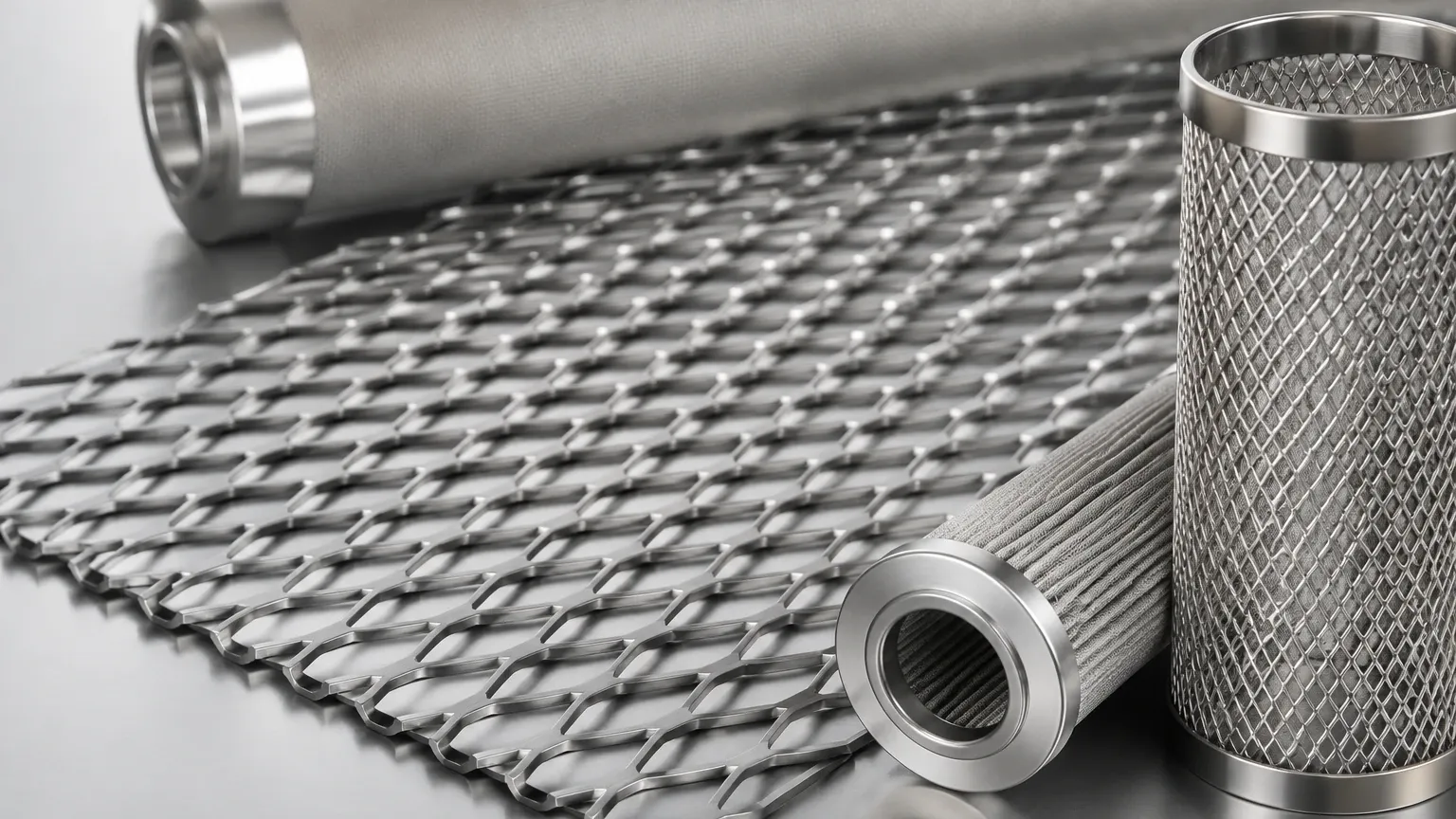
In industrial filtration and structural engineering, selecting the correct material for support and separation is critical to the longevity and efficiency of a system. Expanded metal 1/2 #13 is a specific designation that technical professionals frequently encounter when designing filter housings, machine guards, and structural reinforcements. This material is characterized by its diamond-shaped openings and a specific gauge that balances weight with mechanical strength.
Unlike perforated metal, which is created by punching holes and removing material, expanded metal is produced by simultaneously slitting and stretching a solid sheet. This process creates a continuous piece of metal without joins or welds, resulting in a high strength-to-weight ratio. For engineers and purchasing teams, understanding the nuances of the 1/2 #13 specification is essential for ensuring that the component meets the rigorous demands of industrial environments.
Understanding the Technical Specifications of 1/2 #13 Expanded Metal
The nomenclature "1/2 #13" provides two vital pieces of information regarding the geometry and thickness of the material.
1. 1/2 (Short Way of Design – SWD): This refers to the nominal dimension of the diamond opening, measured from the center of one bond to the center of the next bond across the short axis of the diamond. In practical terms, a 1/2-inch designation typically results in an actual opening width of approximately 0.4 inch to 0.5 inch, depending on whether the material is standard or flattened.
2. #13 (Gauge): This indicates the thickness of the original metal sheet before it was expanded. For carbon steel, #13 gauge is approximately 0.090 inches thick. When applied to stainless steel, the thickness may vary slightly based on manufacturer standards, but it remains a heavy-duty option compared to lighter #18 or #20 gauges.
Standard vs. Flattened Expanded Metal
When specifying Perforated & Expanded Metal, engineers must choose between "Standard" (raised) and "Flattened" varieties.
* Standard Expanded Metal: This is the product as it comes off the expanding machine. The strands and bonds are set at a sharp angle to the plane of the sheet. This provides maximum rigidity and a slip-resistant surface, which is often preferred for debris screens or heavy-duty filter guards where turbulence is not a primary concern.
* Flattened Expanded Metal: This is standard expanded metal that has been cold-rolled through a mill. This process flattens the strands and bonds, creating a smooth, level surface. Flattened expanded metal 1/2 #13 is often preferred in filtration applications where the metal serves as a backing for fine wire mesh. The smooth surface prevents the mesh from being abraded or punctured by the raised edges of standard expanded metal.
Material Selection for Industrial Filtration and Support
The performance of expanded metal 1/2 #13 is heavily influenced by the alloy from which it is manufactured. In B2B industrial contexts, material selection is driven by chemical compatibility, temperature requirements, and mechanical stress.
Stainless Steel (304 and 316L)
For most filtration and chemical processing applications, stainless steel is the standard choice.
* Grade 304: Offers excellent strength and basic corrosion resistance. It is suitable for food processing, architectural guards, and general industrial filtration where exposure to aggressive acids is limited.
* Grade 316L: Contains molybdenum, which provides superior resistance to chlorides and pitting. This is the preferred material for marine environments, pharmaceutical manufacturing, and high-temperature filtration systems where the integrity of the filter support must be maintained over long cycles.
Carbon Steel and Aluminum
While stainless steel is dominant in filtration, carbon steel expanded metal 1/2 #13 is frequently used for machine guarding and structural panels where corrosion is managed via powder coating or galvanizing. Aluminum expanded metal is chosen for its lightweight properties and natural resistance to atmospheric corrosion, though it lacks the high-pressure tolerance of steel in hydraulic or high-flow filtration applications.
Engineering Considerations: Performance and Durability
When integrating expanded metal 1/2 #13 into a filtration system or an industrial assembly, engineers must evaluate several performance metrics to ensure the component does not become a point of failure.
Open Area and Flow Rates
The "open area" percentage is perhaps the most critical metric for filtration engineers. It determines the pressure drop across the filter and the velocity of the fluid or gas passing through. For expanded metal 1/2 #13, the open area typically ranges between 50% and 60%.
A higher open area reduces the resistance to flow but can compromise the structural integrity of the sheet. Engineers must balance the need for high throughput with the requirement for the expanded metal to support the primary filtration media (such as a sintered wire mesh or a non-woven fabric) against high differential pressures.
Structural Integrity and Load Bearing
The #13 gauge provides significant structural rigidity. In a filter cartridge, the expanded metal often acts as the outer guard or the inner core. It must withstand the "crush pressure" of the system. If the expanded metal is too thin, it may buckle under pressure, leading to the bypass of unfiltered fluid or the total collapse of the filter element. The 1/2-inch diamond size provides a dense enough pattern to support fine media without allowing it to sag into the openings, a phenomenon known as "media migration."
Applications in Filtration and Industrial Processing
The versatility of expanded metal 1/2 #13 makes it a staple in several high-demand sectors. Kaifil’s manufacturing capabilities allow for the customization of these components to fit specific industrial needs.
Filter Cartridge Guards and Cores
In large-scale industrial liquid filtration, expanded metal is used to protect the delicate pleats of a filter cartridge. The 1/2 #13 specification is robust enough to protect against mechanical damage during installation and maintenance while providing enough open area to ensure the filter operates at peak efficiency.
Intake Screens and Debris Filters
For water treatment and power generation plants, expanded metal 1/2 #13 is used in intake screens to prevent large debris from entering pumps and heat exchangers. The diamond pattern is effective at catching linear debris (like sticks or plastic strips) that might pass through circular perforated holes of a similar size.
Catalyst Support Trays
In chemical reactors, expanded metal sheets are used as trays to hold catalyst pellets. The #13 gauge ensures the tray can support the weight of the catalyst bed even at elevated temperatures, while the 1/2-inch openings allow for the efficient passage of reactants and products.
Customization and Fabrication Options
Standard sheets of expanded metal 1/2 #13 are rarely used in their raw form for B2B applications. Fabrication is usually required to integrate the metal into a larger assembly.
* Precision Shearing: Cutting expanded metal requires specialized equipment to ensure the edges are clean and the diamond pattern is not distorted. For filtration components, maintaining the dimensional tolerance of the outer diameter (OD) and inner diameter (ID) is critical for a proper seal.
* Forming and Rolling: Expanded metal can be rolled into cylinders to create filter cores. Because of the diamond orientation, the metal has a "natural" direction for bending. Engineers should specify whether the LWD (Long Way of Design) or SWD should run parallel to the cylinder axis to optimize strength.
* Welding and Joining: Stainless steel expanded metal is typically joined using TIG (Tungsten Inert Gas) or spot welding. Care must be taken to ensure that the welds do not create "dead zones" where bacteria or contaminants can accumulate, especially in food-grade or pharmaceutical applications.
* Surface Finishing: To enhance corrosion resistance and cleanliness, components can undergo electropolishing or passivation. This is particularly important for 316L stainless steel used in sterile environments.
Procurement and Quality Verification
When purchasing expanded metal 1/2 #13, technical buyers should look beyond the basic price per square foot. The total cost of ownership is determined by the quality of the manufacturing and the accuracy of the material certifications.
What to Confirm Before Ordering
1. Material Certification: Ensure the supplier provides MTRs (Material Test Reports) to verify the alloy composition, especially for 316L stainless steel.
2. Dimensional Tolerances: Specify the allowable variance in sheet size, flatness, and diamond dimensions. In precision filtration, even a small deviation can lead to assembly issues.
3. Edge Treatment: Determine if the edges should be "bonded" (closed diamonds) or "random sheared" (open diamonds). Bonded edges are safer to handle and easier to weld but may increase the cost due to higher precision requirements.
4. Cleaning Standards: For oxygen service or pharmaceutical use, the metal must be free of oils, lubricants, and metal fines from the expanding process.
By focusing on these technical details, engineers can ensure that their choice of expanded metal 1/2 #13 provides the necessary support and durability for their specific industrial application. Whether used as a standalone screen or as a critical component in a complex filtration assembly, the 1/2 #13 specification remains a reliable standard in the metal processing industry.
