


16 Gauge Expanded Metal
In the landscape of industrial filtration and structural support, material selection is a critical engineering decision that dictates the longevity, efficiency, and safety of a system. Among the various specifications available to engineers, 16 gauge expanded metal stands out as a versatile and robust choice. This material thickness, approximately 0.0598 inches (1.52 mm), provides an optimal balance between structural rigidity and workable weight, making it a staple in the production of filter cores, protective screens, and architectural panels.
As a specialized manufacturer, Kaifil utilizes Perforated & Expanded Metal to create high-performance filtration components. Understanding the technical nuances of 16 gauge expanded metal—from its manufacturing process to its flow dynamics—is essential for procurement teams and design engineers who must meet stringent industrial standards in chemical processing, water treatment, and food production.
Understanding 16 Gauge Expanded Metal in Industrial Contexts
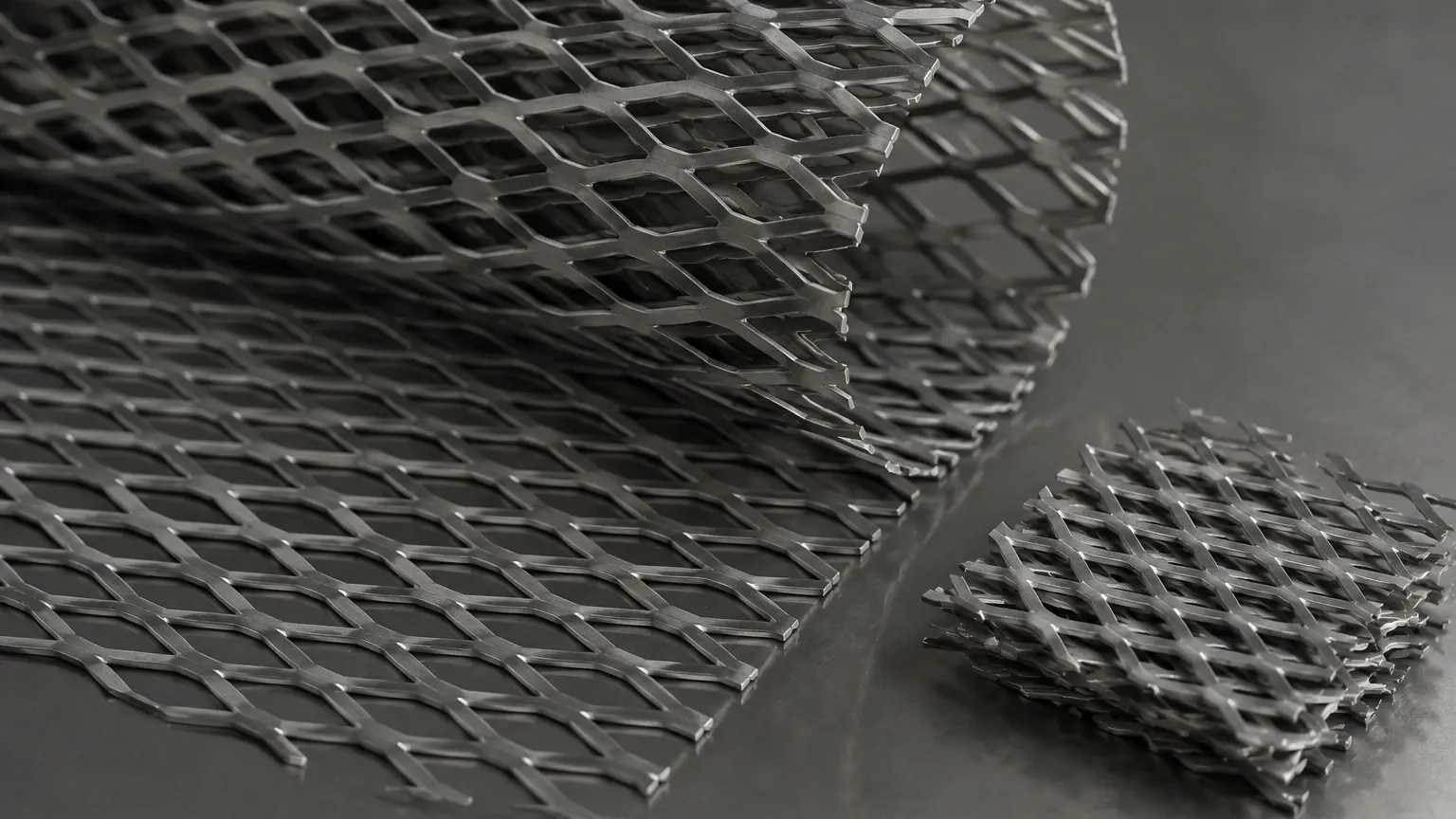
Expanded metal is produced through a process of slitting and stretching a solid metal sheet. Unlike perforated metal, which involves punching holes and generating scrap material, expanded metal is created without any waste. The "16 gauge" designation refers to the thickness of the original sheet before the expansion process. For stainless steel, 16 gauge is a standard industrial thickness that offers significant resistance to mechanical deformation while remaining light enough for easy installation and maintenance.
In filtration applications, 16 gauge expanded metal often serves as the "backbone" of a filter assembly. Whether used as an outer cage for a pleated filter cartridge or an internal support core for fine wire mesh, the material must withstand differential pressures without collapsing. The expansion process creates a diamond-shaped pattern that inherently distributes stress more evenly than a solid sheet with drilled holes, providing superior strength-to-weight ratios.
Technical Specifications: SWD, LWD, and Strand Geometry
When specifying 16 gauge expanded metal, engineers must look beyond the gauge thickness. The performance of the material is defined by its diamond geometry, which includes:
* SWD (Short Way of Design): The distance from the center of one bond to the center of the next bond across the short axis of the diamond.
* LWD (Long Way of Design): The distance across the long axis of the diamond.
* Strand Width: The amount of metal fed into the expanding machine between slits.
* Strand Thickness: The original gauge of the metal (in this case, 16 gauge).
For a standard 16 gauge expanded metal sheet, common diamond sizes might range from 1/4" to 1-1/2". A smaller SWD results in a denser mesh with higher structural integrity but lower open area. Conversely, a larger LWD increases the open area, reducing the weight and the pressure drop across the screen, which is vital for high-flow liquid filtration systems.
Material Selection: Stainless Steel vs. Carbon Steel
The choice of alloy is as important as the gauge. While 16 gauge expanded metal can be produced from various materials, industrial filtration typically demands stainless steel due to its corrosion resistance and thermal stability.
1. 304 Stainless Steel: The most common grade, offering excellent durability and resistance to atmospheric corrosion. It is widely used in general industrial applications where extreme chemical exposure is not a factor.
2. 316L Stainless Steel: For pharmaceutical, food and beverage, and marine applications, 316L is the preferred choice. The addition of molybdenum provides enhanced resistance to pitting and crevice corrosion in chloride-rich environments. The "L" (low carbon) designation ensures that the material remains corrosion-resistant after welding, which is a common fabrication step for filter cartridges.
3. Specialty Alloys: In highly corrosive chemical processing, materials like Monel or Hastelloy may be expanded in a 16 gauge format to provide long-term reliability under aggressive pH levels.
Standard vs. Flattened Expanded Metal
Engineers must decide between "Standard" (raised) and "Flattened" expanded metal. This choice significantly impacts the fluid dynamics and cleaning protocols of a filtration system.
* Standard (Raised) Expanded Metal: In this form, the strands and bonds are set at a uniform angle to the plane of the sheet. This creates a three-dimensional surface that adds extra rigidity. In air filtration or mist elimination, the raised edges can help break up flow and capture droplets. However, the uneven surface can be more difficult to clean in "clean-in-place" (CIP) systems.
* Flattened Expanded Metal: This is standard expanded metal that has been cold-rolled to create a smooth, flat surface. Flattening reduces the overall thickness of the sheet slightly but ensures that the material is easier to handle and less likely to snag fine filter media. For liquid filtration, flattened 16 gauge expanded metal is often preferred because it provides a uniform support surface for delicate wire mesh layers, preventing the mesh from being cut by raised edges under high pressure.
Engineering Considerations for Filtration and Support
When integrating 16 gauge expanded metal into a B2B industrial project, several engineering factors must be calculated to ensure system efficiency.
Open Area and Flow Rates
The percentage of open area determines the flow capacity and the pressure drop (delta P). A 16 gauge sheet with a large diamond pattern may offer an open area of 60-80%, allowing for high-volume throughput. Engineers must balance the need for a high open area with the requirement for mechanical support. If the open area is too high, the strands may be too thin to support the filter media during backwashing or high-pressure surges.
Structural Load and Pressure Differential
In hydraulic and high-viscosity liquid applications, the filter core is subjected to significant inward or outward pressure. 16 gauge expanded metal provides the necessary hoop strength to prevent the collapse of cylindrical filter elements. By calculating the yield strength of the selected stainless steel grade and the geometric properties of the expansion, designers can predict the maximum allowable pressure differential before permanent deformation occurs.
Media Compatibility
16 gauge expanded metal is rarely used as the primary filtration layer for fine particles. Instead, it acts as a protector or support for fine wire mesh or non-woven media. The diamond pattern must be sized appropriately so that the finer media does not "blind" or sag into the openings. Kaifil’s engineering team often assists in selecting the correct diamond size to ensure the secondary media remains taut and effective throughout its service life.
Applications Across Demanding Industries
The versatility of 16 gauge expanded metal allows it to serve multiple functions across various sectors:
* Chemical Processing: Used as internal support structures for catalyst baskets and chemical strainers where durability and chemical resistance are paramount.
* Food and Beverage: 16 gauge 316L stainless steel expanded metal is used in juice extraction and dairy processing screens. Its smooth, flattened version meets hygiene standards by eliminating crevices where bacteria could proliferate.
* Water Treatment: Large-scale intake screens and pre-filtration systems utilize expanded metal to remove coarse debris before the water reaches more sensitive membrane systems.
* Hydraulic Systems: Serving as the outer protective wrap for hydraulic oil filters, protecting the delicate internal pleats from mechanical damage during handling and operation.
Customization and OEM Capabilities
Standard off-the-shelf expanded metal sheets often fail to meet the precise tolerances required for high-end industrial filtration. This is where custom manufacturing becomes essential. For B2B clients, customization of 16 gauge expanded metal includes:
* Precision Slitting: Cutting sheets to exact widths for seamless integration into automated assembly lines.
* Cylindrical Forming and Welding: Rolling expanded metal into tubes with specific diameters and welding the seams to create rigid filter cores.
* Surface Finishes: Electropolishing or passivating stainless steel components to enhance corrosion resistance and meet sanitary requirements.
* Custom Diamond Patterns: Adjusting the feed rate and tool size to create a specific open area percentage tailored to a unique flow requirement.
Kaifil provides these OEM services, ensuring that the 16 gauge components are not just raw materials, but engineered parts ready for immediate assembly into complex filtration systems.
Maintenance, Replacement, and Total Cost of Ownership
While the initial cost of 16 gauge stainless steel expanded metal may be higher than thinner gauges or carbon steel alternatives, the total cost of ownership (TCO) is generally lower. The durability of 16 gauge material reduces the frequency of replacements caused by mechanical failure or corrosion.
Maintenance teams should regularly inspect expanded metal components for:
* Strand Erosion: In high-velocity systems containing abrasive particles, the leading edges of the strands can wear down over time.
* Chemical Pitting: Even stainless steel can succumb to localized corrosion if the environment changes or if cleaning agents are not thoroughly rinsed.
* Mechanical Fatigue: Repeated pressure cycles can eventually lead to stress cracks at the bonds of the diamonds.
Because 16 gauge expanded metal is a robust material, it can often be cleaned and reused multiple times. Ultrasonic cleaning and high-pressure washing are effective methods for removing accumulated debris from the diamond apertures, provided the cleaning process does not exceed the material's mechanical limits.
Conclusion: Selecting the Right Partner for Filtration Solutions
Selecting 16 gauge expanded metal is a decision that impacts the entire lifecycle of an industrial filtration system. From ensuring the structural integrity of a filter core to optimizing the flow of a chemical process, the technical details of the material cannot be overlooked. By focusing on material grade, diamond geometry, and the choice between standard or flattened finishes, engineers can design systems that are both efficient and durable.
For organizations looking to integrate these components into their products, partnering with a manufacturer that understands the intersection of metallurgy and filtration science is vital. Kaifil offers the expertise required to navigate these technical choices, providing high-quality Perforated & Expanded Metal solutions that meet the rigorous demands of global industry. Whether you are developing a new hydraulic filter or upgrading a chemical processing plant, the right 16 gauge expanded metal specification will ensure your system performs reliably under the most challenging conditions.
