


#13 Expanded Metal
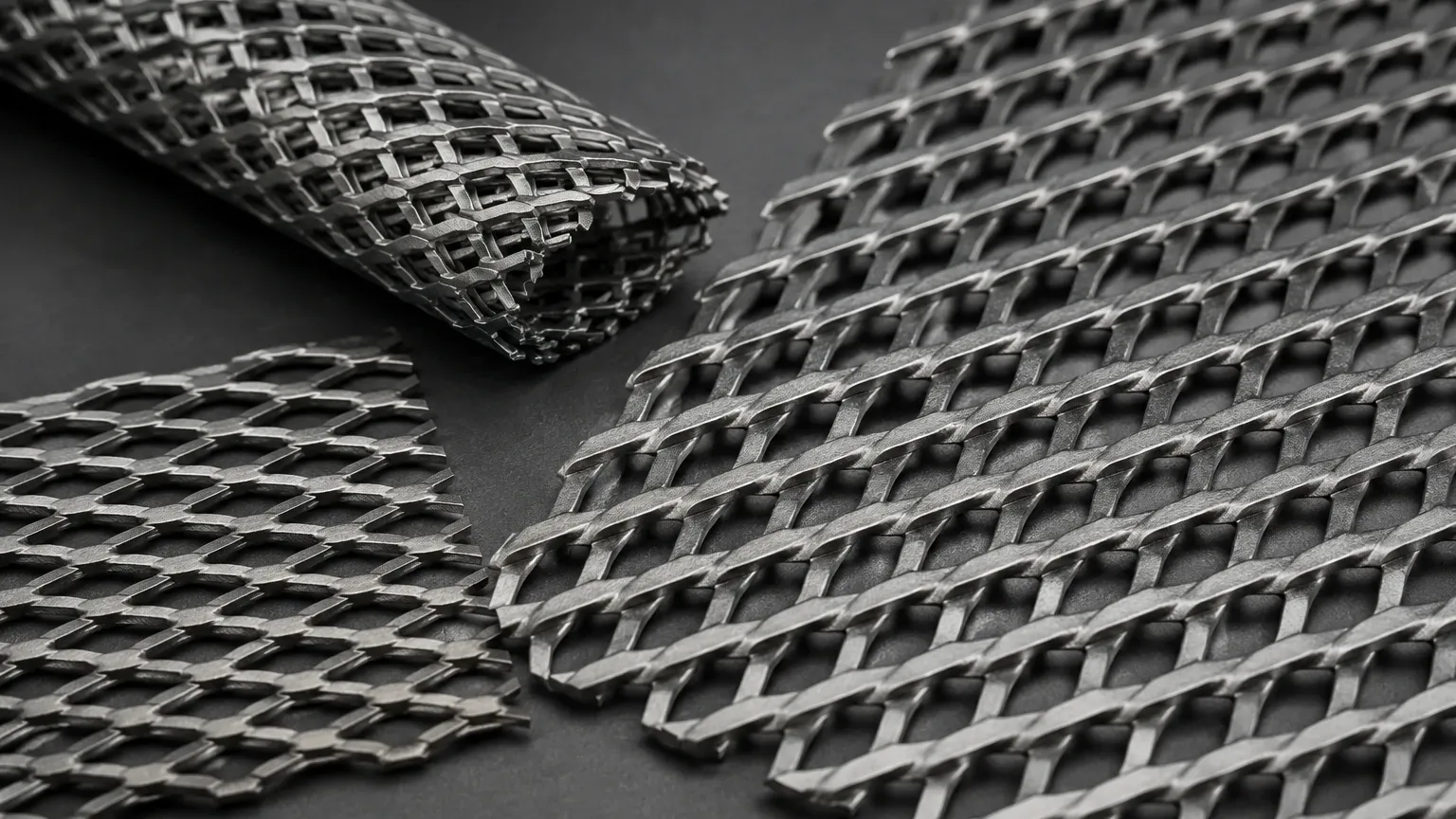
In industrial filtration and structural engineering, the selection of supporting materials is as critical as the selection of the primary filtration media. Among the various options in the Perforated & Expanded Metal category, #13 expanded metal stands out as a versatile, medium-duty solution. This specific designation refers to a style of metal mesh produced by simultaneously slitting and stretching a solid sheet of metal—typically stainless steel, carbon steel, or aluminum—to create a diamond-patterned structure without any material waste.
For engineers and procurement specialists, understanding the technical nuances of #13 expanded metal is essential for ensuring the structural integrity of filtration systems, protective guards, and industrial partitions. As a specialized manufacturer of stainless steel filtration solutions, Kaifil provides precision-engineered expanded metal components designed to meet the rigorous demands of chemical processing, hydraulic systems, and water treatment applications.
Understanding the Technical Specifications of #13 Expanded Metal
To properly integrate #13 expanded metal into an industrial design, one must understand the specific measurements that define this style. The designation "#13" traditionally correlates with the thickness of the base material, but the performance of the mesh is determined by four primary dimensions: the Short Way of Design (SWD), the Long Way of Design (LWD), the strand width, and the strand thickness.
Dimensional Standards
In a standard #13 expanded metal configuration, the SWD (the distance from the center of one bond to the center of the next bond across the short axis) is typically around 0.500 inches. The LWD (the distance across the long axis) usually measures approximately 1.200 inches. These dimensions create a diamond opening that provides a specific percentage of open area, which is a critical calculation for fluid dynamics and airflow in filtration environments.
Gauge and Weight
The "#13" designation implies a nominal thickness of approximately 0.090 inches (roughly 13 gauge). When manufactured from stainless steel, this provides a robust strength-to-weight ratio. The weight per square foot is a vital consideration for shipping costs and structural loading; for example, standard #13 carbon steel expanded metal weighs approximately 1.47 pounds per square foot, while stainless steel variants may differ slightly based on alloy density.
Standard vs. Flattened #13 Expanded Metal
One of the most important decisions an engineer must make when specifying #13 expanded metal is whether to use the "Standard" (raised) or "Flattened" version. Both types begin as standard expanded metal, but their physical characteristics and application suitability differ significantly.
Standard (Raised) Expanded Metal
Standard #13 expanded metal features strands that are set at a sharp angle to the plane of the sheet. This creates a three-dimensional surface that offers several functional advantages:
* Rigidity: The angled strands provide greater structural stiffness than a flat sheet of the same weight.
* Grip and Deflection: The raised surface is ideal for applications requiring slip resistance or the deflection of debris.
* Filtration Turbulence: In certain fluid processing applications, the raised profile can induce beneficial turbulence, though it may also increase pressure drop.
Flattened Expanded Metal
Flattened #13 expanded metal is produced by passing the standard raised sheet through a cold-roll reducing mill. This process flattens the strands and bonds into a single plane, resulting in a smooth, level surface. Engineers often prefer flattened #13 for:
* Filter Media Support: When used as a backing for fine wire mesh, a flattened surface prevents the mesh from being punctured or deformed by raised edges.
* Safety and Handling: The absence of sharp, raised edges makes flattened metal safer for components that require frequent manual cleaning or maintenance.
* Precision Thickness: Flattening provides a more consistent overall thickness, which is critical for components that must fit into tight tolerances within a filter housing.
The Role of #13 Expanded Metal in Industrial Filtration
While expanded metal is used across many industries, its role in high-performance filtration is particularly specialized. In the context of Perforated & Expanded Metal solutions, #13 expanded metal often serves as the "skeleton" for complex filtration assemblies.
Structural Support for Pleated Media
In heavy-duty hydraulic or chemical filters, the primary filtration media (such as fine stainless steel wire mesh) lacks the mechanical strength to withstand high differential pressures. #13 expanded metal is frequently used as an inner or outer support core. Its diamond pattern provides a high percentage of open area (typically between 60% and 80%), ensuring that the support structure does not significantly impede flow while preventing the collapse of the delicate filter media.
Coarse Pre-Filtration and Strainers
In applications involving large particulate matter, such as water intake systems or industrial wastewater treatment, #13 expanded metal can serve as a primary strainer. Its durability allows it to capture large debris, protecting downstream precision filters from premature clogging or mechanical damage. The choice of stainless steel (304 or 316L) ensures that these components remain corrosion-resistant even when submerged in aggressive process fluids.
Flow Distribution
Properly oriented expanded metal can help distribute fluid flow evenly across the surface of a filter. By breaking up laminar flow, the mesh ensures that the entire surface area of the filter media is utilized, extending the service life of the cartridge and improving overall filtration efficiency.
Material Selection: Stainless Steel vs. Alternatives
Kaifil specializes in stainless steel filtration, and for #13 expanded metal, the choice of alloy is a primary engineering consideration. While carbon steel is cost-effective for dry, non-corrosive environments, industrial filtration almost exclusively demands stainless steel.
1. Type 304 Stainless Steel: This is the standard choice for most industrial applications. It offers excellent strength and good corrosion resistance for food and beverage processing and general chemical applications.
2. Type 316L Stainless Steel: For marine environments, pharmaceutical production, or highly acidic chemical processing, 316L is preferred. The addition of molybdenum provides superior resistance to pitting and crevice corrosion, particularly in chloride-rich environments.
3. Specialty Alloys: In extreme cases involving high temperatures or highly reactive chemicals, alloys like Monel or Inconel may be used in an expanded format, though #13 is most commonly stocked in 304 and 316.
Engineering Considerations and Customization
When sourcing #13 expanded metal, generic off-the-shelf sheets may not meet the precision requirements of a technical project. Customization is often necessary to ensure seamless integration into existing systems.
Edge Conditions and Tolerances
One of the most frequent issues in expanded metal procurement is the "edge condition." Sheets can be supplied with "random shears" (where the diamonds are cut at any point) or "bond shears" (where the cut is made exactly through the intersection of the diamonds). For filtration cartridges, bond shearing is often required to ensure a clean welding surface and to prevent sharp "fingers" from protruding and damaging other components.
Custom Sizing and Forming
Kaifil provides OEM services that include cutting #13 expanded metal to exact circular, rectangular, or cylindrical dimensions. Because expanding metal involves stretching, the material can exhibit "camber" (a slight bow in the sheet). Precision manufacturing processes are required to minimize camber and ensure that the finished component meets the strict dimensional tolerances required for automated assembly lines.
Selection Criteria for Engineers and Purchasing Teams
Before finalizing a purchase order for #13 expanded metal, technical teams should confirm the following parameters to avoid performance failures or installation delays:
* Open Area Requirements: Does the ~70% open area of #13 meet the flow rate requirements of the system? If a higher flow rate is needed, a lighter gauge or larger diamond may be necessary.
* Direction of the Diamond: The orientation of the LWD and SWD relative to the flow or the structural load can affect the strength of the part. Typically, the LWD runs parallel to the width of the sheet.
* Surface Finish: For pharmaceutical or food-grade applications, does the metal require electropolishing or ultrasonic cleaning to remove manufacturing oils and burrs?
* Compatibility: If the expanded metal will be welded to a housing, ensure the material grades match (e.g., 316L expanded metal should be welded to 316L plate or pipe) to prevent galvanic corrosion or weld failure.
Common Risks and Quality Assurance
The manufacturing process for expanded metal is inherently violent, involving high-pressure shearing. This can lead to several quality risks if not managed by an experienced manufacturer like Kaifil:
* Burrs and Sharp Edges: Standard expanded metal has sharp edges by nature. In filtration, these burrs can break off and become downstream contaminants (media migration). Specifying deburring or choosing flattened and polished variants can mitigate this risk.
* Material Fatigue: If the expansion process is not controlled, micro-fractures can occur at the bonds. In high-vibration environments, such as hydraulic systems, these fractures can lead to total structural failure.
* Inconsistent Gauge: Lower-quality suppliers may use sub-standard base sheets, leading to variations in strand thickness that compromise the calculated burst pressure of a filter cartridge.
Conclusion: Optimizing Performance with #13 Expanded Metal
#13 expanded metal is more than just a piece of hardware; it is a critical engineering component that provides the necessary balance of porosity and strength for industrial applications. Whether utilized as a protective guard or a high-pressure filter support, its performance depends on precise specification and quality manufacturing.
By focusing on the technical details—from the distinction between standard and flattened profiles to the selection of the correct stainless steel alloy—engineers can ensure their filtration systems operate at peak efficiency with minimal maintenance. For those seeking reliable, customized Perforated & Expanded Metal solutions, partnering with a manufacturer that understands the complexities of industrial filtration is the most effective way to achieve long-term operational success.
