


.25 Expanded Metal
In industrial filtration and structural engineering, the selection of mesh materials is a critical decision that impacts the efficiency, durability, and mechanical integrity of the final product. Among the various specifications available, .25 expanded metal—typically referring to a diamond-shaped mesh with a nominal 1/4-inch Short Way of Diamond (SWD) opening—serves as a versatile solution for medium-duty applications. As a specialized manufacturer of stainless steel filtration components, Kaifil provides high-precision Perforated & Expanded Metal solutions designed to meet the rigorous demands of chemical processing, food and beverage production, and hydraulic systems.
Understanding the technical nuances of .25 expanded metal is essential for engineers and procurement teams. This guide explores the geometry, material properties, manufacturing variations, and engineering considerations necessary to optimize filtration performance and structural support.
Technical Geometry and Specifications
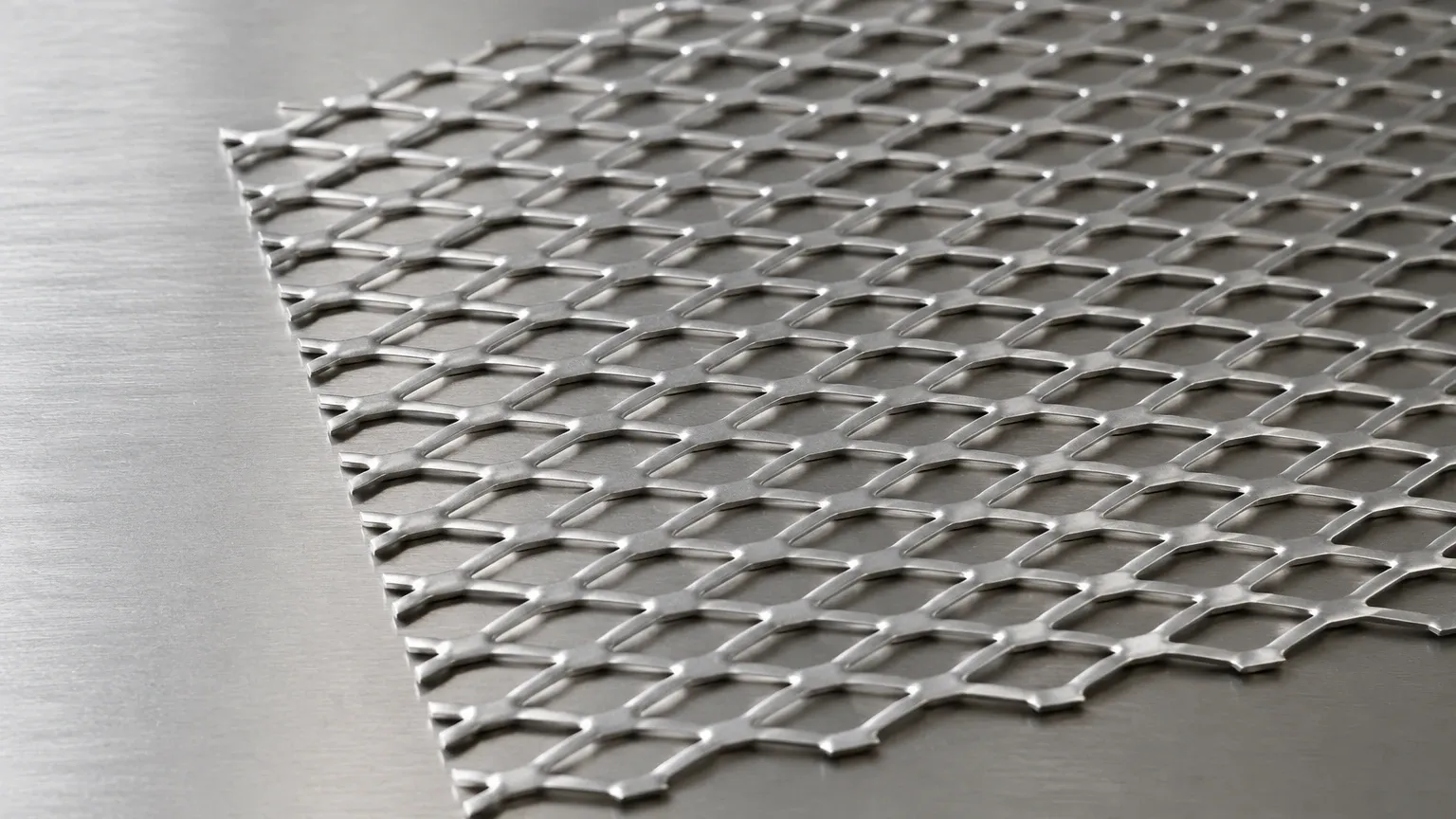
Expanded metal is produced by simultaneously slitting and stretching a solid metal sheet. Unlike perforated metal, which involves punching holes and generating scrap, the expansion process is a "no-waste" manufacturing method that increases the overall surface area of the original material. For .25 expanded metal, several geometric factors define its performance.
SWD and LWD
* Short Way of Diamond (SWD): This is the distance from the center of one bond to the center of the next bond across the short axis. In .25 expanded metal, this dimension is nominally 0.25 inches. It determines the primary filtration or screening capability of the mesh.
* Long Way of Diamond (LWD): This is the distance across the long axis of the diamond. The ratio between SWD and LWD affects the mesh's elongation properties and its aesthetic appearance.
Strand Dimensions
* Strand Width: The amount of metal fed into the expanding machine between slits. This directly influences the open area and the weight of the mesh.
* Strand Thickness: The thickness of the original base metal. For industrial filtration, maintaining precise strand thickness is vital for ensuring the mesh can withstand high-pressure differentials without deforming.
Open Area Percentage
The open area is a calculation of the void space relative to the total area of the sheet. For a .25 expanded metal specification, the open area typically ranges from 40% to 70%, depending on the strand width. Engineers must balance the need for high flow rates (higher open area) with the requirement for structural rigidity (lower open area).
Manufacturing Variations: Standard vs. Flattened
When specifying .25 expanded metal, engineers must choose between two primary finishes: standard (raised) and flattened. Each has distinct mechanical properties that suit different industrial roles.
Standard (Raised) Expanded Metal
In its standard form, the strands and bonds are set at a uniform angle to the plane of the sheet. This creates a three-dimensional profile that offers:
* Enhanced Grip and Turbulence: The raised edges can be beneficial in applications requiring high surface area for catalyst support or to induce turbulence in fluid flow.
* Maximum Rigidity: The angular orientation of the strands provides a high strength-to-weight ratio, making it ideal for support cages in large filter housings.
Flattened Expanded Metal
Flattened expanded metal is produced by passing the standard expanded sheet through a cold-roll reducing mill. This process levels the strands and bonds into a single plane. For filtration applications, flattened .25 expanded metal is often preferred because:
* Pleating Compatibility: A flat profile is easier to pleat alongside fine wire mesh or synthetic filter media, preventing the sharp edges of raised strands from puncturing the primary filter layer.
* Uniform Thickness: It provides a consistent thickness across the entire sheet, which is critical for maintaining tight tolerances in cylindrical filter cartridges.
* Smooth Surface: The lack of raised edges reduces the risk of particulate entrapment in the mesh itself, facilitating easier cleaning and backwashing.
Material Selection and Corrosion Resistance
At Kaifil, we emphasize the use of high-grade stainless steel for .25 expanded metal to ensure longevity in demanding environments. While carbon steel and aluminum are available, stainless steel is the industry standard for B2B filtration solutions.
Grade 304 Stainless Steel
Grade 304 is the most common choice for general industrial applications. It offers excellent formability and good corrosion resistance for water treatment, food processing, and general manufacturing. It is cost-effective but may not be suitable for highly acidic or chloride-rich environments.
Grade 316/316L Stainless Steel
For chemical processing and marine applications, Grade 316 is the preferred material. The addition of molybdenum enhances resistance to pitting and crevice corrosion. Grade 316L (low carbon) is specifically utilized when welding is required, as it prevents carbide precipitation and maintains the integrity of the mesh bonds during the fabrication of filter cartridges.
Specialty Alloys
In extreme cases involving high temperatures or highly aggressive chemicals, alloys such as Monel, Inconel, or Duplex stainless steel may be specified. These materials ensure that the .25 expanded metal retains its mechanical properties under thermal stress and chemical attack.
The Role of .25 Expanded Metal in Filtration Systems
In the context of industrial filtration, .25 expanded metal rarely acts as the final filtration barrier. Instead, it serves several critical secondary roles within a multi-stage system.
1. Support Cores for Filter Cartridges
High-efficiency filter cartridges often utilize fine wire mesh or non-woven media that lacks the structural strength to withstand high differential pressures. A .25 expanded metal cylinder acts as an internal or external support core, preventing the fine media from collapsing or bursting under flow stress.
2. Coarse Pre-Filtration
In water intake systems or large-scale chemical reactors, .25 expanded metal can serve as a primary screen to remove large debris, protecting downstream pumps and sensitive fine filters from mechanical damage.
3. Flow Distribution
The diamond geometry of expanded metal helps to break up laminar flow and distribute fluid more evenly across the surface of a primary filter medium. This prevents "channeling," where fluid flows through a small portion of the filter, leading to premature clogging and reduced service life.
4. Catalyst Bed Support
In the petrochemical industry, expanded metal is used to support catalyst beds. The .25-inch opening is often the ideal size to retain catalyst pellets while allowing for high-velocity gas or liquid throughput.
Engineering Considerations for Selection
Before finalizing a purchase order for .25 expanded metal, engineers should evaluate the following performance metrics:
* Pressure Drop (ΔP): Calculate the expected pressure drop across the mesh based on the fluid viscosity and flow velocity. While .25 expanded metal has a high open area, the strand width and thickness will influence the resistance to flow.
* Mechanical Load: Determine if the mesh will be subjected to static or dynamic loads. If the mesh is supporting a heavy filter cake, the strand thickness must be sufficient to prevent sagging.
* Chemical Compatibility: Ensure the selected stainless steel grade is compatible with the process fluid, especially at elevated temperatures. Consult corrosion charts to verify the longevity of the material.
* Fabrication Requirements: Will the mesh be rolled into a cylinder, welded, or framed? Flattened expanded metal is generally more conducive to precision welding and forming.
Quality Evaluation and Procurement
When sourcing .25 expanded metal for industrial projects, it is vital to work with a manufacturer that understands the precision required for filtration components. At Kaifil, we adhere to strict quality control standards to ensure that every sheet or component meets the specified tolerances.
What to Confirm with Your Supplier:
1. Opening Accuracy: Verify that the SWD is consistently 0.25 inches. Inconsistencies can lead to uneven support or bypass in filtration applications.
2. Edge Treatment: For safety and ease of assembly, confirm whether the edges should be "random sheared" or "bond sheared." Bond shearing provides a smoother edge with fewer sharp points.
3. Cleanliness Levels: For pharmaceutical or food-grade applications, inquire about ultrasonic cleaning or passivating treatments to remove residual oils and contaminants from the manufacturing process.
4. Flatness Tolerances: If the mesh is to be used in a high-precision assembly, specify the maximum allowable camber or bow in the sheet.
Conclusion
.25 expanded metal is a foundational component in the design of robust industrial filtration systems. Its unique diamond geometry, combined with the strength and corrosion resistance of stainless steel, makes it an ideal choice for support structures, pre-filters, and flow distributors. By carefully considering the choice between standard and flattened finishes, selecting the appropriate material grade, and calculating the required open area, engineers can significantly improve the performance and lifespan of their filtration equipment.
Kaifil remains committed to providing technical expertise and customized manufacturing for all Perforated & Expanded Metal requirements. Whether you are designing a new hydraulic filter or upgrading a chemical processing line, our team can assist in selecting the exact specifications needed for your application. For technical consultations or to review our full range of metal filtration products, please contact our engineering department to discuss your project requirements.
