


Expanded Metal 4×4
In industrial manufacturing and filtration engineering, the specification of materials often dictates the efficiency and longevity of the final system. Expanded metal 4×4—typically referring to 4-foot by 4-foot sheet dimensions or specific mesh opening configurations—serves as a versatile substrate and structural component in demanding environments. For engineers and procurement specialists, understanding the mechanical properties, material grades, and fabrication nuances of this material is essential for optimizing filtration performance and structural integrity.
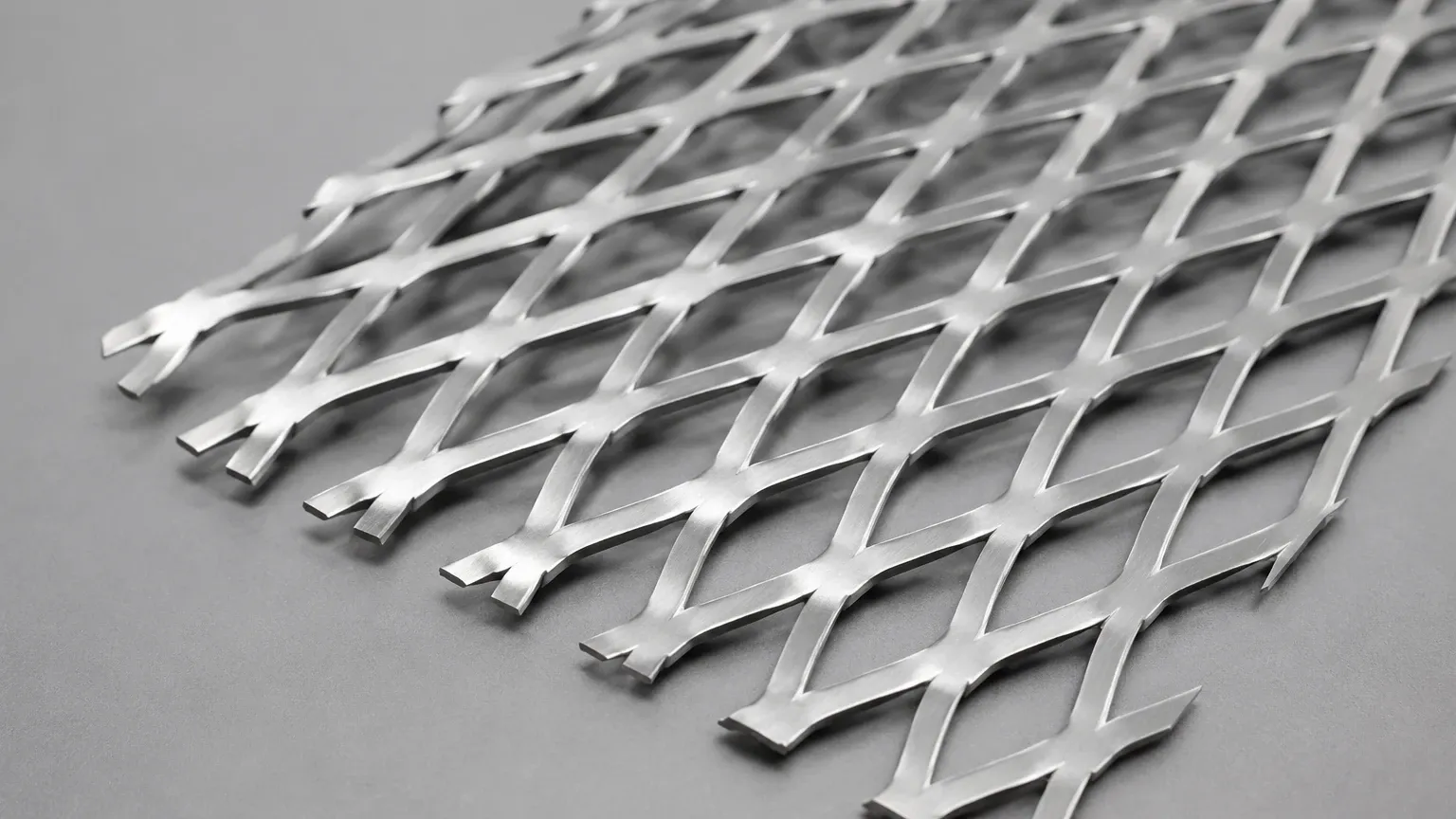
Perforated & Expanded Metal products are foundational to various industrial processes. Unlike perforated metal, which is created by punching holes and removing material, expanded metal is produced by simultaneously slitting and stretching the base sheet. This process creates a diamond-shaped pattern without any material waste, resulting in a high strength-to-weight ratio that is particularly beneficial in heavy-duty filtration and industrial support applications.
Understanding the Specifications of Expanded Metal 4×4
When discussing "4×4" in the context of expanded metal, it is necessary to distinguish between sheet dimensions and mesh opening sizes. In most B2B procurement scenarios, expanded metal 4×4 refers to a standard sheet size of 48 inches by 48 inches. This size is frequently used as the primary stock for fabricating filter cartridge cages, support guards, and industrial screens.
Geometric Parameters: LWD and SWD
Beyond the external dimensions of the sheet, the performance of the material is defined by its internal geometry. The diamond openings are measured by the Long Way of the Diamond (LWD) and the Short Way of the Diamond (SWD). For filtration applications, these dimensions determine the level of mechanical support provided to finer filter media, such as wire mesh or non-woven fabrics.
Standard vs. Flattened Expanded Metal
Engineers must choose between "standard" (raised) and "flattened" expanded metal. Standard expanded metal features strands that are turned at an angle to the plane of the sheet, providing maximum rigidity and a slip-resistant surface. Flattened expanded metal undergoes an additional cold-rolling process that levels the strands into a single plane. For filtration applications, flattened expanded metal 4×4 is often preferred because it provides a smooth contact surface for delicate filter membranes, reducing the risk of mechanical abrasion or tearing under high-pressure flow.
Material Selection and Engineering Considerations
The choice of alloy is the most critical factor in determining the service life of expanded metal components. In the chemical processing, pharmaceutical, and food and beverage industries, stainless steel is the industry standard due to its corrosion resistance and hygienic properties.
Stainless Steel Grades: 304 vs. 316L
* Type 304 Stainless Steel: This is the most common grade used for general industrial applications. It offers excellent formability and weldability, making it ideal for standard expanded metal 4×4 sheets used in non-corrosive or mildly corrosive environments.
* Type 316/316L Stainless Steel: For applications involving chlorides, high-salinity environments, or aggressive chemical filtration, 316L is required. The addition of molybdenum enhances pitting resistance. In hydraulic and oil-gas filtration, using 316L expanded metal ensures that the structural core of the filter does not succumb to stress corrosion cracking over time.
Mechanical Integrity and Load Bearing
The expansion process creates a continuous piece of metal without welds or joints. This continuity allows for superior stress distribution. When used as a support core in high-pressure hydraulic filters, expanded metal 4×4 must withstand significant differential pressures. Engineers must calculate the strand thickness and width to ensure the material does not deform under the mechanical load exerted by the fluid flow.
Applications in Industrial Filtration and Support
Expanded metal is rarely a standalone filter medium for fine particles; instead, it functions as a critical structural component within a multi-layered filtration system.
Filter Cartridge Cores and Guards
In the production of industrial filter cartridges, expanded metal 4×4 sheets are rolled into cylinders to serve as internal cores or external guards. The internal core must resist the inward pressure (collapse pressure) of the fluid, while the external guard protects the filter media from mechanical damage during installation and maintenance. The open area of the expanded metal ensures that the structural support does not significantly impede the flow of the process fluid.
Pre-filtration and Debris Screening
In water treatment and intake systems, expanded metal with larger diamond openings (often referred to in the context of expanded metal 4×4 sheet stock) acts as a primary screen. It captures large debris, such as leaves, plastic, or stones, protecting downstream pumps and finer filtration stages. The rigid nature of the expanded diamonds prevents the screen from sagging or vibrating under high flow velocities.
Support for Fine Wire Mesh
Fine stainless steel wire mesh lacks the structural rigidity to maintain its shape under pressure. By laminating or backing the mesh with expanded metal, engineers can create a composite filter element that combines high filtration accuracy with extreme mechanical strength. This is common in polymer filtration and high-viscosity chemical processing.
Evaluating Performance: Open Area and Flow Rates
A primary concern for engineers when selecting Perforated & Expanded Metal is the percentage of open area. This metric directly influences the pressure drop across the filter and the total throughput of the system.
Calculating Open Area
The open area in expanded metal is determined by the relationship between the strand width and the diamond size (LWD and SWD). Unlike perforated metal, where the open area is a simple ratio of hole area to total area, expanded metal calculations must account for the angle of the strands in standard (raised) configurations. A higher open area reduces the initial pressure drop but may compromise the structural rigidity of the sheet.
Flow Dynamics and Turbulence
In high-velocity gas or liquid filtration, the geometry of the expanded metal can induce localized turbulence. While this can sometimes be beneficial for mixing, in most filtration scenarios, engineers aim for laminar flow to minimize energy consumption. Selecting the correct orientation of the diamond openings relative to the flow direction is a technical nuance that can impact the efficiency of the entire system.
Customization and Fabrication for B2B Procurement
Standard expanded metal 4×4 sheets are often just the starting point. Most industrial applications require specific customization to meet the dimensions of specialized machinery or filtration vessels.
Precision Cutting and Forming
B2B suppliers like Kaifil provide OEM services that include precision shearing, circle cutting, and rolling. When procuring expanded metal for filter housings, it is vital to specify the tolerances required. Because the expansion process can introduce internal stresses, professional leveling and stress-relieving processes are necessary to ensure the 4×4 sheets remain flat and dimensionally stable during subsequent welding or assembly.
Welding and Surface Finishing
Stainless steel expanded metal requires specialized welding techniques, such as TIG or spot welding, to ensure the joints are as corrosion-resistant as the base material. Furthermore, for food-grade or pharmaceutical applications, the expanded metal may require electropolishing. This process removes surface impurities and smooths the edges of the diamonds, ensuring that no particulate matter can become trapped in microscopic crevices, thereby facilitating easier cleaning and sterilization (CIP/SIP).
Total Cost of Ownership and Selection Criteria
When evaluating expanded metal 4×4 for industrial projects, purchasing teams should look beyond the initial price per sheet and consider the total cost of ownership (TCO).
Durability vs. Replacement Cycles
Using a lower-grade material or an insufficient strand thickness may reduce upfront costs but lead to premature failure. In a hydraulic system, a collapsed filter core can cause catastrophic downstream damage to pumps and valves. Investing in high-quality stainless steel expanded metal ensures that the filter elements can be cleaned and reused multiple times, extending the replacement cycle and reducing long-term operational expenses.
Technical Confirmation Checklist
Before finalizing a purchase of expanded metal 4×4, technical professionals should confirm the following:
1. Material Grade: Is 304 sufficient, or does the environment require 316L?
2. Configuration: Is standard (raised) or flattened metal better for the specific media interface?
3. Dimensional Accuracy: What are the LWD and SWD requirements for the necessary open area?
4. Load Requirements: What is the maximum differential pressure the material must withstand?
5. Compliance: Does the material meet industry-specific standards (e.g., FDA for food contact or ISO for hydraulic components)?
By focusing on these technical parameters, engineers can ensure that their selection of expanded metal 4×4 contributes to a robust, efficient, and cost-effective industrial filtration solution. Whether used as a protective guard, a structural core, or a primary screen, the inherent strengths of expanded metal make it an indispensable material in modern industrial engineering.
