


6×10 Expanded Metal
In industrial filtration and structural engineering, the selection of support media is as critical as the selection of the primary filtration layer. Among the various configurations available, 6×10 expanded metal serves as a versatile standard for medium-duty applications requiring a balance of mechanical rigidity and high open-area ratios. Whether utilized as a support cage for pleated filter elements or as a protective screen in harsh chemical environments, understanding the technical nuances of this specification is essential for optimizing system performance.
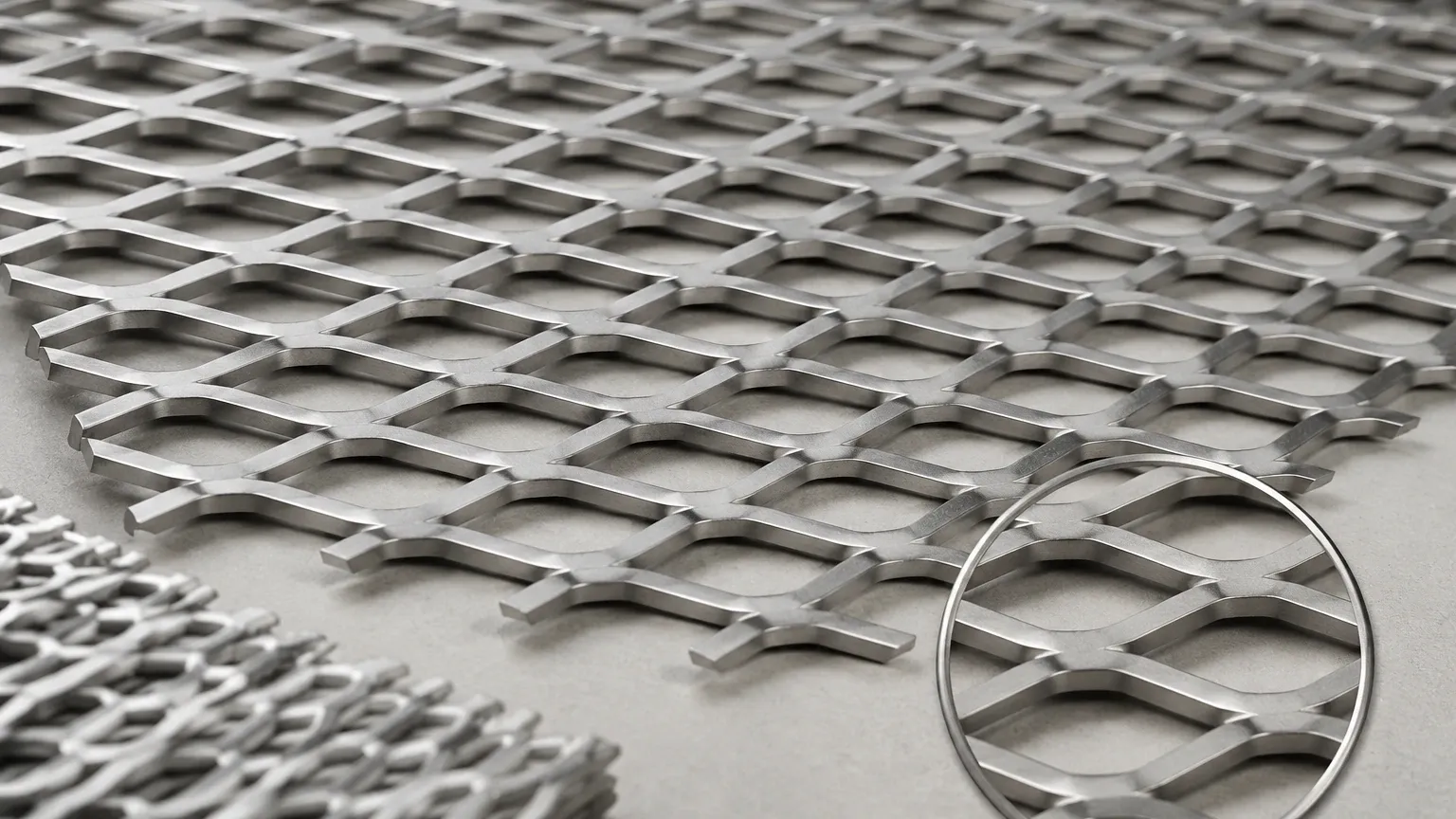
Expanded metal is manufactured through a process of simultaneous slitting and stretching, which transforms a solid metal sheet into a continuous mesh of diamond-shaped openings. Unlike woven wire mesh, expanded metal features a monolithic structure with no joins or welds, providing superior integrity under high-pressure differentials. The "6×10" designation typically refers to the nominal dimensions of the diamond aperture, specifically the Short Way of Diamond (SWD) and the Long Way of Diamond (LWD), which dictate the mechanical properties and flow characteristics of the finished component.
Understanding 6×10 Expanded Metal Specifications
To specify 6×10 expanded metal accurately for an industrial project, engineers must look beyond the nominal aperture size. The performance of the mesh is defined by several geometric variables that influence its strength-to-weight ratio and its interaction with fluid streams.
SWD and LWD Dimensions
In the context of a 6×10 specification, the 6mm dimension generally represents the SWD (measured from the center of one bond to the center of the next across the short axis), while the 10mm dimension represents the LWD. These dimensions are critical because they determine the orientation of the mesh within a filter cartridge or industrial assembly. The orientation affects how the mesh resists bending and how it supports secondary layers like fine wire cloth.
Raised vs. Flattened Profiles
Expanded metal is produced in two primary forms: raised (standard) and flattened.
- Raised Expanded Metal: This is the product as it comes off the expanding machine. The strands and bonds are set at a uniform angle to the plane of the sheet. This adds thickness and provides a three-dimensional surface that can enhance turbulence in fluid applications or provide extra grip in structural walkways.
- Flattened Expanded Metal: The raised mesh is passed through a cold-rolling reducing mill, which flattens the strands and bonds into the same plane as the original sheet. For filtration applications, flattened 6×10 expanded metal is often preferred because it provides a smooth surface that will not abrade delicate filter media, such as fiberglass or synthetic membranes.
Strand Width and Thickness
The strand width (the amount of metal between the slits) and the thickness of the original base material are the primary drivers of the mesh's weight and structural capacity. In a 6×10 configuration, increasing the strand width reduces the open area but significantly increases the burst pressure resistance of the component.
Material Selection for Industrial Environments
Kaifil specializes in high-performance materials designed to withstand the rigors of industrial processing. The choice of material for 6×10 expanded metal is dictated by the chemical composition of the process fluid, the operating temperature, and the required service life.
Stainless Steel 304 and 304L
Grade 304 is the most common choice for general industrial filtration. It offers excellent corrosion resistance to many oxidizing acids and is easily formed into cylindrical shapes for filter cartridges. The "L" (low carbon) version is preferred for components that require extensive welding, as it prevents carbide precipitation in the heat-affected zone.
Stainless Steel 316 and 316L
For applications involving chlorides, marine environments, or highly corrosive chemical processing, 316L stainless steel is the engineering standard. The addition of molybdenum enhances resistance to pitting and crevice corrosion. In pharmaceutical and food processing, 316L is often mandatory to ensure the purity of the end product and to withstand aggressive Clean-in-Place (CIP) cycles.
Specialty Alloys
In extreme environments, such as high-temperature petrochemical refining or specialized water treatment, materials like Monel, Inconel, or Hastelloy may be required. These alloys maintain their mechanical properties at temperatures where standard stainless steels would lose structural integrity or succumb to rapid oxidation.
Structural Roles in Filtration Systems
In the design of industrial filtration components, 6×10 expanded metal rarely acts as the primary filtration barrier. Instead, it serves several critical structural roles that enable the finer media to function effectively.
Pleat Support and Spacing
In pleated filter cartridges, the expanded metal is often layered between the filter media and the core. The 6×10 diamond pattern provides a rigid framework that prevents the pleats from collapsing or "pinching off" under high flow rates. By maintaining uniform pleat spacing, the expanded metal ensures that the entire surface area of the filter media remains available for contaminant loading, thereby extending the filter's service life.
Outer Protection Cages
Industrial filters are often subjected to physical handling and high-velocity fluid impacts. An outer cage made of 6×10 expanded metal protects the internal filter layers from mechanical damage. The diamond openings allow for high flow permeability while the rigid strands provide a robust shield against debris or accidental impact during installation and maintenance.
Inner Core Reinforcement
The inner core of a filter cartridge must resist the compressive forces of the fluid passing from the outside in. Expanded metal, when rolled into a cylinder and seam-welded, provides exceptional hoop strength. The 6×10 pattern is particularly effective here, as the interconnected bonds distribute stress more evenly than traditional perforated tubes of similar weight.
Comparing Expanded Metal with Perforated Metal Solutions
Engineers often must choose between Perforated & Expanded Metal when designing support structures. While both serve similar functions, there are distinct technical advantages to the expanded variety in specific contexts.
Material Efficiency and Weight
Expanded metal is produced without any material waste. Every square inch of the original sheet is utilized in the final product. In contrast, perforated metal involves punching out holes, which can result in up to 40% or more of the material being discarded as scrap. This makes expanded metal a more cost-effective and lighter-weight solution for large-scale industrial projects without sacrificing structural strength.
Flow Dynamics
The geometry of expanded metal creates a more complex flow path than the straight-through holes of perforated metal. In certain applications, this can be used to induce micro-turbulence, which helps prevent the accumulation of a filter cake on the surface of the media, potentially improving filtration efficiency in specific liquid-solid separation processes.
Structural Rigidity
Because the strands of expanded metal are oriented at an angle (in the raised version), they act like structural trusses. This gives the material a higher strength-to-weight ratio in certain directions compared to perforated sheets of the same thickness. However, perforated metal may be preferred when a perfectly flat, uniform surface is required for very fine membrane support where even the slight variations in flattened expanded metal could cause stress concentrations.
Engineering Considerations: Flow Rates and Pressure Drop
When integrating 6×10 expanded metal into a system, the primary engineering concern is the pressure drop ($ΔP$) across the mesh. The open area of the mesh directly influences the velocity of the fluid and the energy required to move it through the system.
Calculating Open Area
The percentage of open area for 6×10 expanded metal is determined by the relationship between the strand width and the SWD. A typical 6×10 configuration might offer an open area ranging from 60% to 80%. Engineers must ensure that the open area is significantly higher than the open area of the primary filter media to ensure that the support layer does not become the bottleneck for flow.
Turbulence and Laminar Flow
At high velocities, the strands of the expanded metal can cause the fluid to transition from laminar to turbulent flow. While turbulence can be beneficial for mixing, it also increases the pressure drop. In hydraulic systems, where maintaining laminar flow is often a priority to prevent cavitation and energy loss, the orientation of the LWD relative to the flow direction must be carefully considered.
Customization and Manufacturing Precision
At Kaifil, we recognize that standard off-the-shelf components rarely meet the exacting requirements of specialized industrial processes. Customization of 6×10 expanded metal involves several critical parameters:
1. Dimensional Tolerances: For precision filtration, tolerances on the SWD and LWD must be tightly controlled to ensure the mesh fits perfectly within machined housings or end caps.
2. Edge Finishing: Expanded metal naturally has "random" edges where diamonds are cut. For safety and ease of assembly, we provide custom shearing to ensure "bond edges" or "closed diamonds," which eliminate sharp points and provide a cleaner welding surface.
3. Surface Treatments: Depending on the application, we offer various finishes, including electropolishing for pharmaceutical applications (to remove microscopic burrs and improve corrosion resistance) or passivation to ensure a clean, oxide-free surface.
4. Forming and Welding: Our capabilities extend to rolling the mesh into precise cylindrical shapes and utilizing advanced welding techniques (such as TIG or plasma welding) to create seamless support structures that maintain their integrity under thermal cycling.
Conclusion
The 6×10 expanded metal specification is a cornerstone of industrial filtration support, offering a unique combination of structural strength, material efficiency, and flow permeability. By selecting the appropriate material grade, strand geometry, and surface finish, engineers can significantly enhance the reliability and efficiency of their filtration systems.
When evaluating suppliers for these critical components, it is essential to partner with a manufacturer that understands the technical demands of your specific industry. Kaifil provides the engineering expertise and manufacturing precision necessary to deliver customized filtration solutions that meet the most stringent performance criteria. For detailed technical specifications or to discuss a custom design for your next project, engineers and purchasing teams are encouraged to consult with our technical department to ensure the optimal selection of filtration media and support structures.
