


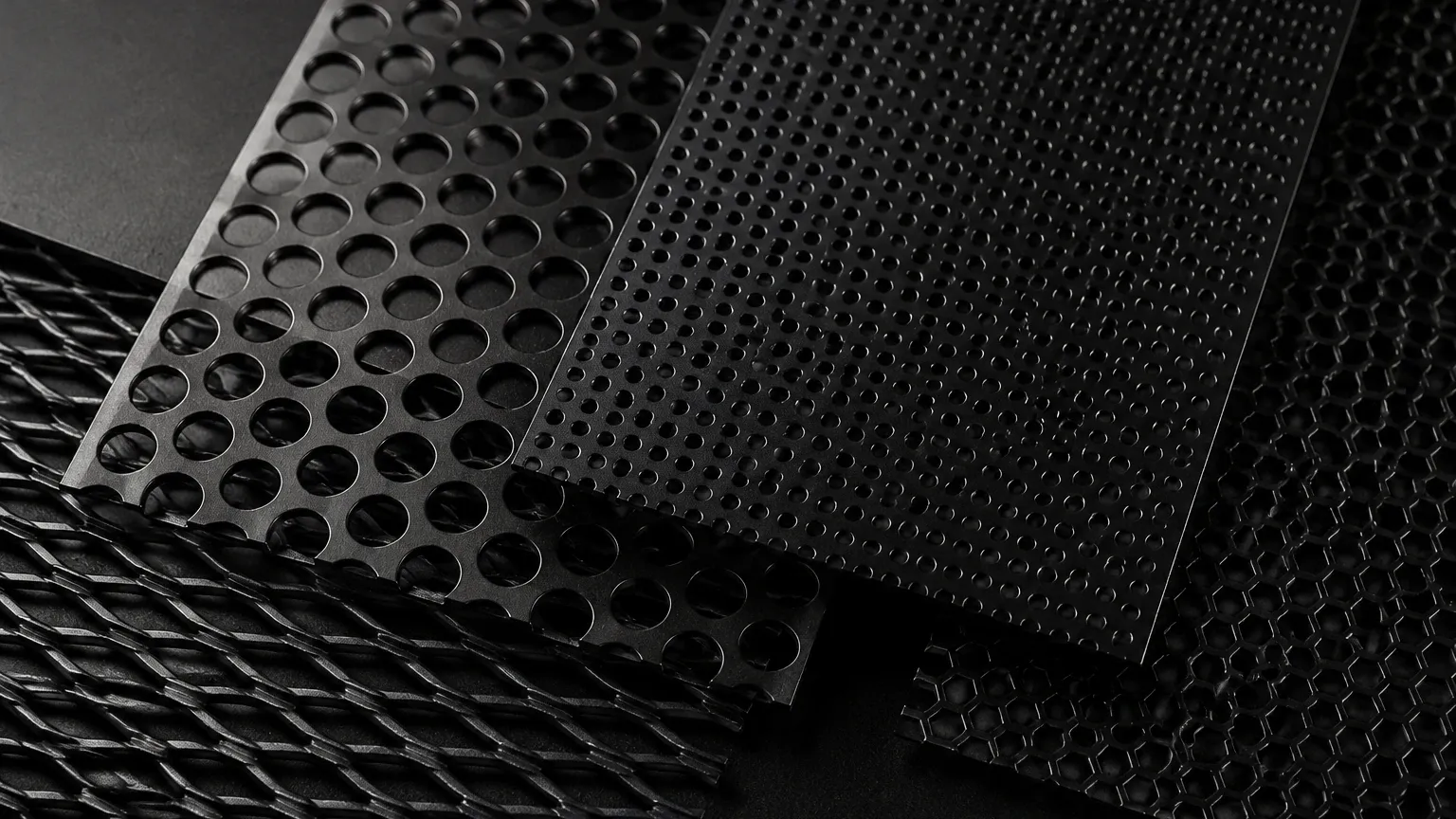
Perforated Metal Black
In industrial engineering and architectural design, perforated metal black serves as a specialized material solution that combines structural utility with specific surface performance characteristics. While the "black" designation often refers to the aesthetic finish, in a B2B and industrial context, this finish frequently serves functional roles, including corrosion resistance, UV protection, heat dissipation, and light absorption. For engineers and procurement specialists, selecting the right perforated metal involves understanding the intersection of mechanical properties, perforation geometry, and the technical requirements of the surface treatment.
As a core component in the broader category of Perforated & Expanded Metal, these products are utilized across diverse sectors, from chemical processing and HVAC systems to high-end acoustic panels and machinery guards. Achieving a high-quality black finish on perforated substrates requires precise manufacturing control to ensure that the coating does not obstruct the open area or compromise the filtration accuracy of the component.
Understanding the Role of Perforated Metal Black in Industrial Design
Industrial applications for perforated metal black extend far beyond simple aesthetics. When a metal sheet is perforated, its surface area increases significantly, exposing more material to the environment. Applying a black finish—typically through powder coating, PVDF (Polyvinylidene Fluoride), or anodizing—serves as a critical protective barrier.
From a functional perspective, the use of perforated metal black is often driven by the following requirements:
* Light Management: In optical filtration or sensor housing, a matte black finish is essential to prevent light reflection and glare, ensuring the accuracy of sensitive equipment.
* Thermal Regulation: Black surfaces have different emissivity properties compared to raw metallic surfaces. In certain heat exchange or ventilation applications, a black coating can assist in radiant heat dissipation.
* Corrosion Mitigation: For carbon steel or aluminum substrates, the black coating acts as a primary defense against oxidation, moisture, and chemical exposure.
* Visual Masking: In HVAC and acoustic applications, black perforated panels are used to conceal internal components (like insulation or mechanical ducting) while maintaining necessary airflow.
Manufacturing Processes: From Perforation to Surface Treatment
The production of perforated metal black is a multi-stage process that begins with the mechanical perforation of the base metal. At Kaifil, this involves high-speed CNC punching or laser cutting to create precise hole patterns in materials such as stainless steel, aluminum, or galvanized steel.
The Perforation Stage
Before any coating is applied, the metal sheet must be perforated according to the required specifications. The choice of hole shape—round, square, slotted, or hexagonal—determines the "open area" percentage. This percentage is a critical engineering metric, as it dictates the flow rate of air or liquid and the structural integrity of the sheet.
One of the primary challenges in manufacturing perforated metal black is maintaining the integrity of the hole edges. Burrs or sharp edges resulting from the punching process can lead to uneven coating thickness or "thinning" at the edges, which is often where corrosion begins. Therefore, a deburring process is typically required before the finishing stage.
Surface Preparation
For the black finish to adhere correctly, the perforated metal must undergo rigorous cleaning. This usually involves degreasing to remove manufacturing oils and a phosphate or chromate conversion coating to enhance adhesion. For stainless steel substrates, passivation may be required to ensure the underlying metal remains inert before the black finish is applied.
Coating Technologies for Perforated Metal Black
The term "perforated metal black" can refer to several different coating technologies, each with its own performance profile. Selecting the appropriate method depends on the operating environment and the mechanical stresses the part will face.
Powder Coating
Powder coating is the most common method for achieving a black finish. It involves applying a dry powder (typically polyester or epoxy) electrostatically and then curing it under heat.
* Advantages: High durability, excellent resistance to chipping and scratching, and the ability to achieve various textures (matte, satin, or high gloss).
* Considerations: The thickness of the powder coat (typically 60-120 microns) must be accounted for in the engineering drawings, as it will slightly reduce the effective diameter of the perforated holes.
PVDF (Kynar 500)
For outdoor industrial applications or high-exposure environments, PVDF coatings are preferred. These are resin-based liquid coatings that offer superior resistance to UV radiation and chemical weathering.
* Advantages: Exceptional color retention and resistance to chalking.
* Applications: Architectural facades, outdoor ventilation louvers, and chemical plant enclosures.
* Perforated Metal Black Context: PVDF is often the standard for "black" architectural perforated panels that must withstand decades of sun exposure.
Anodizing (For Aluminum)
If the substrate is aluminum, black anodizing is a common choice. This is an electrochemical process that converts the metal surface into a decorative, durable, corrosion-resistant, anodic oxide finish.
* Advantages: The finish is integral to the metal and cannot peel or flake. It maintains the metallic feel of the substrate while providing a deep black color.
Engineering Specifications: Hole Patterns and Open Area
When specifying perforated metal black, engineers must balance the desired visual or protective qualities of the black finish with the mechanical requirements of the perforation pattern. The most critical technical data points include:
1. Hole Diameter and Pitch
The diameter refers to the size of the individual holes, while the pitch is the distance from the center of one hole to the center of the adjacent hole. In a black-finished product, the "finished hole size" will be smaller than the "punched hole size" due to the thickness of the coating.
2. Open Area Calculation
The open area is the total area of the holes divided by the total area of the sheet, expressed as a percentage. For example, a standard 60-degree staggered round hole pattern is calculated using the formula:
* Open Area % = (D² x 90.69) / P²
Where D is the hole diameter and P is the pitch. When ordering perforated metal black for filtration or airflow, it is vital to specify whether the required open area is for the pre-coated or post-coated state.
3. Margin Requirements
Margins are the unperforated areas along the edges of the sheet. In industrial filtration components, specific margins are often required for welding or mounting. The black coating must be applied uniformly across both the perforated area and the margins to ensure consistent corrosion protection.
Industrial Applications of Perforated Metal Black
Filtration and Separation
In specialized filtration systems, perforated metal black is used when light sensitivity is a factor. For instance, in certain chemical separation processes where the media is UV-sensitive, black perforated screens provide the necessary structural support while minimizing light penetration. Additionally, the coating can provide an extra layer of resistance against specific corrosive agents that might otherwise attack the base metal.
Acoustic Dampening
Perforated metal black is a staple in acoustic engineering. When backed with sound-absorbent materials, these panels act as resonant absorbers. The black finish is frequently chosen for theaters, recording studios, and industrial engine rooms because it disappears into the shadows, focusing attention away from the mechanical infrastructure while providing high-performance sound attenuation.
Machinery Guards and Safety Enclosures
In manufacturing environments, safety guards must be durable and provide high visibility of the internal machinery. Perforated metal black is often preferred over bright or reflective finishes because the dark color reduces glare from overhead factory lighting, allowing operators to see through the mesh more clearly to monitor equipment status.
Selection Guide for Engineers and Procurement Teams
To ensure the successful procurement of perforated metal black, technical teams should confirm several factors before production begins:
1. Substrate Compatibility: Ensure the base metal (e.g., 304 vs. 316 stainless steel or 5000 series aluminum) is compatible with the intended black coating process and the final operating environment.
2. Coating Thickness vs. Hole Size: For fine filtration (holes under 2mm), the coating thickness can significantly impact the flow rate. Engineers should specify the minimum allowable finished hole diameter.
3. Environmental Exposure: Determine if the part will be exposed to high temperatures, salt spray, or harsh chemicals. This will dictate whether a standard polyester powder coat is sufficient or if a high-performance PVDF or epoxy coating is required.
4. Forming Post-Coating: If the perforated metal needs to be bent, rolled, or welded into a filter cartridge shape after the black finish is applied, the coating must be flexible enough to withstand deformation without cracking (T-bend rating).
Quality Assurance and Performance Testing
Reliable manufacturers like Kaifil adhere to strict quality control protocols to ensure that perforated metal black meets industrial standards. Key tests include:
* Adhesion Testing (Cross-Hatch): Ensuring the black coating adheres firmly to the perforated substrate, especially around the hole edges.
* Salt Spray Testing (ASTM B117): Evaluating the corrosion resistance of the finished product, which is critical for components used in marine or industrial chemical environments.
* Gloss Level Verification: Using a gloss meter to ensure the "black" meets the specific visual requirements, ranging from matte (0-10 units) to high gloss (above 80 units).
* Dimensional Inspection: Verifying that the perforation pattern and margins remain within the specified tolerances after the coating process.
Conclusion
Perforated metal black is a versatile and technically demanding material that requires a deep understanding of both metallurgy and surface science. Whether it is used for its light-absorbing properties in a sensor housing or its corrosion resistance in an outdoor ventilation system, the quality of the final product depends on the precision of the initial perforation and the integrity of the finishing process.
For organizations seeking customized filtration or structural solutions, partnering with a manufacturer that understands these engineering nuances is essential. By carefully considering material substrates, coating types, and hole geometries, engineers can leverage Perforated & Expanded Metal to achieve optimized performance in the most demanding industrial applications.
