


Curved Perforated Metal Panel
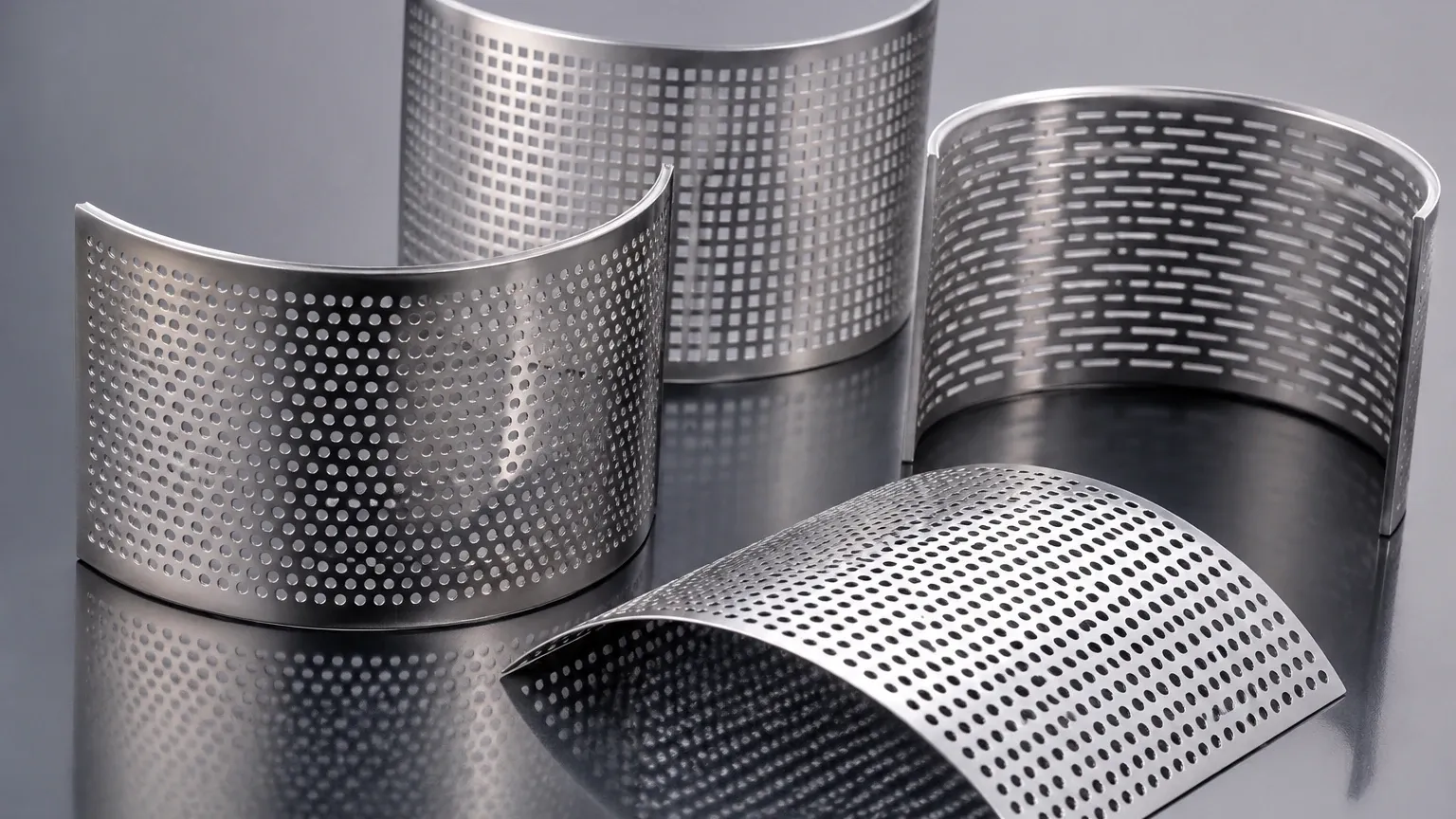
In industrial engineering and filtration design, the transition from flat components to curved geometries is often a necessity driven by the shape of pressure vessels, the ergonomics of machinery, or the fluid dynamics of a specific system. A curved perforated metal panel is a specialized component where a flat sheet of perforated material is precision-formed into a radius or cylindrical shape. While these panels are frequently recognized for their aesthetic value in architectural facades, their primary utility in industrial sectors—such as chemical processing, water treatment, and hydraulic systems—lies in their structural integrity and functional efficiency.
Selecting and specifying a curved perforated metal panel requires a deep understanding of material science, mechanical deformation, and filtration physics. Unlike flat panels, curved variants must account for the stresses of the forming process and the potential deformation of the hole patterns, which can alter the effective open area and filtration accuracy.
Engineering Fundamentals of Perforated Metal Curvature
When a flat sheet of Perforated & Expanded Metal is subjected to a curving process, the material undergoes mechanical stress that varies across its thickness. The outer radius of the curve experiences tension, while the inner radius experiences compression. For perforated materials, this process is more complex than for solid sheets because the presence of holes creates "bridges" of material that behave differently under stress.
Hole Pattern Integrity
In industrial filtration, the precision of the hole size is critical. During the curving of a perforated metal panel, the holes on the outer surface may slightly elongate, while those on the inner surface may slightly constrict. Engineers must calculate the "neutral axis" of the sheet to predict how much the hole geometry will shift. For high-precision applications, such as fine mesh support or intake screens, this deformation must be accounted for during the initial punching phase to ensure the final curved product meets the required micron rating or flow rate.
Open Area and Flow Dynamics
The open area percentage is a primary metric for any filtration component. In a curved perforated metal panel, the effective open area remains relatively constant, but the flow path of the fluid changes. Curved surfaces are often used to manage pressure drops or to direct flow more efficiently around a cylindrical filter core. By using a curved geometry, engineers can increase the total surface area of a filter within a confined footprint, thereby extending the service life of the filter element and reducing the frequency of maintenance cycles.
Material Selection for Industrial Environments
The choice of material for a curved perforated metal panel is dictated by the chemical compatibility of the fluid, the operating temperature, and the mechanical loads the panel will bear. Kaifil specializes in stainless steel solutions, which are the industry standard for demanding environments.
1. Stainless Steel 304: This is the most common grade used for general industrial applications. It offers excellent formability, making it ideal for tight-radius curves. It provides good corrosion resistance in most atmospheric and freshwater environments.
2. Stainless Steel 316L: For chemical processing, pharmaceutical production, and marine environments, 316L is preferred due to the addition of molybdenum, which enhances resistance to pitting and crevice corrosion in chloride-rich environments. The "L" (low carbon) designation ensures better weldability, which is often necessary when curved panels are joined to form full cylinders.
3. Duplex Stainless Steels: In high-pressure hydraulic systems or heavy-duty industrial strainers, duplex grades may be used for their superior yield strength. This allows for thinner panels to be used without sacrificing structural stability, though the curving process requires more specialized equipment due to the material's high work-hardening rate.
Manufacturing Techniques: From Flat Sheet to Curved Component
Transforming a flat perforated sheet into a precise curved panel involves several technical stages. The method chosen depends on the thickness of the material, the required radius, and the complexity of the curve.
Slip Rolling
Slip rolling is the most common method for creating large-radius curves or full cylinders. The perforated sheet is passed through a series of three rollers. The position of the rollers determines the radius of the curve. In this process, the "lead-in" and "lead-out" edges of the panel often remain flat, which must be trimmed or pre-bent to ensure a perfectly circular profile if the panel is to be used as a filter cartridge support.
Press Braking (Step Bending)
For panels that require a non-standard curve or a very large radius that exceeds the capacity of standard rollers, step bending on a CNC press brake is used. The machine makes a series of small, incremental bends along the sheet. While this creates a faceted appearance upon close inspection, it allows for the creation of complex elliptical or parabolic curves that are sometimes required in specialized fluid diversion systems.
CNC Punching and Laser Cutting
Before the curving occurs, the hole pattern is established. CNC punching is the most cost-effective method for high-volume production of standard patterns (round, square, or slotted holes). However, for custom curved perforated metal panels with intricate patterns or varying hole sizes across the surface, fiber laser cutting provides the necessary precision without the mechanical stress of a physical punch.
Key Applications in Filtration and Protection
Curved perforated metal panels are foundational components in various industrial systems. Their ability to provide structural support while allowing for high-volume fluid or gas passage makes them indispensable.
Cylindrical Filter Support Cores
In high-pressure filtration, the primary filter media (such as fine wire mesh or pleated paper) lacks the structural strength to withstand the differential pressure. A curved perforated metal panel, rolled into a cylinder and welded, serves as the internal core or external cage. This support prevents the media from collapsing or bursting under load.
Industrial Strainers and Intake Screens
Large-scale water intake systems for cooling towers or desalination plants utilize curved panels to create drum screens. The curvature allows the screen to rotate or to present a larger surface area to the incoming water, effectively capturing debris while maintaining a low approach velocity to protect aquatic life and prevent pump cavitation.
Machine Guarding and Safety Enclosures
In manufacturing environments, curved perforated panels are used as guards for rotating equipment. The curvature provides an ergonomic fit around motors or turbines, while the perforations allow for heat dissipation and visual inspection without compromising the safety of the operators.
Design Considerations: Radius, Thickness, and Deformation
Engineers must balance several conflicting factors when designing a curved perforated metal panel. Failure to account for these can lead to material failure or poor filtration performance.
* Minimum Bend Radius: Every material has a minimum radius it can be bent to before the material cracks or the holes deform excessively. As a rule of thumb, the radius should be at least three to five times the thickness of the metal, though this varies significantly with the open area percentage. A higher open area means less material is available to absorb the stress, making the panel more prone to kinking.
* Springback: Stainless steel has a high elastic modulus, meaning it tends to return to its original shape after being bent. Manufacturers must "over-bend" the panel to achieve the final desired radius. This effect is more pronounced in perforated sheets because the holes reduce the overall stiffness of the panel.
* Hole Orientation: The direction of the hole pattern relative to the curve matters. Staggered patterns (usually 60 degrees) provide more uniform strength. If the holes are aligned in a straight line with the axis of the curve, the panel is more likely to bend unevenly along the lines of the holes.
Quality Control and Performance Evaluation
To ensure that a curved perforated metal panel performs reliably in an industrial setting, several quality control measures are implemented during production at Kaifil:
1. Dimensional Inspection: Using radius gauges or CMM (Coordinate Measuring Machine) equipment to ensure the curvature matches the technical drawings within specified tolerances.
2. Surface Finish Assessment: After punching and rolling, panels may have burrs or sharp edges. For filtration applications, these must be removed via electropolishing or mechanical deburring to prevent damage to the filter media and to ensure the panel is easy to clean.
3. Weld Integrity: If the curved panel is joined into a cylinder, the longitudinal weld must be inspected for penetration and consistency. In pharmaceutical or food-grade applications, these welds must be ground smooth to eliminate crevices where bacteria could proliferate.
Procurement Checklist for Engineers
Before finalizing a specification for a curved perforated metal panel, technical teams should confirm the following details to ensure the component is fit for purpose:
* Material Grade: Is 304 sufficient, or does the chemical environment require 316L or a high-nickel alloy?
* Hole Specifications: Diameter, pitch, and pattern (staggered or straight). How much deformation is acceptable in the final curved state?
* Open Area Requirements: What is the minimum required flow rate and maximum allowable pressure drop?
* Radius and Arc Length: Provide the internal or external radius and the degree of the arc (e.g., a 180-degree semi-circle or a 360-degree cylinder).
* Edge Margins: Do you require "blank" (unperforated) borders for welding or mounting? Standard panels often have a small margin, but custom margins can be specified.
* Environmental Factors: Will the panel be exposed to high vibration, extreme temperatures, or abrasive particles?
By addressing these technical parameters, engineers can ensure that the curved perforated metal panels they integrate into their systems provide the necessary durability and filtration efficiency. As a professional manufacturer, Kaifil provides the engineering support and manufacturing precision required to deliver these components to exact industrial standards, supporting applications from simple strainers to complex chemical processing units.
