


Perforated Metal Detail
In industrial filtration and structural engineering, the performance of a component is often determined by the precision of its specifications. For engineers and procurement specialists, understanding every perforated metal detail is essential to ensuring that a filter cartridge, screen, or support structure meets the rigorous demands of chemical processing, pharmaceutical manufacturing, or hydraulic systems. Perforated and expanded metals serve as the backbone of many filtration solutions, providing both the necessary aperture for fluid passage and the mechanical strength to withstand high-pressure environments.
Selecting the right Perforated & Expanded Metal requires a deep dive into technical parameters such as hole patterns, open area percentages, material thickness, and edge configurations. This guide examines the critical engineering considerations and manufacturing nuances that define high-quality industrial metal components.
Technical Parameters of Perforated Metal
The term "perforated metal detail" encompasses a wide range of geometric and physical properties. When designing a filtration component, engineers must specify several key variables to ensure the part functions as intended.
Hole Shapes and Patterns
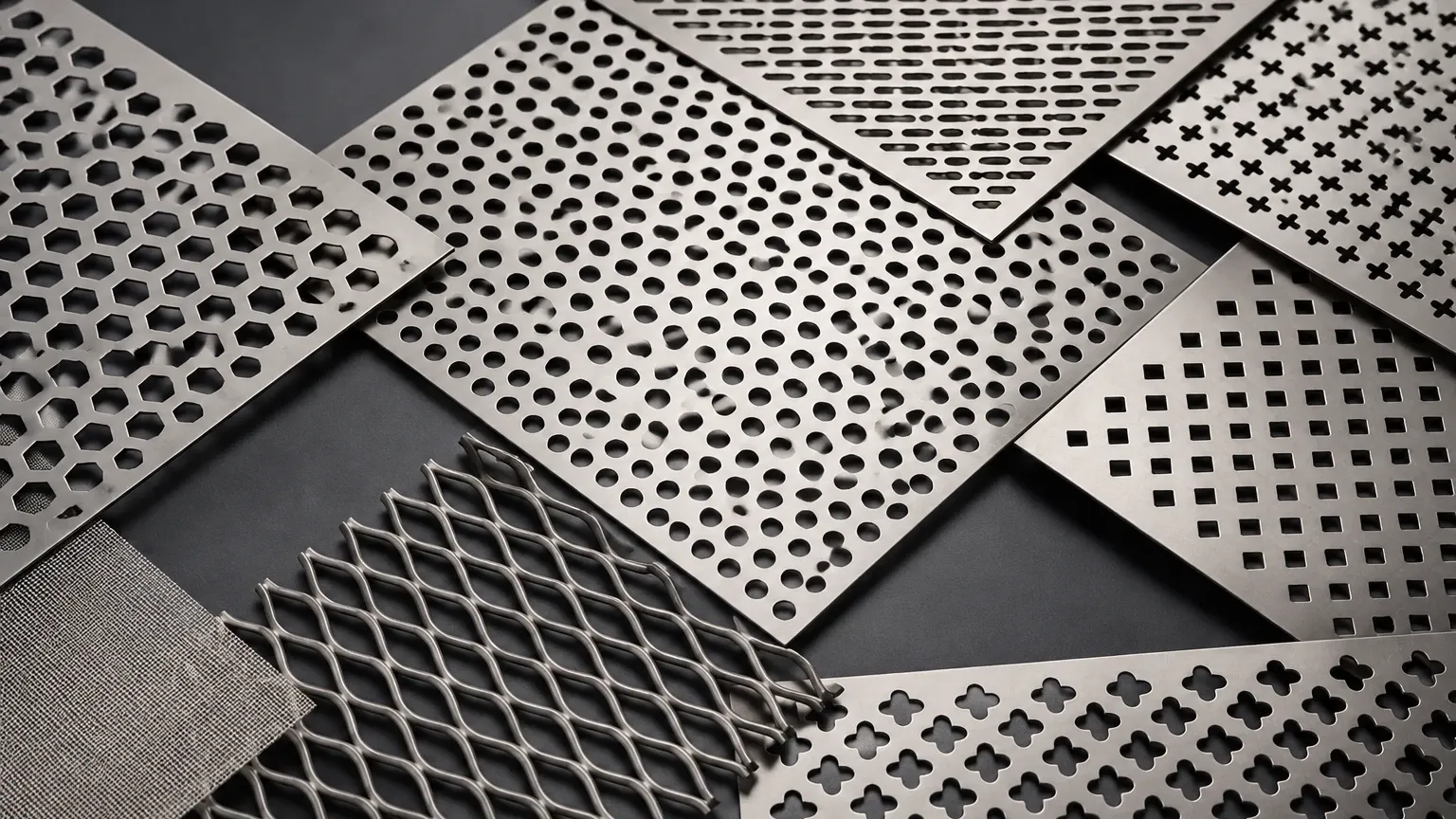
While round holes are the most common due to their structural stability and ease of manufacturing, other shapes serve specific industrial purposes. Square holes offer a higher open area but may compromise structural rigidity under high pressure. Slotted holes are frequently used in applications involving elongated particles or specific flow orientations.
The arrangement of these holes is equally critical. A staggered pattern (usually at 60 degrees) is the industry standard because it provides the highest strength-to-open-area ratio. Straight patterns, where holes align in rows and columns, are easier to fabricate but generally offer less structural integrity under load.
Pitch and Open Area
The pitch is the distance from the center of one hole to the center of the adjacent hole. This measurement, combined with the hole diameter, determines the "open area percentage." In filtration, the open area is a primary factor in calculating flow rate and pressure drop. A higher open area reduces resistance to flow but can lead to material fatigue if the remaining "bridges" (the metal between the holes) are too thin to support the system's operating pressure.
Material Selection for Demanding Environments
The longevity of a perforated metal component depends heavily on its metallurgical composition. In industrial B2B applications, environmental factors such as pH levels, temperature fluctuations, and abrasive particles dictate the material choice.
Stainless Steel Grades
Stainless steel is the preferred material for most industrial filtration due to its corrosion resistance and mechanical strength.
- Grade 304: Suitable for general-purpose applications, offering good corrosion resistance in most atmospheric conditions.
- Grade 316/316L: The "L" denotes low carbon content, which is essential for components that require welding. 316 stainless steel contains molybdenum, providing superior resistance to chlorides and acidic environments, making it the standard for chemical and marine applications.
Specialized Alloys
For extreme conditions, such as high-temperature gas filtration or highly corrosive chemical processing, specialized alloys like Monel, Inconel, or Hastelloy may be required. These materials maintain their structural integrity and oxidation resistance where standard stainless steels might fail.
Engineering Considerations: Strength vs. Filtration Efficiency
A common challenge in specifying a perforated metal detail is balancing filtration efficiency with mechanical durability. Engineers must consider the following:
Material Thickness (Gauge)
The thickness of the sheet must be sufficient to prevent deformation under the differential pressure of the fluid flow. However, as thickness increases, the difficulty of punching smaller holes also increases. A general rule of engineering is that the hole diameter should not be smaller than the material thickness to ensure clean perforations and prevent tool breakage during manufacturing.
Pressure Drop and Flow Velocity
In hydraulic and water treatment applications, the perforated metal acts as either a primary filter or a support for a finer wire mesh. If the perforated metal detail—specifically the open area—is not optimized, it can cause a significant pressure drop, leading to system inefficiency or pump cavitation. Calculating the effective flow area is a prerequisite for any custom filtration design.
The Role of Expanded Metal in Filtration
While perforated metal is created by punching holes out of a solid sheet, expanded metal is produced by slitting and stretching the material. This process creates a diamond-shaped mesh that is integral to the sheet, meaning there are no joins or welds to fail.
Structural Advantages of Expanded Metal
Expanded metal is often used as a support layer for pleated filter media. Because it is stretched, it provides a high strength-to-weight ratio. The "strands" and "bonds" of expanded metal are set at a sharp angle to the plane of the sheet, which can help in breaking up fluid flow and increasing turbulence, sometimes beneficial in specific mixing or heat exchange applications.
Standard vs. Flattened Expanded Metal
Engineers can choose between "standard" (raised) expanded metal, which has a textured surface, or "flattened" expanded metal. Flattened expanded metal is passed through a cold rolling mill to create a smooth, flat surface. In filtration, flattened expanded metal is often preferred to prevent damage to delicate wire mesh layers or to ensure a tight seal within a filter housing.
Manufacturing Precision and Customization
Customization is at the heart of industrial filtration. Every application has unique spatial constraints and performance requirements. High-quality manufacturing ensures that the perforated metal detail aligns perfectly with the final assembly.
Margins and Blank Areas
A critical detail often overlooked is the margin. This refers to the unperforated area around the edges of the sheet. Precise margins are necessary for welding the perforated sheet into a cylinder or for seating it into a flange. Custom OEM manufacturing allows for "blank" areas within the perforated pattern to accommodate mounting brackets or sensor ports without compromising the structural integrity of the part.
Finishing and Post-Processing
After perforation or expansion, the metal often requires post-processing to meet industrial standards.
- Degreasing: Essential for food and beverage or pharmaceutical applications to remove lubricants used during the punching process.
- Deburring: Removing sharp edges to ensure safety and prevent the accumulation of debris.
- Electropolishing: Often used for stainless steel 316L components to create a microscopically smooth surface that resists bacterial growth and is easier to clean (CIP – Clean-In-Place).
Application-Specific Requirements
The necessary perforated metal detail varies significantly across industries.
Food and Beverage
In this sector, hygiene is paramount. Perforated components must be free of pits, crevices, or sharp edges where organic material could collect. Stainless steel 316L is typically mandated, and the finish must meet specific Ra (roughness average) values.
Chemical and Petrochemical
Here, the focus shifts to chemical compatibility. The perforated metal must withstand aggressive solvents and high temperatures. Engineers often specify thicker gauges to account for potential material loss due to corrosion over the component's lifecycle.
Pharmaceutical
Filtration in pharmaceutical manufacturing requires extreme precision in hole size and distribution to ensure batch consistency. The documentation of material traceability (MTRs) is as important as the physical perforated metal detail itself.
Procurement Checklist for Engineers
Before finalizing a purchase order for perforated or expanded metal components, technical teams should confirm the following details to avoid costly errors or performance failures:
1. Material Grade: Is the specific alloy (e.g., 304, 316L) confirmed for the operating environment?
2. Hole Specification: Have the diameter, shape, and pitch been defined?
3. Open Area: Does the calculated open area meet the flow requirements of the system?
4. Dimensions and Tolerances: Are the length, width, and thickness specified with acceptable industrial tolerances?
5. Margin Requirements: Are there specific unperforated areas needed for welding or installation?
6. Surface Finish: Does the application require deburring, pickling, or electropolishing?
7. Quantity and Lead Time: Does the production schedule align with the project timeline?
Conclusion
Every perforated metal detail contributes to the overall efficiency and reliability of an industrial filtration system. From the selection of the correct stainless steel grade to the precise calculation of the open area and pitch, these technical decisions prevent premature equipment failure and optimize process performance. By working with a manufacturer that understands the nuances of Perforated & Expanded Metal, engineers can ensure their custom filtration solutions are built to last in the most demanding environments. Whether providing structural support for a wire mesh filter or acting as a primary strainer, the precision of the perforation is the difference between a high-performing system and one prone to downtime.
