


Designer Perforated Metal
In industrial engineering and architectural design, the selection of materials often requires a balance between structural integrity, functional performance, and aesthetic requirements. Designer perforated metal represents a specialized category of fabricated materials where precision-engineered patterns are punched or laser-cut into metal sheets. Unlike standard industrial gratings, these components are tailored to meet specific technical specifications while providing a distinct visual profile suitable for high-end industrial equipment, architectural facades, and precision filtration systems.
As a manufacturer specializing in custom stainless steel filtration solutions, Kaifil understands that the efficacy of Perforated & Expanded Metal depends on meticulous attention to hole geometry, material thickness, and open area calculations. For engineers and procurement professionals, choosing the right designer perforated metal involves more than selecting a pattern; it requires an understanding of how hole configurations affect flow dynamics, structural load-bearing capacity, and long-term durability in demanding environments.
Technical Fundamentals of Designer Perforated Metal
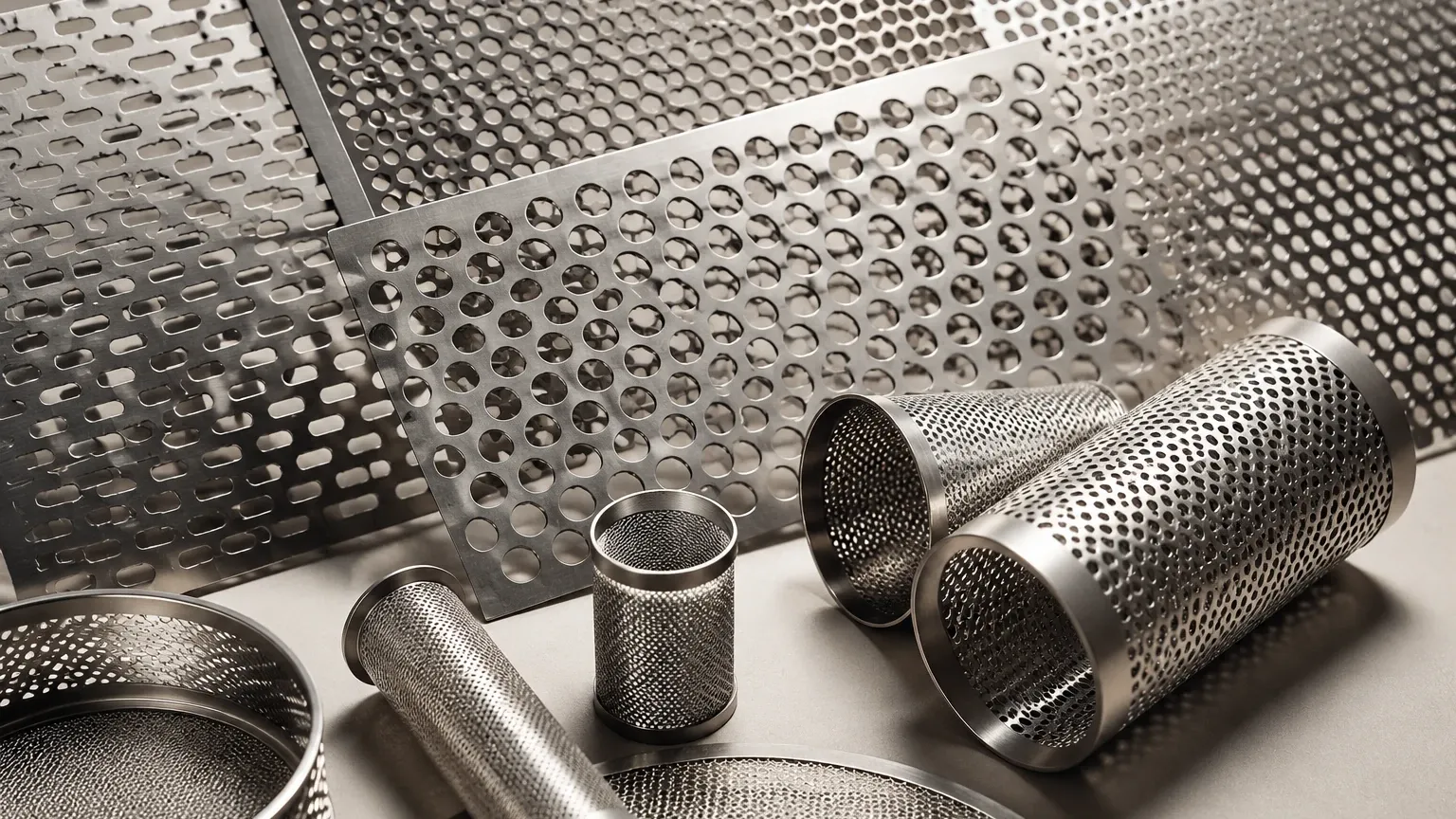
Designer perforated metal is produced through a process of cold-punching or laser-cutting various shapes into metallic sheets, typically stainless steel, aluminum, or carbon steel. The "designer" aspect refers to the customization of hole shapes, sizes, and arrangements that go beyond standard round or square patterns. These can include complex geometric arrays, varied hole sizes within a single sheet, or decorative motifs that serve both functional and aesthetic purposes.
Hole Patterns and Geometry
The geometry of the perforations dictates the mechanical properties of the sheet. Common configurations include:
* Staggered Patterns: The most common industrial arrangement, offering high open area and structural strength. In designer applications, staggered patterns can be manipulated to create visual gradients.
* Straight Line Patterns: Holes aligned in both horizontal and vertical rows. While often preferred for aesthetic symmetry, they generally offer lower structural stability compared to staggered patterns under high-pressure loads.
* Custom Geometric Shapes: Hexagonal (honeycomb), slotted, and triangular apertures are frequently used in designer perforated metal to achieve specific airflow characteristics or light diffusion properties.
Open Area Calculations
The "open area" is the percentage of the sheet that is comprised of holes. This is a critical metric for engineers designing filtration systems or HVAC components. A higher open area allows for greater flow rates and lower pressure drops but may compromise the rigidity of the material. Kaifil’s engineering team works to optimize this ratio, ensuring that even complex designer patterns maintain the necessary tensile strength for industrial use.
Material Selection for Performance and Longevity
The choice of substrate is the most significant factor in determining the service life of designer perforated metal. Because these materials are often used in exposed architectural elements or corrosive industrial processes, material grade selection is paramount.
Stainless Steel Alloys
Stainless steel is the preferred material for most high-performance applications due to its corrosion resistance and mechanical strength.
* Grade 304: Suitable for most indoor and mild outdoor environments. It offers excellent formability and is cost-effective for decorative panels and light-duty industrial guards.
* Grade 316/316L: Contains molybdenum, providing superior resistance to chlorides and marine environments. This is the standard for chemical processing, pharmaceutical filtration, and coastal architectural installations.
* Specialty Alloys: For high-temperature or highly acidic environments, alloys like Monel or Inconel may be utilized, though these are less common in purely "designer" applications.
Surface Finishes
To enhance both the appearance and the corrosion resistance of designer perforated metal, various surface treatments can be applied:
1. Electropolishing: Removes a microscopic layer of material, resulting in a smooth, high-luster finish that is easy to clean and highly resistant to bacterial growth, making it ideal for food and beverage or pharmaceutical applications.
2. Powder Coating: Provides a wide range of color options and an extra layer of protection against UV radiation and physical abrasion.
3. Anodizing: Specifically for aluminum substrates, this process hardens the surface and allows for integrated coloring.
Engineering Considerations for Custom Applications
When specifying designer perforated metal for a project, engineers must account for several technical variables that influence the manufacturing process and the final performance of the component.
Margins and Blank Areas
In many industrial designs, the perforated pattern does not cover the entire sheet. "Margins" are the unperforated areas along the edges of the sheet. Specifying accurate margins is essential for subsequent welding, forming, or mounting processes. Designer patterns often require "blank areas" within the perforated field to accommodate mounting holes or to provide structural reinforcement in specific zones.
Flatness and Stress Relieving
The process of perforating metal introduces internal stresses into the material, which can cause the sheet to curl or bow. For designer perforated metal used in large architectural facades or precision filter supports, maintaining flatness is critical. High-quality manufacturers utilize leveling rollers and tension-leveling processes to ensure the finished product meets strict flatness tolerances.
Hole-to-Bar Ratio
The "bar" is the distance between two adjacent holes. If the bar is too thin relative to the material thickness, the sheet may become fragile and prone to tearing during the manufacturing process or under operational stress. As a general rule of thumb, the bar width should be equal to or greater than the material thickness to ensure structural integrity.
Applications in Industrial and Architectural Filtration
While the term "designer" implies an aesthetic focus, designer perforated metal is frequently employed in technical applications where standard patterns are insufficient.
Precision Filtration Support
In complex filtration systems, perforated metal serves as the structural skeleton for finer wire mesh layers. Designer patterns can be engineered to provide maximum support at high-pressure points while maintaining a high open area in flow zones. This is particularly relevant in the production of custom stainless steel filter cartridges where flow distribution must be precisely controlled.
Acoustic Dampening
Perforated metal is an excellent material for sound absorption. By varying the hole size and pitch, engineers can tune the material to absorb specific sound frequencies. Designer perforated metal is often used in industrial silencers, generator enclosures, and architectural acoustic panels to manage noise levels without sacrificing airflow.
Heat Dissipation and Airflow Management
In electronics and heavy machinery, heat management is vital. Designer patterns allow for optimized airflow that can be directed toward specific components. The ability to customize the pattern allows engineers to create "airflow gradients," where the density of perforations changes across the surface of the panel to match the cooling requirements of the internal hardware.
Comparison: Perforated vs. Expanded Metal
When evaluating Perforated & Expanded Metal for a project, it is important to distinguish between the two manufacturing methods, as they offer different benefits.
| Feature | Perforated Metal | Expanded Metal |
| :— | :— | :— |
| Manufacturing | Material is punched out (waste produced) | Material is slit and stretched (no waste) |
| Structural Rigidity | High, maintains sheet integrity | High, but has a 3D texture |
| Customization | Extremely high (any shape/pattern) | Limited to diamond or hexagonal shapes |
| Cost | Higher due to material waste | Lower due to efficient material use |
| Weight | Varies by open area | Generally lighter for the same strength |
For most "designer" applications requiring specific branding, intricate logos, or non-standard geometric arrays, perforated metal is the superior choice due to its nearly limitless customization potential.
Procurement and Quality Control Standards
To ensure the successful integration of designer perforated metal into an industrial project, the procurement team must confirm several key factors with the manufacturer.
Verification of Tolerances
Standard industrial tolerances may not be sufficient for precision-engineered designer panels. It is necessary to confirm:
* Hole Diameter Tolerance: Critical for filtration accuracy.
* Pitch Tolerance: Important for the alignment of multiple panels.
* Sheet Dimension Tolerance: Ensures proper fitment in frames or housings.
Burr Removal and Edge Quality
The punching process can leave sharp burrs on the exit side of the hole. For applications in the food, beverage, and pharmaceutical industries, or for architectural panels that will be touched by the public, thorough deburring is mandatory. Kaifil employs advanced finishing techniques to ensure that all designer perforated metal components are free of sharp edges and surface contaminants.
Material Certification
Always request Mill Test Reports (MTRs) to verify the chemical composition and mechanical properties of the metal. This ensures that the material meets the specified grade (e.g., SS316L) and will perform as expected in corrosive environments.
Maintenance and Total Cost of Ownership
Investing in high-quality designer perforated metal involves considering the total cost of ownership, which includes initial procurement, installation, and long-term maintenance.
Stainless steel designer panels are relatively low-maintenance, but they are not "no-maintenance." In outdoor or industrial environments, regular cleaning is required to prevent the accumulation of surface contaminants that can lead to localized corrosion (pitting). The smooth surface finish provided by electropolishing can significantly reduce maintenance intervals by preventing the adhesion of debris.
When used as part of a filtration system, the replacement cycle of the perforated support is typically much longer than that of the primary filter media. However, regular inspection for signs of stress cracking or erosion around the hole edges is recommended to prevent catastrophic failure of the filter assembly.
Conclusion: Selecting the Right Partner for Custom Solutions
Designer perforated metal is a versatile material that bridges the gap between industrial functionality and sophisticated design. Whether the requirement is for a high-precision filter support, an acoustic dampening panel, or a custom architectural element, the success of the project hinges on the manufacturer’s ability to execute complex patterns with high dimensional accuracy.
As a professional manufacturer of custom stainless steel filtration solutions, Kaifil provides the technical expertise and manufacturing capabilities required to produce high-performance Perforated & Expanded Metal components. By focusing on material quality, precise engineering, and customized designs, we help our global customers achieve reliable and cost-effective results in their most demanding applications. Engineers and purchasing teams are encouraged to confirm their specific material grades, open area requirements, and finishing standards early in the design phase to ensure the final product meets all operational goals.
