


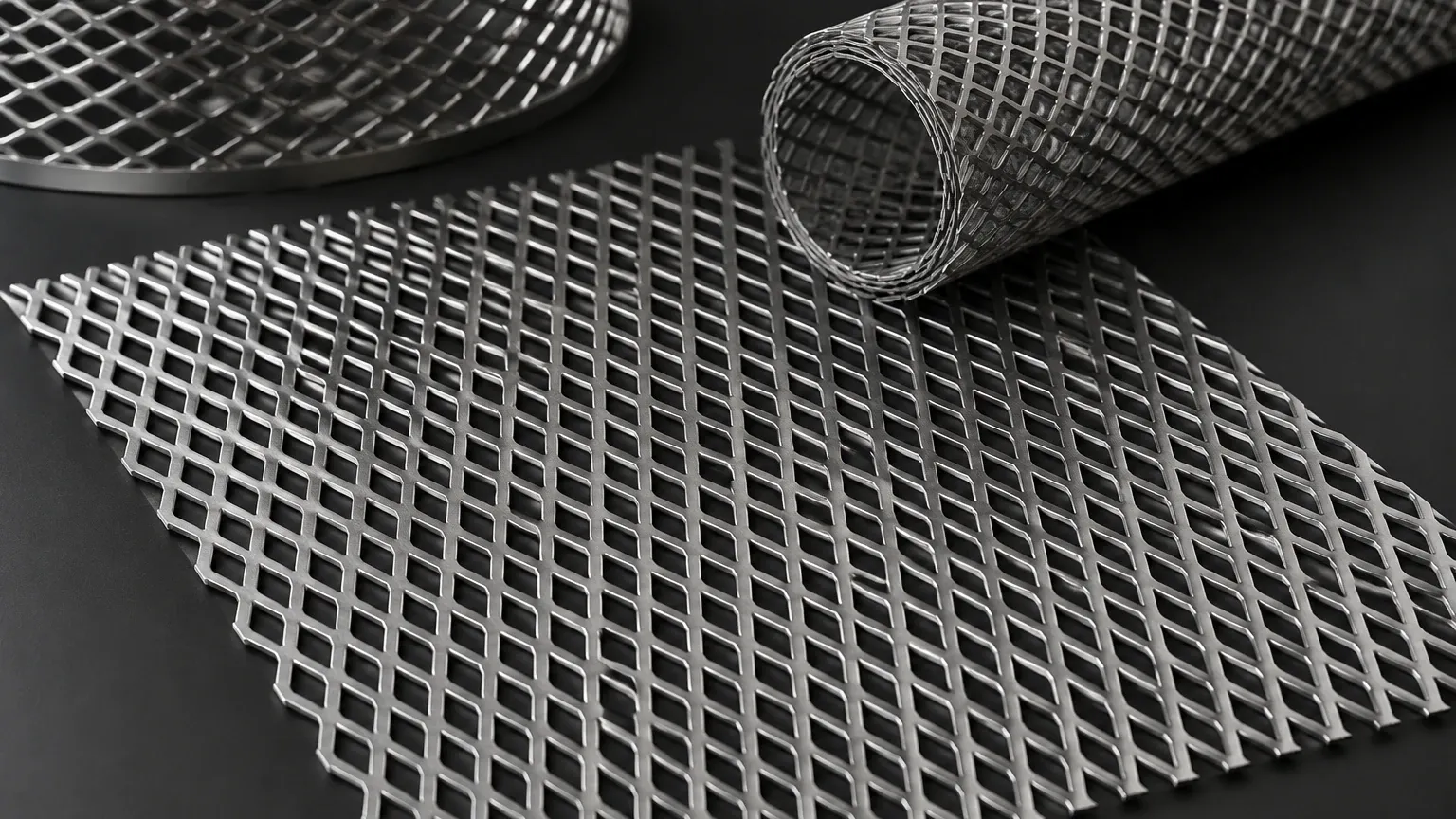
Diamond Perforated Metal Sheet
In the landscape of industrial filtration and structural engineering, the diamond perforated metal sheet represents a specialized geometry designed to balance mechanical rigidity with controlled permeability. Unlike standard round-hole patterns, the diamond configuration—whether achieved through precision punching or the expanding process—offers unique directional strength and aesthetic properties that are critical in high-performance B2B applications. For engineers and procurement specialists, understanding the technical nuances of these components is essential for optimizing filtration efficiency and ensuring the longevity of industrial equipment.
As a core component in many Perforated & Expanded Metal solutions, diamond-patterned materials serve as the backbone for filter cages, protective screens, and architectural supports. This guide examines the engineering fundamentals, material considerations, and application-specific criteria required to select the right diamond perforated metal sheet for demanding industrial environments.
Engineering Fundamentals: Perforated vs. Expanded Diamond Patterns
While the term "diamond perforated metal sheet" is often used broadly, it is vital to distinguish between the two primary manufacturing methods: perforation and expansion. Both result in diamond-shaped openings, but their mechanical properties and material efficiency differ significantly.
Perforated Diamond Sheets
Perforation involves a CNC-controlled punching process where diamond-shaped dies remove material from a solid metal sheet. This method allows for high precision in hole size and spacing (pitch). The primary advantage of a punched diamond perforated metal sheet is the ability to maintain flat margins (unperforated edges) and specific hole orientations. Because the material between the holes remains in the same plane as the original sheet, these components are easier to weld and integrate into complex assemblies like stainless steel filter cartridges.
Expanded Metal Sheets
Expanded metal is produced by simultaneously slitting and stretching the material. This process creates diamond-shaped openings without any scrap loss, making it a highly cost-effective alternative for large-scale applications. The resulting "strands" and "bonds" are set at a sharp angle to the plane of the sheet, which increases the structural rigidity and provides a natural anti-slip surface. For filtration, expanded metal is often "flattened" through a cold-rolling process to ensure a smooth surface that won't damage delicate filter media.
Material Selection for Industrial Environments
The performance of a diamond perforated metal sheet is heavily dictated by its metallurgical composition. In industrial filtration, where exposure to corrosive chemicals, high temperatures, and high pressure is common, material selection is the first line of defense against premature failure.
Stainless Steel (304 and 316L)
Stainless steel is the industry standard for filtration components. Grade 304 offers excellent strength and basic corrosion resistance, suitable for food and beverage or general industrial use. However, for pharmaceutical and chemical processing, Grade 316L is preferred due to the addition of molybdenum, which enhances resistance to pitting and crevice corrosion in chloride-rich environments. Kaifil specializes in utilizing high-grade stainless steel to ensure that the diamond perforated metal sheet maintains its structural integrity under rigorous cleaning cycles, including CIP (Clean-in-Place) procedures.
Carbon Steel and Galvanized Steel
For applications where corrosion is less of a concern, such as structural supports or ventilation screens in dry environments, carbon steel provides a high strength-to-weight ratio at a lower cost. Galvanized options provide a protective zinc coating that extends the service life in outdoor or humid conditions.
Aluminum and Specialized Alloys
Aluminum diamond perforated sheets are selected for their lightweight properties and natural oxidation resistance. In highly specialized sectors, such as aerospace or high-temperature chemical synthesis, alloys like Monel or Inconel may be specified to withstand extreme thermal stresses.
Technical Specifications and Performance Metrics
When specifying a diamond perforated metal sheet, engineers must look beyond the visual pattern and focus on the geometric variables that influence fluid dynamics and mechanical load-bearing capacity.
Open Area Percentage
The "open area" is the ratio of the total area of the holes to the total area of the sheet. This metric is critical for calculating flow rates and pressure drops. A higher open area reduces resistance to flow but can compromise the sheet's ability to withstand internal pressure. Diamond patterns often provide a unique distribution of open area that can be tailored to specific directional flow requirements.
Pitch and Hole Dimensions
In a diamond pattern, dimensions are typically defined by the Long Way of Diamond (LWD) and the Short Way of Diamond (SWD). For perforated sheets, the "bridge" or the width of the metal between the holes determines the sheet's tensile strength. Engineers must ensure the bridge is thick enough to prevent "ligament failure" under the stress of high-viscosity fluid filtration.
Gauge and Thickness
The thickness of the base material impacts the overall durability and the ease of secondary manufacturing processes like rolling or welding. For industrial filter cores, a thicker gauge is often required to prevent the diamond perforated metal sheet from collapsing under the differential pressure that occurs as the filter media becomes loaded with contaminants.
Applications in Filtration and Industrial Processing
The diamond perforated metal sheet is more than just a decorative element; it is a functional component in various critical systems. Its geometric stability makes it ideal for several key industrial roles:
1. Filter Element Support Cores: In pleated stainless steel filter cartridges, a diamond-patterned sheet often serves as the inner or outer support core. It provides the necessary rigidity to prevent the pleats from bunching or collapsing under high flow rates.
2. Primary Strainers: In water treatment and chemical processing, large diamond perforated sheets act as primary strainers, removing coarse debris before the fluid reaches finer filtration stages.
3. Heat Exchanger Guards: The directional airflow properties of expanded and perforated diamond sheets make them excellent for protecting heat exchanger fins while maintaining optimal thermal transfer.
4. Centrifuge Liners: The high strength-to-weight ratio of diamond patterns allows them to withstand the extreme G-forces found in centrifugal separation equipment used in the food and pharmaceutical industries.
5. Acoustic Damping: In industrial machinery enclosures, perforated metal sheets with specific diamond geometries are used to house sound-absorbing materials, helping facilities meet noise regulation standards.
Customization and OEM Capabilities
Standard off-the-shelf solutions rarely meet the exacting demands of specialized industrial processes. Customization is where the value of a professional manufacturer like Kaifil becomes apparent. When ordering a diamond perforated metal sheet, technical teams should consider the following customization options:
* Margins and Blank Areas: Specifying unperforated borders is essential for welding the sheet into a cylinder or frame. This ensures a clean, strong joint without the risk of burn-through on thin ligaments.
* Hole Orientation: The orientation of the diamond (parallel or perpendicular to the length of the sheet) affects how the material bends. This is a crucial consideration for rolling the sheet into cylindrical filter components.
* Surface Finishing: Depending on the application, sheets may require degreasing, pickling, passivating, or electropolishing. For food-grade applications, a smooth, burr-free finish is mandatory to prevent bacterial growth and ensure ease of cleaning.
* Precision Forming: Beyond the flat sheet, many B2B projects require the material to be cut to size, rolled, or welded into specific geometries. Integrated manufacturing capabilities allow for tighter tolerances and lower total assembly costs.
Maintenance, Durability, and Total Cost of Ownership
While the initial purchase price is a factor, the total cost of ownership (TCO) for a diamond perforated metal sheet is determined by its service life and maintenance requirements. A cheaply manufactured sheet with irregular hole patterns or poor-quality material will lead to higher costs through:
* Frequent Replacements: Low-grade alloys or thin gauges may fail under pressure or succumb to corrosion prematurely.
* Cleaning Inefficiency: Burrs or rough edges on the diamond pattern can trap particulates, making the cleaning process longer and less effective, which is particularly detrimental in the food and beverage sector.
* System Downtime: A failure in a support core can lead to the bypass of unfiltered fluid, potentially damaging downstream equipment or contaminating the final product.
To maximize the value of these components, engineers should establish a regular inspection cycle. For diamond perforated sheets used in filtration, checking for signs of ligament cracking, erosion of the hole edges, and any deformation of the sheet's profile is recommended. In many cases, high-quality stainless steel diamond sheets can be cleaned and reused multiple times, significantly reducing the long-term operational expenditure.
Conclusion: Selection Criteria for Engineers
Selecting the optimal diamond perforated metal sheet requires a holistic view of the application's mechanical and chemical environment. Engineers should confirm the following before proceeding with a procurement or design phase:
1. Chemical Compatibility: Does the alloy (e.g., 316L) match the corrosivity of the process fluid?
2. Pressure Requirements: Will the gauge and open area support the maximum expected differential pressure?
3. Dimensional Tolerances: Are the LWD, SWD, and margin specifications precise enough for the final assembly?
4. Compliance: Does the material meet industry-specific standards, such as FDA or 3A for food contact?
By focusing on these technical boundaries and leveraging the expertise of a specialized manufacturer, industrial teams can ensure that their filtration systems operate with maximum reliability. For more detailed technical specifications and to explore custom design options, engineers are encouraged to Review product options and application support to find the precise solution for their specific industrial challenges.
