


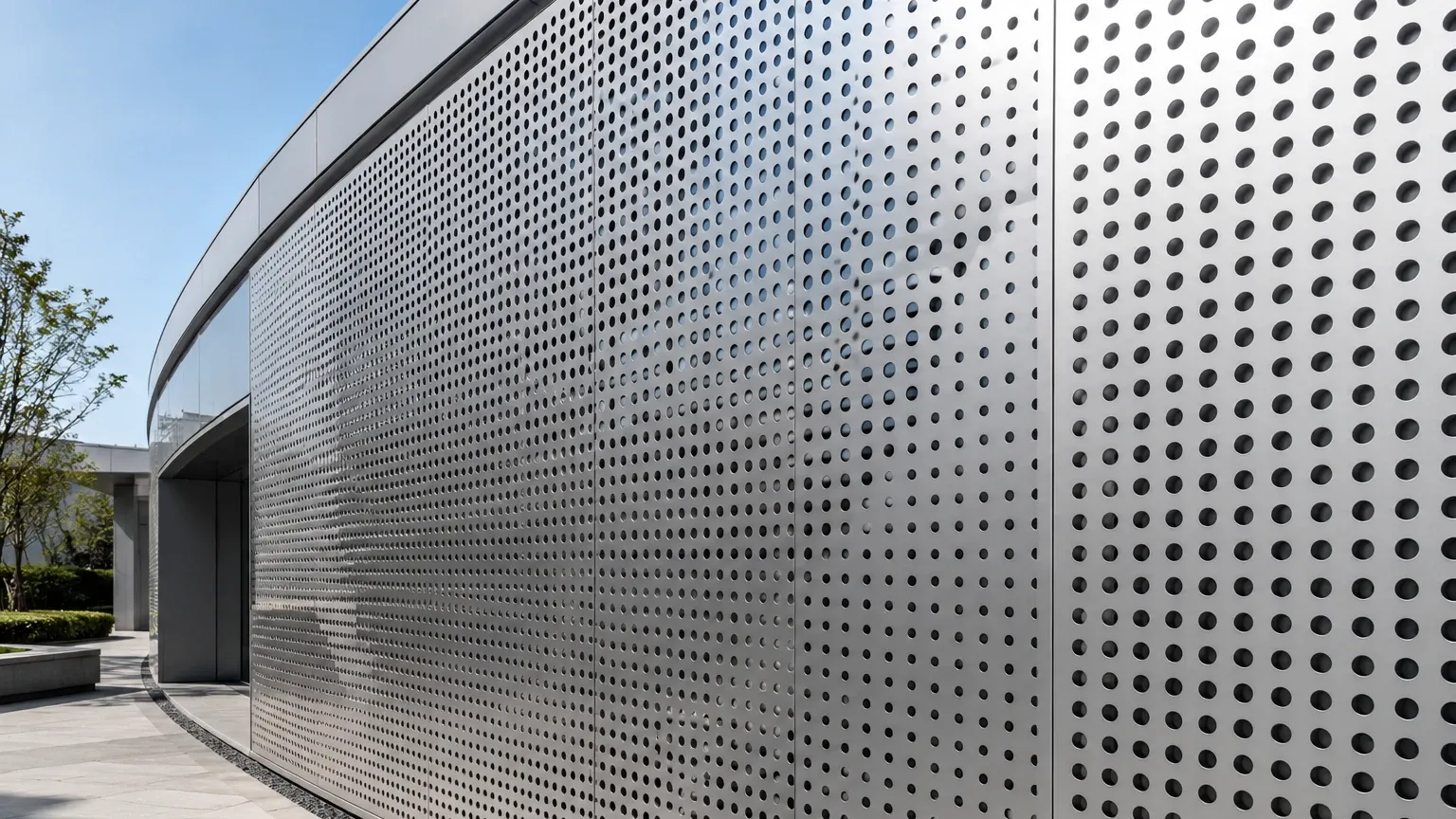
Perforated Metal Exterior
In industrial engineering and large-scale facility design, the selection of materials for external structures requires a balance of structural integrity, environmental resistance, and functional performance. A perforated metal exterior serves as a critical component in various applications, ranging from protective enclosures for filtration systems and heavy machinery to industrial cladding and ventilation screens. Unlike solid metal sheets, perforated materials provide controlled permeability, allowing for the passage of air, light, and sound while maintaining a robust physical barrier.
For engineers and procurement professionals, specifying the correct Perforated & Expanded Metal involves understanding the nuances of material science, manufacturing tolerances, and the specific demands of the operating environment. This guide examines the technical considerations essential for selecting and implementing perforated metal in exterior industrial contexts.
Understanding Perforated Metal Exterior Applications
The term "exterior" in an industrial B2B context often refers to the outermost layer of a system or a structure. While architectural aesthetics are a factor, the primary drivers for choosing a perforated metal exterior are usually functional. These applications typically fall into three categories:
1. Protective Enclosures: Industrial filtration units, HVAC systems, and power generators often require outer shells that protect internal components from debris and impact while ensuring adequate heat dissipation. Perforated metal provides the necessary ventilation without compromising the safety of the equipment.
2. Industrial Cladding and Screening: In chemical processing plants or water treatment facilities, perforated panels are used to shield sensitive areas from direct sunlight or wind-driven rain while maintaining airflow to prevent the buildup of hazardous fumes or moisture.
3. Filtration and Separation Supports: Large-scale outdoor filtration systems, such as intake screens for water treatment or coarse filters for industrial runoff, utilize perforated metal as the primary structural element. These components must withstand constant exposure to the elements and mechanical stress.
By utilizing specialized manufacturing techniques, these components can be tailored to meet specific flow rates, pressure drop requirements, and structural load capacities.
Material Selection for Durability and Corrosion Resistance
The longevity of a perforated metal exterior is heavily dependent on the material grade selected. Because these components are exposed to UV radiation, fluctuating temperatures, and potentially corrosive atmospheres (such as salt air in coastal regions or chemical vapors in processing plants), material selection is the first critical decision in the engineering process.
Stainless Steel (304 and 316 Grades)
Stainless steel is the industry standard for high-performance exterior applications.
* Grade 304: Offers excellent durability and is suitable for most general-purpose industrial environments. It provides good resistance to oxidation and common industrial chemicals.
* Grade 316: Specifically recommended for marine environments or chemical plants where exposure to chlorides or high-acidity vapors is expected. The addition of molybdenum enhances its pitting resistance, making it the preferred choice for critical filtration housings and exterior panels in harsh conditions.
Aluminum and Specialized Alloys
Aluminum is often selected for applications where weight reduction is a priority. While it naturally forms a protective oxide layer, it may require anodizing or powder coating for enhanced exterior durability. For extreme high-temperature or highly specialized chemical environments, alloys like Monel or Inconel may be specified, though these are typically reserved for niche filtration and processing components.
Engineering Specifications: Hole Patterns and Open Area
The performance of a perforated metal exterior is defined by its geometry. Engineers must calculate the "open area percentage" to ensure the material meets the required specifications for airflow, light transmission, or filtration efficiency.
Calculation of Open Area
The open area is the ratio of the total area of the holes to the total area of the sheet. For a standard staggered round hole pattern, the formula is:
Open Area % = (D² × 90.69) / P²
*(Where D = Hole Diameter and P = Center-to-Center Pitch)*
For industrial ventilation, an open area of 40% to 60% is common, providing a balance between airflow and structural rigidity. In filtration support roles, the open area may be lower to ensure the metal can withstand high differential pressures.
Hole Patterns and Their Impact
* Round Holes: The most common and cost-effective pattern. Staggered round holes provide the highest structural strength and are ideal for pressure-bearing applications.
* Square Holes: Offer a higher open area for maximum airflow but may have lower resistance to mechanical stress compared to round holes.
* Slotted Holes: Frequently used in separation processes where the orientation of the particles or the flow direction is a factor.
Perforated vs. Expanded Metal: Choosing the Right Manufacturing Method
When specifying a Perforated & Expanded Metal solution, it is important to distinguish between the two manufacturing processes, as they offer different mechanical properties.
Perforated Metal
Produced by punching holes into a solid metal sheet. This process allows for extreme precision in hole size and placement. It is the preferred choice for applications requiring exact filtration ratings or specific acoustic properties. The margins (the solid areas around the edges of the sheet) can be customized to facilitate easier welding or mounting into frames.
Expanded Metal
Created by simultaneously slitting and stretching the metal sheet. This process creates a diamond-shaped mesh without any material waste. Expanded metal is inherently rigid because it is made from a single piece of metal without joins or welds. It is often used for heavy-duty exterior walkways, safety guards, and coarse filtration where high strength-to-weight ratios are required. However, it lacks the precision in aperture size that perforated metal provides.
Critical Factors in Specifying Perforated Metal Exteriors
To ensure a successful procurement and installation process, engineers should confirm several technical variables before finalizing a design.
1. Gauge and Thickness
The thickness of the metal (gauge) must be sufficient to resist wind loads and physical impacts. In industrial settings, using a gauge that is too light can lead to "oil canning" (visible buckling) or premature fatigue failure due to vibration. Conversely, over-specifying thickness increases costs and weight unnecessarily.
2. Tolerance and Precision
For precision filtration and high-end industrial enclosures, tolerances are vital. Standard commercial tolerances may not be sufficient for components that must fit perfectly into a larger assembly. Specifying tolerances for hole diameter, pitch, and sheet flatness is essential for OEM integrations.
3. Surface Finishing
Beyond the base material, surface treatments can extend the service life of an exterior component. Common finishes include:
* Pickling and Passivation: Essential for stainless steel to remove surface contaminants and restore the protective chrome-oxide layer.
* Electropolishing: Provides a mirror-like finish and further enhances corrosion resistance by smoothing the surface at a microscopic level, which is particularly useful in food and pharmaceutical grade exteriors.
* Powder Coating: Used for color-coding or additional chemical resistance, though care must be taken to ensure the coating does not clog the perforations.
Performance Expectations and Maintenance
A well-engineered perforated metal exterior should require minimal maintenance, but it is not "maintenance-free." In industrial environments, particulate matter can accumulate in the perforations, leading to reduced airflow or increased pressure drop in filtration systems.
Cleaning Cycles
Regular inspection cycles should be established to check for debris buildup. For stainless steel exteriors, a simple pressurized water wash is often sufficient. In environments with high chemical exposure, specialized cleaning agents may be required to prevent the accumulation of corrosive residues.
Structural Integrity Checks
Periodic inspections should look for signs of stress cracking, especially around mounting points or areas subject to high vibration. Because perforated metal has a lower cross-sectional area than solid sheet, stress concentrations can occur at the edges of the holes if the component is subjected to loads beyond its design capacity.
Total Cost of Ownership (TCO) Considerations
When evaluating providers for perforated metal components, the initial purchase price is only one part of the TCO. Engineers should consider:
* Customization vs. Standard Sizes: While standard sheets are cheaper, custom-sized panels with finished margins can significantly reduce labor costs during assembly and installation.
* Durability vs. Replacement Frequency: Investing in Grade 316 stainless steel may have a higher upfront cost than Grade 304, but the extension of the replacement cycle in corrosive environments often results in a lower TCO over the life of the project.
* Manufacturing Quality: Precision in the perforating process ensures that the open area is consistent across the entire panel, which is critical for maintaining uniform flow rates in filtration and ventilation applications.
Conclusion for Technical Procurement
Specifying a perforated metal exterior requires a deep understanding of the interplay between material properties, geometric configurations, and environmental stressors. Whether the goal is to protect sensitive industrial equipment, manage airflow in a processing facility, or provide structural support for a large-scale filtration system, the choice of Perforated & Expanded Metal determines the ultimate reliability of the installation.
By focusing on high-quality materials like stainless steel, calculating precise open area requirements, and considering the long-term environmental impacts, engineers can ensure that their exterior metal components perform effectively throughout their intended service life. For complex industrial applications, partnering with a manufacturer that offers custom engineering and OEM capabilities allows for the development of filtration and screening solutions that meet the exact rigors of the field.
