


Enscape Perforated Metal
In the modern engineering and architectural workflow, the transition from digital visualization to physical procurement is a critical phase where technical accuracy determines project success. For professionals utilizing real-time rendering tools, the term "enscape perforated metal" often refers to the search for high-fidelity material representations that accurately reflect the physical properties of industrial metal components. However, achieving a seamless transition from a digital twin in Enscape to a physical installation requires a deep understanding of the mechanical specifications, material behaviors, and manufacturing constraints of Perforated & Expanded Metal.
This guide examines the technical parameters that define perforated metal performance, the considerations for material selection in industrial environments, and the essential data points engineers must confirm before moving from a digital model to a manufacturing order.
Technical Parameters of Perforated Metal Geometry
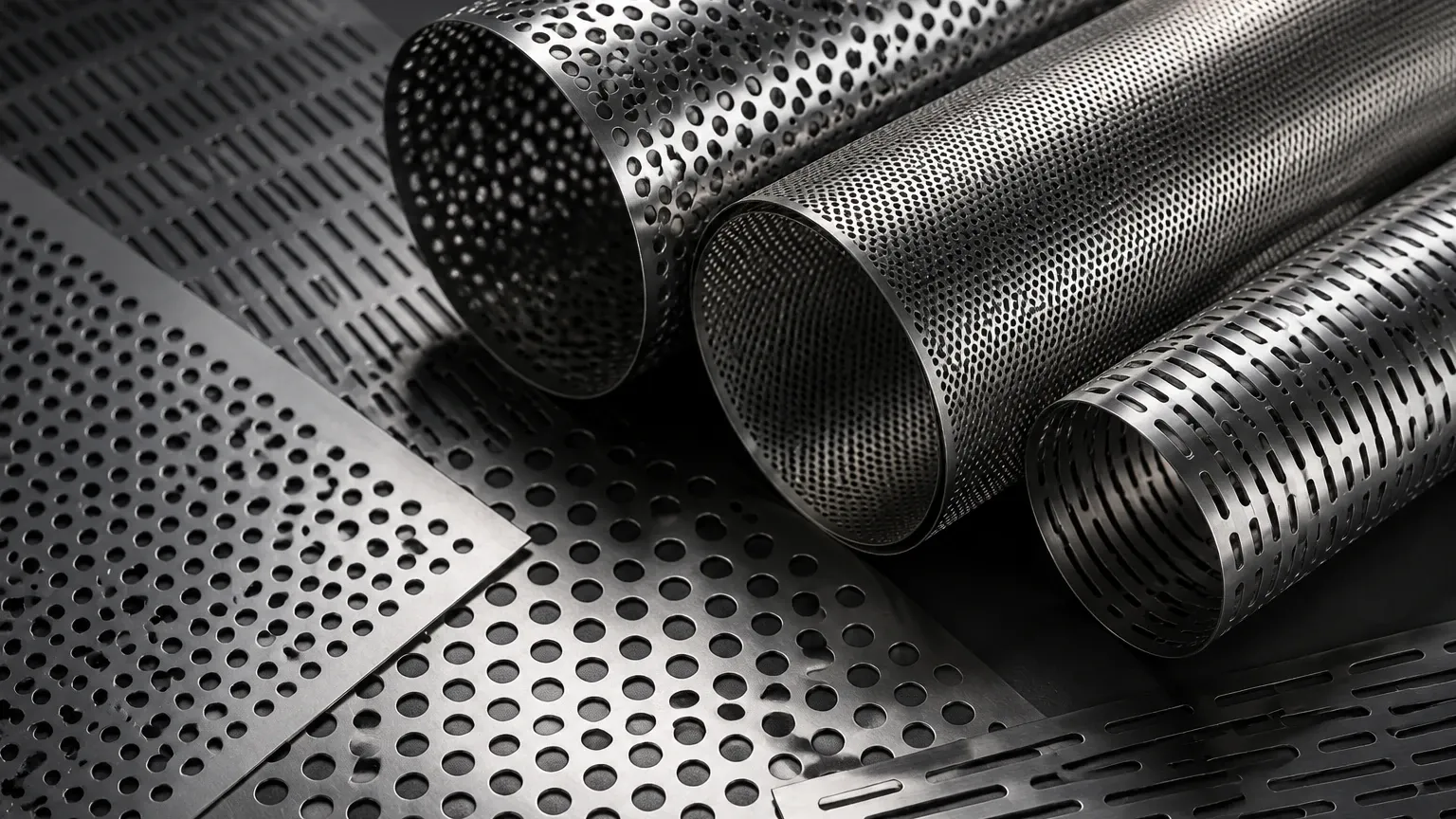
Whether designing a filtration system, an acoustic baffle, or an architectural facade, the geometry of the perforation is the primary driver of both aesthetic appearance and functional performance. In digital environments like Enscape, these patterns are often represented by textures or displacement maps, but in physical manufacturing, they are defined by precise mechanical measurements.
Hole Patterns and Staggering
Industrial perforated metal is typically produced in three main configurations:
1. 60-Degree Staggered: The most common and efficient pattern, providing high open area and structural integrity. The holes are offset so that each hole is equidistant from its neighbors.
2. 45-Degree Staggered: An alternative offset pattern often used for specific aesthetic requirements or directional airflow control.
3. Straight Line: Holes are aligned in both horizontal and vertical rows. While simpler to visualize, this pattern generally offers lower structural strength compared to staggered configurations.
Calculating Open Area
The "Open Area" percentage is the most critical metric for engineers concerned with filtration efficiency, pressure drop, or light transmission. For a standard 60-degree staggered round hole pattern, the calculation is as follows:
Percent Open Area = (D² × 90.69) / P²
Where:
* D = Hole Diameter
* P = Pitch (the distance from the center of one hole to the center of the adjacent hole)
In a B2B procurement context, providing the exact open area requirement ensures that the manufactured product meets the hydraulic or pneumatic specifications intended during the design phase.
Material Selection for Industrial Durability
While an "enscape perforated metal" material might look identical across different metal types in a render, the physical environment dictates the choice of substrate. Selecting the wrong material can lead to premature failure due to corrosion, mechanical stress, or thermal expansion.
Stainless Steel (304 and 316 Grades)
For most industrial filtration and chemical processing applications, stainless steel is the standard.
* Grade 304: Offers excellent strength and basic corrosion resistance, suitable for food processing and general industrial use.
* Grade 316: Contains molybdenum, providing superior resistance to chlorides and marine environments. This is the preferred choice for pharmaceutical and high-corrosion chemical applications.
Aluminum and Specialized Alloys
Aluminum is frequently selected for architectural panels and weight-sensitive applications due to its high strength-to-weight ratio and natural oxide layer that resists atmospheric corrosion. For high-temperature environments, specialized alloys or carbon steel with protective coatings (such as galvanization or powder coating) may be required.
Digital Visualization vs. Manufacturing Reality
Engineers using Enscape to visualize perforated metal must account for "manufacturing margins"—the unperforated areas along the edges of a sheet. In a digital model, it is easy to apply a seamless perforated texture across an entire surface. However, in reality, margins are necessary for several reasons:
1. Welding and Mounting: Unperforated edges provide a solid surface for TIG or MIG welding and for drilling mounting holes without compromising the hole pattern.
2. Structural Stability: Margins prevent the sheet from warping during the punching process, especially in high-open-area designs.
3. Safety: Solid edges eliminate sharp, partial holes at the perimeter of the panel.
When transitioning from an Enscape model to a technical drawing, engineers should specify the required margin widths for all four sides of the panel to ensure the final product integrates correctly with the support structure.
Applications in Filtration and Industrial Systems
Perforated metal serves as the backbone for many complex filtration systems. In these scenarios, the material is rarely used in isolation but rather as a component of a larger assembly.
Support for Wire Mesh
In high-pressure hydraulic or liquid filtration, fine wire mesh is often pleated to increase surface area. Because wire mesh lacks inherent rigidity, a perforated metal core or outer shroud is used to provide structural support, preventing the mesh from collapsing under the force of the fluid flow.
Strainers and Baskets
For coarse filtration, perforated metal baskets are used to remove larger particulates from process streams. The durability of stainless steel perforated metal allows these components to be cleaned and reused, providing a lower total cost of ownership compared to disposable filter elements.
Acoustic and Thermal Shielding
Beyond fluid dynamics, perforated metal is utilized in power generation and heavy machinery to dampen noise. The hole size and pitch are engineered to trap specific sound frequencies, a function that can be simulated in advanced engineering software and visualized for client approval in Enscape.
Evaluation Criteria for B2B Procurement
When sourcing Perforated & Expanded Metal, purchasing teams and engineers should evaluate suppliers based on technical capability rather than just unit price. Key evaluation criteria include:
* Tolerance Precision: Does the manufacturer adhere to international standards (such as IPA – Industrial Perforators Association) for hole diameter and pitch tolerances?
* Flatness Requirements: The punching process introduces internal stresses into the metal. Professional manufacturers use leveling rollers to ensure the finished sheets meet flatness specifications for easy installation.
* Burr Removal: High-speed punching can leave sharp edges (burrs) on the exit side of the hole. For applications in food processing or pharmaceutical manufacturing, secondary de-burring or polishing is mandatory.
* Material Traceability: For critical applications, suppliers must provide Mill Test Reports (MTRs) to verify the chemical composition and mechanical properties of the stainless steel or alloy used.
Common Risks in Perforated Metal Specification
Failure to define specific technical boundaries often leads to project delays or mechanical failures. Common risks include:
* Ignoring the "Punch Side": One side of a perforated sheet is always smoother than the other. In architectural applications visualized in Enscape, the orientation of the "smooth" side toward the viewer is a key aesthetic detail that must be communicated to the fabricator.
* Over-specifying Open Area: While a high open area improves flow, it significantly reduces the load-bearing capacity of the metal. Engineers must balance filtration needs with the structural requirements of the application.
* Incompatible Finishes: If a perforated panel is to be powder-coated after production, the hole size must be slightly oversized to account for the thickness of the coating, which can range from 60 to 120 microns.
Conclusion: Moving Toward Production
For the technical professional, "enscape perforated metal" is the starting point of a design journey. To move toward a successful physical implementation, the focus must shift from visual representation to mechanical specification. By defining the exact hole geometry, calculating the required open area, selecting the appropriate material grade, and accounting for manufacturing margins, engineers can ensure that the final product performs as reliably in the field as it appeared in the digital render.
Before finalizing a procurement order, it is recommended to confirm the following with your manufacturing partner:
1. The specific alloy grade and required certifications (e.g., ISO, ASTM).
2. The exact dimensions including margins and tolerances.
3. The intended environment (to determine if secondary finishes like electropolishing are necessary).
4. The load-bearing requirements if the metal is used as a structural or support component.
By addressing these factors early, B2B buyers can optimize their filtration and industrial systems for long-term durability and cost-efficiency.
