


Perforated Metal Indonesia
In the rapidly expanding industrial landscape of Southeast Asia, the demand for precision-engineered filtration and structural components has never been higher. For engineers and procurement specialists managing projects in sectors such as palm oil processing, mining, chemical manufacturing, and food production, selecting the right materials is critical to operational efficiency. Among the most versatile components used in these industries is Perforated & Expanded Metal, which serves as the backbone for filtration systems, protective screening, and structural support.
When sourcing perforated metal Indonesia, technical professionals must look beyond basic dimensions. The performance of these components depends on a deep understanding of metallurgy, mechanical tolerances, and the specific environmental challenges present in the Indonesian archipelago. This guide explores the technical specifications, application-specific requirements, and engineering considerations essential for selecting high-performance metal solutions.
Technical Specifications of Perforated and Expanded Metal
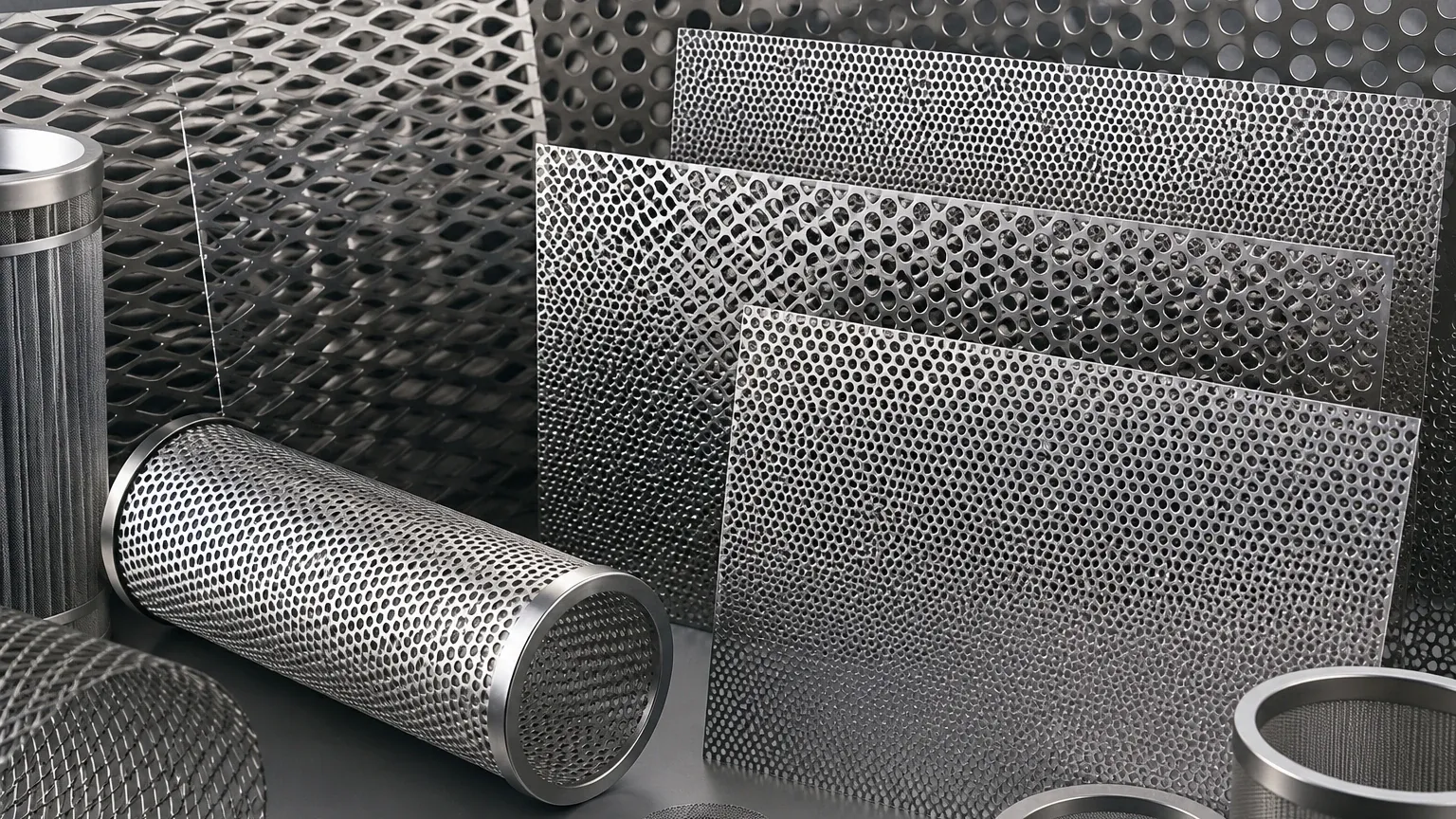
To ensure a filtration system or structural component performs as intended, engineers must define several key parameters. Perforated metal is created by mechanically punching or laser-cutting holes into a metal sheet, while expanded metal is produced by slitting and stretching the material simultaneously, creating a diamond-shaped mesh without any material waste.
Hole Patterns and Geometry
The geometry of the perforation significantly impacts both flow rates and structural integrity. Common patterns include:
* Round Holes: The most popular choice due to their versatility and structural strength. They are typically arranged in a 60-degree staggered pattern, which provides the highest open area and strength-to-weight ratio.
* Square Holes: Often used when a higher open area is required, though they may offer less structural rigidity than round holes under high pressure.
* Slotted Holes: Ideal for filtering elongated particles or for use in vibrating screens where material flow direction is a factor.
Open Area Calculation
The "Open Area" is perhaps the most critical metric for filtration applications. It is the percentage of the total area of the sheet that is occupied by the holes. For instance, a higher open area allows for greater flow and lower pressure drop but reduces the mechanical strength of the sheet. Engineers must calculate the balance between the required flow rate and the pressure the sheet must withstand without deforming.
Expanded Metal Characteristics
Unlike perforated metal, expanded metal does not involve removing material. It is often used as a support layer for finer wire mesh filters or as a heavy-duty walkway and safety grating. Because the strands and bonds are set at an angle, expanded metal provides excellent directional strength and can be used to deflect light or sound in architectural applications.
Industrial Applications in the Indonesian Market
Indonesia’s diverse industrial base requires specialized filtration solutions. Understanding how perforated metal Indonesia is utilized across different sectors helps in specifying the right grade and pattern.
Palm Oil and Agricultural Processing
As the world’s largest producer of palm oil, Indonesia relies heavily on robust filtration components. Perforated stainless steel sheets are used in clarification tanks, centrifuge baskets, and sterilizer cages. These components must withstand high temperatures, abrasive organic matter, and acidic environments. Using high-grade stainless steel ensures that the filters do not contaminate the oil and maintain their structural integrity over long production cycles.
Mining and Mineral Processing
The Indonesian mining sector utilizes heavy-gauge perforated metal for ore grading and sifting. These screens must be manufactured from wear-resistant alloys to handle the constant friction of rocks and minerals. Precision in hole size is vital here to ensure accurate particle separation, which directly impacts the quality of the final mineral product.
Food and Beverage Industry
In food processing, hygiene and cleanability are paramount. Perforated metal used in this sector must have a smooth surface finish (often electropolished) to prevent bacterial growth in crevices. Stainless steel 304 and 316 are the standard materials, providing the necessary corrosion resistance against cleaning chemicals and food acids.
Engineering Considerations for Custom Filtration Components
When designing custom filtration solutions, several engineering factors must be addressed to ensure longevity and performance.
Material Selection and Corrosion Resistance
Indonesia’s tropical climate, characterized by high humidity and coastal proximity, presents a significant risk of atmospheric corrosion. For industrial applications, stainless steel is the preferred material.
* Grade 304: Suitable for general-purpose applications with moderate corrosion risk.
* Grade 316: Contains molybdenum, making it highly resistant to chlorides and sea salt, which is essential for facilities located near the coast or those handling harsh chemicals.
Mechanical Stress and Fatigue
In many industrial processes, perforated metal is subjected to cyclic loading or high-pressure differentials. Engineers must consider the "ligament width"—the distance between the holes. If the holes are too close together, the material may fail under stress. Conversely, if they are too far apart, the filtration efficiency drops. Advanced manufacturing techniques ensure that the structural integrity of the sheet is maintained even with high open-area percentages.
Edge Configurations and Margins
Standard perforated sheets often come with "minimum margins" (unperforated areas along the edges). However, for custom filter cartridges or machine guards, specific margin dimensions are required for welding or bolting. Specifying "finished ends" ensures that the hole pattern is centered and that there are no partial holes at the edges, which could create weak points or sharp hazards.
Quality Control and Manufacturing Standards
For B2B procurement, consistency is key. When sourcing perforated metal, it is essential to verify that the manufacturer adheres to international quality standards such as ISO 9001. Quality control processes should include:
1. Dimensional Tolerance: Ensuring that hole diameters, pitch, and sheet thickness meet the exact specifications within a fraction of a millimeter.
2. Flatness: Perforation can sometimes cause internal stresses that warp the metal. Professional manufacturers use leveling rollers to ensure the final product is perfectly flat for easy installation.
3. Deburring: The punching process can leave sharp burrs on the underside of the sheet. For filtration applications, these must be removed to prevent flow turbulence and to ensure the safety of personnel handling the components.
4. Material Certification: Providing Mill Test Reports (MTRs) to verify the chemical composition and mechanical properties of the steel used.
Procurement and Customization Guide for Indonesian Projects
Navigating the procurement process for perforated metal Indonesia requires clear communication of technical needs. To streamline the process and avoid costly errors, purchasing teams should provide the following information during the inquiry phase:
* Material Type: (e.g., Stainless Steel 316L, Carbon Steel, Aluminum).
* Thickness: Usually expressed in millimeters or gauge.
* Hole Shape and Size: (e.g., 5mm Round).
* Pitch and Arrangement: (e.g., 8mm staggered pitch).
* Sheet Dimensions: Width and length of the required panels.
* Quantity: Total number of pieces or total area.
* Application Environment: Temperature, chemical exposure, and pressure requirements.
Total Cost of Ownership (TCO)
While the initial purchase price is a factor, engineers should focus on the Total Cost of Ownership. A cheaper, lower-grade perforated sheet may save money upfront but could lead to frequent replacements, production downtime, and potential equipment damage. Investing in high-quality, precision-manufactured Perforated & Expanded Metal from a reliable manufacturer like Kaifil ensures long-term reliability and lower maintenance costs.
The Role of Customization in Industrial Efficiency
One size rarely fits all in industrial filtration. Customization allows for the optimization of every variable to suit a specific process. For example, a chemical plant in Surabaya might require a custom-sized perforated basket with a specific slot orientation to optimize the flow of a high-viscosity fluid.
By working with a manufacturer that specializes in custom stainless steel filtration solutions, Indonesian businesses can access engineering expertise that helps refine these specifications. This collaborative approach ensures that the resulting components are not just parts, but solutions that enhance the overall performance of the industrial system.
Conclusion
Selecting perforated metal for Indonesian industrial applications involves a sophisticated understanding of material science and mechanical engineering. Whether it is for the heavy-duty demands of the mining sector or the high-purity requirements of the pharmaceutical industry, the quality of the perforated or expanded metal used will dictate the success of the operation. By prioritizing technical accuracy, material quality, and custom engineering, businesses can ensure their filtration and structural systems are built to last in even the most demanding environments.
