


Ikea Perforated Metal
In the realm of interior design and organizational systems, the term "ikea perforated metal" has become synonymous with functional, modular, and aesthetically pleasing solutions like the SKÅDIS pegboard or various powder-coated steel cabinets. For consumers, these products offer a cost-effective way to manage tools, office supplies, or retail displays. However, when engineers and procurement professionals in the industrial sector evaluate perforated metal for filtration, structural support, or chemical processing, the requirements shift from aesthetics to rigorous technical performance.
While retail-grade perforated metal serves a valuable purpose in domestic and light commercial environments, industrial applications demand a level of precision, material integrity, and durability that goes far beyond consumer standards. Understanding the distinction between these two tiers is essential for ensuring the safety and efficiency of industrial systems.
From Retail Aesthetics to Industrial Performance
Consumer-grade perforated metal, such as that found in popular retail furniture, is typically designed for low-stress environments. These products are often manufactured from thin-gauge carbon steel and finished with a decorative powder coating. The primary design goals are ease of assembly, visual appeal, and affordability.
In contrast, Perforated & Expanded Metal used in industrial filtration and mechanical engineering must meet strict tolerances. In sectors like chemical processing or hydraulic filtration, the metal is not just a mounting surface; it is a critical component that must withstand high pressure, corrosive fluids, and extreme temperatures. Where a consumer pegboard might hold a few kilograms of tools, an industrial perforated metal cylinder may need to support the structural integrity of a filter element under hundreds of PSI of differential pressure.
Material Selection: Why Stainless Steel Outperforms Powder-Coated Carbon Steel
One of the most significant differences between retail-grade and industrial perforated metal is the base material. Most consumer products labeled as "perforated metal" utilize mild carbon steel. To prevent rust, these are coated in epoxy or polyester-based powders. While effective in a dry home office, this coating is a point of failure in industrial settings. If the coating is scratched or chipped, the underlying steel oxidizes rapidly, leading to structural failure and contamination of the process fluid.
Industrial filtration solutions provided by manufacturers like Kaifil utilize high-grade alloys tailored to specific environments:
* Stainless Steel 304: Offers excellent corrosion resistance and is the standard for food and beverage applications where frequent washdowns occur.
* Stainless Steel 316/316L: Contains molybdenum, providing superior resistance to chlorides and acids, making it essential for marine and pharmaceutical environments.
* Duplex Stainless Steel: Used in high-stress, highly corrosive chemical processing where both strength and corrosion resistance are paramount.
For engineers, the choice of material is dictated by the chemical compatibility of the fluid being filtered and the required lifespan of the component. Unlike retail products, industrial perforated metals are often left unfinished or passivated to ensure that the material itself provides the protection, rather than a superficial coating.
Understanding Geometric Specifications: Hole Patterns and Open Area
The utility of perforated metal is defined by its geometry. In consumer products, hole size and spacing are often standardized for compatibility with specific hooks or accessories. In industrial filtration, these specifications are calculated based on fluid dynamics and particle retention requirements.
Hole Patterns
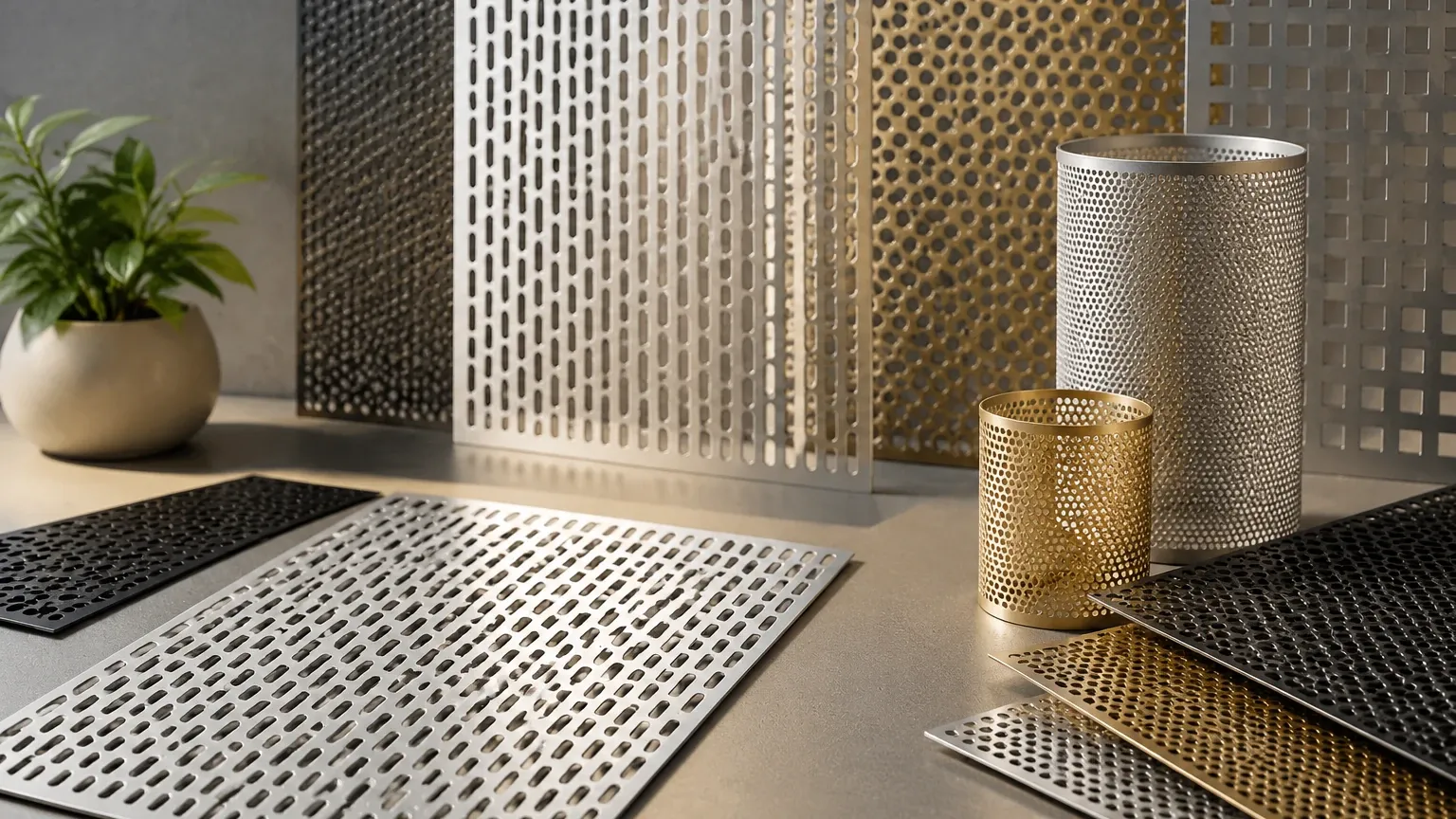
Industrial perforated metal is available in several configurations, each serving a specific mechanical purpose:
1. Round Holes: The most common and versatile pattern, providing a good balance of strength and open area. They are typically arranged in a 60-degree staggered pattern to maximize the number of holes per square inch.
2. Square Holes: Often used when a higher open area is required, though they can result in lower structural rigidity compared to round holes.
3. Slotted Holes: Ideal for filtering elongated particles or for use in vibrating screens where material flow direction is critical.
The Open Area Calculation
The "open area" is the percentage of the total sheet area that is occupied by holes. This is a critical metric for engineers because it determines the pressure drop across the filter. A retail-grade "ikea perforated metal" panel might have an open area designed for visual balance, whereas an industrial filter core is engineered to minimize resistance to flow while maintaining enough solid metal to prevent collapsing under load.
Structural Integrity and Load-Bearing Capacity
In industrial environments, perforated metal often serves as the "skeleton" for finer filtration media. For example, in a stainless steel filter cartridge, a perforated metal core provides the necessary support for layers of wire mesh or sintered metal.
Engineers must consider several mechanical factors that are irrelevant in consumer applications:
* Yield Strength: The amount of stress the metal can withstand before it deforms permanently. Industrial perforated sheets are often thicker (gauges ranging from 26 to 1/2") than retail variants.
* Edge Margins: Industrial sheets can be manufactured with "safe sides" or blank margins, which are essential for welding the sheet into a cylinder or frame without distorting the hole pattern.
* Flatness Tolerances: For precision machinery, the perforated sheet must be perfectly flat. Retail products often have slight bows or waves that would be unacceptable in a high-speed centrifugal filter or a precision chemical strainer.
Applications in Demanding Environments: Chemical, Food, and Pharmaceutical
The gap between consumer and industrial perforated metal is most apparent when looking at specialized industry requirements.
Food and Beverage Processing
In food production, perforated metal must be "sanitary grade." This means the surfaces must be smooth, and the holes must be free of burrs or sharp edges where bacteria could thrive. While a consumer-grade metal shelf might look clean, it likely contains microscopic crevices. Industrial manufacturers use electropolishing to ensure a mirror-like finish that meets FDA and 3A standards.
Pharmaceutical Manufacturing
Precision is the priority here. Perforated metal used in fluid bed dryers or tablet coating machines must have extremely tight tolerances on hole diameters to ensure uniform airflow and consistent product quality. The material must also be traceable, with Mill Test Reports (MTRs) proving the exact chemical composition of the steel—something never provided with retail furniture.
Hydraulic and Oil Filtration
In hydraulic systems, perforated metal must withstand rapid pressure pulsations. If the metal is too thin or the alloy is incorrect, the material will suffer from fatigue cracking. Industrial-grade expanded metal is often used here as well, providing a rigid structure that can be pleated or formed into complex shapes to increase surface area.
Customization and OEM Solutions for Industrial Filtration
One of the primary limitations of purchasing off-the-shelf retail perforated metal is the lack of customization. For an engineer designing a new filtration system, the ability to specify the exact hole diameter, pitch, thickness, and material is non-negotiable.
Custom manufacturing allows for:
* Variable Hole Densities: Increasing the number of holes in high-flow areas while keeping other sections solid for structural mounting.
* Specialized Shapes: Beyond flat sheets, industrial perforated metal can be supplied as pre-rolled cylinders, conical strainers, or custom-fabricated baskets.
* Secondary Processing: This includes degreasing, pickling, passivating, or specialized welding (such as TIG or plasma welding) to ensure the final component is ready for immediate integration into a heavy-duty system.
Total Cost of Ownership and Replacement Cycles
When evaluating Perforated & Expanded Metal, purchasing departments must look beyond the initial price point. A consumer-grade panel may be inexpensive, but if it requires replacement every six months due to corrosion or structural failure, the total cost of ownership (TCO) quickly exceeds that of a high-quality stainless steel component.
Industrial-grade filters are designed for longevity and cleanability. Many stainless steel perforated elements can be cleaned via ultrasonic baths or back-flushing, allowing them to be reused for years. In high-volume industrial processes, the cost of downtime caused by a failing sub-par filter far outweighs the investment in a precision-engineered metal component.
Conclusion: Selecting the Right Specification
While "ikea perforated metal" serves as an excellent reference point for the versatility of perforated materials in everyday life, it is not a substitute for industrial-grade components. For engineers and technical professionals, the selection process must be driven by data: flow rates, chemical compatibility, pressure requirements, and regulatory compliance.
By partnering with a professional manufacturer like Kaifil, companies can ensure that their filtration and structural components are built to survive the rigors of the industrial world. Whether you require a standard perforated sheet or a complex, custom-fabricated filter core, focusing on material science and engineering precision is the only way to achieve reliable, long-term performance.
