


Perforated Metal Mesh Panels
In industrial filtration and structural engineering, perforated metal mesh panels serve as fundamental components that balance mechanical strength with precise permeability. These panels are manufactured by punching or laser-cutting a series of holes into a solid metal sheet, creating a medium that allows for the controlled passage of fluids, gases, or light while retaining solids. For engineers and procurement teams, selecting the correct perforated panel involves a deep understanding of material properties, geometric configurations, and the specific demands of the operating environment.
As a specialized manufacturer, Kaifil provides a broad range of Perforated & Expanded Metal solutions designed to meet the rigorous standards of the chemical, pharmaceutical, and food processing industries. Understanding the technical nuances of these components is essential for optimizing filtration efficiency and ensuring the longevity of industrial equipment.
Technical Specifications of Perforated Metal Mesh Panels
The performance of perforated metal mesh panels is dictated by several geometric variables. Unlike woven wire mesh, which relies on the intersection of wires, perforated panels are monolithic structures, offering superior rigidity and predictable flow characteristics.
Hole Patterns and Geometry
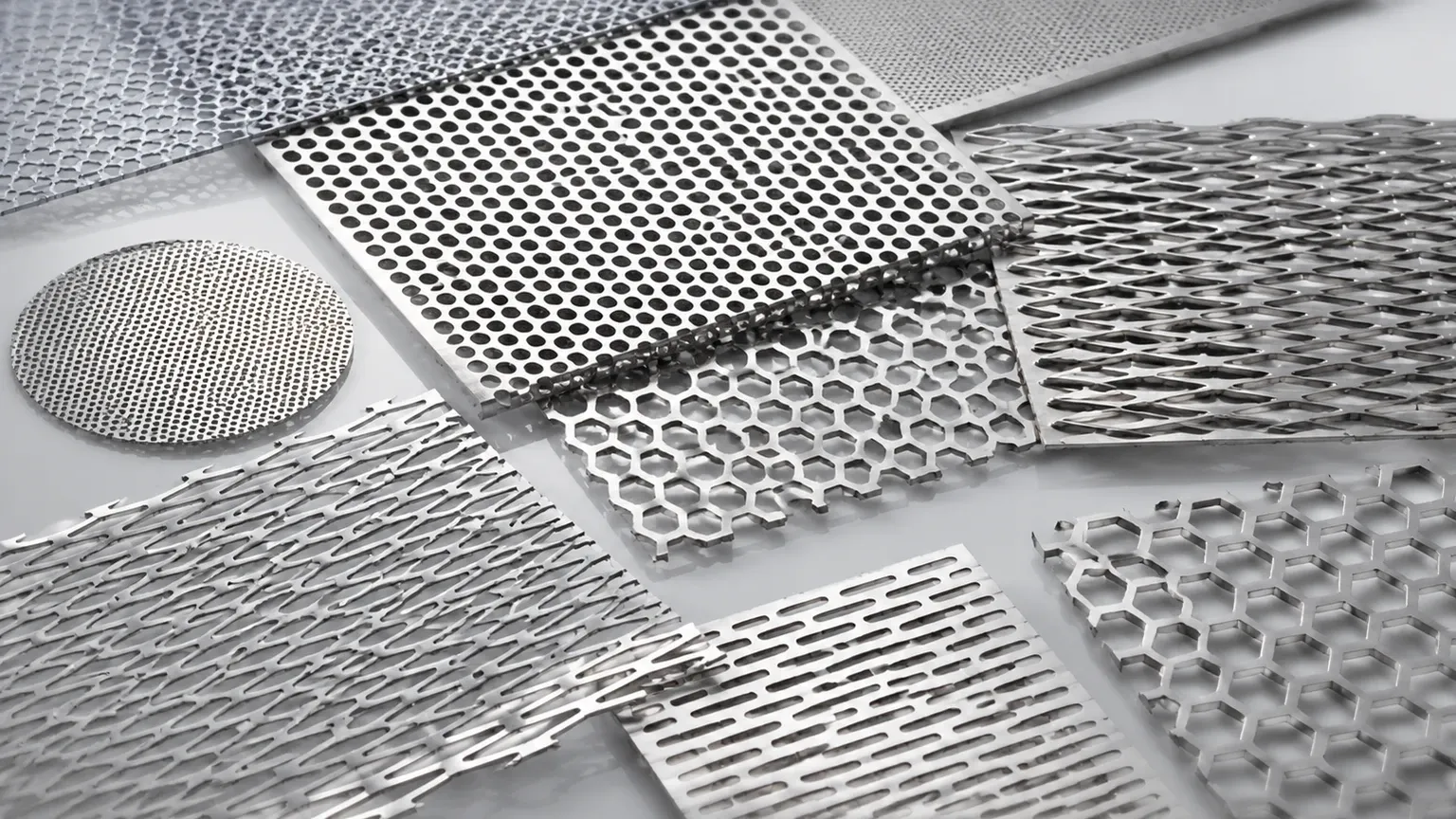
The most common hole patterns include round, square, and slotted configurations. Each serves a distinct functional purpose:
* Round Holes: The most versatile and widely used pattern. Round holes offer the greatest structural integrity and are easier to manufacture with high precision. They are typically arranged in a 60-degree staggered pattern, which maximizes the open area while maintaining the strength of the metal "bridges" (the material between the holes).
* Square Holes: Often selected for applications requiring a higher open area or for aesthetic architectural purposes. However, they are more prone to stress concentrations at the corners compared to round holes.
* Slotted Holes: Primarily used in screening and sorting applications where the material being filtered is elongated or where a specific directional flow is required.
Open Area Calculations
The "open area" is the percentage of the panel that consists of holes. This metric is critical because it directly influences the flow rate and the pressure drop across the filter. For a standard 60-degree staggered round hole pattern, the open area percentage (OA%) is calculated using the formula:
OA% = (D² × 90.69) / P²
Where *D* is the hole diameter and *P* is the pitch (the distance from the center of one hole to the center of the adjacent hole). Achieving the optimal balance between open area and mechanical stability is a primary engineering challenge in custom filtration design.
Material Selection and Corrosion Resistance
The choice of material for perforated metal mesh panels is determined by the chemical composition of the filtered media and the physical conditions of the application, such as temperature and pressure.
Stainless Steel Grades
Stainless steel is the industry standard for high-performance filtration due to its excellent corrosion resistance and mechanical durability.
* Grade 304: Suitable for general-purpose applications, providing good resistance to atmospheric corrosion and many organic and inorganic chemicals. It is frequently used in food processing and commercial filtration.
* Grade 316/316L: Contains molybdenum, which provides superior resistance to chlorides and pitting. This makes 316L the preferred choice for marine environments, pharmaceutical manufacturing, and aggressive chemical processing. The "L" denotes low carbon content, which minimizes carbide precipitation during welding, ensuring the integrity of the panel in fabricated assemblies.
Alternative Alloys
In specialized cases involving extreme temperatures or highly acidic environments, other materials such as Duplex stainless steel, Monel, or Hastelloy may be utilized. These alloys offer enhanced resistance to stress corrosion cracking and high-temperature oxidation, which are critical in petrochemical and heavy industrial sectors.
Manufacturing Processes: Perforation vs. Expansion
When evaluating Perforated & Expanded Metal, it is important to distinguish between the two manufacturing methods, as they result in different physical properties and performance profiles.
Perforation Process
Perforation is a subtractive process where material is removed from a sheet using high-speed CNC punching presses or laser cutting systems. This allows for extremely tight tolerances and the ability to leave "margins" (unperforated borders) on the panels. Margins are essential for welding the panels into filter housings or structural frames without compromising the hole pattern.
Expansion Process
Expanded metal is produced by simultaneously slitting and stretching a metal sheet. This process is additive in terms of surface area and results in a diamond-shaped mesh. Unlike perforated metal mesh panels, expanded metal has no waste material, making it a cost-effective alternative for support structures. However, it lacks the precise filtration accuracy of punched perforated panels and is typically used as a secondary support layer for finer filter media.
Engineering Considerations for Industrial Filtration
When integrating perforated metal mesh panels into an industrial system, engineers must account for several operational factors that influence the total cost of ownership and system reliability.
Pressure Drop and Flow Dynamics
A common mistake in filter selection is over-specifying the filtration fineness, which can lead to an excessive pressure drop. A higher pressure drop requires more energy from pumps and compressors to maintain flow, increasing operational costs. Engineers must confirm the maximum allowable pressure drop (ΔP) for their system and select a perforation pattern that provides sufficient open area to minimize resistance while meeting the required solids retention.
Mechanical Loading and Support
In high-pressure hydraulic or water treatment applications, the perforated panel may act as a support for a finer wire mesh or a filter membrane. In these "pleated" or "multi-layer" configurations, the perforated panel must withstand the mechanical load of the fluid pressure without deforming. The thickness of the sheet and the width of the bridges between holes are critical parameters in determining the panel's burst strength.
Flatness and Tolerances
For precision components, such as those used in centrifugal separators or pharmaceutical sieves, the flatness of the panel is paramount. Internal stresses generated during the punching process can cause the metal to warp. Professional manufacturers utilize leveling rollers to ensure that the finished perforated metal mesh panels meet strict flatness specifications, ensuring they fit perfectly into the intended machinery.
Applications Across Key Industries
Perforated metal mesh panels are utilized in diverse sectors, each with unique regulatory and performance requirements.
Chemical and Petrochemical Processing
In these environments, perforated panels are often used as catalyst support grids in reactors. They must endure high temperatures and corrosive vapors while maintaining structural integrity over long production cycles. The precision of the hole size ensures that catalyst pellets are retained while allowing the reaction products to flow freely.
Food and Beverage Industry
Sanitary design is the priority in food processing. Perforated panels used in grain drying, fruit juice filtration, or dairy processing must have smooth surfaces and burr-free holes to prevent bacterial growth and facilitate easy cleaning (CIP – Clean-In-Place). Stainless steel 316L is typically mandated for these applications.
Pharmaceutical Manufacturing
Pharmaceutical applications require the highest levels of filtration accuracy and material traceability. Perforated metal mesh panels are used in fluid bed dryers and granulation equipment. The panels must be manufactured to exacting standards to ensure consistent batch quality and compliance with FDA or EMA regulations.
Selection Guide: Confirming Requirements Before Purchase
To ensure the successful procurement of perforated metal mesh panels, technical professionals should confirm the following details with their manufacturer:
1. Material Grade: Specify the exact alloy and whether material test reports (MTRs) are required for compliance.
2. Dimensional Accuracy: Define the hole diameter, pitch, and sheet thickness. Include tolerances for both the hole size and the overall panel dimensions.
3. Margin Requirements: Determine if the panel needs unperforated borders for welding or mounting. Provide a drawing showing the width of the margins on all four sides.
4. Surface Finish: Indicate if the panels require de-burring, pickling, passivation, or electropolishing. A smooth finish is often necessary to prevent clogging and improve corrosion resistance.
5. Quantity and Lead Time: For OEM applications, establish a delivery schedule that aligns with production timelines to minimize inventory costs.
Maintenance and Replacement Cycles
The durability of stainless steel perforated metal mesh panels often leads to long service lives, but they are not indefinite. Regular inspection is necessary to identify signs of erosion, corrosion, or mechanical fatigue.
* Cleaning: Depending on the media, panels can be cleaned using ultrasonic baths, high-pressure washing, or chemical solvents. Proper cleaning extends the life of the filter and maintains flow efficiency.
* Replacement: Panels should be replaced if there is visible thinning of the bridges, enlargement of the holes due to erosion, or any signs of cracking. In critical applications, a scheduled replacement cycle based on operational hours is recommended to prevent catastrophic failure.
By focusing on technical precision and material integrity, Kaifil supports global engineering teams in developing filtration solutions that are both efficient and durable. Whether for a standard application or a highly customized industrial project, the correct selection of perforated metal mesh panels is a cornerstone of operational success.
