


Mcnichols Perforated Metal Round
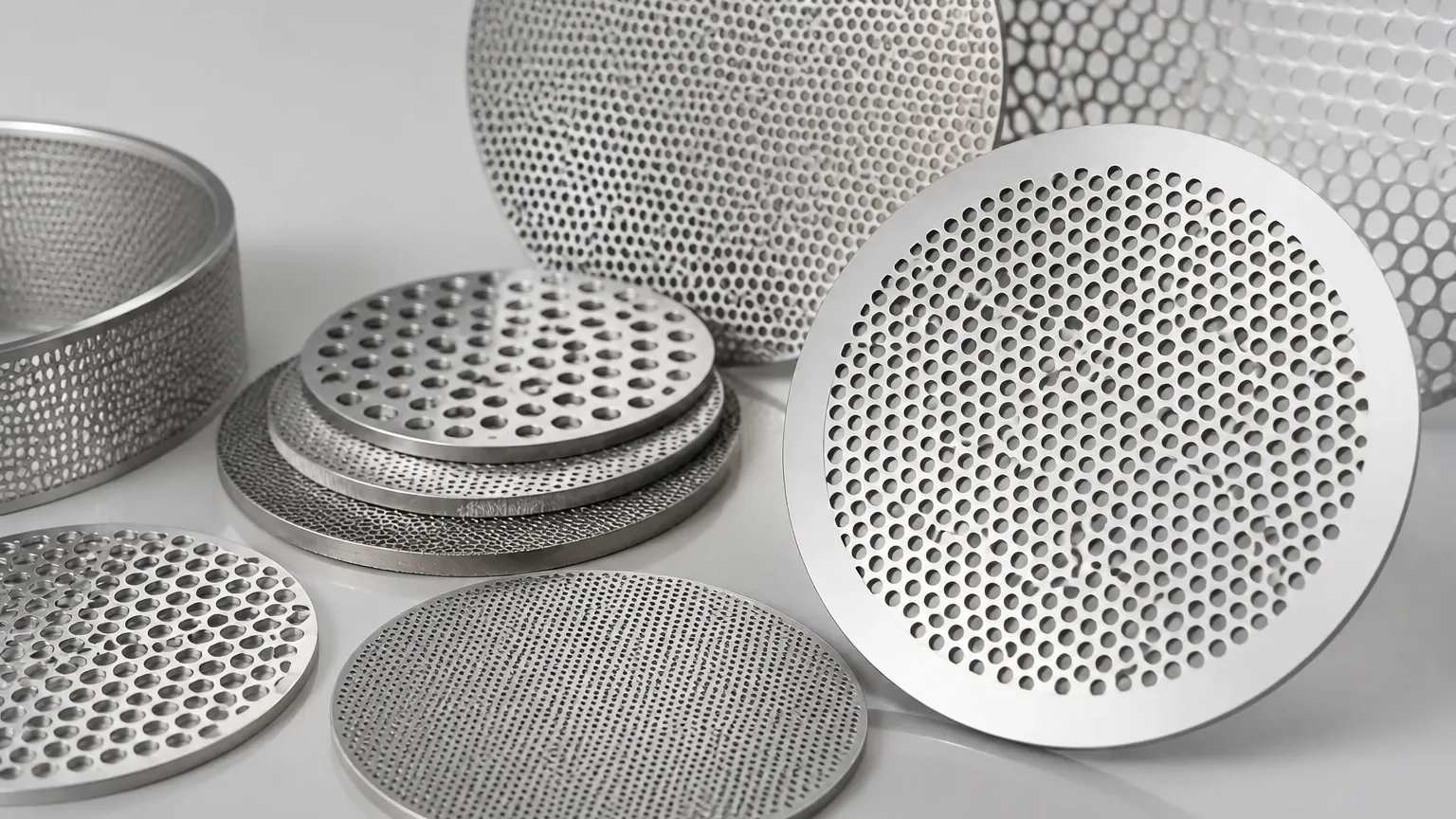
In the landscape of industrial filtration and structural components, the round hole pattern remains the most versatile and widely utilized configuration. For engineers and procurement specialists sourcing materials, the term mcnichols perforated metal round often serves as a benchmark for industry-standard specifications. Round hole perforations offer a unique balance of structural integrity, open area efficiency, and ease of fabrication, making them the primary choice for everything from simple strainers to complex support cores in high-pressure hydraulic systems.
Selecting the right perforated metal requires a deep understanding of how hole diameter, center-to-center spacing, and material thickness interact to affect performance. At Kaifil, we specialize in translating these technical requirements into high-performance Perforated & Expanded Metal solutions that meet or exceed standard industrial benchmarks, ensuring that every component is optimized for its specific operational environment.
Engineering Fundamentals of Round Hole Perforations
The geometry of a round hole is inherently stable, distributing mechanical stress more evenly than square or slotted openings. When evaluating round hole perforated metal, the most critical factor is the arrangement of the holes.
Staggered vs. Straight Patterns
There are two primary orientations for round holes: staggered and straight line.
* 60-Degree Staggered: This is the most common and efficient pattern. It provides the highest open area and the greatest strength-to-weight ratio. In a 60-degree staggered configuration, each hole is equidistant from its neighbors, creating a uniform distribution of material that resists deformation under pressure.
* Straight Line: In this arrangement, holes are aligned in both horizontal and vertical rows. While simpler to align for certain aesthetic or specific mechanical tracking applications, straight patterns generally offer lower structural stability and less open area than staggered patterns.
Calculating Open Area
For filtration applications, the percentage of open area determines the flow rate and pressure drop across the media. For a standard 60-degree staggered pattern, the formula used by engineers is:
Percent Open Area = (D² × 90.69) / C²
Where *D* is the hole diameter and *C* is the center-to-center spacing. Understanding this calculation is vital when comparing a standard mcnichols perforated metal round specification against a custom requirement. If the open area is too low, the system will experience excessive backpressure; if it is too high, the structural integrity of the filter element may be compromised.
Material Selection for Corrosive and High-Temperature Environments
The performance of perforated metal is inextricably linked to the alloy from which it is manufactured. In industrial filtration, where components are frequently exposed to caustic chemicals, high temperatures, or abrasive particulates, material selection is the first line of defense against premature failure.
Stainless Steel 304 vs. 316L
Stainless steel is the industry standard for durability.
* Type 304: Offers excellent corrosion resistance and is suitable for most food processing and general industrial applications. It is the most cost-effective stainless option for standard environments.
* Type 316L: Contains molybdenum, which significantly enhances resistance to chlorides and pitting. This is the preferred material for marine environments, pharmaceutical manufacturing, and aggressive chemical processing. The "L" denotes low carbon, which is essential for components that require welding, as it prevents carbide precipitation and maintains corrosion resistance at the weld joints.
Specialty Alloys
For extreme conditions, such as those found in petrochemical refining or specialized water treatment, materials like Monel, Inconel, or Duplex stainless steel may be required. These alloys provide superior resistance to stress corrosion cracking and high-temperature oxidation, ensuring that the perforated core remains intact even when the filter media it supports is subjected to rigorous cleaning cycles.
Structural Role in Industrial Filtration Systems
While perforated metal can act as a standalone filter for large particulates, its primary role in high-precision systems is to serve as a support structure. In many industrial cartridges, a layer of fine wire mesh is wrapped around or pleated inside a perforated metal cylinder.
Support Cores and Outer Guards
In hydraulic and high-viscosity fluid applications, the pressure differential can be immense. A perforated metal core provides the necessary rigidity to prevent the fine mesh from collapsing. Conversely, an outer guard protects the delicate filtration media from mechanical damage during installation or backwashing.
When designing these components, engineers must consider the "bar width"—the amount of metal remaining between the holes. If the bar width is too narrow, the cylinder may buckle under radial pressure. A professional manufacturer ensures that the gauge of the metal and the perforation pattern are perfectly synchronized to handle the calculated collapse pressure of the system.
Custom Fabrication vs. Standard Specifications
While standard stock like mcnichols perforated metal round is suitable for many general-purpose applications, industrial filtration often demands customization that goes beyond off-the-shelf availability.
The 1:1 Rule
A critical engineering constraint in perforation is the relationship between hole diameter and material thickness. Generally, the hole diameter should not be less than the material thickness (a 1:1 ratio). Attempting to punch holes smaller than the thickness of the plate increases the risk of tool breakage and results in irregular hole shapes or excessive burrs. For high-precision filtration, maintaining a clean, cylindrical hole profile is essential for predictable flow characteristics.
Margins and Blank Areas
Custom fabrication allows for the inclusion of "safe margins"—unperforated areas along the edges of the sheet or cylinder. These margins are vital for welding and mounting. A standard stock sheet often has "random" margins where the pattern is sheared mid-hole, which can create sharp edges and weak points. Custom-engineered Perforated & Expanded Metal ensures that margins are designed specifically for the final assembly, facilitating cleaner welds and a more robust finished product.
Evaluating Quality and Tolerances in Perforated Metal
Not all perforated metal is created equal. In B2B procurement, the difference between a high-quality component and a substandard one often lies in the details of the manufacturing process.
1. Flatness: The punching process naturally introduces internal stresses into the metal, which can cause bowing or curling. High-quality perforated sheets must undergo a leveling process to ensure they meet flatness tolerances required for automated assembly or precise rolling into cylinders.
2. Burr Removal: Punching inevitably creates burrs on the exit side of the hole. In filtration, these burrs can trap contaminants, impede flow, or even break off and damage downstream equipment. Proper deburring, whether through mechanical sanding or chemical processes, is a non-negotiable requirement for industrial-grade components.
3. Hole Concentricity: In cylindrical filters, the alignment of holes is crucial. If the pattern is inconsistent, it creates uneven flow distribution, leading to localized "hot spots" where the filter mesh may wear out prematurely.
Optimization of Flow and Pressure Drop
In any filtration system, the goal is to maximize the effective filtration area (EFA) while maintaining structural integrity. The choice of round hole size and spacing directly impacts the total cost of ownership.
Smaller holes provide better support for fine mesh but increase the risk of blinding (plugging) if the perforated metal itself is acting as a filter. Larger holes increase the open area and reduce pressure drop but require a thicker gauge of metal to maintain the same strength.
Engineers must also consider the "entrance and exit effects" of the fluid passing through the perforations. Smooth, clean-punched holes minimize turbulence, which is critical in high-velocity gas filtration or sensitive food and beverage processing where shear stress must be avoided.
Conclusion: Selecting the Right Partner for Filtration Solutions
Whether you are looking for a standard mcnichols perforated metal round specification or a highly customized stainless steel filter component, understanding the technical boundaries of perforation is key to system longevity. The choice of material, pattern, and fabrication technique should always be driven by the specific demands of the application—be it chemical compatibility, pressure resistance, or hygienic standards.
At Kaifil, we combine advanced manufacturing capabilities with deep engineering expertise to provide reliable filtration components. By focusing on precision and durability, we help our partners optimize their processes and reduce maintenance overhead. For those seeking detailed specifications or custom design assistance, we invite you to Review product options and application support to find the ideal solution for your industrial filtration needs.
