


Perforated Metal Sheet Nearby
In the landscape of industrial filtration and structural engineering, the search for a "perforated metal sheet nearby" is often driven by the need for immediate material availability, reduced shipping costs, and localized technical support. However, for engineers and procurement specialists in sectors like chemical processing, food and beverage, and pharmaceuticals, the proximity of a supplier is only one variable in a complex equation of performance, durability, and precision.
Perforated & Expanded Metal components serve as the backbone for many filtration systems, providing the necessary mechanical strength to support finer mesh media or acting as primary filters for coarse particles. Understanding the technical nuances of these materials is essential before finalizing a sourcing decision, whether the supplier is across the street or across the globe.
Technical Specifications of Perforated and Expanded Metal
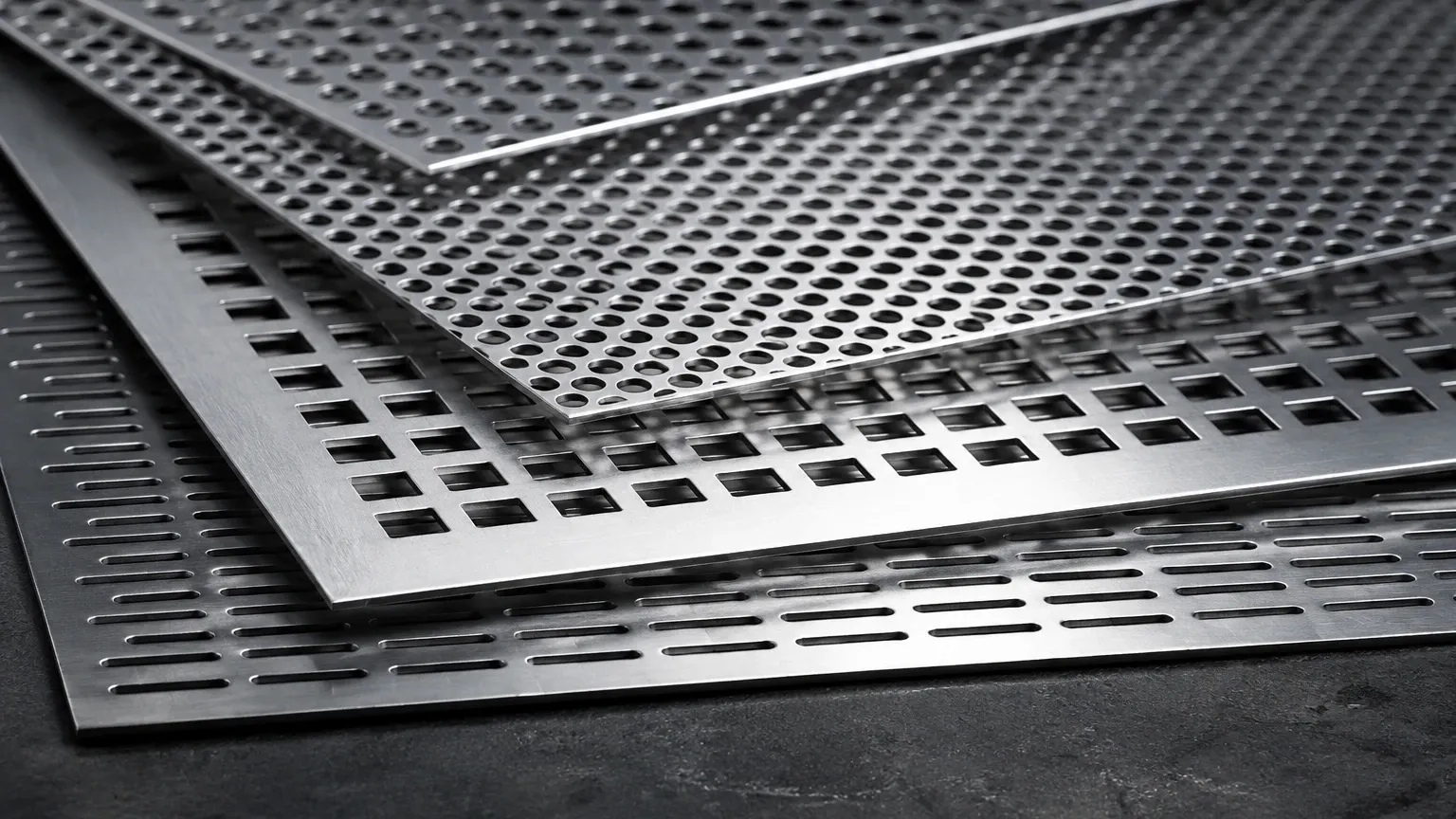
When evaluating perforated metal, the primary focus is on the hole pattern and the resulting open area. The most common configuration is the 60-degree staggered round hole pattern, which offers the best balance of structural integrity and open area. Other patterns, such as straight-row round holes, square holes, or slotted perforations, are selected based on specific flow dynamics or the shape of the particulates being filtered.
Expanded metal differs fundamentally from perforated metal in its manufacturing process. While perforated sheets are created by punching holes and removing material (slugs), expanded metal is produced by slitting and stretching the sheet simultaneously. This process creates diamond-shaped openings without any material waste. From an engineering perspective, expanded metal provides an excellent strength-to-weight ratio and can be supplied in "raised" (standard) or "flattened" forms, depending on the required surface profile.
Key technical parameters to define include:
- Hole Size (Aperture): The diameter of the punched hole or the dimensions of the diamond opening.
- Pitch (Center-to-Center): The distance between the centers of adjacent holes, which determines the density of the pattern.
- Open Area Percentage: A critical calculation for flow rate and pressure drop. For example, a 60-degree staggered pattern’s open area is calculated as (Hole Diameter² × 90.69) / Pitch².
- Sheet Thickness (Gauge): Must be selected to withstand the differential pressure of the specific application without deforming.
The Logistics of Sourcing Perforated Metal Sheet Nearby
Searching for a "perforated metal sheet nearby" often implies a preference for local distributors or service centers. For standard architectural or general-purpose applications, local sourcing is highly efficient. However, for industrial filtration, the limitations of local stock must be considered.
Local Distributors vs. Specialized Manufacturers
Local metal service centers typically stock standard sizes (e.g., 4'x8' sheets) in common materials like carbon steel or 304 stainless steel with standard 1/8" or 1/4" perforations. If your project requires high-precision tolerances, specialized alloys like 316L stainless steel, or custom margins (unperforated borders for welding), a local generalist may not have the necessary inventory or the secondary processing equipment (such as precision leveling or degreasing) required for filtration components.
Lead Times and Prototyping
The primary advantage of a nearby supplier is the reduction in transit time. For rapid prototyping or emergency repairs in a hydraulic or water treatment plant, local availability is paramount. Conversely, for large-scale OEM production, a specialized manufacturer like Kaifil can often offer better total cost of ownership by providing custom-cut-to-size pieces that reduce on-site labor and material waste, even if the shipping distance is greater.
Material Selection for Demanding Environments
In industrial filtration, the choice of material is dictated by the chemical compatibility and temperature of the process fluid. While searching for a "perforated metal sheet nearby," engineers must ensure the supplier can provide certified materials that meet industry standards.
1. Stainless Steel 304/304L: The standard for general industrial use, offering good corrosion resistance and excellent formability.
2. Stainless Steel 316/316L: Essential for marine environments, chemical processing, and pharmaceutical applications due to the addition of molybdenum, which enhances resistance to pitting and crevice corrosion in chloride-rich environments.
3. Specialty Alloys: For highly corrosive or high-temperature applications, materials such as Monel, Inconel, or Titanium may be required. These are rarely found in local "off-the-shelf" stock and usually require sourcing from specialized industrial filtration manufacturers.
Surface finish is another critical factor. For the food and beverage industry, perforated sheets must be free of burrs and oil. Electropolishing or passivating the stainless steel ensures that the surface is chemically inert and easy to sanitize, preventing bacterial growth in the filtration system.
Filtration Performance and Engineering Considerations
The performance of Perforated & Expanded Metal in a filtration assembly is measured by its impact on flow and its ability to protect downstream components. Engineers must calculate the "Total Open Area" to ensure that the filter does not create an excessive pressure drop, which could lead to pump cavitation or system failure.
Structural Support Role
In many high-pressure hydraulic applications, a perforated metal tube acts as the internal core of a pleated filter cartridge. In this role, the perforated sheet must resist collapse under high differential pressure. The thickness of the sheet and the "bridge" (the material between the holes) are the primary factors in determining the collapse strength. If the bridge is too narrow, the sheet may fail; if it is too wide, the effective filtration area is reduced.
Edge and Margin Requirements
When ordering perforated metal, specifying the margins is vital for assembly. "Finished margins" mean the pattern is centered on the sheet with solid edges on all four sides, which is ideal for welding into a frame or housing. "Unfinished margins" (where the pattern is sheared through the holes) are common in stock sheets found nearby but can lead to sharp edges and difficulties in achieving a clean weld, potentially compromising the integrity of the filter housing.
Quality Assurance and Compliance Standards
Reliability in B2B procurement depends on consistent quality. When evaluating a supplier for a "perforated metal sheet nearby," it is necessary to confirm their adherence to international standards.
- Dimensional Tolerances: Perforated sheets should meet Industry Standard (IPA) tolerances for hole diameter, pitch, and flatness. Sheets that are not properly leveled after the perforation process will have internal stresses that cause bowing, making them difficult to integrate into precision machinery.
- Material Certification: For industries like pharmaceuticals or aerospace, Mill Test Reports (MTRs) are mandatory to verify the chemical composition and mechanical properties of the metal.
- Burr Control: The punching process naturally creates a "burr" side and a "smooth" side. For filtration applications, excessive burrs can trap particles that should be washed away during backpulsing or can damage delicate outer mesh layers. High-quality manufacturers employ secondary de-burring processes to ensure a smooth finish.
Customization vs. Off-the-Shelf Solutions
While a local warehouse might offer a quick fix, custom-engineered solutions often provide better long-term value. Customization options include:
- Variable Perforation Patterns: Creating zones of different hole densities on a single sheet to manage flow distribution.
- Complex Shapes: Laser cutting or waterjet cutting perforated sheets into circular discs, cones, or custom geometries for specific filter housings.
- Forming and Welding: Rolling perforated sheets into cylinders and performing longitudinal welding to create filter baskets or strainers.
For OEM applications, partnering with a manufacturer that understands the end-use—such as water treatment or oil and gas filtration—allows for the development of components that are optimized for the specific pressures and flow rates of the system, rather than forcing a design to fit available stock materials.
Total Cost of Ownership (TCO) in Sourcing
The lowest price per sheet from a "perforated metal sheet nearby" does not always translate to the lowest total cost. Engineers should consider the following:
- Scrap Rates: If you buy standard sheets and cut them yourself, the cost of the wasted material and labor must be factored in.
- Operational Efficiency: A perforated sheet with a higher open area might allow for a smaller, less expensive pump or lower energy consumption over the life of the system.
- Replacement Cycles: Using a higher grade of stainless steel (e.g., 316L vs. 304) may double the lifespan of a filter in a corrosive environment, significantly reducing downtime and maintenance costs.
Conclusion: Selecting the Right Partner
When your project requires Perforated & Expanded Metal, the decision between a local generalist and a specialized manufacturer should be based on the technical complexity of the application. For simple guarding or architectural panels, a local supplier is often the most efficient choice. However, for industrial filtration where precision, material purity, and structural integrity are non-negotiable, working with an experienced manufacturer like Kaifil ensures that the final product meets the rigorous demands of your specific industry.
Before placing an order, confirm the exact material grade, the required open area, the margin specifications, and whether any secondary processes like degreasing or leveling are required. By addressing these technical details upfront, you ensure that the perforated metal components contribute to a high-performance, reliable filtration solution.
