


Non Perforated Metal Ceiling
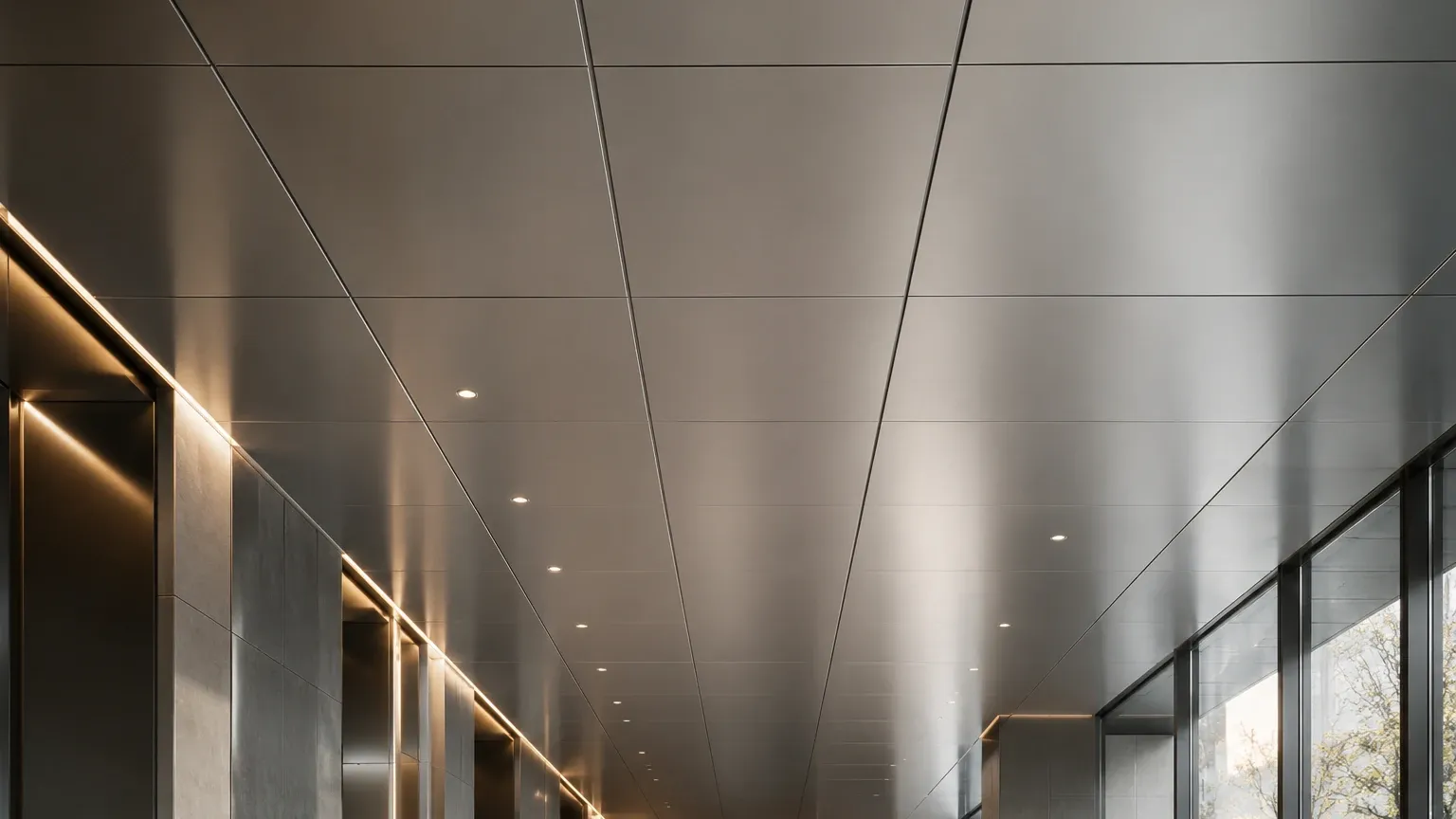
In the landscape of industrial architecture and facility engineering, the selection of ceiling systems extends far beyond aesthetics. For specialized environments such as pharmaceutical laboratories, food processing plants, and high-tech manufacturing cleanrooms, the structural and functional integrity of the ceiling is paramount. The non perforated metal ceiling represents a critical solution for facilities requiring strict environmental control, hygiene maintenance, and long-term durability. Unlike standard commercial ceilings, these systems are engineered to withstand rigorous cleaning protocols, maintain air pressure differentials, and provide a robust barrier against contaminants.
From a technical perspective, choosing between solid panels and Perforated & Expanded Metal systems depends entirely on the specific performance requirements of the space. While perforated materials offer advantages in acoustics and airflow, non-perforated surfaces are the gold standard for containment and sterilization. This guide examines the engineering considerations, material selections, and application-specific advantages of non-perforated metal systems in industrial B2B environments.
Understanding the Engineering Requirements for Non Perforated Metal Ceilings
The primary function of a non perforated metal ceiling in an industrial context is to create a secure, impermeable boundary. In facilities where laminar flow is required or where hazardous vapors must be contained, the ceiling acts as a critical component of the building’s HVAC and safety infrastructure.
Air Pressure and Containment
In cleanroom environments (ISO Class 1 through ISO Class 9), maintaining a positive or negative air pressure differential is essential. A non-perforated surface prevents the uncontrolled migration of air between the room and the plenum space. Engineers must consider the sealing mechanism of these panels—often utilizing specialized gaskets or silicone-based sealants—to ensure that the ceiling assembly remains airtight under operational pressure loads.
Hygiene and Sterilization
In the food and beverage and pharmaceutical sectors, the ability to sanitize surfaces is a non-negotiable requirement. A non perforated metal ceiling provides a smooth, continuous surface that lacks the small apertures found in perforated designs where bacteria, dust, and moisture can accumulate. This makes them compatible with Clean-in-Place (CIP) or manual washdown procedures using aggressive chemical agents.
Material Selection: Stainless Steel vs. Alternative Alloys
The performance of a metal ceiling is fundamentally tied to its metallurgy. Kaifil’s expertise in stainless steel fabrication highlights the importance of selecting the correct alloy grade to match the environmental stressors of the facility.
Stainless Steel (Grade 304 and 316)
Stainless steel is the preferred material for high-performance industrial ceilings. Grade 304 offers excellent corrosion resistance for most standard industrial applications. However, in environments exposed to chlorides or high-salinity conditions—common in chemical processing or coastal facilities—Grade 316 is recommended due to its molybdenum content, which provides superior pitting resistance.
Aluminum Systems
Aluminum is often selected for its high strength-to-weight ratio and natural resistance to atmospheric corrosion. While it is easier to install due to its lower density, it may not offer the same level of chemical resistance as high-grade stainless steel in heavy-duty industrial washdown zones. Aluminum panels are frequently powder-coated to provide an additional layer of protection and to meet specific reflectivity requirements.
Surface Finishes and Engineering Standards
Engineers must specify the appropriate surface finish to ensure the ceiling meets functional goals. A "2B" mill finish is common for general industrial use, while a "No. 4" brushed finish or an electropolished surface may be required for pharmaceutical applications to minimize surface roughness (Ra value), thereby reducing the risk of microbial adhesion.
Technical Comparison: Solid Panels vs. Perforated & Expanded Metal
When designing a facility, the choice between solid and open-area metal components is a pivotal decision. Understanding the trade-offs between a non perforated metal ceiling and Perforated & Expanded Metal is essential for optimizing facility performance.
| Feature | Non Perforated Metal Ceiling | Perforated & Expanded Metal |
| :— | :— | :— |
| Acoustic Performance | Reflective; requires external treatment | Sound-absorptive (with acoustic backing) |
| Airflow Management | Blocks airflow; supports pressure control | Allows free airflow and ventilation |
| Hygiene/Cleaning | High; easy to wipe and sterilize | Moderate; apertures can trap debris |
| Structural Rigidity | Higher localized stiffness | Variable based on open area percentage |
| Weight | Heavier per square meter | Lighter due to material removal |
| Light Reflectance | High (up to 85% depending on finish) | Lower (light passes through apertures) |
In many modern industrial designs, these two systems are used in tandem. For example, a facility may utilize non-perforated panels in the primary processing zone to ensure maximum hygiene, while using perforated sections in the administrative or mechanical corridors to facilitate HVAC return air and noise reduction.
Performance in Controlled Environments: Cleanrooms and Food Processing
The application of a non perforated metal ceiling is most critical in controlled environments where the cost of contamination can result in significant financial loss or regulatory non-compliance.
Cleanroom Integration
In semiconductor and biotech cleanrooms, the ceiling grid must support HEPA or ULPA filter modules. The non-perforated panels used in these grids are often designed as "walkable" ceilings, allowing maintenance personnel to access the plenum space from above without compromising the cleanroom environment. This requires precise engineering of the panel thickness (gauge) and the suspension system to handle point loads and uniform live loads.
Food and Beverage Safety
In food production, the ceiling must resist the growth of mold and fungi. Metal ceilings are inherently non-porous. When configured as a non-perforated system, they eliminate the risk of "ceiling dust" or insulation fibers shedding into the production line. Furthermore, the use of stainless steel ensures that the ceiling will not rust or flake even when subjected to the high humidity levels common in steam-intensive processing areas.
Structural Design and Installation Considerations
Engineering a metal ceiling system involves more than just selecting the panel material. The suspension system and the interface with other building services are equally important.
Suspension Systems
Industrial ceilings typically utilize a heavy-duty T-grid or a threaded rod suspension system. For a non perforated metal ceiling, the suspension must be robust enough to prevent sagging over large spans. In seismic zones, the ceiling must be braced according to local building codes to ensure it remains intact during a seismic event, preventing the ceiling from becoming a falling hazard or breaching the containment of the room.
Integration with MEP Services
Mechanical, Electrical, and Plumbing (MEP) services must penetrate the ceiling. In a non-perforated system, every cutout for lighting, fire sprinklers, or HVAC diffusers must be precisely machined and sealed. Factory-cut openings are preferred over field-cut openings to maintain the integrity of the metal's protective coating and to ensure a perfect fit for gaskets.
Thermal and Acoustic Insulation
While metal is a conductor of heat and sound, non-perforated panels can be backed with insulation materials. In temperature-controlled warehouses or cold storage facilities, composite "sandwich" panels—consisting of two metal skins with an insulating core—are used to provide both the ceiling surface and thermal resistance (R-value).
Maintenance and Total Cost of Ownership in Industrial Settings
When evaluating the procurement of a non perforated metal ceiling, purchasing teams must look beyond the initial capital expenditure and consider the Total Cost of Ownership (TCO).
1. Durability and Lifecycle: Unlike mineral fiber or gypsum-based ceilings, metal panels do not warp, crack, or absorb moisture. In an industrial setting, a stainless steel ceiling can last the entire lifespan of the facility, whereas cheaper materials may require replacement every 5 to 10 years due to environmental degradation.
2. Cleaning Efficiency: The time and labor required to clean a smooth, non-perforated metal surface are significantly lower than for textured or perforated materials. In facilities with daily sanitation requirements, this leads to substantial operational savings.
3. Resistance to Damage: Metal panels are resilient against accidental impacts during equipment installation or maintenance activities. If a panel is damaged, the modular nature of the system allows for individual panel replacement without disturbing the rest of the ceiling.
Customization and OEM Support for Industrial Filtration and Shielding
As a specialist in custom stainless steel solutions, Kaifil understands that standard off-the-shelf products rarely meet the exacting needs of high-stakes industrial applications. Customization options for metal ceiling components include:
* Custom Dimensions: Manufacturing panels to fit non-standard room geometries or to accommodate large-scale industrial machinery.
* Specialized Coatings: Antimicrobial powder coatings or chemical-resistant fluoropolymer finishes (like PTFE) for extreme environments.
* Integrated Filtration Components: Designing ceiling panels that interface directly with custom wire mesh filters or air purification units.
Engineers and purchasing managers should work closely with manufacturers to confirm material certifications (such as ASTM or ISO standards) and to ensure that the load-bearing specifications of the ceiling match the intended use. Before finalizing a project, it is essential to verify the compatibility of the chosen metal with the specific cleaning chemicals and environmental conditions present in the facility.
Conclusion
The non perforated metal ceiling is a vital engineering component for industrial facilities that prioritize hygiene, containment, and structural longevity. By selecting high-quality materials like stainless steel and ensuring precise integration with the building's mechanical systems, facility managers can create environments that are both safe and efficient. Whether your project requires the breathable properties of Perforated & Expanded Metal or the absolute barrier of a solid metal panel, understanding the technical nuances of these materials is the key to a successful installation. For specialized requirements, consulting with a manufacturer like Kaifil ensures that the final solution is tailored to the rigorous demands of your specific industrial application.
