


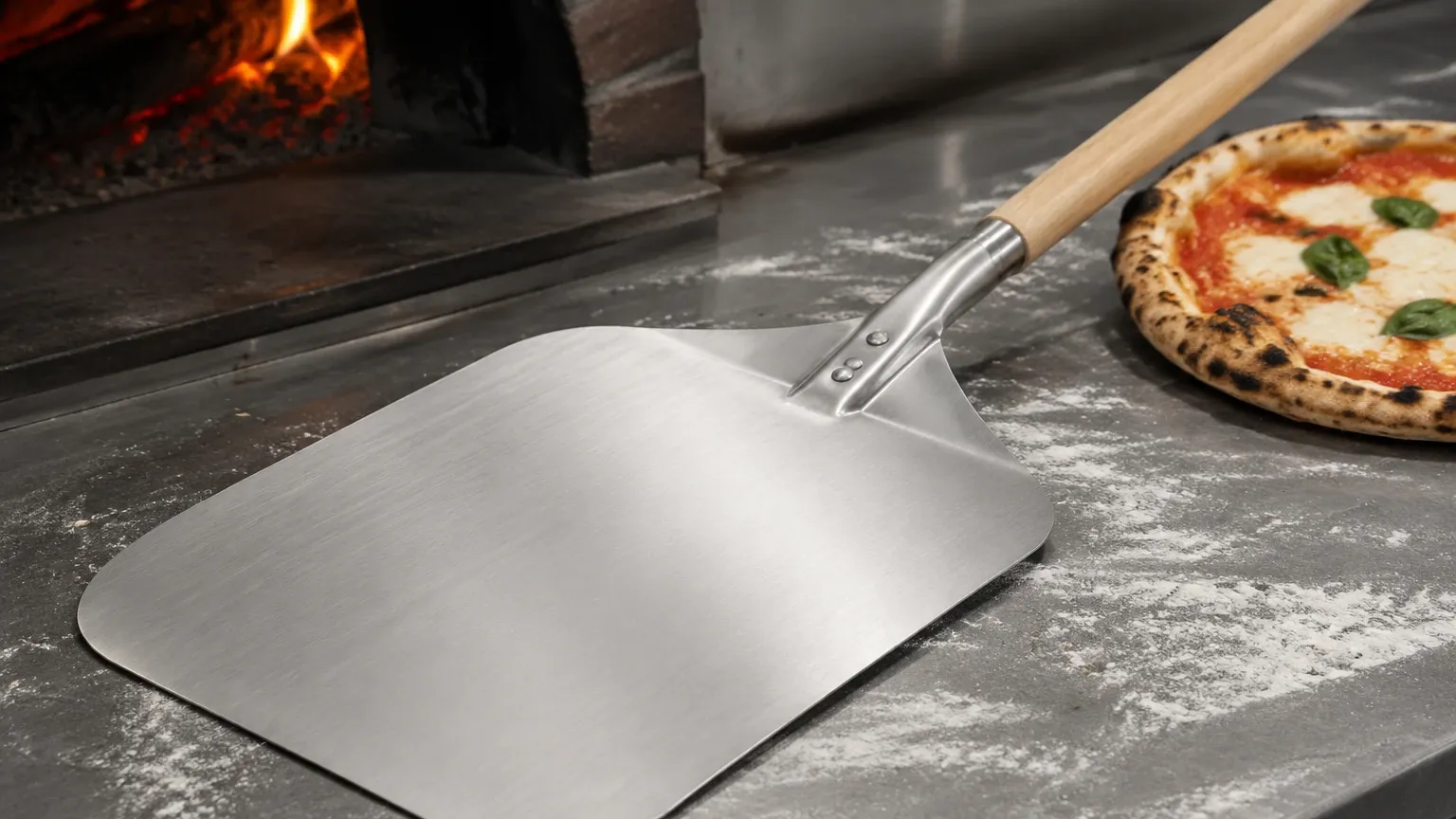
Non Perforated Metal Pizza Peel
In the realm of commercial food processing and high-volume culinary operations, the selection of equipment components is driven by material science and mechanical engineering. The non perforated metal pizza peel serves as a primary example of how surface geometry and material properties influence operational efficiency. While perforated variants have gained popularity for specific use cases, the solid, non-perforated metal surface remains a standard for many industrial baking applications due to its structural integrity and specific thermal characteristics.
For engineers and procurement specialists sourcing components for industrial ovens or commercial kitchen equipment, understanding the technical distinctions between solid metal sheets and Perforated & Expanded Metal is essential. This guide explores the engineering considerations, material selection, and performance metrics associated with non-perforated metal surfaces in food-grade environments.
Understanding the Engineering of Metal Surfaces in Food Processing
The design of a non perforated metal pizza peel is fundamentally an exercise in balancing weight, rigidity, and surface friction. In industrial settings, a "peel" may refer to a manual tool or a mechanical component within an automated loading system. The primary function is the seamless transfer of dough-based products into high-temperature environments.
Surface Continuity and Friction
A non-perforated surface provides 100% surface contact. From a mechanical perspective, this continuity is critical when handling high-hydration doughs that might otherwise sag into perforations, causing mechanical interlocking and sticking. The friction coefficient of the metal surface is managed through specialized finishes, such as bead-blasting or mechanical polishing, rather than through hole patterns.
Structural Load Distribution
Solid metal sheets offer superior flexural rigidity compared to perforated sheets of the same gauge. In large-scale industrial applications where the peel surface may span significant widths to accommodate multiple products, the absence of perforations ensures that the component maintains its flatness under thermal stress. This prevents the warping that can occur when heat gradients across a perforated pattern cause uneven expansion.
Material Selection: Stainless Steel and Aluminum in High-Heat Environments
When specifying materials for a non perforated metal pizza peel, engineers must choose between various alloys based on the thermal requirements and the chemical environment of the processing facility.
Stainless Steel (304 and 316 Grades)
Kaifil specializes in stainless steel solutions because of the material's exceptional durability. For food contact, Grade 304 is the industry standard, offering excellent corrosion resistance and the ability to withstand temperatures exceeding 800°C without losing structural integrity. Grade 316 may be specified if the environment involves high salinity or acidic cleaning agents, providing superior pitting resistance.
* Thermal Mass: Stainless steel has a higher thermal mass than aluminum, meaning it retains heat longer. In a continuous baking process, a non-perforated stainless steel surface helps maintain a consistent interface temperature.
* Durability: The high tensile strength of stainless steel ensures that the edges of the peel remain sharp and free of nicks, which is vital for sliding under thin dough without tearing.
Hard-Anodized Aluminum
While aluminum offers lower weight and higher thermal conductivity, it lacks the raw durability of stainless steel. In industrial OEM applications, aluminum is often hard-anodized to increase surface hardness and provide a non-reactive barrier. However, for heavy-duty, long-cycle applications, stainless steel remains the preferred choice for its longevity and ease of sanitation.
Comparing Non-Perforated vs. Perforated Metal Components
The decision to utilize a solid surface versus a perforated one depends on the specific goals of the filtration or material handling process. While the non perforated metal pizza peel is optimized for support, Perforated & Expanded Metal offers distinct advantages in other areas of the production line.
Moisture and Steam Management
Perforated metals allow for the rapid escape of steam and excess flour. In a pizza baking context, this can lead to a crispier crust. However, in the initial loading phase, a non-perforated surface is often preferred because it prevents the dough from "grabbing" the edges of the holes. Engineers must evaluate whether the application requires the ventilation properties of perforated metal or the stability of a solid sheet.
Weight Reduction vs. Strength
Perforations significantly reduce the weight of a metal component, which is beneficial for manual tools to reduce operator fatigue. However, in automated systems where robotic arms handle the metal plates, the added weight of a solid stainless steel sheet is often negligible compared to the benefit of increased structural lifespan and resistance to deformation.
| Feature | Non-Perforated Metal | Perforated Metal |
| :— | :— | :— |
| Surface Area | 100% (Maximum Support) | 40% – 80% (Reduced Support) |
| Rigidity | High (Resists Warping) | Moderate (Higher Flex) |
| Airflow | None | High (Excellent Ventilation) |
| Cleaning | Simple (Smooth Surface) | Complex (Hole Edges) |
| Dough Handling | Best for High-Hydration | Best for Low-Hydration |
Performance Factors: Friction, Heat Transfer, and Structural Integrity
For technical professionals, the performance of a non perforated metal pizza peel is measured by its behavior under cyclic loading and extreme temperature fluctuations.
Thermal Expansion Coefficients
In industrial ovens operating at 400°C to 500°C, metal components undergo significant thermal expansion. A solid sheet expands uniformly. If a peel is integrated into a larger assembly, engineers must calculate the expansion clearance to prevent binding. Stainless steel’s coefficient of thermal expansion is lower than aluminum’s, making it more dimensionally stable in high-heat cycles.
Boundary Layer Effects
When a non-perforated peel enters an oven, a thin boundary layer of air is trapped between the metal and the dough. In some designs, a subtle texture is applied to the metal to break this vacuum effect, allowing the dough to slide off more easily. This is an engineering alternative to perforations that maintains the structural benefits of a solid sheet.
Edge Profile Engineering
The "leading edge" of a non-perforated peel is a critical engineering point. It is typically tapered through a precision grinding process to a thickness of 0.5mm or less. This taper must be achieved without creating a "knife edge" that could be dangerous to operators or susceptible to curling under heat.
Custom Manufacturing Considerations for Industrial Food Equipment
As a manufacturer of custom filtration and metal components, Kaifil understands that standard off-the-shelf solutions rarely meet the needs of specialized industrial lines. When ordering or designing non-perforated metal components, several customization factors should be confirmed.
Gauge and Thickness
The thickness of the metal sheet directly impacts the tool's weight and its heat retention. For industrial peels, gauges typically range from 14 to 18 (1.2mm to 1.9mm). Thicker gauges are used for heavy-duty mechanical loaders, while thinner gauges are reserved for manual tools where weight is the primary concern.
Surface Finish and Treatment
* Electropolishing: This process removes surface imperfections at a microscopic level, significantly reducing the stickiness of the metal. It also enhances the corrosion resistance of stainless steel.
* PTFE Coating: In some low-temperature baking applications, a non-stick coating may be applied to the non-perforated surface. However, for high-heat wood-fired or infrared ovens, the raw metal finish is preferred to avoid coating degradation.
Attachment and Integration
For OEM components, how the metal plate attaches to the handle or the robotic actuator is a point of potential failure. Welding (TIG or Laser) is preferred over riveting in food-grade environments to eliminate crevices where bacteria can proliferate. Kaifil’s expertise in precision welding ensures that these joints are as strong as the base metal itself.
Maintenance and Hygiene Standards for Solid Metal Surfaces
In B2B environments, the Total Cost of Ownership (TCO) is heavily influenced by maintenance requirements. Non-perforated metal surfaces offer significant advantages in hygiene and sanitation.
Ease of Cleaning
Unlike Perforated & Expanded Metal, which has hundreds of internal hole edges that can trap carbonized organic matter, a solid metal sheet is easily wiped clean. In industrial settings, this allows for faster changeovers between product batches and reduces the chemical load required for Clean-in-Place (CIP) cycles.
Inspection and Compliance
Solid surfaces are easier to inspect for cracks or pits using standard visual or dye-penetrant testing. For facilities following HACCP (Hazard Analysis and Critical Control Points) protocols, the simplicity of a non-perforated surface simplifies the verification of cleanliness.
Long-Term Durability
Because there are no holes to act as stress concentrators, non-perforated stainless steel components are less likely to develop fatigue cracks over thousands of heating and cooling cycles. This reliability is essential for maintaining uptime in 24/7 food production facilities.
Conclusion: Selecting the Right Metal Configuration
Choosing a non perforated metal pizza peel or component involves a detailed analysis of the dough characteristics, oven temperature, and desired lifespan. While perforated metals offer benefits in weight and steam release, the solid metal surface remains the benchmark for durability, hygiene, and structural stability in demanding industrial environments.
When specifying these components, engineers should prioritize high-grade stainless steel and precision manufacturing techniques to ensure the final product meets the rigorous demands of the food processing industry. By focusing on material grade, surface finish, and edge geometry, purchasing teams can secure components that optimize both performance and long-term value.
For those requiring specialized patterns or lighter-weight solutions for other stages of the filtration or production process, exploring Perforated & Expanded Metal options can provide the necessary airflow and weight savings without sacrificing too much structural integrity. Kaifil remains committed to providing the technical expertise and manufacturing precision required to deliver high-performance metal solutions across all industrial applications.
