


Perforated Metal One Way
In industrial engineering and architectural design, the term "one way" applied to perforated materials refers to a specific functional or visual asymmetry. Whether the objective is to control the direction of airflow, manage light transmission, or provide privacy while maintaining visibility from a single side, perforated metal one way solutions require precise manufacturing and material selection. For engineers and procurement teams, understanding the mechanics of these specialized components is essential for ensuring performance in filtration, security, and HVAC applications.
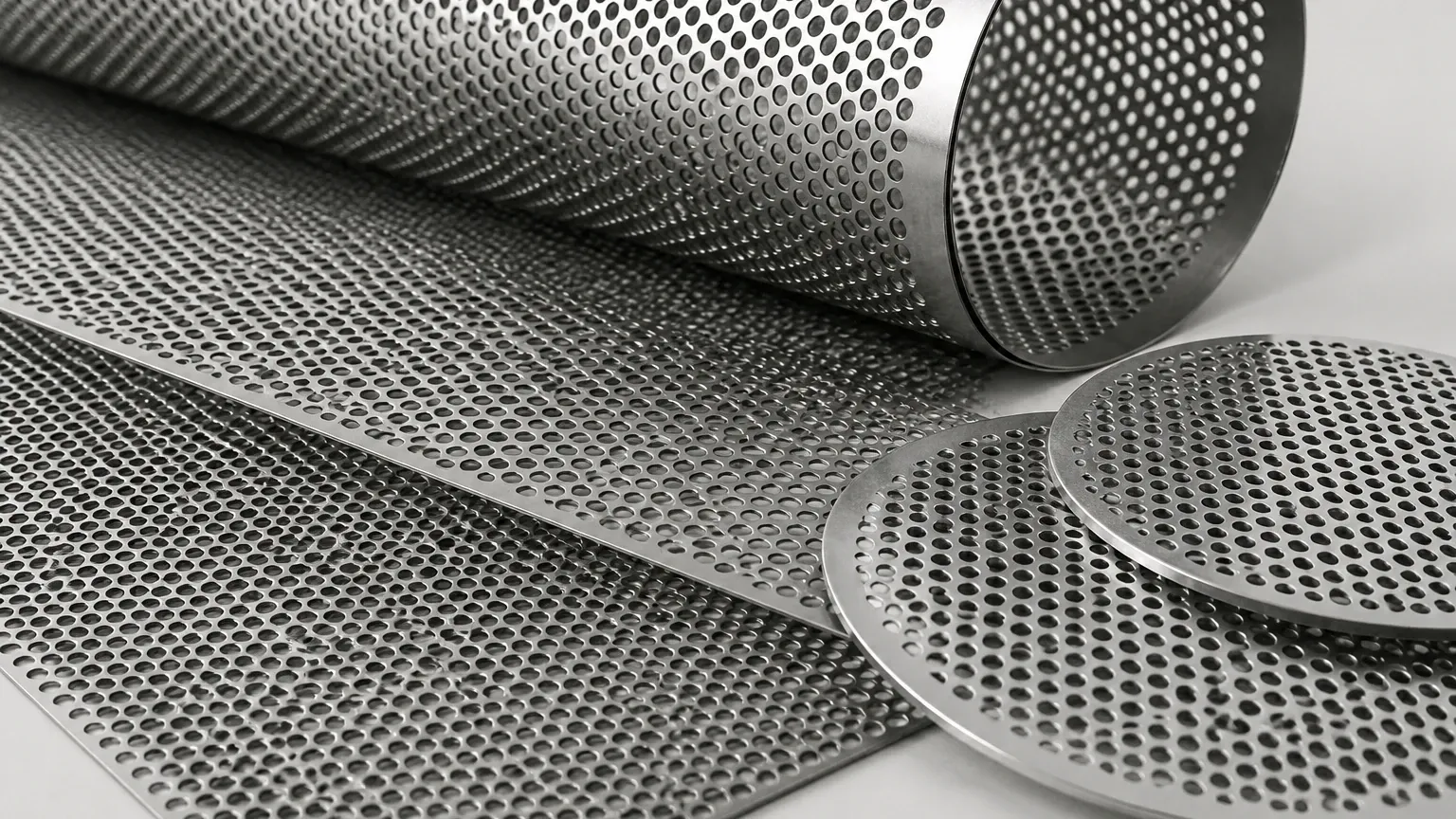
Perforated & Expanded Metal products are often customized to achieve these directional properties. By manipulating hole geometry, pitch, and material thickness, manufacturers can create sheets that behave differently depending on the orientation of the observer or the direction of the fluid flow.
Understanding the Mechanics of One-Way Perforated Metal
The "one-way" effect in perforated metal is typically achieved through two primary methods: visual restriction (often called limited vision or DVA mesh) and functional directionality (such as louvered or angled perforations).
Visual One-Way Mechanics
In security and privacy applications, one-way perforated metal relies on the principle of light contrast and hole geometry. Small, closely spaced holes are punched into a sheet—often aluminum or stainless steel—and then finished with specific coatings. When the light intensity is higher on the "outside" than the "inside," the human eye focuses on the illuminated surface of the metal rather than the dark space behind the holes. This creates a screen that is transparent from the darker side but opaque from the brighter side.
Functional Directionality
In industrial filtration and ventilation, "one-way" refers to the physical movement of air, water, or debris. Louvered perforations are a prime example. By punching the metal in a way that creates a raised lip or an angled opening, the material allows fluids to pass through from one side while blocking them—or redirecting them—from the other. This is critical for protecting sensitive equipment from rain or debris while allowing heat to escape.
Technical Specifications and Engineering Considerations
Selecting the right perforated metal one way component requires a deep dive into technical specifications. Engineers must balance the need for the one-way effect with the structural requirements of the application.
1. Hole Size and Shape: For visual one-way effects, hole diameters are typically very small (often under 2mm). For functional flow control, louvered or bridge-slot openings are more common. The shape of the hole directly impacts the angle of incidence for light or fluid.
2. Open Area Ratio: This is the percentage of the sheet that is comprised of holes. A higher open area improves visibility and flow but reduces the "one-way" privacy effect and the structural strength of the panel. Most one-way privacy screens maintain an open area between 20% and 40%.
3. Material Thickness (Gauge): The thickness of the metal affects the depth of the hole. In directional flow applications, a thicker material allows for a more pronounced angle in the perforation, which can enhance the one-way effect or provide better protection against ingress.
4. Pitch and Pattern: The arrangement of the holes (staggered vs. straight line) influences the uniformity of the one-way effect. Staggered patterns are generally preferred for industrial filtration because they offer better structural integrity and more consistent flow distribution.
Industrial Applications of Directional Perforated Metal
While often associated with security doors, perforated metal one way technology has significant utility across various industrial sectors.
Filtration and Separation Systems
In complex filtration systems, directional perforated metal serves as a primary guard or a support structure. By using angled perforations, engineers can design intake screens that deflect large particles or debris in a specific direction (e.g., downward away from the intake) while allowing the filtered medium to pass through the apertures. This reduces the frequency of manual cleaning and protects downstream filter cartridges from premature clogging.
HVAC and Ventilation
One-way louvered metal is a standard in external ventilation units. It allows for the exhaust of hot air while preventing rainwater, snow, or wind-blown dust from entering the system. The "one-way" nature here is purely functional, ensuring that the internal components of the HVAC system remain dry and operational regardless of external weather conditions.
Acoustic Dampening
In power plants and manufacturing facilities, perforated metal is used for sound attenuation. Certain directional patterns can be engineered to trap sound waves coming from a specific source (like a turbine) while allowing air to circulate for cooling. This directional sound control is vital for meeting occupational safety standards regarding noise levels.
Material Selection for Durability and Performance
The environment in which the perforated metal one way solution will be installed dictates the material choice. Choosing the wrong alloy can lead to premature failure due to corrosion or mechanical stress.
* Stainless Steel (304 and 316): These are the gold standards for industrial filtration and harsh environments. Grade 316 is particularly effective in marine or chemical processing environments due to its molybdenum content, which provides superior resistance to pitting and chloride corrosion.
* Aluminum: Often used for visual one-way screens due to its lightweight nature and ease of fabrication. It is typically powder-coated to enhance the visual one-way effect and provide a layer of protection against oxidation.
* Galvanized Steel: A cost-effective option for indoor industrial applications where moisture levels are controlled. It provides basic corrosion resistance through a zinc coating.
Manufacturing Processes and Customization
Producing high-quality perforated metal one way components involves more than just standard punching. It requires advanced CNC machinery and precision tooling to ensure consistency across the entire sheet.
Precision Punching
For one-way vision, the punch must be clean and burr-free. Any irregularities around the hole can catch light and ruin the visual effect. In industrial applications, the angle of the punch must be strictly controlled to ensure that louvered openings meet the specified flow requirements.
Secondary Operations
After perforation, the metal often undergoes secondary processes. Leveling is necessary to ensure the sheet is perfectly flat, which is critical for installation in filtration housings or security frames. For visual one-way products, a matte black powder coating is often applied to the "inside" surface to maximize the light contrast effect.
OEM and Custom Solutions
Many industrial projects require non-standard hole patterns or unique material combinations. Working with a manufacturer that offers OEM services allows engineers to specify the exact pitch, hole size, and margin requirements. This is particularly important when integrating Perforated & Expanded Metal into larger filtration assemblies where tolerances are tight.
Common Risks and Evaluation Criteria
When sourcing perforated metal one way products, purchasing teams should be aware of common pitfalls that can affect the total cost of ownership and performance.
* Burrs and Sharp Edges: In filtration, burrs can trap fibers or particles, leading to uneven flow and difficult cleaning. In security applications, they can interfere with the coating process. Ensure the manufacturer has robust deburring processes.
* Inconsistent Open Area: Variations in the punching process can lead to inconsistent open areas across a single sheet. This can cause pressure drops in filtration systems or "dead spots" in ventilation.
* Coating Adhesion: For one-way vision screens, the coating is functional, not just aesthetic. If the powder coating peels or fades, the one-way effect is compromised. Specifications should include salt spray testing or adhesion standards for coated products.
Procurement Checklist for Engineers
Before finalizing a purchase order for one-way perforated metal, engineers should confirm the following data points with their supplier:
* Detailed Drawing: Does the drawing specify the direction of the perforation (especially for louvers)?
* Flow Data: For filtration applications, what is the expected pressure drop across the sheet at a given flow rate?
* Material Certification: Are mill test reports (MTRs) available to verify the alloy grade and mechanical properties?
* Installation Orientation: Is the "one-way" effect dependent on a specific vertical or horizontal orientation? This must be clearly marked on the finished product to avoid installation errors.
By focusing on these technical parameters, industrial professionals can ensure that their perforated metal one way components deliver the required performance, whether the goal is privacy, protection, or precision filtration. Working with an experienced manufacturer like Kaifil ensures that these complex requirements are met through advanced manufacturing capabilities and technical expertise.
