


Perforated Metal Plate
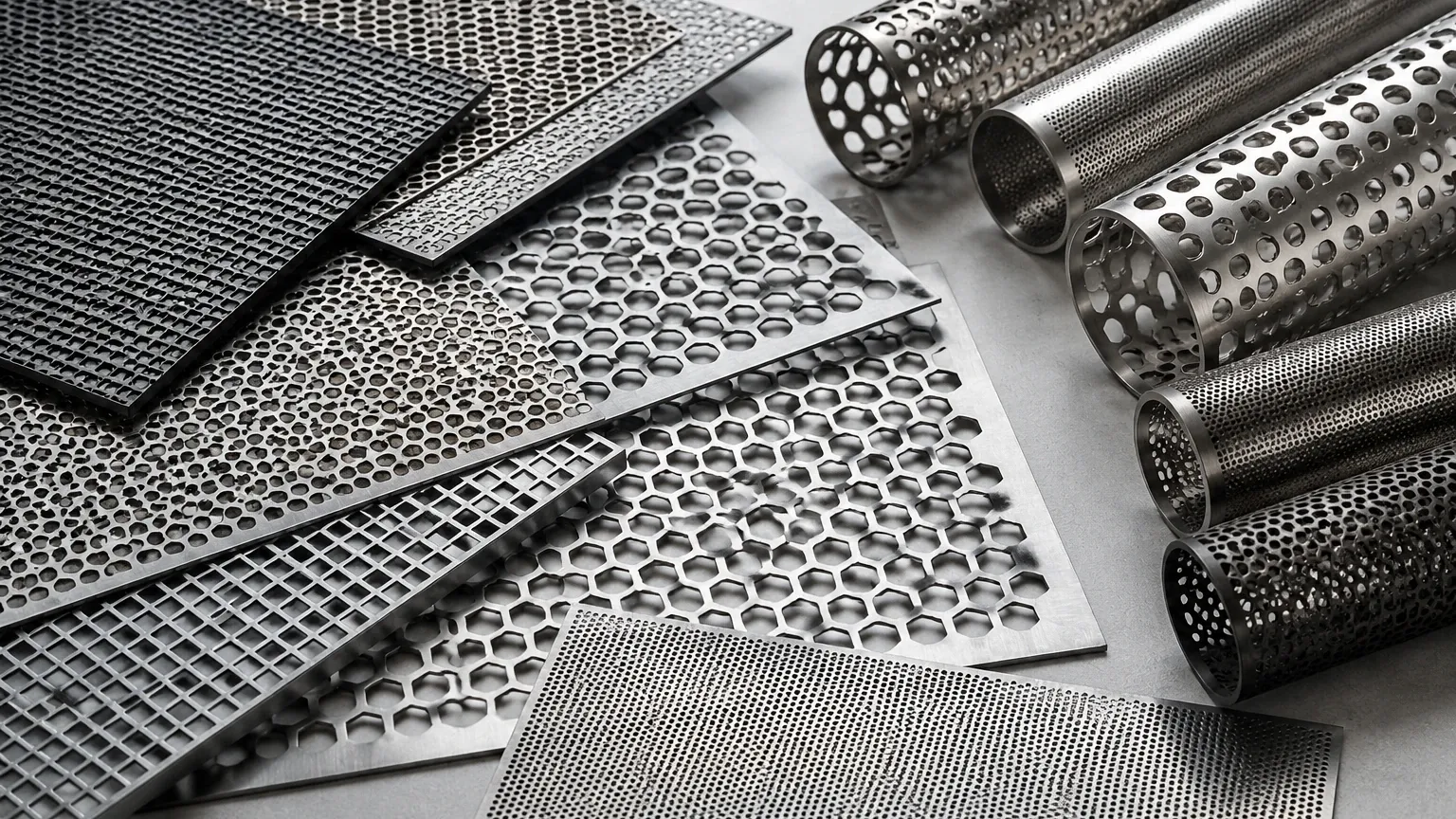
In the landscape of industrial filtration and structural engineering, the perforated metal plate serves as a fundamental component that bridges the gap between mechanical strength and precise fluid dynamics. Unlike woven wire mesh, which relies on the interlacing of wires, a perforated metal plate is a solid sheet of material—typically stainless steel—that has been mechanically punched or laser-cut to create a specific pattern of holes. This results in a medium that offers superior structural integrity, making it indispensable for high-pressure applications and as a support substrate for finer filtration media.
For engineers and procurement specialists, selecting the right Perforated & Expanded Metal requires a deep dive into material science, geometric configurations, and the specific hydraulic demands of the application. Whether used as a primary strainer or a protective cage for a pleated filter cartridge, the performance of the perforated metal plate dictates the efficiency and longevity of the entire filtration system.
Engineering Fundamentals: Hole Patterns and Geometry
The functionality of a perforated metal plate is primarily defined by its hole geometry. The choice of pattern affects not only the filtration accuracy but also the plate's structural rigidity and the flow characteristics of the medium passing through it.
Round Hole Patterns
Round holes are the most common configuration due to their versatility and ease of manufacturing. They are typically arranged in two ways:
* 60-Degree Staggered: This is the industry standard for most industrial applications. It provides the highest open area and the most uniform strength across the plate. By staggering the holes, engineers can maximize the number of openings without compromising the bridge (the material between the holes).
* Straight Row: In this configuration, holes are aligned both vertically and horizontally. While easier to align for certain aesthetic or specific mechanical tracking applications, straight rows offer lower structural strength and a reduced open area compared to staggered patterns.
Slotted and Square Holes
Slotted holes are frequently utilized in applications involving elongated particles or where high-viscosity fluids are processed. They provide a larger open area with less risk of blinding (clogging) compared to round holes of the same width. Square holes are often chosen for high-visibility applications or specific screening processes where a high open-area-to-strength ratio is required, though they may be more prone to stress concentrations at the corners.
Calculating Open Area and Flow Dynamics
For any filtration professional, the "Open Area Percentage" is the most critical metric. It represents the ratio of the total area of the holes to the total area of the sheet. This percentage directly influences the pressure drop across the filter and the velocity of the fluid.
An accurately calculated open area ensures that the system does not experience excessive backpressure, which can lead to pump failure or energy inefficiency. In a typical 60-degree staggered round hole pattern, the formula for open area is:
Open Area % = (D² × 90.69) / R²
*(Where D = Hole Diameter and R = Center-to-Center Pitch)*
When designing a system, it is vital to balance the open area with the thickness of the perforated metal plate. A high open area with a thin plate may lead to mechanical deformation under high differential pressure, while a low open area with a thick plate may cause unacceptable flow resistance.
Material Selection: Stainless Steel and Beyond
In the industrial sectors served by Kaifil—including chemical processing, pharmaceuticals, and food and beverage—the material of construction is non-negotiable. The perforated metal plate must withstand corrosive environments, high temperatures, and rigorous cleaning cycles.
Stainless Steel 304 and 304L
Grade 304 is the standard for general-purpose industrial applications. It offers excellent corrosion resistance and formability. However, in applications involving welding, 304L (low carbon) is preferred to prevent carbide precipitation and maintain corrosion resistance in the heat-affected zones.
Stainless Steel 316 and 316L
For more demanding environments, such as marine applications or chemical processing involving chlorides, SS316 is the preferred choice. The addition of molybdenum enhances its resistance to pitting and crevice corrosion. In the pharmaceutical and food industries, 316L is often the baseline requirement to ensure product purity and compliance with hygiene standards.
Specialized Alloys
In extreme cases involving highly acidic or high-temperature environments, specialized alloys like Monel, Inconel, or Hastelloy may be used to manufacture the perforated metal plate. These materials ensure that the filter core remains intact even when exposed to aggressive media that would degrade standard stainless steels.
The Role of Perforated Plate as a Support Structure
While a perforated metal plate can act as a standalone coarse strainer, its most common role in precision filtration is as a support structure. In many high-performance filter cartridges, a fine stainless steel wire mesh or a non-woven fiber medium is wrapped around a perforated metal core.
Preventing Media Migration
Under high flow rates, fine filtration media can shift or deform. A robust perforated metal plate provides a rigid backbone that keeps the primary filtration layer in place, preventing "media migration"—where the filter material itself breaks off and contaminates the downstream fluid.
Handling Differential Pressure
As a filter accumulates debris, the differential pressure (the difference in pressure between the upstream and downstream sides) increases. If the support core is not engineered correctly, the pressure can cause the filter to collapse. Engineering the perforated metal plate with the correct thickness and hole pitch ensures it can withstand the maximum rated collapse pressure of the system.
Customization and Secondary Processing
Standard off-the-shelf perforated sheets rarely meet the specific needs of complex industrial equipment. Customization is essential for achieving optimal performance. Key secondary processes include:
1. Margins and Blank Areas: Custom perforation allows for unperforated borders (margins) along the edges of the plate. These blank areas are crucial for welding the plate into a cylinder or for clamping it into a housing without damaging the hole pattern.
2. Forming and Rolling: Perforated plates are often rolled into cylinders to create filter cores or baskets. Precision rolling ensures that the diameter remains consistent, which is vital for the proper fit of end caps and seals.
3. Degreasing and Passivation: For pharmaceutical and food-grade applications, the manufacturing oils used during the punching process must be completely removed. Passivation further enhances the corrosion resistance of the stainless steel by removing free iron from the surface and encouraging the formation of a protective oxide layer.
4. Deburring: The punching process can leave sharp edges or "burrs" on the exit side of the hole. For filtration applications, these must be removed to prevent turbulence and to ensure that the fine wire mesh wrapped around the plate is not punctured.
Selection Criteria: What Engineers Should Confirm
Before finalizing the specifications for a perforated metal plate, purchasing teams and engineers should address several critical questions to ensure the component is fit for purpose:
* What is the Hole-to-Thickness Ratio? As a rule of thumb, the hole diameter should not be smaller than the thickness of the plate if using traditional punching methods. If a smaller hole is required in a thick plate, laser drilling or chemical etching may be necessary.
* What is the Maximum Differential Pressure? Understanding the peak pressure the plate will encounter during a surge or when the filter is fully loaded is essential for determining the required plate thickness.
* Is the Fluid Chemically Compatible? Beyond the primary fluid, consider the chemicals used for Clean-in-Place (CIP) cycles. A material that handles the process fluid might fail during a caustic wash.
* What are the Dimensional Tolerances? In high-precision equipment, even a millimeter of deviation in the plate's width or the hole's pitch can lead to assembly failures. Confirming the manufacturer's tolerance standards is a prerequisite for OEM integration.
Total Cost Considerations
While the initial cost of a perforated metal plate is a factor, the total cost of ownership is determined by its durability and the protection it offers to more expensive components. A high-quality stainless steel plate reduces the frequency of replacement and protects downstream pumps and valves from damage caused by filter bypass or collapse. Furthermore, choosing a manufacturer with integrated OEM capabilities allows for the delivery of semi-finished or finished components, reducing the need for additional on-site processing and lowering overall assembly costs.
By focusing on technical precision and material integrity, Kaifil provides the engineering support necessary to integrate Perforated & Expanded Metal into the most demanding industrial environments. Whether the requirement is for a standard perforated metal plate or a highly customized support core, understanding these engineering principles ensures a reliable and efficient filtration solution.
