


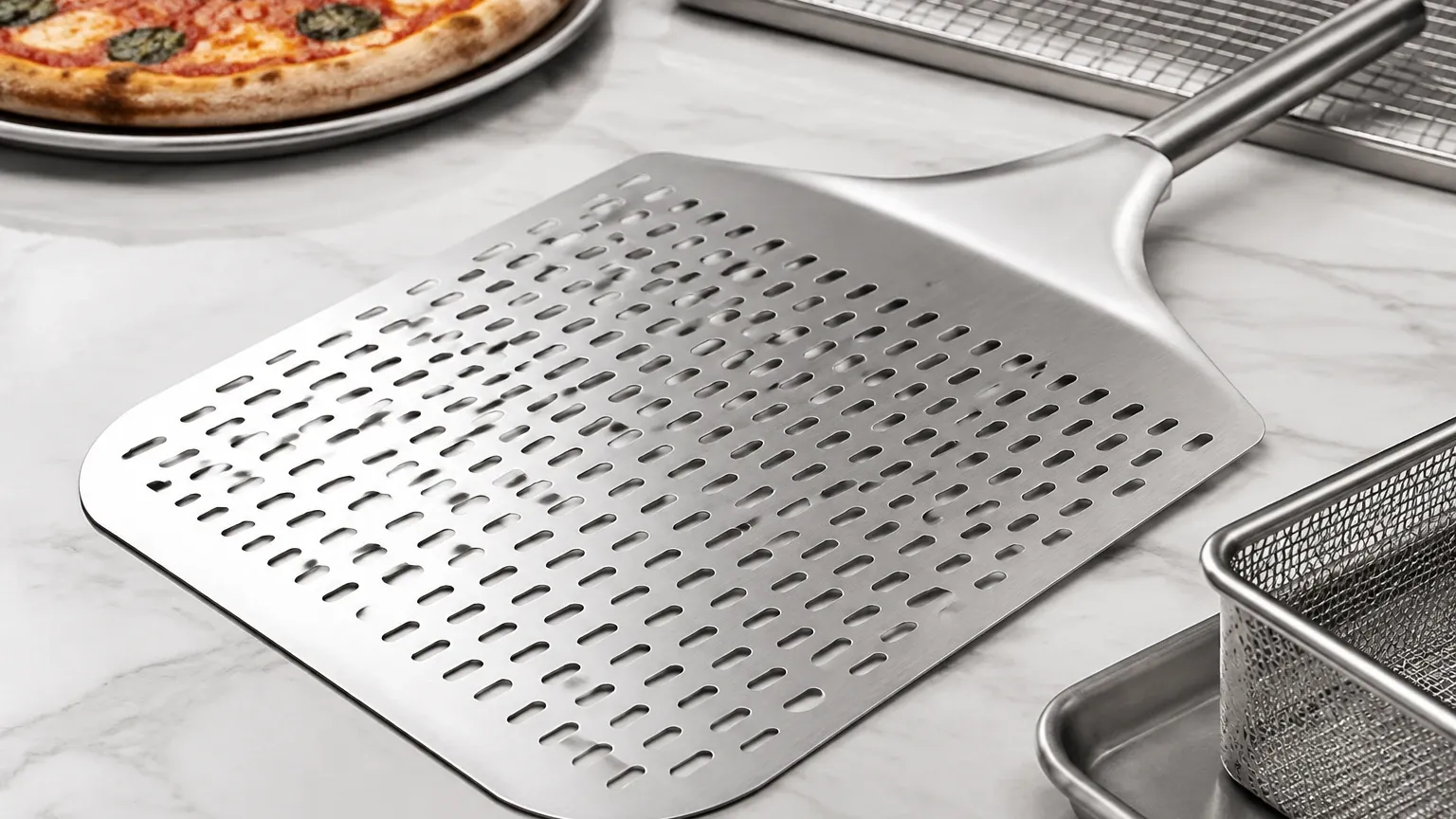
Perforated Metal Pizza Peel
In the specialized field of industrial food service equipment and commercial baking tools, the transition from solid surfaces to precision-engineered perforated components represents a significant leap in efficiency and performance. A perforated metal pizza peel is not merely a kitchen utensil; it is a calculated engineering solution designed to address specific physical challenges such as friction, heat management, and material weight. For engineers and procurement professionals sourcing components for high-volume food processing or commercial kitchenware, understanding the technical nuances of Perforated & Expanded Metal is essential for ensuring product durability and operational excellence.
Engineering Advantages of Perforation in Food Equipment
The primary motivation for utilizing perforated metal in a pizza peel—or any similar food-handling tool—revolves around the management of surface contact and airflow. In a B2B manufacturing context, several key engineering advantages emerge when moving away from solid sheet metal.
Friction Reduction and Flour Discharge
One of the most critical challenges in high-temperature baking is the accumulation of excess flour or cornmeal on the underside of the dough. In a solid peel, this flour remains trapped between the dough and the metal surface, creating a high-friction environment that can lead to sticking and uneven loading. Perforations allow excess flour to fall through the tool before the dough enters the oven. This not only reduces the risk of the flour burning—which can impart a bitter taste to the product—but also significantly lowers the coefficient of friction, allowing for a smoother release.
Weight Optimization and Ergonomics
For industrial applications where operators handle tools for several hours per shift, the weight of the equipment is a primary ergonomic concern. By removing a calculated percentage of the material through the perforation process, manufacturers can reduce the overall mass of the peel by 20% to 40% without compromising structural integrity. This reduction in weight minimizes operator fatigue and improves the maneuverability of the tool during high-speed production cycles.
Thermal Dynamics and Heat Dissipation
Perforated surfaces offer superior thermal performance compared to solid sheets. In the high-ambient-heat environment of a commercial oven (often exceeding 300°C to 450°C), a solid metal peel can quickly absorb and retain heat, potentially causing the dough to stick or pre-cook prematurely. The open area provided by the perforations facilitates rapid heat dissipation and allows for better airflow, ensuring the tool remains at a more manageable temperature during repeated use.
Material Selection and Food-Grade Standards
When specifying a perforated metal pizza peel for industrial use, material selection is the most critical factor influencing longevity and safety. As a manufacturer specialized in stainless steel solutions, Kaifil emphasizes the use of alloys that meet stringent global food safety standards.
Stainless Steel 304 (AISI 304)
Stainless Steel 304 is the industry standard for most food-grade applications. Its high chromium and nickel content provide excellent corrosion resistance against the organic acids found in food and the harsh chemicals used in industrial sanitation. From a manufacturing perspective, SS 304 offers the necessary ductility for precision perforation while maintaining the hardness required to resist deformation under mechanical stress.
Stainless Steel 316 (AISI 316)
In environments where the equipment is exposed to high-salinity ingredients or more aggressive cleaning agents, AISI 316 may be specified. The addition of molybdenum enhances its resistance to pitting and crevice corrosion, making it a premium choice for high-durability industrial components.
Hard-Anodized Aluminum
While stainless steel is preferred for its extreme durability and ease of sterilization, some B2B applications require the extreme lightness of aluminum. In these cases, hard-anodizing is necessary to provide a non-reactive, wear-resistant surface that can withstand the abrasive nature of moving dough and the high temperatures of the oven hearth.
Technical Specifications: Hole Patterns and Open Area
The performance of a perforated metal pizza peel is dictated by the geometry of its perforations. Engineers must balance the "open area" (the percentage of the sheet that is holes) with the remaining "ligament" (the metal between the holes) to ensure the tool does not flex or fail under load.
1. Round Hole Patterns: This is the most common configuration due to its structural stability and ease of cleaning. Staggered round holes (usually at a 60-degree angle) maximize the open area while maintaining uniform strength in all directions.
2. Hexagonal (Honeycomb) Patterns: Hexagonal perforations offer a higher open-area-to-weight ratio than round holes. This is often preferred when maximum weight reduction and flour discharge are the primary goals.
3. Slot and Oblong Patterns: These are sometimes used to provide directional friction reduction, though they are less common in standard pizza peels and more frequent in specialized sorting or dewatering screens.
For a standard industrial pizza peel, an open area of 25% to 35% is typically targeted. This provides a significant reduction in friction and weight while ensuring the leading edge of the peel remains rigid enough to slide under heavy dough without bending.
Manufacturing Processes for Precision Components
Producing a high-quality perforated metal pizza peel requires advanced manufacturing capabilities to ensure the tool is safe for food contact and durable enough for industrial use. At Kaifil, the production process involves several critical stages:
CNC Punching and Laser Cutting
Precision is paramount. CNC punching allows for high-speed, repeatable perforation of complex patterns with tight tolerances. For custom designs or thicker materials, fiber laser cutting may be employed to ensure clean edges and complex geometries that traditional punching might struggle to achieve.
Deburring and Edge Finishing
In any perforated metal application, the presence of burrs (small, sharp protrusions of metal) is a significant quality failure. Burrs can trap food particles, leading to bacterial growth, or cause physical injury to operators. Industrial-grade peels undergo rigorous mechanical or vibratory deburring to ensure every hole is smooth and safe.
Surface Treatment: Electropolishing
To further enhance the hygiene and performance of the tool, electropolishing is often applied. This electrochemical process removes a microscopic layer of material, smoothing out surface irregularities and creating a "passive" layer that is highly resistant to corrosion. For a pizza peel, this results in a mirror-like finish that further reduces dough adhesion.
Customization and OEM Capabilities
In the B2B sector, a "one size fits all" approach rarely meets the needs of specialized equipment manufacturers or large-scale food franchises. Customization is a core component of the value chain. When sourcing Perforated & Expanded Metal components, purchasing teams should look for manufacturers capable of providing:
* Bespoke Hole Configurations: Tailoring the hole size and spacing to the specific hydration level of the dough being used.
* Variable Thickness: Adjusting the gauge of the metal to balance weight against the need for a thin, sharp leading edge.
* Integrated Branding: Using laser perforation to incorporate logos or serial numbers directly into the metal pattern for asset tracking and brand identity.
* Handle Integration: Engineering the transition point between the perforated head and the handle to prevent stress fractures—a common point of failure in low-quality tools.
Selection Criteria for Industrial Procurement
When evaluating suppliers for perforated metal components, engineering and purchasing teams should confirm the following technical details before proceeding with an order:
* Material Certification: Ensure the supplier provides mill test reports (MTRs) confirming the alloy composition (e.g., 304 vs. 201 stainless steel).
* Flatness Tolerances: Perforation can introduce internal stresses that cause metal to curl. Confirm that the supplier uses leveling rollers to ensure the finished peel is perfectly flat.
* Sanitation Compliance: Verify that the hole designs do not have "dead zones" where flour or moisture can become trapped and resist standard cleaning protocols.
* Load Bearing Capacity: For larger peels (e.g., 18-inch to 20-inch diameters), ensure the ligament width is sufficient to support the weight of a fully loaded pizza without permanent deformation.
Maintenance and Lifecycle Considerations
The total cost of ownership (TCO) for a perforated metal pizza peel is significantly lower than that of solid or wooden alternatives when properly maintained. Stainless steel perforated tools are dishwasher safe and resistant to the warping that affects wood. However, industrial users should implement a regular inspection cycle to check for:
1. Stress Cracks: Specifically around the perforations nearest the handle attachment point.
2. Surface Abrasion: While stainless steel is hard, constant contact with stone or brick oven hearths will eventually wear down the leading edge. High-quality peels are designed with enough material thickness to allow for occasional light regrinding of the edge.
3. Cleanliness: Ensuring that the interior of the perforations is free from carbonized organic matter, which can happen if the tool is left inside the oven for extended periods.
Conclusion
The perforated metal pizza peel is a prime example of how industrial filtration and metal fabrication principles—such as those applied in the production of Perforated & Expanded Metal—can optimize a traditional tool for modern, high-volume environments. By focusing on material science, precision perforation patterns, and advanced surface finishing, manufacturers like Kaifil provide the food industry with tools that enhance product quality, improve operator safety, and deliver long-term operational reliability. When selecting these components, engineers must prioritize technical specifications and manufacturing quality to ensure the finished product meets the rigorous demands of the commercial kitchen.
