


Perforated Metal Curtain Wall
In modern industrial and architectural engineering, the perforated metal curtain wall has emerged as a critical solution for balancing structural aesthetics with functional performance. As a non-structural outer covering of a building, a curtain wall must withstand environmental stressors while providing essential services such as ventilation, solar shading, and acoustic dampening. For engineers and procurement specialists, selecting the right materials and specifications for these systems requires a deep understanding of metal fabrication, material science, and fluid dynamics.
Kaifil, as a specialist in precision metal components, provides high-performance Perforated & Expanded Metal solutions designed to meet the rigorous demands of industrial facades and filtration-adjacent applications. This guide explores the technical considerations, material selection criteria, and engineering advantages of implementing perforated metal in curtain wall systems.
Understanding the Mechanics of Perforated Metal Facades
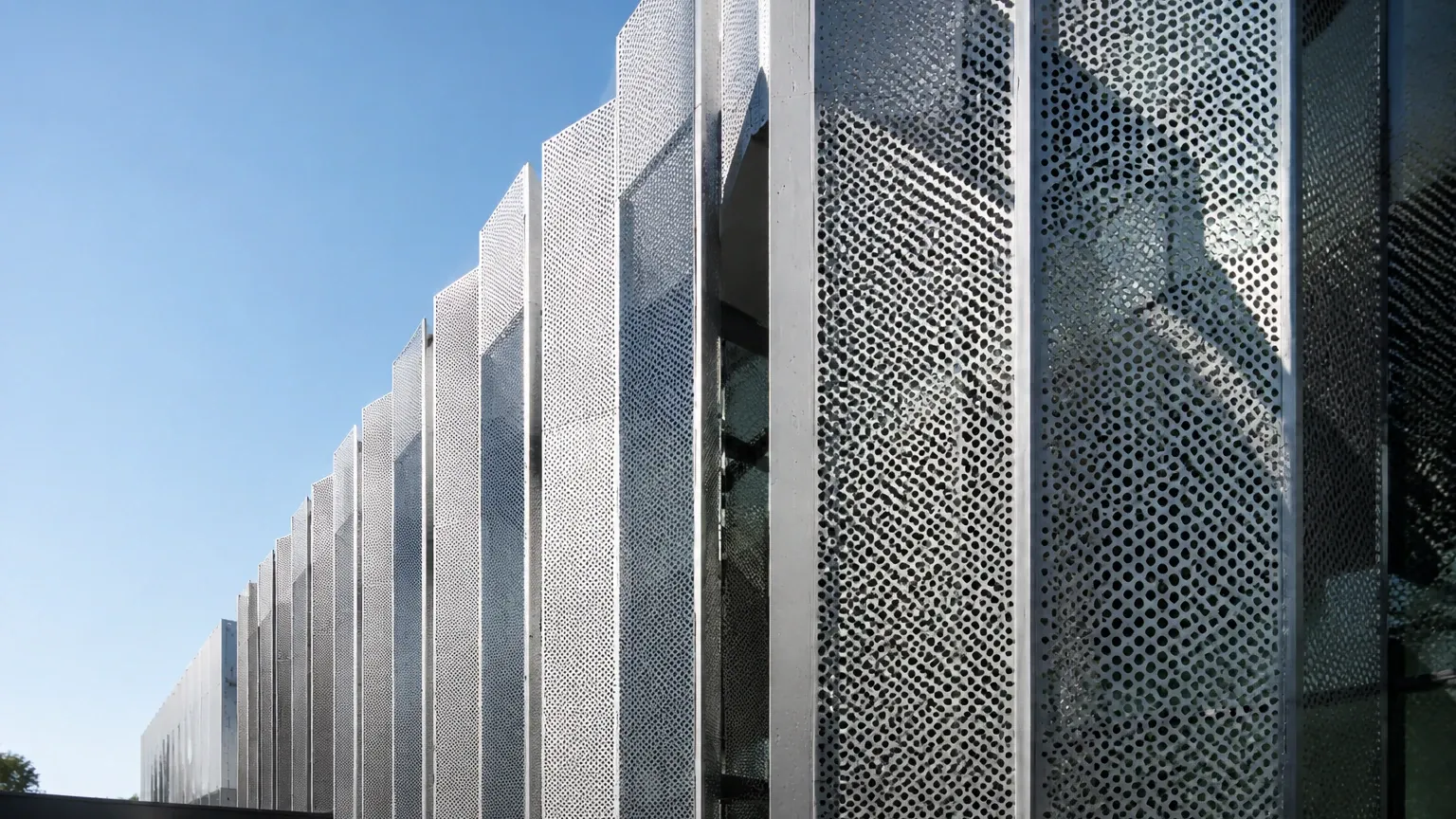
A perforated metal curtain wall is more than a decorative skin; it is a functional interface between the internal environment of a structure and the external atmosphere. The primary function of the perforations is to manage the passage of light, air, and sound. Unlike solid panels, perforated sheets allow for natural ventilation, which is essential for reducing the energy load required for HVAC systems in large-scale industrial or commercial buildings.
From an engineering perspective, the performance of these walls is dictated by the "open area percentage." This is the ratio of the total area of the holes to the total area of the sheet. A higher open area increases transparency and airflow but may reduce the structural rigidity of the panel and its effectiveness as a solar shield. Conversely, a lower open area provides better privacy and solar protection but increases the wind load on the building’s substructure. Finding the optimal balance is a key step in the design phase.
Material Selection: Durability in Demanding Environments
The longevity of a perforated metal curtain wall is heavily dependent on the alloy selected. Given that these components are exposed to UV radiation, moisture, and potentially corrosive industrial pollutants, material science plays a central role in the procurement process.
Stainless Steel
Stainless steel is often the preferred choice for industrial applications due to its exceptional corrosion resistance and mechanical strength. For curtain walls in coastal areas or chemical processing environments, Grade 316 or 316L stainless steel is recommended. These grades contain molybdenum, which provides superior resistance to pitting and crevice corrosion in chloride-rich environments. For less aggressive environments, Grade 304 offers a cost-effective alternative while maintaining high durability.
Aluminum
Aluminum is frequently utilized where weight reduction is a priority. It is naturally corrosion-resistant due to its oxide layer and is highly malleable, allowing for complex perforated patterns. However, it lacks the tensile strength of stainless steel, which may necessitate thicker panels or more robust support structures to handle high wind loads.
Weathering Steel and Specialty Alloys
In specific architectural contexts, weathering steel (Corten) may be used for its unique aesthetic and self-protecting rust layer. However, for industrial performance where precision and hygiene are paramount—such as in food processing or pharmaceutical facilities—stainless steel remains the industry standard.
Engineering Considerations: Hole Patterns and Structural Integrity
The geometry of the perforations significantly influences the mechanical properties of the curtain wall. Common patterns include round, square, and slotted holes, each offering different advantages:
1. Round Holes: These are the most common and cost-effective to produce. They offer the most uniform distribution of stress across the panel, making them ideal for high-load applications.
2. Square Holes: These provide a high open area and a modern aesthetic but can create stress concentrations at the corners, which may lead to fatigue over long cycles of wind loading.
3. Slotted Holes: Often used for directional airflow or drainage, slotted patterns are effective for screening while maintaining high visibility in one axis.
Beyond pattern choice, the "pitch" (the distance between the centers of adjacent holes) and the "stagger" (the orientation of the holes) must be calculated. A 60-degree staggered pattern is the most popular because it maximizes the open area while maintaining the structural integrity of the metal bridge between the holes.
The Role of Expanded Metal in Curtain Wall Systems
While perforated metal is created by punching holes out of a solid sheet, expanded metal is produced by slitting and stretching the material simultaneously. This process creates a diamond-shaped mesh that is integral to the sheet, meaning there is no material waste during production.
In the context of a curtain wall, expanded metal offers unique three-dimensional properties. The "strands" of the mesh are angled, providing inherent solar shading. When viewed from one angle, the wall may appear solid, blocking direct sunlight; from another angle, it remains transparent, allowing for visibility and airflow. This directional transparency is a significant advantage for engineers looking to optimize thermal performance without sacrificing the building's aesthetic transparency.
Solar Shading and Acoustic Performance
One of the primary technical drivers for installing a perforated metal curtain wall is the management of solar heat gain. By intercepting solar radiation before it reaches the building's primary glass envelope, perforated panels can significantly reduce cooling costs. The specific hole size and open area can be engineered to block high-angle summer sun while allowing low-angle winter sun to provide passive heating.
Furthermore, perforated metal is an excellent tool for acoustic management. In industrial zones where noise pollution is a concern, these curtain walls can act as sound diffusers. When combined with acoustic insulation materials behind the metal panels, they form a highly effective sound absorption system that prevents noise from reflecting off the building's surface and into the surrounding environment.
Customization and Manufacturing Precision
Every industrial project has unique requirements regarding wind load, light transmission, and environmental exposure. Therefore, off-the-shelf solutions are rarely sufficient. Customization is at the heart of effective filtration and architectural metal solutions.
At Kaifil, the manufacturing process for Perforated & Expanded Metal involves advanced CNC punching and precision laser cutting. This allows for the creation of complex, non-repeating patterns or varying open areas across a single panel. For instance, a curtain wall can be designed with a 20% open area at eye level for privacy and an 80% open area at the top of the structure for maximum ventilation.
Precision in manufacturing also ensures that panel edges are clean and burr-free, which is critical for both safety during installation and the long-term integrity of any applied coatings (such as powder coating or PVDF finishes). Proper edge treatment prevents the initiation of corrosion at the periphery of the panel.
Installation, Maintenance, and Lifecycle Costs
For procurement teams, the total cost of ownership is a vital metric. While the initial material cost of a stainless steel perforated curtain wall may be higher than alternative cladding options, the lifecycle costs are often lower due to minimal maintenance requirements.
Installation
Perforated panels are typically mounted on a sub-frame of aluminum or steel. It is essential to account for thermal expansion and contraction, especially in large-scale facades. Using slotted mounting holes or flexible fastening systems prevents the panels from warping or buckling as temperatures fluctuate.
Maintenance
Stainless steel perforated walls are largely self-cleaning in rain-exposed areas. However, in sheltered or high-pollution zones, periodic pressure washing is recommended to remove accumulated particulates that could trap moisture and lead to localized corrosion. The ease of access to the underlying structure for inspection is another benefit of perforated systems, as the transparency allows for visual checks without removing the panels.
Replacement Cycles
High-quality stainless steel components manufactured to precise tolerances can last several decades. Unlike composite materials that may degrade under UV exposure, metal remains stable, ensuring that the safety and performance of the curtain wall do not diminish over time.
Technical Confirmation Before Procurement
Before moving forward with a perforated metal curtain wall project, engineering teams should confirm several key data points with their manufacturer:
* Load Calculations: Ensure the panel thickness and hole pattern can withstand the specific wind loads of the installation site.
* Material Certification: Request mill test reports to verify the alloy grade and chemical composition.
* Finishing Compatibility: If the panels are to be coated, ensure the perforation pattern allows for uniform coverage on all internal surfaces of the holes.
* Tolerances: Define the acceptable variance in hole diameter and pitch to ensure seamless alignment across multiple panels.
By addressing these technical details early in the design phase, engineers can ensure that the resulting facade provides the necessary protection, efficiency, and durability required for industrial applications. For more information on technical specifications and custom fabrication options, Review product options and application support to align your project requirements with high-precision manufacturing capabilities.
