


Rothley Stretched Perforated Metal Sheet Steel
In industrial engineering and architectural design, the selection of metal substrates requires a balance between structural integrity, weight, and permeability. The term rothley stretched perforated metal sheet steel frequently appears in procurement specifications for light-to-medium duty applications. While the name often suggests a hybrid of two distinct manufacturing processes—perforation and expansion—it primarily refers to expanded metal products that provide a versatile solution for ventilation, safety guarding, and filtration support.
For engineers and technical buyers, understanding the mechanical properties and manufacturing nuances of Perforated & Expanded Metal is essential for ensuring long-term performance in demanding environments. This guide examines the technical specifications, material considerations, and industrial applications of stretched metal sheets, providing the necessary data for informed decision-making.
Defining Stretched and Perforated Metal Structures
To accurately specify materials for a project, one must distinguish between the two primary methods of creating openings in sheet steel. Although the phrase "stretched perforated metal" is common in retail and general hardware contexts, in a technical manufacturing setting, these are usually distinct categories:
1. Perforated Metal: Created by punching holes (round, square, or slotted) into a solid sheet. This process involves material removal (slugs), which can increase the cost per square foot due to waste, but it offers high precision in hole placement and edge margins.
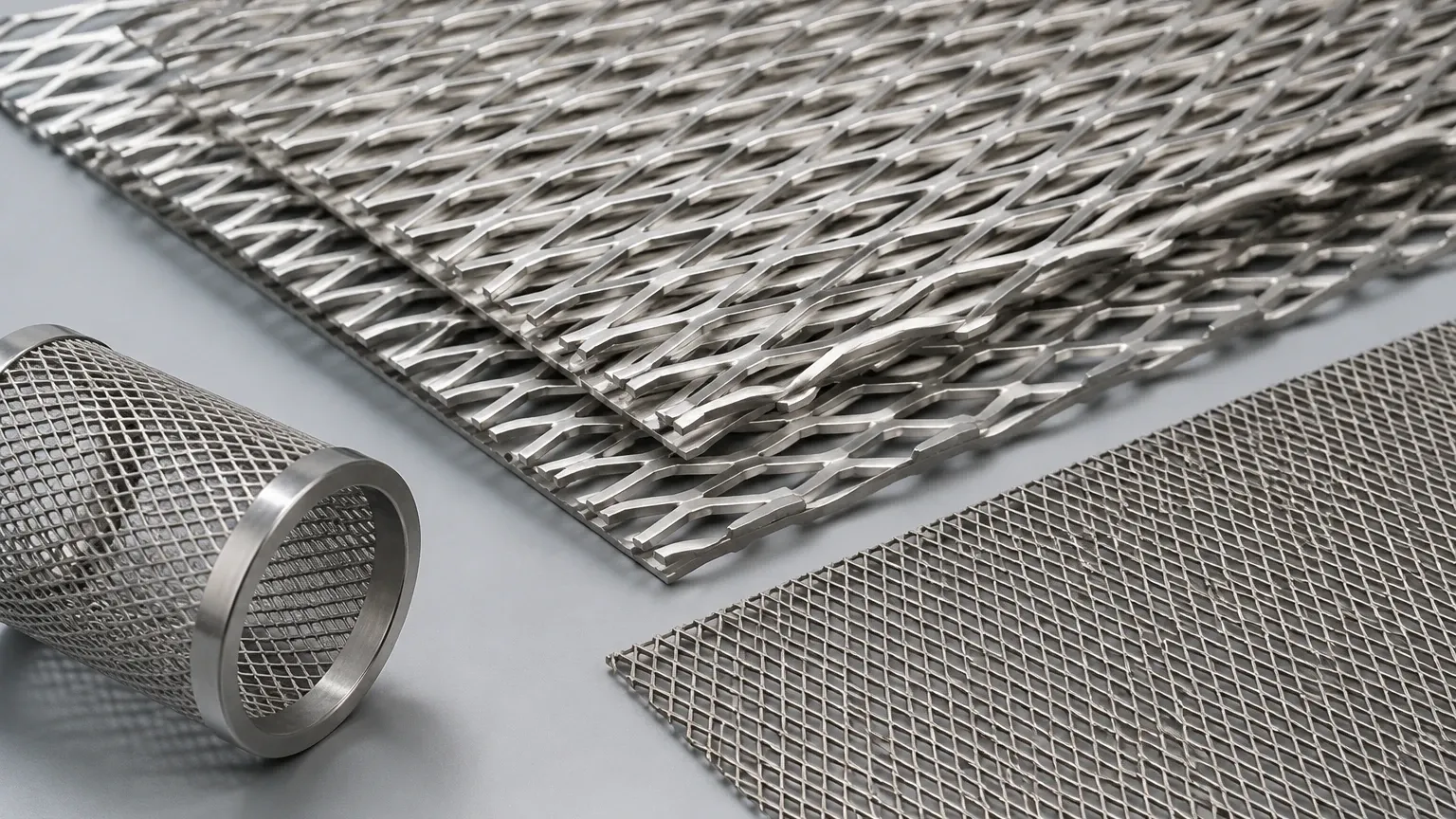
2. Expanded (Stretched) Metal: Created by simultaneously slitting and stretching the metal sheet. This process produces diamond-shaped openings without any material waste. The "stretched" nature of the metal creates a three-dimensional profile that increases the rigidity of the original sheet.
When sourcing rothley stretched perforated metal sheet steel, users are typically looking for the high strength-to-weight ratio characteristic of expanded metal. Because the mesh is formed from a single piece of steel, there are no welds or joints to fail, making it an excellent choice for high-vibration or high-stress environments.
Technical Specifications and Geometry
When evaluating Perforated & Expanded Metal, engineers must define several geometric parameters to ensure the material meets the flow or structural requirements of the application. These parameters include:
SWD and LWD (Short Way of Design / Long Way of Design)
These measurements define the size of the diamond openings. The SWD is the distance from the center of one bond to the center of the next bond across the short axis of the diamond. The LWD is the equivalent measurement across the long axis. These dimensions determine the overall "mesh size" and directly influence the filtration capabilities and visibility through the sheet.
Strand Width and Thickness
The "strand" is the single metal strip that forms the border of the diamond opening. The thickness refers to the gauge of the original base metal, while the width refers to the amount of metal fed into the machine for each stroke. By adjusting these two variables, manufacturers can create a lightweight, flexible mesh or a heavy-duty, rigid grate using the same base material.
Percent Open Area
For filtration and ventilation applications, the open area percentage is the most critical metric. It determines the pressure drop across the screen and the volume of air or liquid that can pass through at a given velocity. Unlike perforated metal, where the open area is a simple calculation of hole area vs. total area, expanded metal's three-dimensional profile means the "effective" open area can change depending on the angle of incidence.
Material Selection: Stainless Steel vs. Carbon Steel
The choice of alloy for rothley stretched perforated metal sheet steel significantly impacts the product's lifespan and suitability for specific environments.
Stainless Steel (304 and 316 Grades)
In industrial filtration and chemical processing, stainless steel is the preferred substrate. Kaifil specializes in manufacturing stainless steel components that resist oxidation and chemical corrosion.
* Grade 304: Suitable for most general industrial uses, providing excellent durability and resistance to atmospheric corrosion.
* Grade 316: Contains molybdenum, making it essential for marine environments or applications involving chlorides and acidic cleaning agents.
Carbon and Galvanized Steel
For applications where cost is the primary driver and the environment is relatively dry, carbon steel is often used. To prevent rust, these sheets are frequently galvanized. However, for precision filtration or high-purity pharmaceutical and food processing, stainless steel remains the industry standard due to its non-reactive properties and ease of sterilization.
Structural Variations: Standard vs. Flattened
When ordering Perforated & Expanded Metal, buyers must choose between the "Standard" (raised) and "Flattened" finishes.
* Standard Expanded Metal: This is the material as it comes off the expanding machine. The strands and bonds are set at a uniform angle to the plane of the sheet. This provides maximum rigidity and a slip-resistant surface, which is ideal for walkways or heavy-duty filter supports where turbulence is desired to prevent bypass.
* Flattened Expanded Metal: The standard expanded sheet is passed through a cold-rolling reducing mill. This flattens the strands and bonds into a single plane, resulting in a smooth, flat surface. Flattened rothley stretched perforated metal sheet steel is often preferred for safety guards, shelving, and applications where a thin profile is required to fit within a frame or housing.
Industrial Applications of Stretched Metal Sheets
Because of its unique mechanical properties, expanded and stretched metal is utilized across a broad spectrum of B2B sectors:
1. Filtration Support and Pleat Spacing
In high-pressure hydraulic and air filtration systems, fine wire mesh often lacks the structural integrity to withstand differential pressure. Stretched metal sheets are used as an outer cage or inner core to support the primary filter media. The diamond pattern provides excellent support for pleats, ensuring they do not collapse during high-flow cycles.
2. Machine Guarding and Safety
In manufacturing facilities, rothley stretched perforated metal sheet steel serves as a protective barrier around moving parts. The high visibility through the diamond mesh allows operators to monitor equipment while remaining protected from debris or accidental contact. The one-piece construction ensures that the guard remains intact even if a single strand is cut.
3. Architectural and Acoustic Panels
The aesthetic appeal of stretched metal has led to its widespread use in architectural cladding and ceiling panels. Beyond aesthetics, the material can be used in conjunction with acoustic insulation to create sound-dampening baffles in industrial workspaces or commercial buildings.
4. Heat Dissipation and Ventilation
Electronic enclosures and generator housings require constant airflow to prevent overheating. Stretched metal provides a high open-area-to-weight ratio, allowing for efficient heat dissipation while preventing the ingress of large foreign objects.
Engineering Considerations for Procurement
When specifying rothley stretched perforated metal sheet steel for an industrial project, engineers should confirm the following details with the manufacturer to ensure application compatibility:
* Load-Bearing Requirements: Unlike solid plate, expanded metal has directional strength. The sheet is significantly stronger across the SWD than the LWD. If the material is being used for a platform or shelf, the orientation of the diamonds is critical.
* Edge Treatment: Expanded metal leaves "random" or "open" edges when cut. For safety or ease of installation, buyers should specify whether they require a U-edging trim or if the mesh will be welded into a frame.
* Tolerances: Standard commercial tolerances for expanded metal are broader than those for machined parts. If the component must fit into a precision-machined slot, custom shearing and leveling may be required.
* Total Cost of Ownership: While carbon steel is cheaper upfront, the maintenance and replacement costs associated with corrosion often make stainless steel Perforated & Expanded Metal more cost-effective over the lifecycle of the equipment.
Customization and OEM Capabilities
For many industrial applications, off-the-shelf rothley stretched perforated metal sheet steel does not meet the exact requirements for filtration accuracy or structural dimensions. Custom manufacturing allows for the adjustment of strand width, opening size, and material grade to match specific performance envelopes.
Kaifil provides comprehensive OEM services, working from engineering drawings to produce precision-cut and formed metal components. Whether the requirement is for a specific diamond pattern to optimize airflow in a chemical reactor or a reinforced stainless steel cylinder for water treatment, custom expansion and perforation processes ensure the final product integrates seamlessly into the larger system.
Conclusion
Rothley stretched perforated metal sheet steel represents a versatile category of metal products that bridge the gap between lightweight mesh and solid plate. By understanding the technical distinctions between standard and flattened profiles, the importance of SWD/LWD dimensions, and the benefits of stainless steel alloys, procurement teams can select materials that enhance the durability and efficiency of their industrial systems. For demanding filtration and structural applications, focusing on the precision and quality of the Perforated & Expanded Metal substrate is the first step toward achieving optimal performance and reduced downtime.
Download Rothley Stretched Perforated Metal Sheet Steel as a PDF
