


Thickness of Perforated Metal Sheet
In industrial filtration and structural engineering, the thickness of perforated metal sheet is a fundamental specification that dictates the mechanical integrity, hydraulic performance, and manufacturability of the final component. Selecting the correct thickness is not merely a matter of weight or cost; it involves a complex interplay between material properties, hole geometry, and the intended environmental stresses. For engineers and procurement teams sourcing components from a professional manufacturer like Kaifil, understanding these technical nuances is essential to ensuring long-term reliability in demanding applications such as chemical processing, hydraulic filtration, and water treatment.
As a core element of Perforated & Expanded Metal production, thickness influences every stage of the lifecycle—from the initial punching force required during fabrication to the collapse pressure the part can withstand in a high-pressure fluid system.
Understanding the Role of Thickness in Industrial Perforation
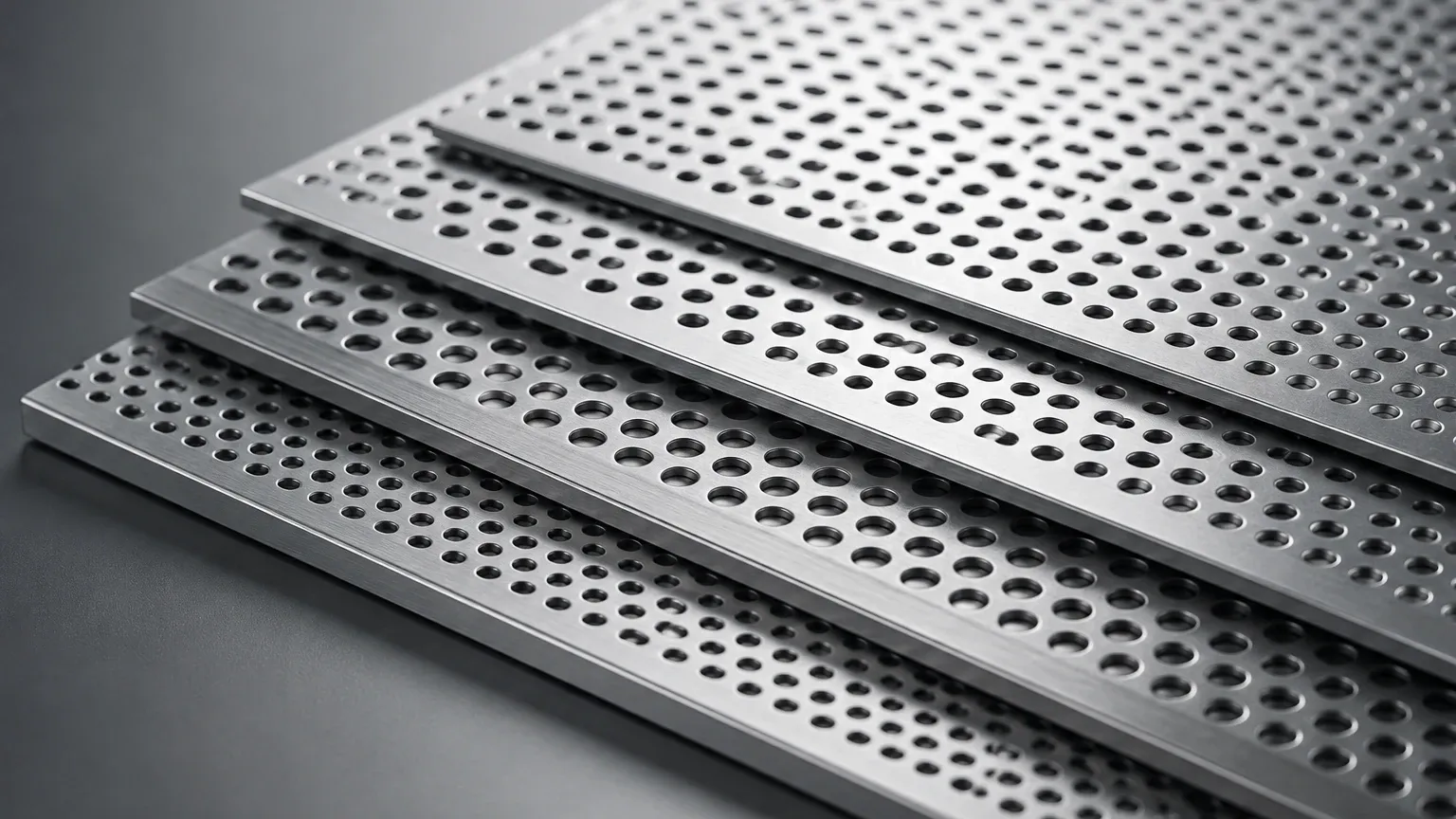
The thickness of perforated metal sheet, often referred to as the "gauge" or decimal thickness, serves as the backbone of the medium. In filtration applications, the perforated sheet often acts as a support substrate for finer wire mesh or as a standalone coarse filter. In both roles, the thickness determines the rigidity of the structure.
When a metal sheet is perforated, a significant portion of its material is removed to create the "open area." This removal reduces the overall cross-sectional area, which inherently weakens the sheet compared to its solid state. Consequently, the remaining material—the "bridges" or "lands" between the holes—must be thick enough to carry the required loads without deforming. In B2B procurement, specifying the thickness requires an evaluation of the mechanical stresses, including tension, compression, and vibration, that the component will encounter in the field.
Measuring Thickness: Gauges vs. Decimal Dimensions
One of the primary points of confusion in specifying the thickness of perforated metal sheet is the use of gauge systems. Historically, different metals used different gauge scales (e.g., Manufacturers' Standard Gauge for sheet steel, Brown & Sharpe for aluminum and copper, and Birmingham Gauge for stainless steel). Because these scales are non-linear and vary by material, relying solely on a gauge number can lead to precision errors.
For industrial filtration components where tolerances are tight, Kaifil recommends using decimal measurements (millimeters or inches). Decimal specifications eliminate ambiguity and ensure that the engineering calculations for flow rate and structural strength are based on absolute values. For instance, a 16-gauge stainless steel sheet is approximately 1.5mm thick, but the exact tolerance can vary depending on the mill standard. Specifying "1.5mm +/- 0.05mm" provides the clarity needed for high-precision OEM manufacturing.
The Engineering Relationship: Thickness vs. Hole Diameter
A critical rule of thumb in the perforation industry is the relationship between the thickness of the material and the diameter of the holes. This is often referred to as the "1:1 Rule."
The 1:1 Rule and Manufacturability
In standard perforation processes, the hole diameter should generally not be smaller than the thickness of perforated metal sheet. For example, if you are using a 2mm thick stainless steel plate, the minimum recommended hole diameter is also 2mm.
Attempting to punch holes smaller than the material thickness subjects the punching pins to extreme stress. The force required to shear through the metal exceeds the structural limits of the narrow punch, leading to frequent tool breakage, excessive burr formation, and increased production costs. While specialized techniques can sometimes achieve a smaller-than-1:1 ratio, it typically requires slower production speeds and premium tooling, which impacts the total cost of ownership.
The "Bridge" Width
The distance between holes, known as the bridge or land, must also be considered in relation to thickness. As a general guideline, the bridge width should be at least equal to the material thickness to maintain the structural integrity of the sheet during the punching process. If the bridge is too narrow relative to the thickness, the material may distort or "creep" during perforation, resulting in a non-flat finished product.
Material Properties and Thickness Limitations
Different alloys exhibit unique behaviors when subjected to the perforation process, which influences the ideal thickness of perforated metal sheet for a given application.
1. Stainless Steel (304, 316L): Stainless steel is the preferred material for filtration due to its corrosion resistance. However, it work-hardens rapidly. As the thickness increases, the force required to punch the material grows exponentially. Thicker stainless sheets require heavy-duty presses and high-carbon tool steel dies.
2. Carbon Steel: More ductile than stainless steel, carbon steel allows for slightly more flexibility in thickness-to-hole ratios, but it requires protective coatings (like galvanization) which can add to the final thickness and affect hole dimensions.
3. Aluminum: Being softer and lighter, aluminum can be perforated at greater thicknesses with less tool wear, but it lacks the structural strength of steel for high-pressure hydraulic or steam applications.
Performance Implications: Strength, Pressure Drop, and Durability
The thickness of perforated metal sheet directly impacts the functional performance of the filter or component in three primary ways:
Structural Strength and Collapse Pressure
In cylindrical filter cartridges, the perforated metal often serves as the inner core or outer guard. The thickness determines the collapse pressure—the maximum pressure differential the cylinder can withstand before buckling. For high-viscosity fluids or high-flow systems, increasing the thickness is the most effective way to enhance the burst and collapse ratings of the filter element.
Hydraulic Resistance (Pressure Drop)
While the 2D "open area" percentage is calculated based on hole diameter and pitch, the thickness of the sheet introduces a 3D component to flow resistance. In thicker sheets, the "tunnel" created by the hole is longer. For high-velocity gases or liquids, this longer path can increase turbulence and lead to a higher pressure drop across the media. Engineers must balance the need for structural thickness with the requirement for low energy consumption in the fluid system.
Corrosion and Erosion Allowance
In aggressive chemical environments, materials will inevitably experience some degree of surface recession over time. Specifying a greater thickness of perforated metal sheet provides a "corrosion allowance." This ensures that even after years of service and minor material loss, the component retains enough cross-sectional area to meet its structural requirements. This is particularly vital in offshore, pharmaceutical, and heavy industrial sectors where replacement cycles are costly.
Manufacturing Challenges and Quality Control
When working with thicker materials, several quality factors must be monitored to ensure the component meets industrial standards:
* Flatness: The perforation process introduces internal stresses into the metal. Thicker sheets are more resistant to the leveling processes used to flatten the material after punching. Specialized roller leveling is often required to ensure the sheet meets flatness tolerances for subsequent welding or assembly.
* Burr Height: As the thickness of perforated metal sheet increases, the shear zone during punching changes, which can lead to larger burrs on the exit side of the hole. For filtration applications, these burrs must be minimized or removed through deburring processes to prevent media migration or damage to secondary filter layers.
* Hole Taper: In very thick plates, the hole may not be perfectly cylindrical; the exit side is often slightly larger than the entry side. This taper must be accounted for if the perforated sheet is being used for precise particle size exclusion.
Selection Guide for B2B Applications
To optimize the selection of Perforated & Expanded Metal, purchasing teams and engineers should confirm the following criteria before finalizing a specification:
1. Operating Pressure: What is the maximum differential pressure the sheet must withstand? This will dictate the minimum required thickness for structural stability.
2. Media Compatibility: Will the fluid cause corrosion? If so, calculate the necessary thickness based on the expected life-cycle and corrosion rate of the alloy.
3. Forming Requirements: Does the sheet need to be rolled into a small-diameter cylinder? Thicker sheets are harder to roll and may require pre-heating or heavy-duty rolling equipment.
4. Weight Constraints: In aerospace or mobile hydraulic applications, excess thickness adds unnecessary weight. Finite Element Analysis (FEA) can help determine the minimum thickness required to meet safety factors without over-engineering.
5. Total Cost Considerations: Thicker material is more expensive per square foot and costs more to process. Ensure the thickness is justified by the application's mechanical demands.
Conclusion
The thickness of perforated metal sheet is a pivotal specification that bridges the gap between theoretical design and practical industrial performance. By moving beyond simple gauge numbers and understanding the technical relationship between thickness, hole geometry, and material behavior, engineers can specify components that offer the ideal balance of strength, flow efficiency, and longevity.
As a specialist in custom stainless steel filtration, Kaifil provides the technical expertise necessary to navigate these choices. Whether your application requires a thin, high-open-area screen for low-pressure air filtration or a heavy-gauge perforated core for high-pressure hydraulic systems, confirming the precise thickness and manufacturing tolerances is the first step toward a successful filtration solution.
