


Thin Perforated Metal Sheet
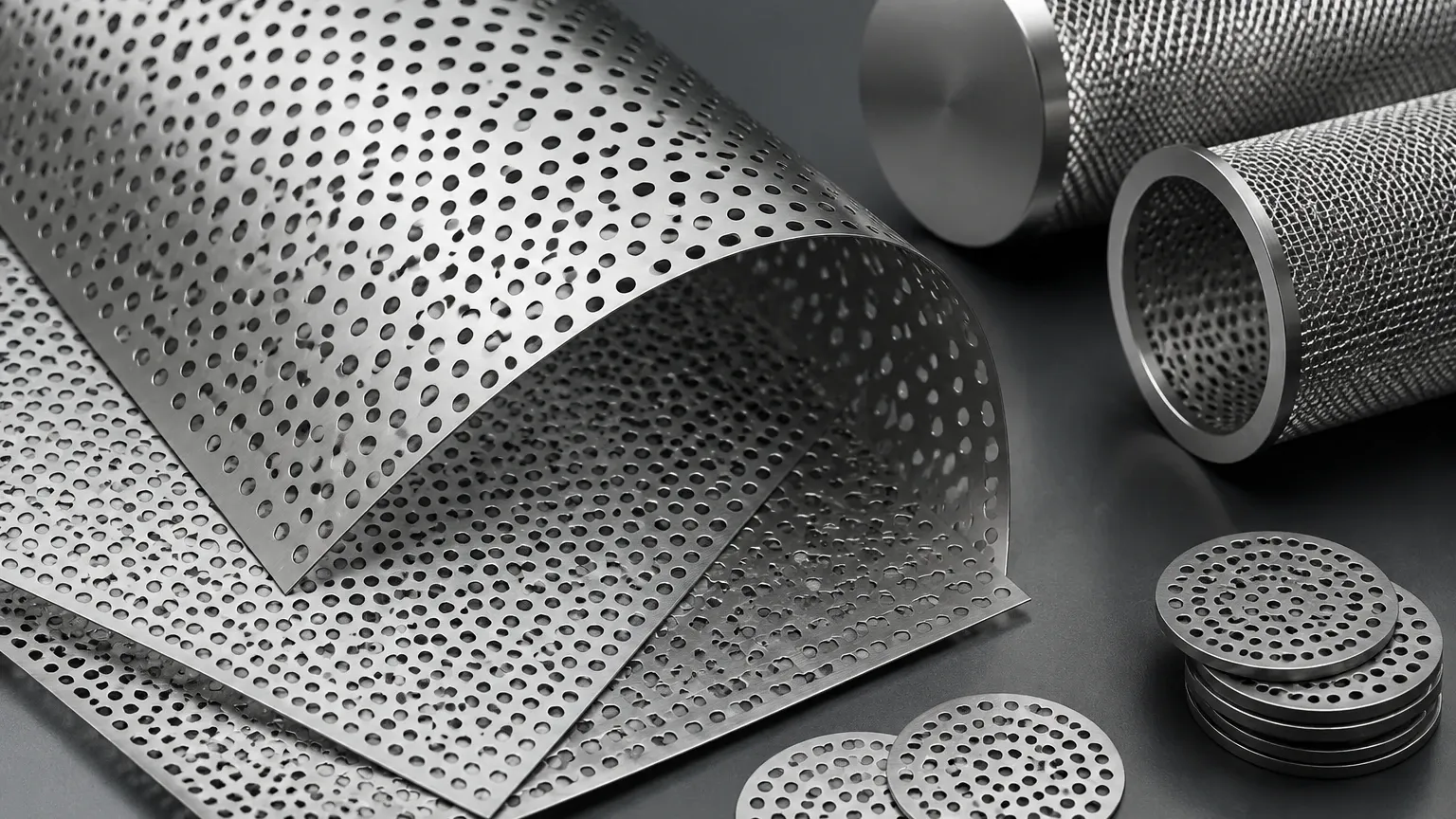
In industrial filtration and precision engineering, the selection of a thin perforated metal sheet is a critical decision that impacts flow dynamics, structural integrity, and the longevity of the filtration system. These components, often categorized under Perforated & Expanded Metal, serve as the foundational architecture for various industrial applications, ranging from chemical processing to high-precision pharmaceutical filtration. Understanding the technical nuances of material thickness, hole geometry, and manufacturing tolerances is essential for engineers and purchasing teams seeking to optimize performance and total cost of ownership.
Technical Definition and Scope of Thin Sheets
In the context of industrial manufacturing, a "thin" perforated metal sheet typically refers to materials with a thickness ranging from 0.3 mm to 1.5 mm (approximately 30 to 16 gauge). While thicker plates are used for heavy-duty structural grates, thin sheets are preferred for applications requiring a high strength-to-weight ratio, precise open areas, and flexibility for forming into cylindrical filter cartridges or pleated supports.
The manufacturing of these sheets involves high-speed CNC punching presses or rotary pins that displace or remove material to create a specific pattern. For engineers, the primary challenge with thin gauges is maintaining flatness and dimensional stability during the perforation process, as the mechanical stress of punching can induce internal tensions in the metal.
Material Selection and Engineering Properties
The performance of a thin perforated metal sheet is largely dictated by its metallurgy. At Kaifil, the focus is predominantly on stainless steel grades due to their superior resistance to corrosion and temperature extremes.
Stainless Steel 304/304L
This is the most common grade used for general industrial filtration. It offers excellent formability and weldability, which is crucial when the thin sheet must be rolled into a filter tube. It provides adequate resistance to atmospheric corrosion and many organic and inorganic chemicals.
Stainless Steel 316/316L
For more demanding environments, such as marine applications or chemical processing involving chlorides, Grade 316 is the standard. The addition of molybdenum enhances pitting resistance. The "L" (low carbon) versions are preferred for components requiring extensive welding, as they minimize carbide precipitation that can lead to intergranular corrosion.
Specialty Alloys
In specific high-temperature or highly corrosive pharmaceutical environments, thin sheets may be fabricated from Hastelloy, Monel, or Inconel. These materials maintain their mechanical properties at temperatures where standard stainless steels would undergo oxidation or creep.
Geometric Specifications and Open Area Calculations
When specifying a thin perforated metal sheet, engineers must balance the requirement for high flow rates (high open area) with the need for mechanical rigidity. The open area is the percentage of the sheet that is comprised of holes, and it directly influences the pressure drop across the filter.
Hole Patterns
* 60-Degree Staggered: This is the most efficient pattern for industrial filtration. It provides the highest open area and uniform strength across all directions.
* Straight Line: Holes are aligned in both horizontal and vertical rows. This pattern is easier to manufacture but offers lower structural integrity and is generally avoided in high-pressure hydraulic or gas filtration.
* 45-Degree Staggered: An intermediate option used when specific aesthetic or directional flow characteristics are required.
The "Rule of Thumb" for Thickness vs. Hole Size
A fundamental engineering constraint in perforation is that the hole diameter should generally not be smaller than the material thickness. For a thin perforated metal sheet of 0.5 mm, a hole diameter of 0.5 mm or larger is standard. Attempting to punch holes smaller than the thickness increases the risk of tool breakage and results in excessive burrs on the exit side of the hole, which can trap contaminants or impede flow.
Calculating Open Area
For a standard 60-degree staggered pattern, the formula for open area (OA%) is:
OA% = (d² × 90.69) / p²
Where *d* is the hole diameter and *p* is the pitch (the distance from the center of one hole to the center of the adjacent hole). Accurate calculation of this value is vital for predicting the flow velocity and ensuring the filter does not become a bottleneck in the process line.
Manufacturing Precision and Quality Control
The utility of a thin perforated metal sheet in a B2B environment depends on the precision of the manufacturing process. Engineers must confirm several quality parameters before procurement.
Burr Management
During the punching process, a small amount of displaced metal, known as a burr, often forms on the underside of the sheet. In precision filtration, these burrs must be minimized or removed through secondary processes like degreasing, ultrasonic cleaning, or electropolishing. Burrs can cause turbulence in fluid flow and may eventually break off, contaminating the downstream filtrate.
Flatness and Leveling
Thin sheets are prone to "oil canning" or warping after perforation due to the release of internal stresses. High-quality manufacturers utilize roller levelers to restore the sheet to a precision flat state. This is particularly important if the sheet is to be used as a support layer in a multi-layered wire mesh filter, where gaps between layers can lead to bypass or structural failure.
Margins and Blank Areas
Engineers should specify the required margins (the unperforated area around the edges). For thin perforated metal sheets intended for welding into cylinders, a "blank" or unperforated strip along the longitudinal edges is necessary to ensure a clean, strong weld seam without compromising the hole pattern.
Applications in Industrial Filtration
Thin perforated metal sheets are rarely used in isolation; they are typically integrated into complex filtration assemblies. Their primary roles include:
1. Filter Support Cages: In dust collection or liquid bag filtration, thin perforated sheets provide the rigid skeleton that prevents the filter media from collapsing under pressure.
2. Pleated Filter Protectors: In hydraulic and lube oil filters, a thin perforated sheet is often wrapped around the pleated media to protect it from mechanical damage during installation and to distribute flow evenly.
3. Pre-Filtration Screens: In water treatment, sheets with larger hole diameters act as strainers to remove macro-particles before the fluid reaches finer mesh or membrane stages.
4. Acoustic and Thermal Buffers: Beyond filtration, these sheets are used in industrial silencers and heat shields where airflow must be maintained while managing sound or heat dissipation.
Selection Criteria for Purchasing Teams
When evaluating a supplier for a thin perforated metal sheet, purchasing teams should move beyond price per square foot and consider the total cost of ownership. Key factors to confirm include:
* Dimensional Tolerances: Ensure the supplier can meet ±0.1 mm or better on sheet dimensions and hole placement.
* Material Certification: Request Mill Test Reports (MTRs) to verify the chemical composition of the stainless steel, especially for pharmaceutical or food-grade applications.
* Customization Capabilities: Can the manufacturer provide custom hole shapes (slotted, hexagonal, or square) if a standard round hole does not meet the flow requirements?
* Secondary Operations: Does the supplier offer rolling, welding, and surface finishing in-house? Consolidating these steps reduces lead times and minimizes the risk of damage during transit between vendors.
Maintenance and Replacement Cycles
While stainless steel thin perforated metal sheets are highly durable, they are not infinite-life components. In high-velocity or abrasive environments, the edges of the perforations can undergo erosion, gradually increasing the hole size and reducing filtration efficiency.
Regular inspection should focus on:
* Blinding: The accumulation of particles that cannot be removed by backwashing.
* Stress Corrosion Cracking: Particularly in thin sheets subjected to cyclic pressure loads in corrosive environments.
* Deformation: Checking for any bulging or bowing that indicates the pressure drop has exceeded the material's yield strength.
Conclusion
The selection of a thin perforated metal sheet is a technical exercise that requires a deep understanding of fluid dynamics, metallurgy, and mechanical engineering. By specifying the correct material grade, hole pattern, and manufacturing tolerances, engineers can ensure that their filtration systems operate at peak efficiency with minimal downtime. As a specialized manufacturer, Kaifil provides the technical expertise and custom manufacturing capabilities necessary to deliver high-performance Perforated & Expanded Metal solutions tailored to the most demanding industrial environments.
