


Perforated Metal Umbrella
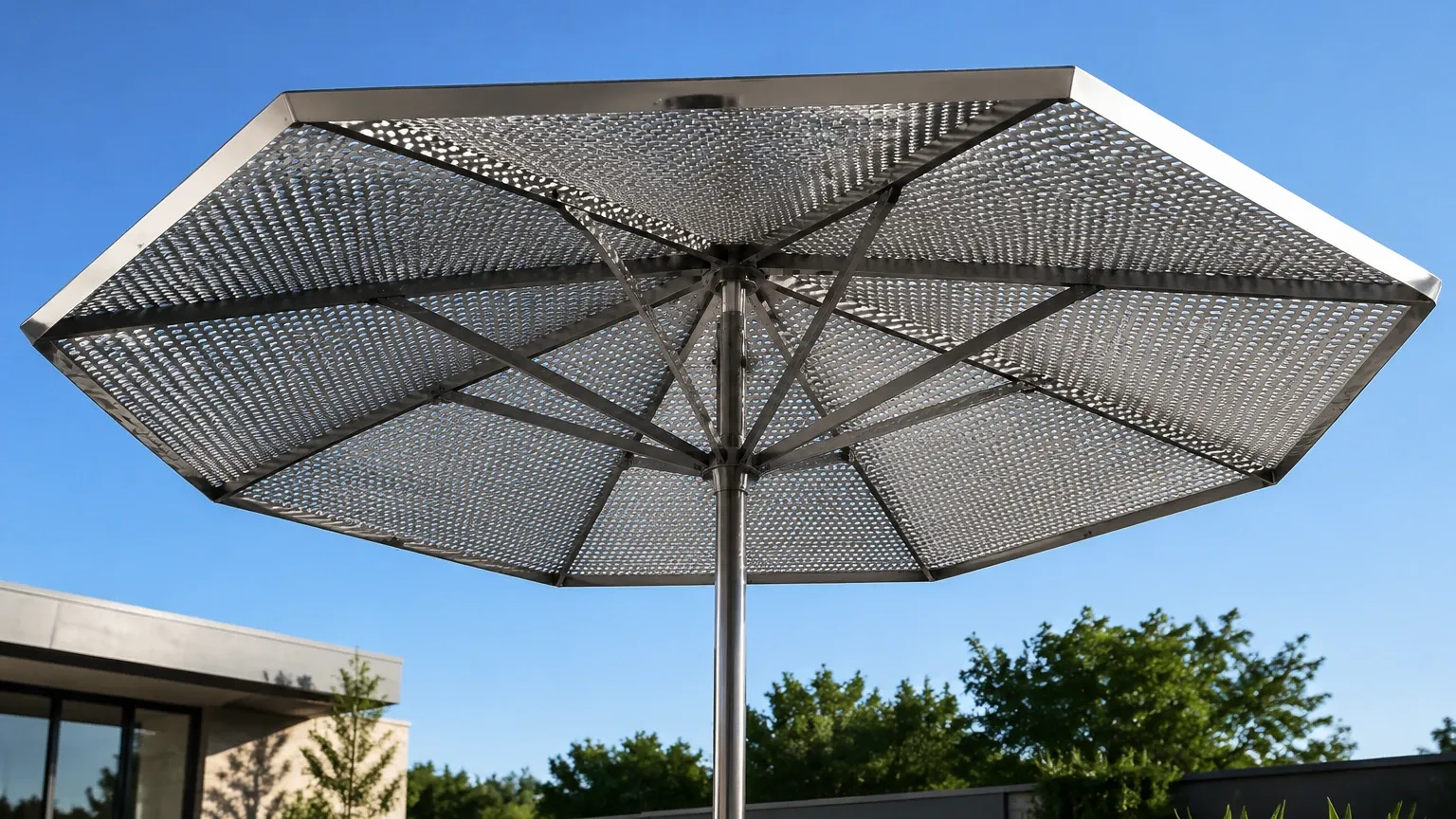
In industrial engineering and architectural design, the term "perforated metal umbrella" refers to specialized conical or domed structures fabricated from punched or expanded metal sheets. These components serve critical functions ranging from protective vent covers and fluid distributors in chemical processing to high-durability shading elements in structural engineering. Unlike standard flat sheets, the umbrella geometry introduces complex mechanical requirements, particularly regarding structural integrity, airflow dynamics, and material fatigue.
For engineers and procurement specialists, selecting the right Perforated & Expanded Metal for these applications requires a deep understanding of metallurgy, open area calculations, and fabrication tolerances. This guide examines the technical specifications and industrial applications of perforated metal umbrella structures, providing the data necessary for informed specification.
Engineering Fundamentals of Perforated and Expanded Metal
The performance of a perforated metal umbrella begins with the base material and the method of aperture creation. There are two primary methods used to create the porous surface: perforation and expansion.
Perforation vs. Expansion
Perforation involves a cold-stamping process where CNC-controlled presses punch specific patterns into a metal sheet. This method offers the highest level of precision, allowing for exact hole diameters and spacing (pitch). In filtration or ventilation applications, this precision is vital for maintaining consistent pressure drops and flow rates.
Expansion, on the other hand, involves slitting and stretching the metal simultaneously. This creates diamond-shaped openings without any material waste. While expanded metal is often more cost-effective and provides a high strength-to-weight ratio, it lacks the geometric variety of perforated sheets. For an industrial umbrella used as a debris shield or a large-scale architectural canopy, expanded metal provides excellent rigidity due to the interconnected strands.
Material Selection for Industrial Environments
Most industrial perforated metal umbrellas are fabricated from stainless steel due to its superior mechanical properties and corrosion resistance.
* Grade 304/304L: The standard choice for general industrial use, providing good resistance to atmospheric corrosion and many organic and inorganic chemicals.
* Grade 316/316L: Specified for marine environments or chemical processing where high resistance to chlorides and acids is required. The "L" (low carbon) designation is critical if the umbrella component requires extensive welding, as it prevents carbide precipitation.
* Aluminum Alloys: Used when weight reduction is a priority, such as in aerospace or large-scale architectural shading. Aluminum also offers natural oxide protection against corrosion.
The Role of Geometry in Fluid Dynamics and Protection
The "umbrella" shape is not merely aesthetic; it is a functional geometry designed to manage fluid or gas flow while providing physical protection. In a filtration system, a perforated metal umbrella may act as a primary baffle or a splash guard.
Fluid Distribution and Baffling
When used inside a pressure vessel or filter housing, an internal perforated umbrella serves to distribute incoming flow evenly across the filter media. By breaking the velocity of the incoming fluid, it prevents "channeling"—a phenomenon where high-velocity fluid carves a path through the filter bed, reducing efficiency and causing premature wear. The curvature of the umbrella ensures that fluid is directed outward toward the vessel walls, utilizing the full surface area of the internal filter elements.
Protective Venting
In outdoor or wash-down environments, perforated metal umbrellas are used as vent caps for storage tanks and silos. The conical shape sheds rainwater and prevents the accumulation of debris, while the perforations allow the tank to "breathe," equalizing internal and external pressure during filling or emptying cycles. The hole size must be engineered to prevent the ingress of insects or birds while maintaining an adequate air exchange rate.
Technical Specifications: Open Area and Hole Patterns
The most critical technical metric for any perforated component is the percentage of open area. This determines the transparency of the material to light, air, or liquid.
Calculating Open Area
For a standard staggered round hole pattern, the open area (OA%) is calculated using the formula:
OA% = (d² × 90.69) / p²
*Where:*
* d = Hole diameter
* p = Pitch (center-to-center distance between holes)
For a perforated metal umbrella used in HVAC or ventilation, a high open area (typically 40% to 60%) is required to minimize static pressure loss. Conversely, for an umbrella used as a protective shield against high-impact debris, a lower open area with thicker gauge material is preferred to ensure structural resilience.
Pattern Selection
* Round Holes: The most common and versatile pattern. It offers the best structural strength and is the easiest to manufacture.
* Square Holes: Provide a higher open area but are more susceptible to stress concentrations at the corners, which can lead to cracking under high-vibration conditions.
* Hexagonal (Honeycomb) Holes: Offer the maximum possible open area (up to 80%+) and are often used in high-performance cooling applications.
Manufacturing and Customization Processes
Fabricating a perforated metal umbrella involves more than just punching holes. The transformation from a flat sheet to a three-dimensional conical or domed shape requires specialized metalworking techniques.
Precision Forming and Welding
To create an umbrella shape, the perforated sheet is typically cut into a circular blank or a series of segments (gores). These segments are then formed using heavy-duty rollers or presses. Because the perforations reduce the overall stiffness of the metal, the forming process must be carefully controlled to avoid distorting the hole pattern or causing the material to buckle.
Once formed, the seams are joined using TIG (Tungsten Inert Gas) or laser welding. For filtration applications, these welds must be high-quality and burr-free to prevent fluid bypass or the accumulation of contaminants. In many cases, the final product undergoes passivating or electropolishing to enhance corrosion resistance and ensure a smooth surface finish.
OEM and Customization Options
Industrial projects often require bespoke dimensions that standard off-the-shelf components cannot meet. Customization options include:
* Variable Hole Sizes: Using different hole diameters on different sections of the umbrella to modulate flow.
* Solid Margins: Leaving unperforated areas at the edges for easier welding or mechanical fastening.
* Mounting Hardware: Integrating flanges, threaded hubs, or support ribs directly into the umbrella structure.
Applications in Industrial and Architectural Sectors
The versatility of Perforated & Expanded Metal allows the umbrella configuration to be utilized across diverse industries.
Chemical and Petrochemical Processing
In these sectors, perforated umbrellas are used as internal components in reactors and separators. They protect sensitive instrumentation from direct fluid contact and serve as support structures for catalyst beds. The use of high-grade alloys like 316L stainless steel ensures longevity in aggressive chemical environments.
Water Treatment and Filtration
Perforated metal umbrellas act as pre-filters or intake screens in water treatment plants. They prevent large debris from entering pumps and piping systems. The domed shape is particularly effective here, as it provides a larger surface area than a flat screen, reducing the frequency of cleaning cycles.
Architectural and Urban Design
In modern architecture, large-scale perforated metal umbrellas are used as permanent sunshades or artistic installations. These structures provide shade while allowing for natural ventilation and a visual connection to the sky. The choice of hole pattern can create unique light and shadow effects, while the durability of metal ensures the structure withstands wind loads and environmental exposure for decades.
Selection Guide: What Engineers Must Confirm
Before finalizing a purchase order for a perforated metal umbrella, engineers and purchasing teams should verify several key parameters to ensure the component meets the application's demands.
1. Load Requirements: Will the umbrella be subjected to high wind loads, snow loads (for outdoor use), or high-pressure fluid flow? This determines the required material thickness and the need for internal structural reinforcement.
2. Filtration/Flow Accuracy: What is the maximum allowable particle size to pass through? This dictates the hole diameter. What is the required flow rate? This dictates the minimum open area.
3. Environmental Compatibility: Will the component be exposed to salt spray, caustic chemicals, or extreme temperatures? This guides the selection between 304, 316, or more exotic alloys.
4. Surface Finish: Is a standard mill finish acceptable, or does the application require a sanitary finish (e.g., for food and beverage or pharmaceutical use)?
5. Installation Method: How will the umbrella be secured? Common methods include center-bolt mounting, peripheral welding, or flange connections.
Conclusion
The perforated metal umbrella is a sophisticated industrial component that combines the benefits of porous metal sheets with the structural advantages of a conical or domed geometry. Whether used to protect a ventilation system, distribute flow in a chemical reactor, or provide shade in a public space, its performance depends on precise engineering and high-quality manufacturing. By selecting the appropriate material, hole pattern, and open area, engineers can ensure long-term reliability and optimal performance in even the most demanding environments.
For those seeking specialized filtration or industrial metal components, working with a manufacturer that understands the nuances of Perforated & Expanded Metal is essential. From material selection to final fabrication, attention to detail ensures that the resulting perforated metal umbrella meets the exact technical specifications required for the project's success.
