


Perforated Metal Vancouver
In the industrial landscape of the Pacific Northwest, the demand for precision-engineered metal components is driven by sectors ranging from maritime engineering and chemical processing to food production and wastewater treatment. For engineers and procurement specialists seeking perforated metal Vancouver solutions, understanding the technical nuances of material selection, hole patterns, and manufacturing methods is essential for ensuring long-term performance in demanding environments.
Perforated and expanded metals serve as critical components in filtration, separation, and structural applications. While they may appear similar in basic utility, their mechanical properties and production processes differ significantly. This guide examines the engineering considerations necessary for selecting the right Perforated & Expanded Metal for industrial applications, with a specific focus on the environmental and technical requirements prevalent in the Vancouver region.
Understanding the Mechanics of Perforated and Expanded Metal
To make an informed purchasing decision, it is necessary to distinguish between the two primary types of processed metal sheets used in industrial settings.
Perforated Metal
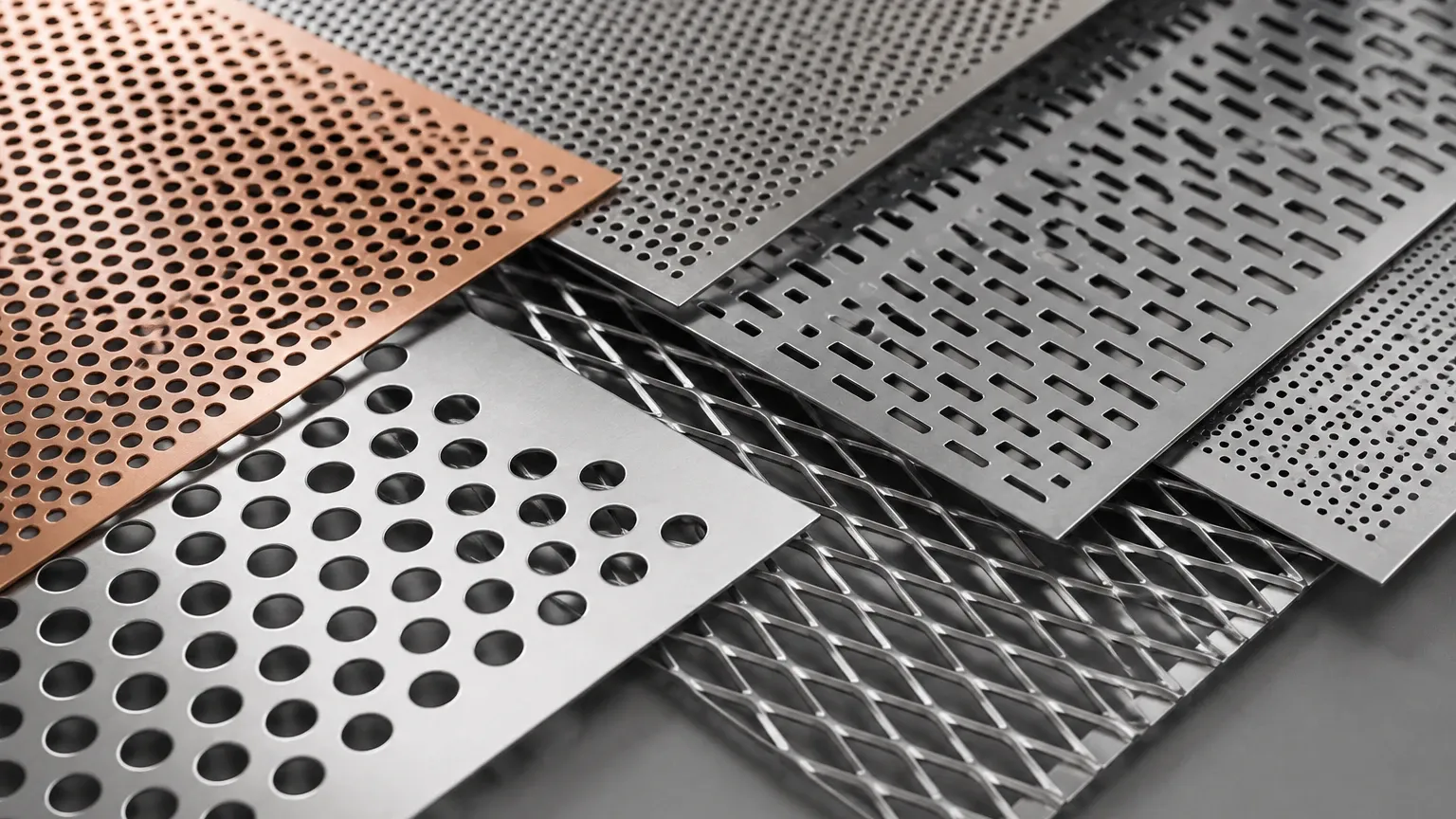
Perforated metal is produced by mechanically punching or laser-cutting a series of holes into a solid metal sheet. This process allows for high precision in hole size, shape, and spacing. The primary advantage of perforated metal is its versatility; engineers can specify exact open area percentages and complex patterns to meet specific flow rates or filtration requirements. However, the punching process creates "slugs" (waste material), which can influence the total cost depending on the material type.
Expanded Metal
Expanded metal is manufactured by simultaneously slitting and stretching a metal sheet. This process creates diamond-shaped openings without any material waste. Because the metal is stretched rather than punched, the resulting mesh maintains structural integrity while being lighter than a solid sheet of the same thickness. Expanded metal is often preferred for applications requiring high strength-to-weight ratios, such as walkways, safety guards, and coarse filtration stages.
Material Selection for Coastal and Industrial Environments
When sourcing perforated metal Vancouver, the local climate and industrial context play a decisive role in material selection. Vancouver’s coastal location introduces high salt spray and humidity, which can lead to rapid corrosion in sub-standard alloys.
Stainless Steel 304 vs. 316
* Type 304: This is the most common grade of stainless steel used in perforated products. It offers excellent corrosion resistance and formability. It is suitable for indoor industrial applications, food processing (where chloride exposure is low), and general-purpose filtration.
* Type 316: For applications exposed to the marine environment or harsh chemical processing, Grade 316 is the industry standard. The addition of molybdenum enhances resistance to pitting and crevice corrosion in chloride-rich environments. For any exterior architectural or maritime filtration project in Vancouver, 316 stainless steel is typically the recommended specification.
Specialized Alloys
In high-temperature or highly acidic environments, such as those found in chemical refineries or pulp and paper mills, specialized alloys like Duplex stainless steel or Monel may be required. These materials provide the necessary mechanical strength and chemical stability to withstand aggressive processing conditions.
Technical Specifications: Hole Patterns and Open Area
The performance of a perforated sheet is defined by its geometry. Engineers must calculate the "Open Area" to determine how the material will affect pressure drop and flow velocity in filtration systems.
Common Hole Patterns
1. Round Holes: The most popular and economical pattern. Round holes offer the highest structural strength and are easiest to clean, making them ideal for food and beverage applications.
2. Square Holes: Often used when a higher open area is required. Square holes provide a modern aesthetic for architectural applications but may have lower resistance to mechanical stress compared to round holes.
3. Slotted Holes: These are primarily used in screening and sorting applications where elongated materials must be separated. They are common in the agricultural and mining sectors.
Calculating Open Area
The open area percentage is the ratio of the total area of the holes to the total area of the sheet. For a standard 60-degree staggered round hole pattern, the formula is:
Open Area % = (D² × 90.69) / R²
*Where D = Hole Diameter and R = Center-to-Center Pitch.*
Achieving the correct balance between open area and structural rigidity is vital. A higher open area reduces pressure drop in a filtration system but may compromise the sheet's ability to withstand hydraulic surges.
Industrial Applications in the Vancouver Market
Vancouver’s diverse economy utilizes perforated and expanded metals across several key sectors. Understanding these applications helps in selecting the appropriate product configuration.
Maritime and Offshore Engineering
Given the prominence of the Port of Vancouver, perforated metals are frequently used in shipboard strainers, intake screens, and ventilation covers. These components must be manufactured from corrosion-resistant alloys to prevent premature failure due to saltwater exposure.
Food and Beverage Processing
In the regional food processing industry, perforated stainless steel is used for dehydration trays, sorting screens, and pasteurization equipment. Here, the focus is on "cleanability." Smooth hole edges and high-grade finishes (such as electro-polishing) are required to prevent bacterial growth and ensure compliance with health and safety standards.
Water Treatment and Filtration
Vancouver’s municipal and industrial water treatment facilities rely on perforated metal as the primary support structure for finer wire mesh filters. In these systems, the perforated metal provides the mechanical strength to support the filter media against high-pressure differentials while ensuring uniform flow distribution.
Architectural and Acoustic Solutions
Beyond industrial utility, perforated metal is increasingly used in Vancouver’s urban architecture for sunshades, balcony railings, and acoustic panels. In these cases, the material must balance aesthetic requirements with functional performance, such as wind load resistance and sound attenuation.
Engineering Considerations for Customization
Standard off-the-shelf perforated sheets may not meet the exacting requirements of specialized industrial equipment. Customization is often necessary to optimize performance.
Margin Requirements
In many filtration applications, a "blank margin" (an unperforated area around the edges) is required for welding or mounting the sheet into a frame. Specifying exact margin dimensions is critical for ensuring the component fits perfectly into the final assembly without the need for additional trimming, which can weaken the structure.
Secondary Operations
To ensure the perforated metal is ready for installation, several secondary processes may be applied:
* Leveling: The perforating process can cause the metal sheet to curl. Precision leveling restores flatness.
* Degreasing: Removing lubricants used during the punching process is essential for applications in the pharmaceutical and food industries.
* Deburring: Ensuring hole edges are smooth prevents the trapping of particles and reduces the risk of injury during handling.
Evaluating Suppliers and Quality Assurance
When sourcing [perforated metal vancouver], engineers should evaluate suppliers based on their technical capabilities and quality control protocols. A reliable manufacturer should provide detailed material certifications (MTRs) to verify the chemical composition of the alloy.
Key Evaluation Criteria:
* Tolerance Precision: Does the manufacturer adhere to international standards (such as ISO or ASTM) for hole diameter and pitch tolerances?
* OEM Capabilities: Can the supplier produce custom components based on CAD drawings, including non-standard hole shapes and complex forming?
* Testing Procedures: For filtration components, are there procedures in place to verify the integrity of the welds and the accuracy of the filtration rating?
Total Cost of Ownership and Replacement Cycles
While the initial purchase price is a factor, the total cost of ownership (TCO) is a more accurate metric for industrial filters and screens. Lower-quality perforated metal may suffer from faster corrosion, fatigue cracking, or clogging, leading to frequent downtime and replacement costs.
Investing in higher-grade materials, such as 316L stainless steel, and ensuring precise manufacturing can significantly extend the service life of the component. Furthermore, choosing a design that allows for easy cleaning (such as backwashing) will reduce maintenance labor costs over the life of the equipment.
Conclusion: Confirming Technical Requirements
Before proceeding with a procurement order for perforated or expanded metal, technical teams should confirm the following data points:
1. Environment: Will the material be exposed to chlorides, high temperatures, or acidic chemicals?
2. Mechanical Load: What is the maximum pressure or weight the sheet must support?
3. Flow Requirements: What is the required open area to maintain the desired flow rate?
4. Dimensions: Are the sheet thickness, hole size, and margins clearly defined in the technical drawings?
By addressing these factors, engineers can ensure that the perforated metal components they integrate into their systems will provide reliable, efficient, and durable performance in any industrial application.
