


Perforated Metal Soffit Vent
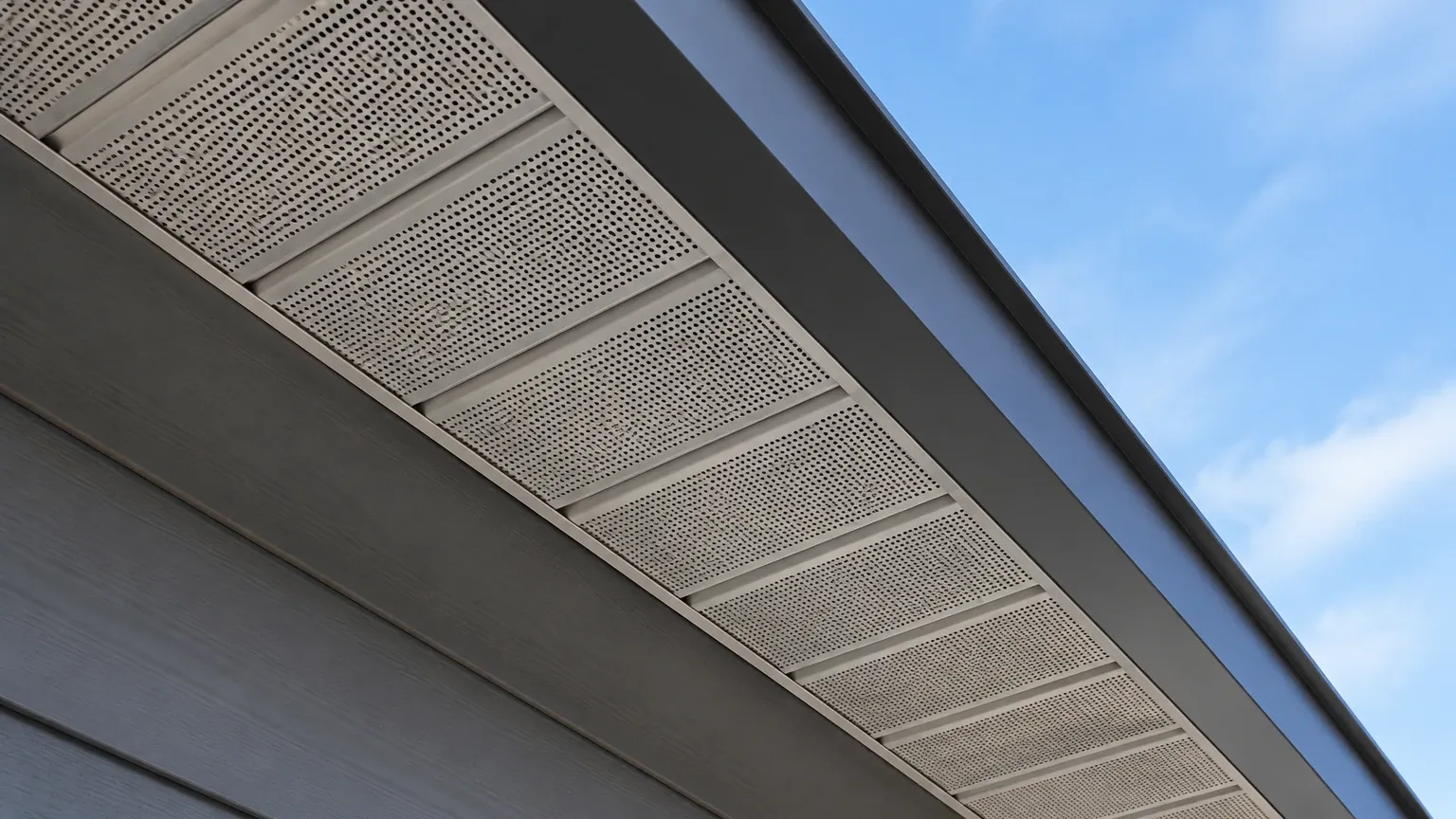
In industrial and commercial architecture, the management of airflow within a building's envelope is a critical engineering requirement. A perforated metal soffit vent serves as the primary intake point for attic or plenum ventilation, facilitating a continuous exchange of air that prevents heat buildup and moisture accumulation. For engineers and facility managers, selecting the correct ventilation component involves more than just choosing a screen; it requires an understanding of material science, airflow dynamics, and structural durability.
As a specialized manufacturer of precision metal components, Kaifil provides high-performance Perforated & Expanded Metal solutions designed to meet the rigorous demands of industrial environments. This guide examines the technical specifications, material considerations, and engineering advantages of utilizing perforated metal for soffit ventilation.
The Engineering Function of Perforated Metal Soffit Vents
The primary purpose of a perforated metal soffit vent is to enable passive ventilation. In a balanced ventilation system, cool air is drawn in through the soffit (the underside of an eave or overhang) and exhausted through ridge vents or gable vents. This cycle is essential for several reasons:
1. Thermal Regulation: In industrial facilities, solar gain can significantly increase the temperature of enclosed roof spaces. Proper ventilation reduces the cooling load on HVAC systems, leading to improved energy efficiency.
2. Moisture Mitigation: Condensation occurs when warm, moist air from the building interior meets cooler surfaces in the attic or plenum. Without adequate ventilation, this moisture can lead to structural degradation, insulation failure, and the growth of mold.
3. Pressure Balancing: Effective intake through the soffit ensures that exhaust fans or passive ridge vents do not create a vacuum effect, which could otherwise pull conditioned air from the living or working spaces into the attic.
Unlike plastic or light-gauge aluminum alternatives, a perforated metal soffit vent manufactured from stainless steel or heavy-duty alloys offers the structural integrity required for long-term industrial service.
Technical Specifications: Open Area and Airflow Dynamics
The performance of a soffit vent is dictated by its "Net Free Area" (NFA). This is the total unobstructed area through which air can pass. When specifying a perforated metal soffit vent, engineers must calculate the required NFA based on the total square footage of the space being ventilated.
Hole Patterns and Pitch
Perforated sheets can be manufactured with various hole geometries, including round, square, and slotted patterns.
* Round Holes: These are the most common for soffit applications due to their structural stability and ease of manufacturing. A staggered 60-degree pattern is often preferred as it maximizes the open area while maintaining the strength of the metal bridge between holes.
* Square Holes: These offer a higher open area percentage but may reduce the overall rigidity of the panel compared to round perforations.
* Slotted Holes: Often used when a specific aesthetic or directional airflow is required, though they are less common in standard industrial soffit applications.
Calculating Open Area
For a standard round-hole staggered pattern, the percentage of open area is calculated using the formula:
Open Area % = (D² × 90.69) / P²
*(Where D is the hole diameter and P is the center-to-center pitch)*
For industrial soffit vents, an open area between 30% and 50% is typically targeted to balance airflow efficiency with the need to exclude pests and debris.
Material Selection for Industrial Environments
The environment in which the vent will be installed determines the material requirements. While standard residential vents might use thin aluminum, industrial applications often demand the corrosion resistance and strength of stainless steel.
Stainless Steel (304 and 316 Grade)
Stainless steel is the gold standard for perforated metal soffit vents in chemical processing plants, coastal facilities, and food production areas.
* Grade 304: Offers excellent corrosion resistance for most standard industrial applications and is highly cost-effective.
* Grade 316: Contains molybdenum, providing superior resistance to chlorides and marine environments. This is essential for facilities located near the ocean or those using harsh cleaning chemicals.
Aluminum
Aluminum is lightweight and naturally resistant to atmospheric corrosion. It is an excellent choice for large-scale commercial projects where weight reduction is a priority. However, it lacks the impact resistance and fire-rated performance of stainless steel.
Galvanized Steel
For indoor industrial applications where humidity is controlled, galvanized steel provides a robust and economical solution. However, once the zinc coating is breached (often during the perforation process or installation), the edges may be susceptible to oxidation over time.
Structural Integrity and Pest Exclusion
A critical design consideration for any perforated metal soffit vent is the exclusion of insects, birds, and rodents. If the perforation diameter is too large, it may allow wasps or small rodents to enter the building envelope. Conversely, if the holes are too small (approaching the scale of a fine mesh), they can easily become clogged with dust, pollen, or industrial particulates, significantly reducing the NFA.
Engineers typically specify hole diameters between 1/8 inch (3.2mm) and 1/4 inch (6.35mm). This range provides a "sweet spot" that maintains high airflow while acting as an effective physical barrier. Because Kaifil specializes in precision manufacturing, we can maintain tight tolerances on these hole diameters, ensuring consistent performance across large production runs.
Customization and OEM Capabilities
Industrial projects rarely follow a one-size-fits-all approach. Customization is often required to integrate ventilation components into existing structural frameworks or to meet specific aesthetic requirements.
Dimensional Customization
Soffit vents may need to be produced in continuous strips, individual panels, or custom shapes to fit unique architectural profiles. Precision shearing and CNC punching allow for the creation of vents that fit perfectly into the soffit channel, reducing installation time and labor costs.
Finishing Options
While stainless steel is often left in its natural mill finish, other materials may require secondary processing:
* Powder Coating: Provides additional corrosion protection and allows the vent to match the building’s color scheme.
* Anodizing: Specific to aluminum, this hardens the surface and enhances weather resistance.
* Electropolishing: For stainless steel components used in pharmaceutical or food-grade environments, electropolishing removes surface impurities and creates a smooth, easy-to-clean finish.
Installation and Maintenance Considerations
The longevity of a perforated metal soffit vent is heavily influenced by how it is installed and maintained. In an industrial context, mechanical fastening is the preferred method.
Installation Best Practices
1. Fastener Compatibility: When installing stainless steel vents, it is imperative to use stainless steel fasteners. Using carbon steel screws can lead to galvanic corrosion, where the dissimilar metals react and cause premature failure at the attachment points.
2. Expansion Gaps: Metal expands and contracts with temperature fluctuations. For long continuous runs of soffit venting, installers should account for thermal expansion to prevent buckling or warping.
3. Support Framing: Depending on the gauge of the metal, additional support may be required to prevent sagging, especially in wide soffit applications.
Maintenance Protocols
In environments with high particulate matter (such as woodworking facilities or textile mills), soffit vents should be inspected annually. Maintenance involves:
* Vacuuming or Compressed Air: Removing surface dust and debris that may be obstructing the perforations.
* Visual Inspection: Checking for signs of mechanical damage or fastener loosening.
* Cleaning: In coastal areas, rinsing the vents with fresh water can help remove salt deposits and extend the life of the material.
Evaluating Total Cost of Ownership (TCO)
When purchasing teams evaluate perforated metal soffit vents, the initial unit price is only one component of the total cost. A B2B procurement strategy should consider the following:
* Durability vs. Replacement Cycle: A lower-cost plastic or thin-gauge aluminum vent may require replacement every 5–10 years due to UV degradation or physical damage. A high-quality stainless steel vent from a manufacturer like Kaifil is designed to last the lifetime of the building.
* Energy Impact: Properly engineered vents with optimized open areas ensure the HVAC system operates at peak efficiency, reducing long-term energy expenditures.
* Compliance and Safety: In certain industries, fire-rated materials are mandatory. Stainless steel perforated metal is non-combustible and meets the strictest fire safety codes, potentially lowering insurance premiums for industrial facilities.
Conclusion
The selection of a perforated metal soffit vent is a critical decision that impacts the structural health and operational efficiency of an industrial building. By prioritizing high-grade materials, precise perforation patterns, and custom-engineered dimensions, engineers can ensure reliable ventilation performance in even the most demanding environments.
Kaifil remains committed to delivering technical excellence in metal fabrication. Our expertise in Perforated & Expanded Metal allows us to support global customers with customized solutions that meet specific filtration and ventilation requirements. When designing your next industrial ventilation system, consider the long-term benefits of precision-engineered metal components that offer durability, safety, and superior airflow management.
