


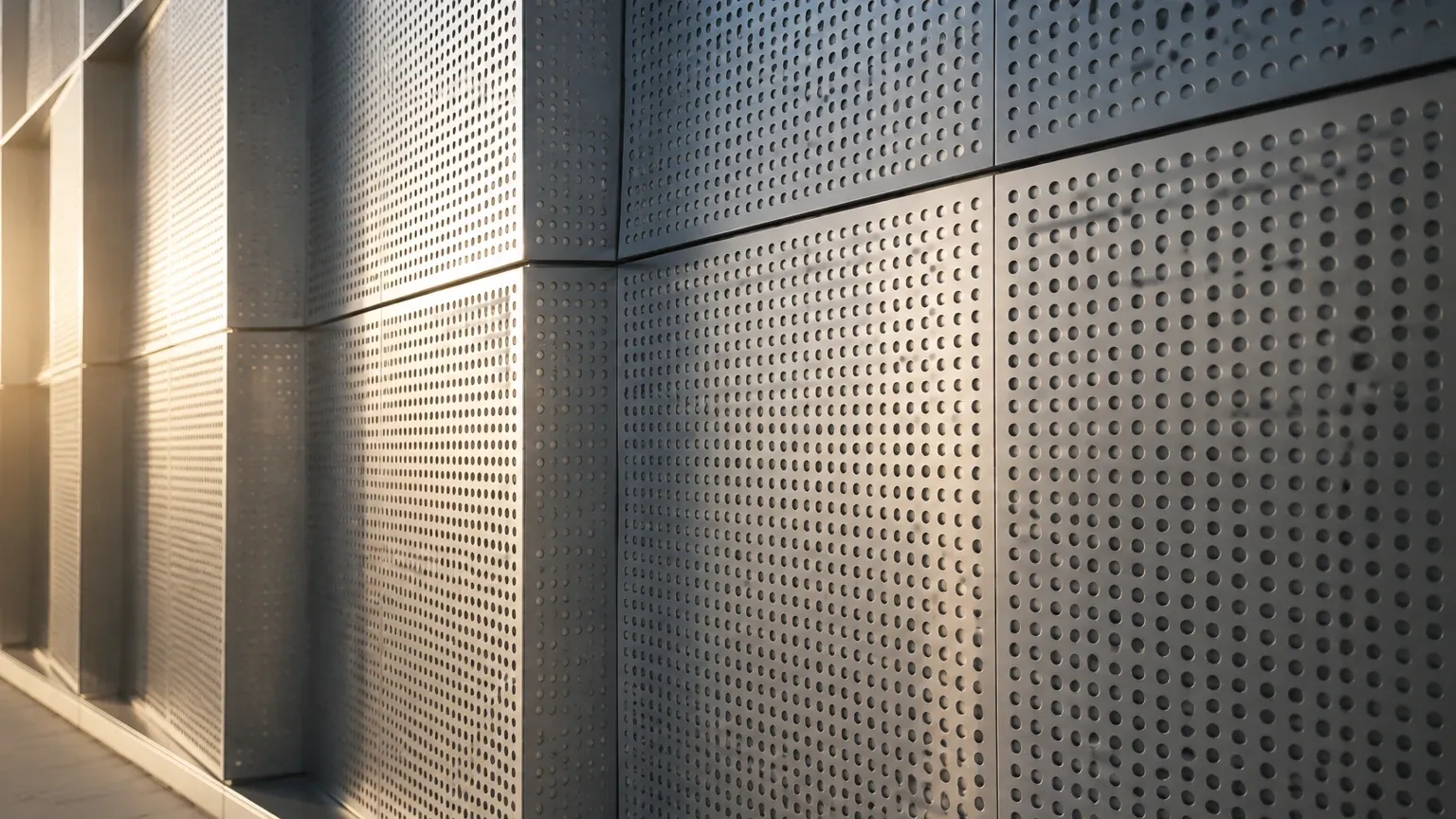
Perforated Metal Wall
In industrial and architectural engineering, the selection of surfacing materials is driven by a balance of structural integrity, functional performance, and environmental resistance. A perforated metal wall serves as a versatile solution that transcends simple aesthetics, providing critical utility in ventilation, acoustic control, and safety guarding. For engineers and procurement professionals, understanding the technical nuances of perforated and expanded metal is essential for ensuring long-term durability and operational efficiency in demanding environments.
As a specialized manufacturer, Kaifil provides precision-engineered Perforated & Expanded Metal solutions tailored to specific industrial requirements. This guide examines the engineering considerations, material specifications, and selection criteria necessary for implementing effective metal wall systems.
Engineering Fundamentals of Perforated Metal Walls
The performance of a perforated metal wall is primarily determined by its geometric configuration and material properties. Unlike solid panels, perforated sheets are defined by their "open area," which is the percentage of the sheet occupied by holes. This variable is the most critical factor in determining the panel’s influence on airflow, light transmission, and sound passage.
Material Selection and Grade Specifications
Material choice is the first boundary in the design process. For industrial applications, stainless steel remains the gold standard due to its mechanical strength and resistance to oxidation.
* Stainless Steel 304: The most common grade for interior industrial partitions and equipment housing. It offers excellent formability and sufficient corrosion resistance for most dry or mildly humid environments.
* Stainless Steel 316: Essential for chemical processing plants, pharmaceutical facilities, and marine environments. The addition of molybdenum provides superior resistance to chlorides and acidic solutions, preventing pitting and structural degradation.
* Carbon Steel and Aluminum: While lighter or more cost-effective in specific scenarios, these materials often require secondary treatments such as galvanization or powder coating to match the inherent longevity of stainless steel in high-moisture settings.
Hole Patterns and Pitch
The arrangement of perforations—referred to as the pattern—impacts both the structural rigidity and the functional transparency of the wall.
1. Staggered Centers (60-degree): This is the most popular industrial pattern. It offers the highest open area while maintaining uniform strength across the sheet, making it ideal for high-pressure ventilation systems.
2. Straight Centers: Holes are aligned in both horizontal and vertical rows. While providing a cleaner visual line, this configuration generally offers less structural stability than staggered patterns under load.
3. Slotted and Decorative Patterns: Used when specific directional airflow or filtration-like characteristics are required. Slotted holes are frequently utilized in sorting or drainage wall applications.
Functional Roles in Industrial Environments
A perforated metal wall is rarely just a barrier; it is an active component of the facility's infrastructure. In B2B contexts, these walls are specified to solve specific engineering challenges.
Acoustic Dampening and Sound Control
In power plants, compressor rooms, and heavy manufacturing floors, noise mitigation is a regulatory and safety requirement. Perforated metal walls act as the face of acoustic insulation systems. The perforations allow sound waves to pass through the metal surface into sound-absorbing material (such as mineral wool) behind the panel, where the energy is dissipated as heat. The hole size and spacing must be tuned to the frequency of the noise being targeted.
Ventilation and Thermal Management
Industrial machinery often generates significant heat that must be dissipated to prevent equipment failure. Perforated walls allow for natural or forced convection while maintaining a physical barrier. Engineers must calculate the required cubic feet per minute (CFM) of airflow and cross-reference this with the open area percentage of the metal sheet to ensure the wall does not create a pressure drop that compromises cooling efficiency.
Safety Guarding and Security
In automated manufacturing, perforated panels serve as safety perimeters around robotic arms and high-voltage areas. They provide high visibility for monitoring operations while ensuring that personnel cannot make contact with moving parts. The strength-to-weight ratio of stainless steel ensures that these walls can withstand incidental impacts without deforming.
Perforated vs. Expanded Metal: Choosing the Right Media
When specifying a metal wall, engineers must decide between perforated and expanded metal. While they may appear similar, their manufacturing processes and physical characteristics differ significantly.
Perforated Metal Characteristics
Perforated metal is created by punching holes into a solid sheet. This process allows for extremely high precision in hole size and placement. It is the preferred choice when specific filtration or airflow calculations are required. Additionally, perforated sheets can be produced with "blank margins"—solid edges around the perimeter—which simplify welding and installation into frames.
Expanded Metal Characteristics
Expanded metal is produced by slitting and stretching a single sheet of metal simultaneously. This creates a diamond-shaped mesh. Because no material is lost during the process, it is often a more cost-effective solution for large-scale wall installations. Expanded metal is inherently rigid because the strands and bonds are set at an angle, providing a 3D structure that is excellent for anti-climb security walls and high-grip surfaces. However, it lacks the precise open-area control offered by perforated alternatives.
Technical Specifications and Customization
Customization is at the core of industrial procurement. A standard off-the-shelf panel rarely meets the exacting tolerances of a specialized chemical plant or food processing line.
Gauge and Thickness
The thickness of the metal, measured in gauge or millimeters, must be calibrated against the span of the wall. Thinner gauges (e.g., 20ga to 16ga) are suitable for decorative cladding or light-duty partitions, whereas heavy-duty industrial guards may require 11ga or thicker stainless steel to ensure structural stability over long spans without sagging.
Finishing and Post-Processing
To ensure the longevity of a perforated metal wall, post-manufacturing treatments are often necessary:
* Degreasing: Removing lubricants used during the punching process, essential for clean-room applications.
* Passivation: A chemical treatment for stainless steel that enhances the protective oxide layer, maximizing corrosion resistance.
* Leveling: Ensuring the sheet is perfectly flat after the perforation process, which can introduce internal stresses and slight warping.
Installation and Maintenance Considerations
The total cost of ownership for a perforated metal wall is heavily influenced by how it is installed and maintained. Engineers should consider the following during the design phase:
Structural Support and Framing
Perforated panels require robust framing to prevent vibration and noise. Common mounting methods include bolting through pre-punched margins or securing the panels within U-edging or angle iron frames. In environments with high vibration, such as near heavy crushers or turbines, specialized fasteners may be required to prevent loosening over time.
Maintenance and Cleaning Cycles
In food and beverage or pharmaceutical sectors, the "cleanability" of the wall is paramount. Stainless steel perforated walls are preferred because they can withstand high-pressure washdowns and aggressive sanitizing chemicals. When specifying the hole pattern, engineers should ensure the hole size is large enough to prevent the entrapment of particulates, which could lead to bacterial growth or "blind" the wall’s ventilation capabilities.
Procurement Checklist for Engineers
Before finalizing a purchase order for perforated metal wall components, technical teams should confirm the following data points with their manufacturer:
1. Exact Open Area Percentage: Does the airflow calculation match the physical product?
2. Hole Shape and Orientation: Is a staggered or straight pattern required for the specific load-bearing direction?
3. Margin Requirements: Are solid borders needed for welding or bolting?
4. Tolerances: What are the allowable variances in sheet flatness and hole diameter?
5. Material Certification: Can the supplier provide mill test reports (MTRs) to verify the stainless steel grade?
Conclusion
A perforated metal wall is a sophisticated engineering component that requires careful specification to perform effectively in industrial settings. By selecting the appropriate material grade, hole pattern, and manufacturing process, facilities can achieve a balance of safety, ventilation, and durability.
Kaifil’s expertise in custom metal fabrication ensures that every panel is produced to meet the rigorous demands of sectors ranging from chemical processing to high-end architectural design. Whether your project requires the precision of perforated sheets or the structural rigidity of expanded metal, focusing on technical accuracy during the selection phase will ensure the long-term success of the installation.
